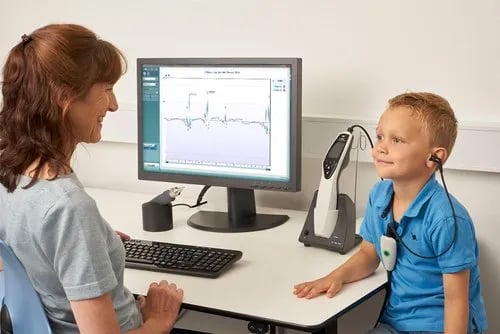
Hearing is fundamental to speech, language and social connection, yet hearing loss in very young children can be surprisingly difficult to recognise. Babies and toddlers can’t tell us when something feels wrong, and many children with hearing difficulties develop remarkable compensatory strategies that mask the problem.
The good news is that early identification and intervention make a real difference. Children whose hearing loss is identified and supported early tend to have better language outcomes, and parents and caregivers are often the first to notice the warning signs.
Below are the age-specific signs of hearing loss from birth through toddlerhood, the children at higher risk, and what to do if you’re concerned. None of this replaces a proper assessment: when in doubt, see an audiologist.
Understanding Newborn Hearing Screening
Some babies are born with permanent hearing loss in one or both ears, and other children develop hearing difficulties later in childhood. That is why every Australian state and territory runs universal newborn hearing screening.
Most babies receive an Automated Auditory Brainstem Response (AABR) or Otoacoustic Emissions (OAE) test within the first few weeks of life, typically before hospital discharge. These screening tests are quick, painless, and conducted while baby sleeps. Passing the newborn screen doesn’t guarantee normal hearing throughout childhood. Some types of hearing loss are progressive or delayed-onset, whilst others may develop following illness, injury, or chronic ear infections.
Equally, if your baby didn’t pass the first screen, try not to panic. Many babies who “refer” (don’t pass) on initial screening turn out to have normal hearing when properly assessed. What matters is following through with the recommended diagnostic assessment.
Age-Specific Signs of Hearing Loss in Babies
Newborn to 3 Months
In the earliest weeks, parents should observe whether their baby:
Startles or blinks in response to sudden loud sounds. Healthy newborns demonstrate a reflexive response to unexpected noise: a door slamming, a dog barking nearby, or hands clapping close by should elicit some reaction, even if subtle.
Shows awareness of voices, particularly familiar ones. Even very young babies should show some response to their mother’s voice: perhaps momentarily stopping movement, widening their eyes, or changing their breathing pattern.
Begins making cooing sounds by 2-3 months. These early vocalisations are precursors to babbling and speech. Whilst timing varies, babies with normal hearing typically begin experimenting with vocal sounds during this period.
The absence of these responses doesn’t necessarily mean hearing loss (some babies are simply calmer by temperament), but a consistent pattern warrants assessment.
3 to 6 Months
As babies become more interactive, hearing behaviours become clearer:
Not turning towards voices or interesting sounds. By four to six months, most babies will turn their head towards a parent’s voice or a novel sound like a rattle or squeaky toy. This localisation ability develops progressively and is an important developmental milestone.
Limited or no babbling by six months. Babies with typical hearing begin babbling, producing repetitive consonant-vowel combinations like “ba-ba-ba” or “da-da-da”, around six months. This vocal play is directly connected to hearing their own voice and the voices around them.
Lack of response to their name. There is some variation, but most babies begin recognising and responding to their own name somewhere between six and nine months.
6 to 12 Months
This period is characterised by rapidly developing communication skills:
Babbling doesn’t progress or show variety. Babbling should become increasingly complex, incorporating different sounds, inflections, and rhythms that mimic conversational speech. Limited variety or regression in babbling patterns can indicate hearing difficulties.
No response to “no” or other common words. By 8-10 months, babies typically demonstrate understanding of frequently used words in context, even if they can’t yet say them.
Doesn’t respond to music or familiar songs. Babies with normal hearing typically show enjoyment or recognition of favourite songs or musical toys.
Appears to hear some sounds but not others. This inconsistency often confuses parents but can indicate frequency-specific hearing loss. A child might respond to low-pitched environmental sounds (doors closing, trucks passing) whilst missing higher-frequency sounds crucial for speech (particularly ‘s’, ‘f’, ‘th’ sounds).
12 to 18 Months
Language development accelerates dramatically during this period:
No first words by 15-18 months. Most toddlers begin using recognisable words with meaning, such as “mama” or “dada”, around their first birthday, with vocabulary expanding through 18 months.
Doesn’t follow simple verbal instructions like “wave bye-bye” or “give me the ball” without accompanying gestures.
Points or gestures excessively rather than attempting words. Whilst all toddlers use gestures as part of normal communication development, over-reliance on pointing without verbal attempts may signal difficulty hearing spoken language.
Signs of Hearing Loss in Toddlers (18 Months to 3 Years)
Beyond 18 months, communication expectations increase substantially, making hearing problems potentially more obvious:
Speech delay or unclear speech. By age two, toddlers should be combining two words (“more milk,” “daddy go”). By three, they should use simple sentences that familiar adults can understand most of the time. Significantly delayed or unusually unclear speech warrants assessment (see hearing loss or speech delay?).
Frequently asks “what?” or doesn’t respond when called from another room. Whilst selective attention is developmentally normal, consistent failure to respond, particularly when the child is not intensely focused on an activity, may indicate hearing difficulty.
Turns up the television or device volume excessively. Preference for very loud volume, or sitting very close to audio sources, can indicate hearing loss.
Watches speakers’ faces intently. Children with hearing loss often unconsciously rely heavily on visual cues, watching mouths and facial expressions, to compensate for what they’re missing auditorily.
Difficulty following verbal instructions, particularly in noisy environments. Many children with mild-to-moderate hearing loss manage reasonably well in quiet settings but struggle significantly when background noise is present.
Speech and language skills seem to plateau or regress. Any loss of previously acquired skills deserves immediate professional attention.
Risk Factors Warranting Earlier Assessment
Certain children face higher risk of hearing loss and warrant particularly vigilant monitoring:
- Family history of childhood hearing loss
- NICU stay longer than 5 days, particularly with ventilation, ototoxic medications, or very low birth weight
- Craniofacial abnormalities affecting the ears or facial structure
- In-utero infections (CMV, rubella, toxoplasmosis)
- Syndromes associated with hearing loss (Down syndrome, Usher syndrome, among others)
- Recurrent ear infections or persistent glue ear (otitis media with effusion)
- Head injury or exposure to very loud noise
- Bacterial meningitis or other serious infections
Children with these risk factors should receive more frequent hearing assessments, even with normal newborn screening results, as many associated hearing losses are progressive or delayed-onset.
Trust Your Parental Instinct
Parental concern about hearing is an important signal and should always be taken seriously. Parents spend more time with their children than anyone else and notice subtle patterns that may not be apparent in brief clinical encounters.
If you have a persistent feeling that something isn’t quite right with your child’s hearing or communication development, seek assessment. You won’t be wasting anyone’s time. Early intervention services across Australia emphasise that concerns should be evaluated, not dismissed. Hearing can be assessed at any age, from newborn onwards, and you don’t need a doctor’s referral to see an audiologist privately.
What Happens During Paediatric Hearing Assessment
Paediatric audiological assessment differs substantially from adult testing. Audiologists trained in paediatric assessment use age-appropriate, play-based techniques that don’t require the child to “cooperate” in the traditional sense.
For babies and very young children, objective measures like tympanometry (assessing middle ear function), otoacoustic emissions (measuring inner ear response), and auditory brainstem response testing (measuring the hearing nerve’s response to sound) provide reliable information without requiring behavioural responses.
As children develop, behavioural observation audiometry, visual reinforcement audiometry, and eventually play audiometry allow assessment through developmentally appropriate games and activities. These techniques, administered by qualified paediatric audiologists, can accurately assess hearing in even very young children.
Taking Action: Practical Next Steps
If you’ve recognised potential signs of hearing loss in your baby or toddler:
Document your specific concerns. Note particular situations where you’ve observed difficulties: this information helps audiologists understand patterns and tailor assessment.
Seek assessment promptly. Contact an audiologist experienced in assessing children. At The Audiology Place we offer children’s hearing tests from six months of age at our Epping and Forestville clinics, using visual reinforcement and play audiometry.
Don’t wait to “see if they grow out of it.” When it comes to hearing and early language development, time matters. Even temporary hearing loss from chronic ear infections during critical developmental periods can have lasting impacts if not addressed.
Follow through with recommendations. If assessment identifies hearing loss, early intervention, whether medical management, hearing devices, or speech therapy, makes a real difference to developmental outcomes.
Children and young people under 26 with hearing loss receive government-funded hearing services through Hearing Australia, under the Community Service Obligations part of the Hearing Services Program, and early intervention services are also available. Your audiologist can guide you through available resources and support systems.
The Bottom Line
Recognising hearing loss in babies and toddlers requires awareness of age-specific developmental milestones and attention to subtle communication patterns. Not every delayed milestone means hearing loss, and there is plenty of normal variation in child development, but persistent concerns warrant assessment.
Modern paediatric audiology can accurately assess hearing at any age, and early identification combined with appropriate intervention allows children with hearing loss to achieve their full communication potential. When it comes to your child’s hearing, trust your instincts and seek timely assessment.