
When a toddler talks less than other children their age, or their words are hard to make out, the worry sets in fast. The question parents bring to us most often in paediatric audiology is a version of the same thing: is this a speech delay, or is my child not hearing properly? The two look almost identical in a young child, which is why the answer matters and why the order you investigate them in matters just as much.
A child who cannot hear well will usually struggle to develop speech and language on schedule. A child who hears perfectly can still be delayed for developmental, neurological or oral-motor reasons. Because the outward signs overlap, guessing is a poor strategy. Hearing is the one factor that can be measured objectively and ruled in or out quickly, so it belongs at the front of the queue.
Why hearing loss gets tested first
Hearing is the base that speech and language are built on. From birth, babies take in the voices, rhythm and intonation around them and use that input to wire the pathways they will later use to talk. Interrupt that input, even mildly, and the process slows.
The practical reason to start with hearing is simple. A hearing test is objective, painless and available from birth. Assessments for developmental language disorder, autism or oral-motor problems often need observation over weeks or months, milestone tracking and clinical judgement. A hearing assessment can frequently settle the hearing question in a single appointment.
Australian guidance, including material from Speech Pathology Australia and the National Acoustic Laboratories, points to hearing screening as a first step whenever speech or language delay is suspected. That is not because hearing is usually the cause. It is because missing a hearing problem costs months or years of intervention a child cannot get back. Even a temporary conductive loss from fluid behind the eardrum, common in young children as otitis media with effusion, can measurably set back language during the years it matters most.
What else causes speech delay
Speech and language delay rarely has a single cause, and hearing is only one candidate. Several others turn up, alone or in combination.
Developmental Language Disorder (DLD) describes a child who has ongoing trouble understanding or using spoken language despite normal hearing and no other obvious developmental concern. It is common, affecting an estimated 7% of children, and often goes unrecognised. These children may battle to build sentences, learn words or follow multi-step instructions.
Oral-motor difficulties are about the physical coordination speech requires. The child may understand language well and think at an age-appropriate level, yet struggle to move the lips, tongue and jaw precisely enough to form clear sounds. Childhood apraxia of speech sits in this group.
Autism Spectrum Disorder (ASD) can show up as delayed or atypical speech alongside differences in social communication: less eye contact, few gestures, echolalia, or difficulty taking turns in conversation. Autism Spectrum Australia (Aspect) notes that early identification and intervention improve outcomes, which is a large part of why a multi-disciplinary look matters when communication is delayed.
Global developmental delay applies when a child is behind across several areas at once, with motor skills, thinking and communication affected together. Here the speech delay is one sign of a wider pattern that needs paediatric and allied health input.
Each of these needs different tools, timelines and specialists. That is the practical case for testing hearing first: it is the quickest way to confirm or remove one whole branch of the possibilities.
Hearing can be tested at any age
Most parents are reassured to learn that hearing can be assessed reliably at any age, newborns included.
Universal Newborn Hearing Screening is offered across most Australian states and territories, usually through automated auditory brainstem response (AABR) or otoacoustic emissions (OAE). Both are quick, painless and accurate. If your child missed newborn screening, or concerns have surfaced since, full diagnostic assessment is available right through childhood.
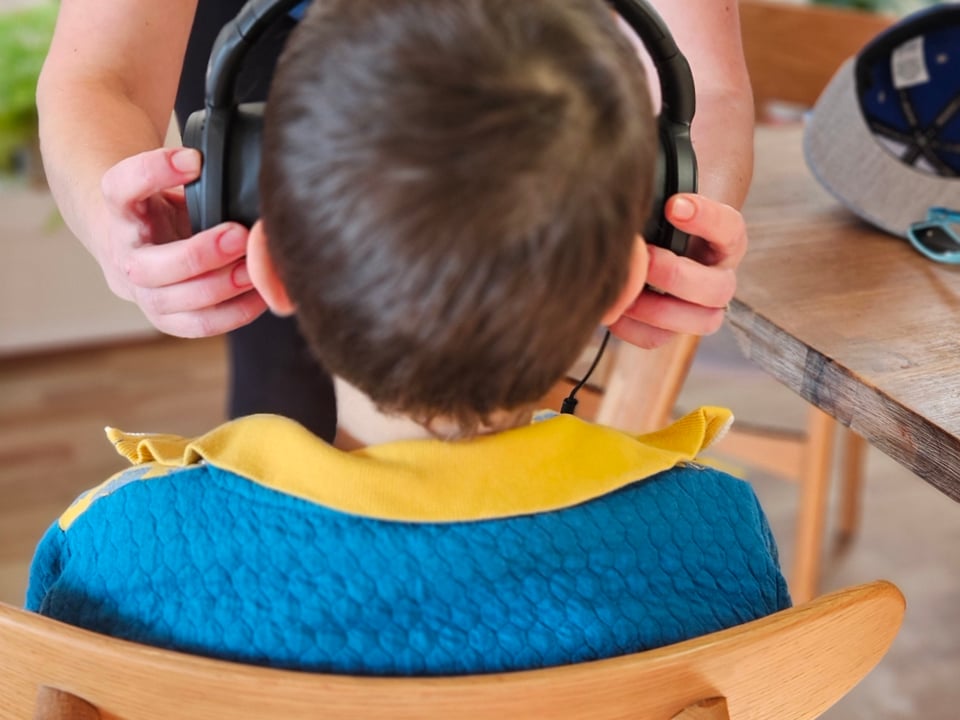
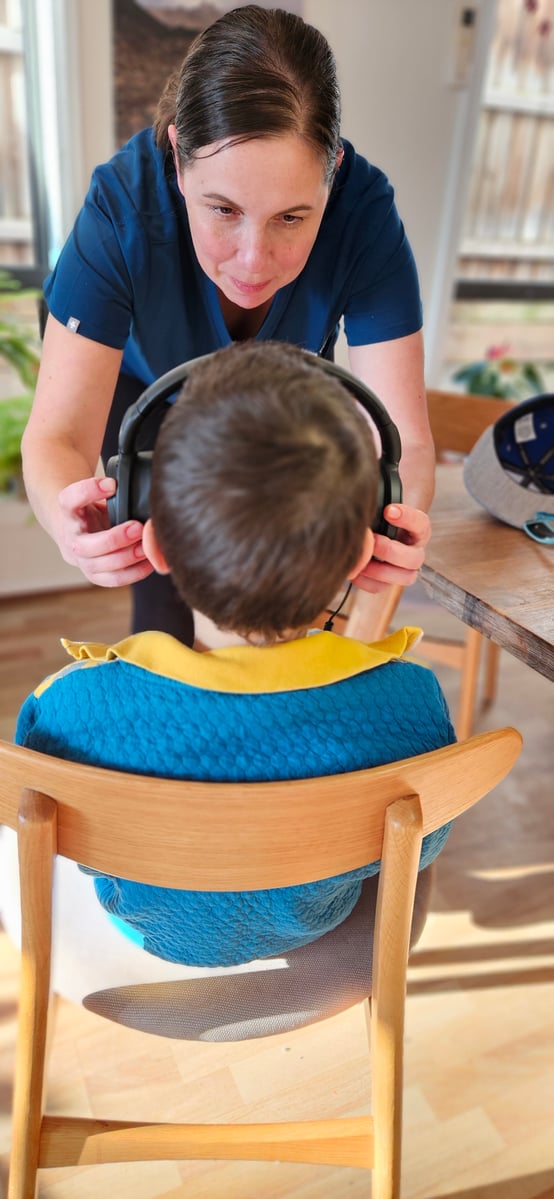
For babies and toddlers too young to respond on cue, we use visual reinforcement audiometry (VRA) or play audiometry, where a response to sound is rewarded with something visual or a game. Preschoolers and school-aged children can manage conditioned play audiometry or standard pure-tone testing, much as adults do. Tympanometry checks how the middle ear is working and is particularly good at picking up fluid behind the eardrum, which is a frequent and treatable cause of temporary hearing loss in young children. Auditory brainstem response (ABR) testing measures how the hearing nerve and brainstem respond to sound, and can be done while a child is asleep.
Age is not a barrier. If you are worried, testing is possible and worth doing, no matter how young the child.
Why more than one clinician is usually involved
One clinician rarely holds the whole answer when a child presents with communication delay. Good paediatric care is collaborative by design.
Once hearing has been checked and found normal, the usual next step is a speech-language pathologist (SLP), who can assess language in depth, evaluate oral-motor skills, watch social communication and build a therapy plan with the family. When broader development is in question, a paediatrician or developmental paediatrician coordinates the assessments, looks for medical causes and weighs diagnoses such as ASD. Occupational therapists or psychologists may join where sensory processing, attention or behaviour are shaping how a child communicates.
We work alongside speech pathologists, paediatricians and early childhood intervention services so families get coordinated care without delay. Making each professional’s role clear, and keeping referral pathways smooth, is part of how we practise.
A clear path for parents
If you are weighing up whether your child has a hearing problem or a speech delay, this is the order that works.
- Trust your instincts. If something about your child’s hearing, speech or language concerns you, get it assessed. Early intervention changes outcomes.
- Book the hearing test first. It is quick, objective and often covered by Medicare or private health cover. Paediatric hearing assessments are available at most audiology clinics, including The Audiology Place.
- Ask your GP or child health nurse for a speech pathology referral if hearing is normal but the concerns persist.
- Keep a short developmental diary. Note when your child gestures, makes eye contact, responds to their name or uses words. Clinicians rely on that detail.
- Be open to seeing more than one specialist. The picture often sharpens when several professionals contribute.
How we approach this
We are an independent practice, which means we are not owned by a hearing aid manufacturer and we do not steer families toward a particular brand or therapy without clinical reason. With children that matters, because the recommendation should follow the assessment, not a supplier relationship. Our advice is based on what the testing shows and what serves the child.
This article is general information, not personalised medical advice. Every child is different, and any concern about development is worth discussing with your GP, paediatrician or allied health professional.
Getting started
Hearing loss and speech delay are not an either-or. Sometimes both are present. Starting with a hearing assessment is the logical first move, because it either takes hearing out of the picture or finds something you can act on straight away. From there, whether the cause turns out to be hearing, language, coordination or development, early identification gives your child the best footing.
To arrange a paediatric hearing assessment or talk through what you are noticing, call 02 9315 8327 or book online.
Disclaimer: This content is for informational purposes only and is not a substitute for professional medical advice, diagnosis or treatment. Always seek the advice of your GP, audiologist or other qualified health provider with any questions about your child’s development.
References:
- Speech Pathology Australia. (2022). Clinical Guidelines: Speech and Language Disorders in Children.
- National Acoustic Laboratories. Paediatric Audiological Protocols.
- Autism Spectrum Australia (Aspect). Early Intervention and Communication Development.