
No. Properly fitted hearing aids do not damage your hearing or make your hearing loss worse. This is one of the most persistent myths in audiology, and after two decades of fitting hearing aids and managing the anxieties that come with them, I can tell you it’s almost entirely unfounded when we’re talking about modern devices fitted with real-ear measurement verification.
What people interpret as “worsening” is usually something else entirely: the brain’s normal adjustment to amplified sound, poorly fitted devices from decades past, or the simple fact that most hearing loss is progressive regardless of whether you wear hearing aids or not. The confusion is understandable, but the underlying fear keeps thousands of Australians from addressing hearing loss that’s already affecting their cognitive function, their relationships, and their safety.
The Reality Behind the Concern
The worry typically stems from one of three experiences. First, there’s the feeling that your hearing seems “worse” when you take the aids out at night. This isn’t damage—it’s neural adaptation. Your auditory cortex adjusts to receiving a fuller signal throughout the day, and when you remove that input, the contrast is stark. You’re not hearing worse than before you got the aids; you’re just noticing the deficit more acutely because your brain has recalibrated to the improved input. Studies by Knudsen and colleagues on auditory plasticity have documented this adaptation process extensively. It’s actually evidence that the devices are working and your brain is responding.
Second, there are legitimate historical cases of damage from overamplification, particularly from analogue hearing aids that lacked the sophisticated compression and output limiting we have now. If a device delivered excessive sound pressure levels—we’re talking about prolonged exposure above 110-115 dB SPL at the eardrum—yes, that could theoretically cause noise-induced threshold shift. But this is exceptionally rare with digital hearing aids fitted using real-ear measurement (REM). REM involves placing a probe microphone in your ear canal while you’re wearing the hearing aid, measuring the actual sound pressure level reaching your eardrum, and verifying it matches prescriptive targets without exceeding safe maximum output levels. When we fit devices at The Audiology Place, we’re looking at your uncomfortable loudness levels (UCLs) during the assessment and programming maximum power output below those thresholds. The concern about damage made sense in 1985. It doesn’t hold weight in 2025 with verification protocols.
Third, people conflate the natural progression of hearing loss with hearing aid use. Age-related hearing loss (presbycusis) is typically progressive. So is noise-induced hearing loss. So is hearing loss from ototoxic medication exposure, Ménière’s disease, or genetic factors. Your hearing can and often does worsen over time whether you wear aids or not. In fact, emerging research suggests the opposite: that auditory deprivation from *not* wearing hearing aids may accelerate cognitive decline and potentially worsen central auditory processing. The Lancet Commission on dementia prevention identified hearing loss as the single largest modifiable risk factor for dementia, more significant than smoking or hypertension. The mechanism appears to be twofold—reduced cognitive load from straining to hear, and maintained stimulation of auditory pathways that would otherwise atrophy from disuse.
What the Research Actually Shows
Hickson’s work on hearing aid outcomes consistently demonstrates that appropriately fitted amplification does not worsen pure-tone thresholds. When audiologists track patients over years with serial audiometry, the progression of hearing loss in aided ears follows the same trajectory—or in some datasets, a slightly better trajectory—than unaided ears with comparable losses. There’s no evidence of accelerated threshold shift attributable to hearing aid use when devices are fitted within safe output limits.
The more interesting research is on what happens when you *don’t* treat hearing loss. Studies using functional MRI show that untreated hearing loss is associated with accelerated brain atrophy, particularly in regions responsible for sound processing and memory. The brain operates on a “use it or lose it” principle. When auditory input is consistently degraded, the neural networks that process sound start to reorganize or atrophy. Hearing aids deliver the signal your brain needs to maintain those pathways. This isn’t speculative—longitudinal studies are increasingly showing that hearing aid users demonstrate slower cognitive decline than those with untreated hearing loss of similar severity.
There’s also preliminary evidence that earlier intervention may be more beneficial. If you wait until your hearing loss is severe, you’re asking the brain to suddenly process a decade’s worth of acoustic information it hasn’t been receiving. The adjustment is harder, speech understanding outcomes are typically poorer, and satisfaction is lower. I see this pattern weekly: patients who present with moderate-to-severe loss who “should have come in five years ago” struggle more than those who address mild-to-moderate loss early.
When Problems Do Occur
Hearing aids can cause problems, but not the kind people fear. The issues we actually see are physical and technical, not sensory damage.
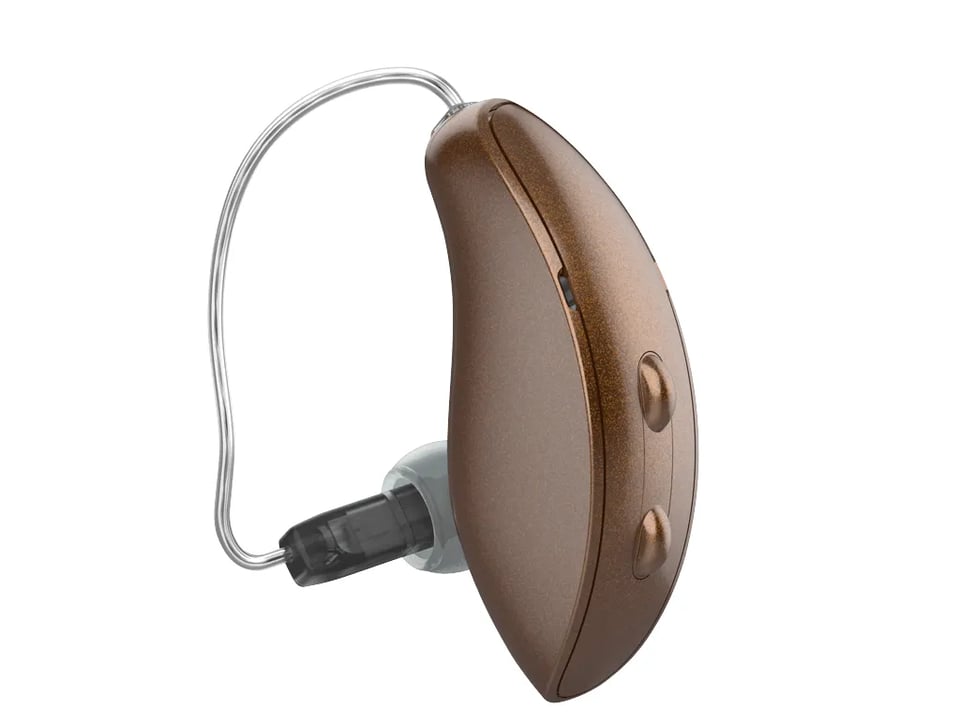
Occlusion effect—that hollow, echo-y sensation of your own voice—happens when the ear canal is blocked and low-frequency sound generated by your voice gets trapped. It’s uncomfortable and makes people rip their aids out, but it’s a fitting issue, not a hearing issue. We manage it with venting, open domes, or receiver-in-canal designs that leave the ear canal less occluded.
Chronic moisture or poorly fitted earmoulds can contribute to external ear infections. That’s a hygiene and fit problem that needs addressing with your audiologist, not a reason to stop wearing the devices.
Unrealistic expectations cause the most dissatisfaction, and that’s partly on us as clinicians to manage. Hearing aids restore access to sound, but they don’t restore normal hearing. You’ll hear better in quiet, often significantly better in noise with modern directional microphone technology and noise reduction algorithms, but you won’t hear like you did at 25. If you have a 60 dB loss at 4000 Hz, we’re amplifying a damaged system. The hair cells are gone. We’re making sound louder so your remaining hair cells can respond, but clarity is partially dependent on the health of your cochlea. Some patients hear “hearing aids don’t make your hearing worse” and interpret that as “hearing aids will make my hearing perfect.” Neither is true.
The Dependency Question
People worry about becoming “dependent” on hearing aids as though it’s an addiction. This framing misunderstands what hearing aids do. If you have a refractive error, you’re “dependent” on glasses to see clearly. That’s not pathological dependence—that’s correction of a sensory deficit. The same applies to hearing aids.
What people often mean is that they feel they can’t function without them once they’re accustomed to wearing them. That’s accurate, and it’s actually the goal. If your hearing aids aren’t becoming something you rely on, they’re probably not providing enough benefit. The brain’s adaptation to improved auditory input is a feature, not a bug.
What Proper Fitting Actually Involves
Safe, effective hearing aid fitting isn’t pulling a device off a shelf and turning it on. At a legitimate audiology practice, you’re looking at comprehensive pure-tone audiometry (air and bone conduction thresholds from 250 Hz to 8000 Hz at minimum), speech discrimination testing in quiet and ideally in background noise, tympanometry to rule out middle ear pathology, and case history to identify realistic goals and listening environments.
Hearing aid selection is based on your audiogram configuration, your dexterity, your lifestyle, and your budget. Programming is based on validated prescriptive formulas—NAL-NL2 or DSL, typically—that calculate appropriate gain and output based on your specific thresholds. Then comes real-ear measurement: we place a probe tube in your ear canal, present speech-like stimuli through the hearing aid, and verify that the amplification at your eardrum matches the target within acceptable tolerances across frequencies. We check that maximum output doesn’t exceed safe levels, usually keeping MPO at least 5-10 dB below your loudness discomfort levels.
Follow-up is not optional. Initial settings are a starting point. We track outcomes with validated questionnaires, make adjustments based on real-world experience, and repeat audiometry periodically to monitor your thresholds. If your hearing is changing, we need to know so we can adjust programming or investigate underlying pathology.
The Bottom Line
The fear that hearing aids will damage your hearing is keeping people from treatment that could preserve cognitive function, improve quality of life, and maintain social connection. Properly fitted modern hearing aids, verified with real-ear measurement and monitored with appropriate follow-up, do not worsen hearing thresholds. What they do is provide your brain with the input it needs to function and adapt.
If your concern is based on a bad experience from a relative who wore analogue aids in 1992, that’s not relevant to contemporary practice. If you’re worried because your hearing seems worse when you remove your aids at night, that’s normal adaptation. If you’ve been told by someone selling hearing aids online that you don’t need verification or follow-up, find a different provider.
The risk isn’t from wearing hearing aids. The risk is from not addressing hearing loss while your brain reorganizes around the absence of sound.