

If you’ve ever tried to chat on a blustery headland or cycle track, you’ll know the “whoosh” that swamps everything. A 2025 Scientific Report used high-fidelity computer simulations (validated in a wind tunnel) to show why this happens around our ears—and how hearing aid style, microphone placement, and even the shape of your ear can change the result. Here’s the plain-English version, plus practical tips we use at The Audiology Place to tame the wind.
Wind noise is turbulence, not “sound” from a speaker. As air hits your head and ear, it sheds swirling vortices that create a low-frequency rumble at the microphones.
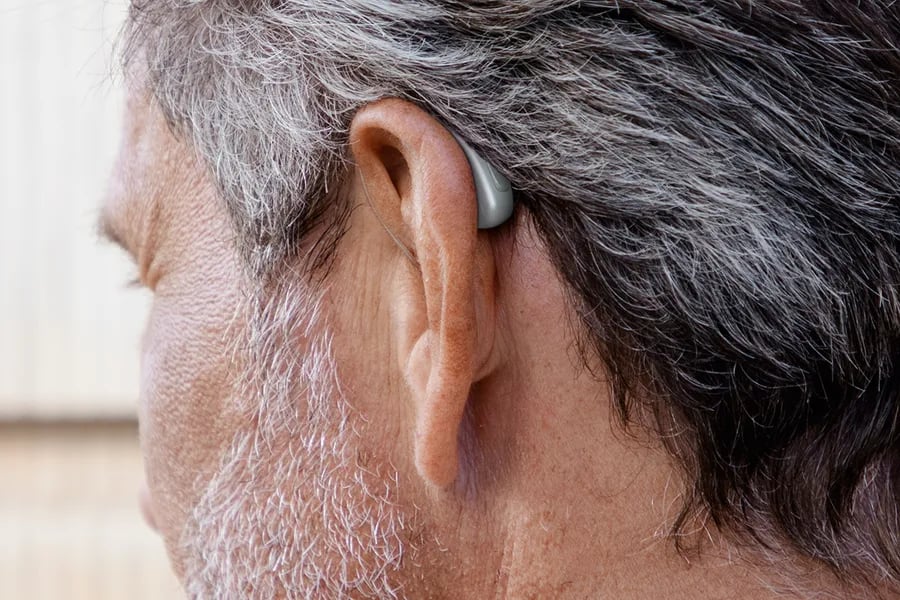
Behind-the-ear (BTE/RIC) mics see the worst of it. The study found the most substantial pressure fluctuations where BTE microphones usually sit—above and just behind the pinna (outer ear).
Deeper in the canal = quieter. In-the-ear (ITE), in-the-canal (ITC),, and especially completely-in-canal (CIC) styles place mics where the ear’s natural anatomy (tragus + canal) helps shield against turbulence.
Speed matters. At jogging (≈10 km/h) and cycling (≈20 km/h) speeds, levels rise and spread across a wider frequency range; at 20 km/h, BTE mic positions can exceed 85 dB(A) of wind-induced input.
Orientation helps. Counter-intuitively, when the ear faces directly into the breeze, wind noise at a BTE mic can drop because local air velocity at the actual stagnation point is near zero.
Your unique ear helps. Authentic, anatomically accurate ear canals damp turbulence faster than simplified/artificial canals—another reason custom shells can be calmer in wind.
What’s actually going on around your ear?
When wind (or your motion through still air) meets the head, airflow separates at predictable spots and sheds vortices—think of mini whirlpools in air:
Temple area: large-scale vortices peel off and sweep towards the top edge of the ear.
Upper pinna & rim: lots of small-scale swirls detach right where many BTE/RIC microphones sit.
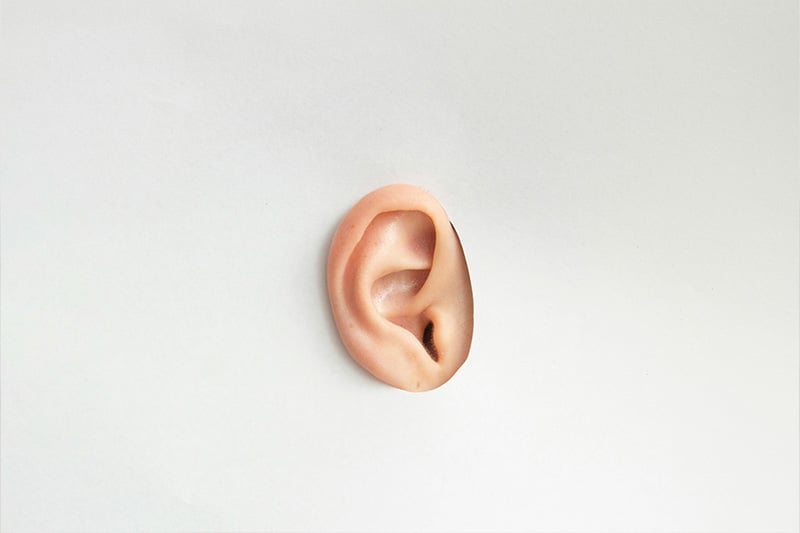
Entrance to the ear canal: the tragus (that little flap at the front of your ear canal) and the narrowing of the canal act like a natural windscreen, knocking turbulence down before it reaches deeper.
Because low frequencies dominate wind noise, it presents to the hearing aid as a broad, rumbling input that can mask speech, saturate microphones, and trigger aggressive noise management—sometimes at the expense of clarity.
Which hearing aid styles cope best with wind?
Think of it as a spectrum from most to least wind-exposed microphone position:
CIC (Completely-in-Canal), mic deepest and best shielded by the ear itself → typically the calmest.
ITC / ITE (In-the-Canal / In-the-Ear), mic near or at canal entrance → generally good.
RIC / BTE (Receiver-in-Canal / Behind-the-Ear), mics above/behind pinna in the “swirl zone” → most exposed.
That doesn’t mean everyone should switch to CICs. Comfort, dexterity, ear health, connectivity, tinnitus features, rechargeable options, and hearing profile all matter. But if wind is a top pain point, mic position becomes a deciding factor—and there are innovative ways to improve wind performance even with RIC/BTE.
Practical ways to reduce wind noise (what really helps)
1) Match the style to your activities
Cyclists, runners, coastal walkers: strongly consider custom ITE/ITC/CIC options, especially if most listening is outdoors.
If you prefer RIC/BTE (for rechargeability, Bluetooth, tap controls, or easier handling), ask us to prioritise wind performance in your fitting.
2) Use the correct settings
Modern devices offer specific wind tools. At The Audiology Place, we routinely:
Enable wind-noise managers and tune their aggressiveness.
Adjust the directional microphone strategy for outdoor uses (often more omnidirectional at lowfrequenciese, with smarter high-frequency directionality).
Reduce excess low-frequency gain in an “Outdoor” program to cut rumble without gutting speech.
Optimise sudden noise handling to prevent wind gusts from tripping the system.
3) Small behaviour tweaks
Head orientation: if you must stick with BTE/RIC, turning the ear slightly into the breeze can reduce turbulence right at the front mic.
Cap, headband, or hair over the mic area: a thin, breathable layer can disrupt vortex formation (avoid rubbing fabrics).
Phone as a remote mic: In very windy spots, use your smartphone/companion mic clipped to the speaker (on the leeward side).
4) Hardware choices that help
Custom shells (even for ITC/ITE) can calm the canal’s airflow and improve retention for active use.
Mic windscreens/ports: built-in meshes and redesigned ports in newer models can cut wind input without muffling speech.
Water- and sweat-resistant housings withstand sporty conditions, allowing us to fit firmer domes or vents that won’t chatter in gusts.
Why speed and angle matter
The study looked at 10 km/h (jogging) and 20 km/h (easy cycling) in clean airflow. As speed doubles, turbulence becomes stronger and spreads across a wider portion of the speech band, making cancellation harder. It also showed that wind blowing straight on (front) or directly from behind tends to produce higher levels at typical BTE mic sites than when the ear faces into the wind (that local stagnation zone effect). Real life adds gusts, eddies off buildings and trees, and “dirty” wind—but the broad principle holds. What this means for you (Northern Beaches realities)
A coastal breeze is a feature, not a bug,, of life here. If you walk around Narrabeen Lagoon, run the Spit to Manly, or ride along Pittwater Rd, plan your hearing solution with wind in mind.
If your current aids sound great indoors but fall apart outside, it’s not (just) you—the mic location and tuning may be at odds with physics.
Trade-offs are customisable. We can bias a program toward wind robustness when you’re outdoors, then snap back to full-fidelity settings indoors—all automatically based on environment detection or with a quick tap.
Our wind-wise fitting checklist at The Audiology Place
When wind is on your agenda, we’ll:
Map your real environments (run/cycle speeds, usual paths, headwear, phone use).
Select a style with mic placement that fits those habits (and your dexterity/ear health).
Run real-ear verification with an outdoor-optimised program, balancing low-frequency control and speech audibility.
Tune wind tools and directional behaviour, then field-test—yes, we’ll step outside or simulate airflow to check it.
Review accessories (caps/headbands, remote mic options) and simple on-the-go orientation tricks.
Follow up after a week of your regular routine to fine-tune based on real use.
Because we’reindependent and brand-agnostic, we pick from multiple manufacturers—the ones whose wind handling matches your activities, not a sales contract.
Wind noise isn’t a software glitch; it’s fluid dynamics around the head. The 2025 research confirms what many of our patients feel: BTE/RIC microphones live in the “swirl zone,” while mics placed deeper in the canal are naturally sheltered. With the right style choice, innovative programming, and a couple of everyday tricks, you can keep the breeze in your hair—not in your ears.
If wind is spoiling your walks, rides, or calls, book an appointment at The Audiology Place (Forestville). We’ll build you a wind-wise setup that fits your ears, your routine, and our local weather.