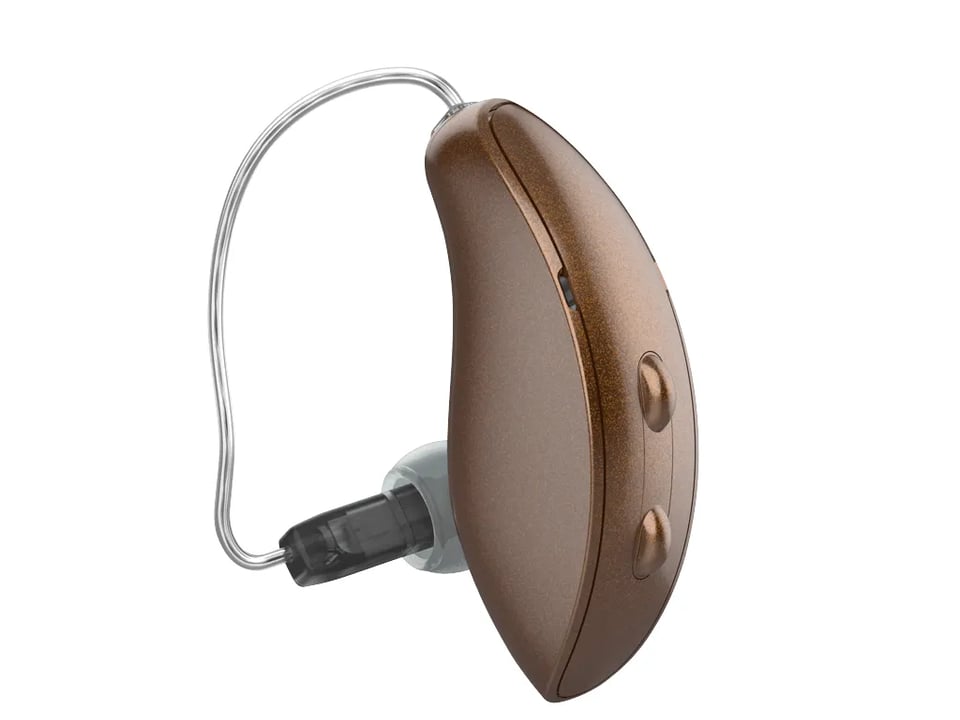
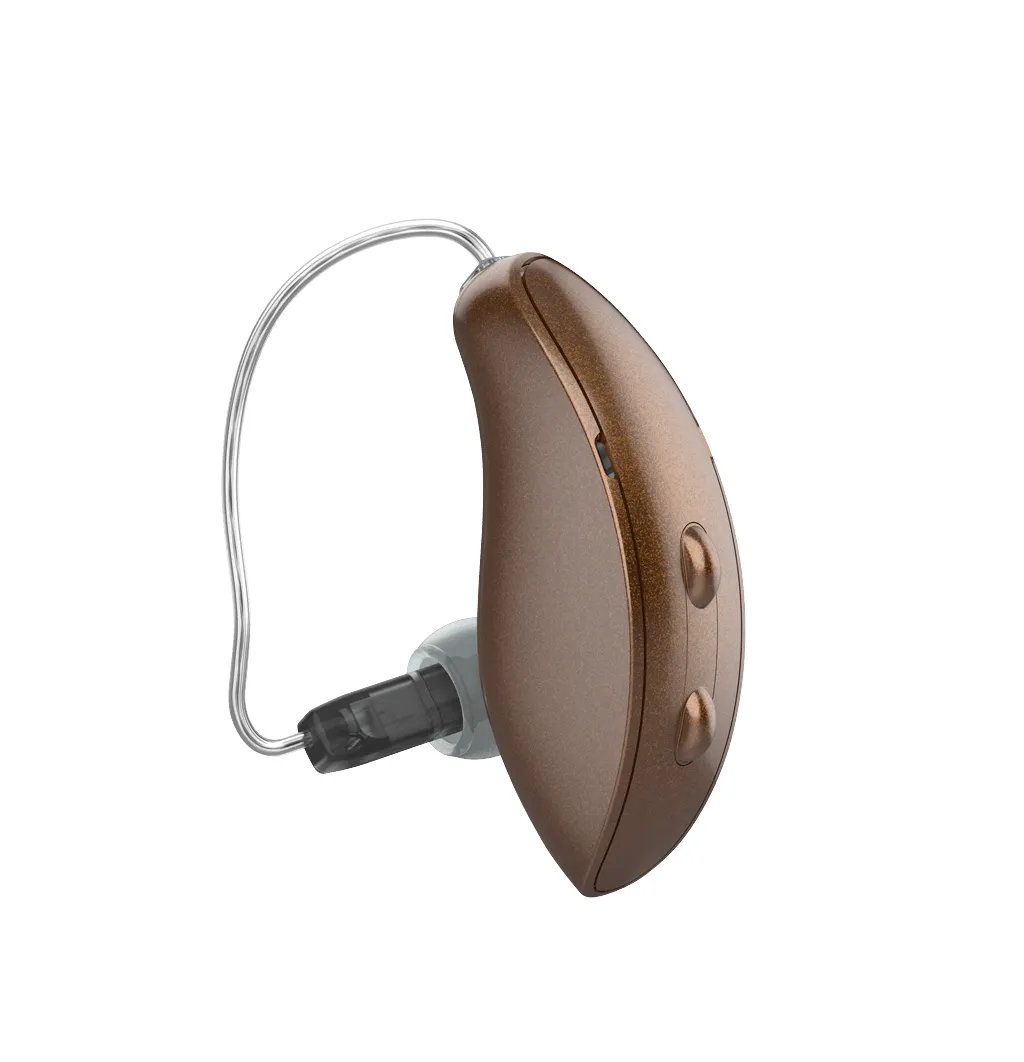
If your own voice sounds hollow, booming, or like you’re speaking inside a barrel when you wear your new hearing aids, you’re experiencing the occlusion effect. It happens when your ear canal is blocked by a hearing aid or earmould, trapping low-frequency vibrations from your own voice that would normally escape. The good news: it’s fixable, and the solution depends on proper assessment and fitting adjustments, not “getting used to it.”
Plenty of people come back in their first week of hearing aid use convinced something is badly wrong with their devices, when what they’re describing is textbook occlusion. It’s a common reason people give up on hearing aids early, and careful fitting usually prevents or fixes it.
What Actually Causes the Occlusion Effect
When you speak, your vocal cords create vibrations that travel two ways to your ears: through the air (air conduction) and through the bones of your skull (bone conduction). For low-frequency sounds, roughly below 500 Hz, which includes most of the resonance in your own voice, bone conduction is significant.
Normally, these bone-conducted vibrations reach the ear canal and radiate back out through the open canal opening. But when you seal the canal with a hearing aid dome, earmould, or even a poorly fitted custom shell, you trap that low-frequency energy. It has nowhere to go, so it bounces around in the closed space, increasing the sound pressure level at your eardrum by as much as 20 to 30 dB in the lower frequencies.
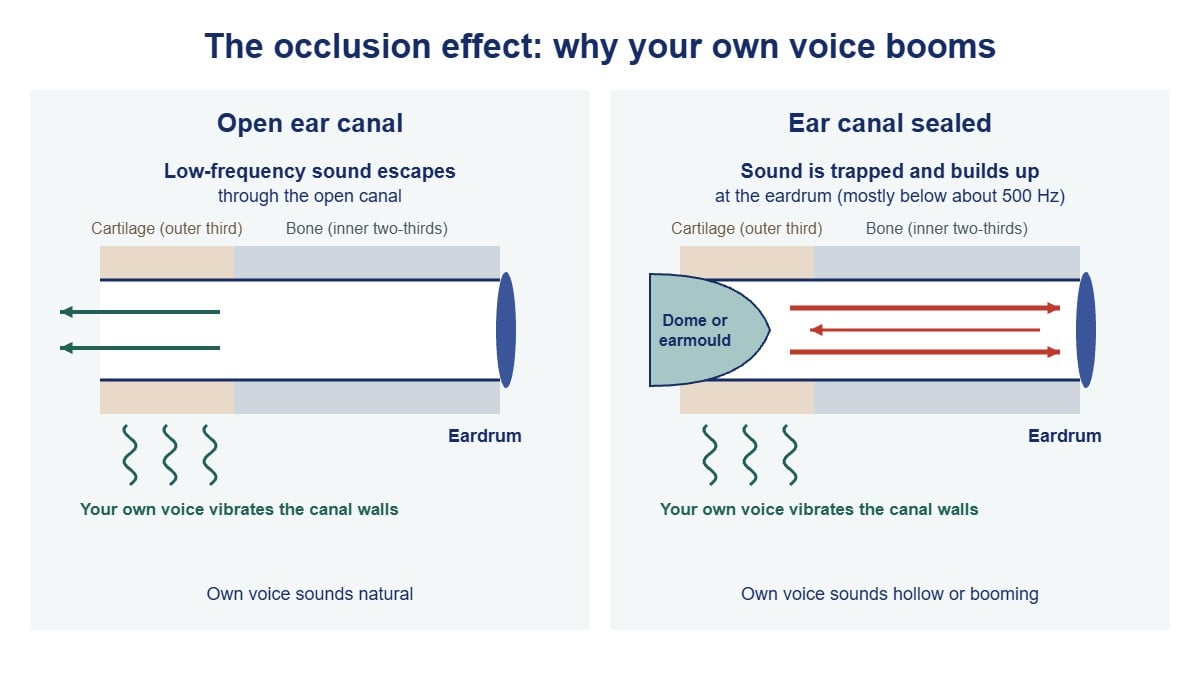
The cartilaginous portion of the ear canal, roughly the outer third, is where this trapped energy causes the most trouble. That’s the part that moves when you talk or chew, and it’s where most standard dome and earmould fittings sit. When we measure the occlusion effect with real-ear measurement equipment, we can see and quantify exactly how much excess low-frequency energy is being generated when a patient speaks with their canal occluded.
Occlusion vs Ampclusion: Different Problems, Different Fixes
Before we get into solutions, it’s critical to distinguish between two things that patients often describe the same way:
The occlusion effect is mechanical trapping of bone-conducted sound. It happens even if the hearing aid is turned off. If you put your fingers in your ears and say “eeeee,” that booming sensation is occlusion. It’s a physical problem requiring a physical solution.
Ampclusion (a term some audiologists use for the amplified part of the problem) is when your hearing aid is picking up your own voice through its microphone and amplifying it back to you, often more than feels natural. This is an amplification and processing problem, not a mechanical one.
The fixes are completely different. Venting won’t help ampclusion. Gain adjustments won’t fix true occlusion. It’s common for people to be told to “give it a few weeks” before anyone has worked out which problem they’re dealing with. True mechanical occlusion doesn’t go away with acclimatisation, although some people become less bothered by it over time.
How We Actually Fix Occlusion
The remedies fall into three categories: venting, insertion depth, and digital signal processing.
Venting and Open Fittings
The most common solution is to let low-frequency sound escape. This means using:
- Open domes: silicone domes with large openings that allow sound to pass in and out freely
- Vented earmoulds: custom moulds with a drilled channel running through them
- Receiver-in-canal (RIC) and thin-tube designs: paired with open domes, these are physically less occlusive than traditional behind-the-ear moulds
Venting works brilliantly for mild to moderate high-frequency hearing loss where you don’t need much low-frequency amplification anyway. But here’s the trade-off every audiologist confronts daily: the more you vent, the less low-frequency gain you can deliver before you get feedback (that whistling sound), and the less environmental noise isolation you achieve.
For someone with a flat or more severe loss who needs amplification across all frequencies, aggressive venting may not be an option. We measure the acceptable amount of venting during real-ear verification, checking insertion gain against targets while ensuring we don’t create a feedback loop.
Deeper Insertion into the Bony Canal
If we can get the hearing aid or earmould past the cartilaginous part of the canal and seat it in the bony portion (roughly the inner two-thirds), we reduce occlusion significantly. The bony canal doesn’t vibrate the same way, so there’s less trapped energy.
This is why deeper-fitting custom completely-in-canal (CIC) devices often have less occlusion than shallow receiver domes, assuming the fit is correct. The catch: deeper fittings require good dexterity for insertion and removal, which not every patient has, and they’re not suitable for every ear anatomy. Some canals are too narrow or curved. Some have skin conditions that make deep insertion uncomfortable or risky.
Own-voice processing
Some manufacturers now offer processing that detects when you’re speaking and handles your own voice differently from other sounds. Signia’s Own Voice Processing is the best-known example. Because it changes what the hearing aid amplifies, it mainly helps with ampclusion, the amplified part of the problem. It can’t remove sound that is physically trapped by a sealed canal.
In practice it can help, particularly when more venting isn’t an option. But it’s not magic, it can’t make up for a poorly chosen physical fitting, and it’s specific to that manufacturer. We use own-voice features when they suit the patient, but not as a substitute for getting the mechanical fit right.
What to Expect During a Proper Fitting Adjustment
If you’re experiencing occlusion, here’s what should happen when you go back to your audiologist (and what we do at The Audiology Place):
First, confirm it’s actually occlusion. We’ll ask you to describe what you’re hearing, and often have you speak with the aids turned off. If the booming persists, it’s mechanical occlusion, not ampclusion.
Measure it. Using real-ear measurement with a probe microphone in your ear canal, we can objectively measure how much low-frequency energy is being trapped when you speak. This isn’t guesswork.
Trial physical changes first. We’ll try more open domes, add or enlarge venting, or adjust insertion depth. These changes have immediate effect: you’ll know within seconds if it’s better.
Consider device changes if needed. Sometimes the wrong style was chosen from the start. A patient with good low-frequency hearing and a high-frequency loss rarely needs a closed dome. If you’ve been fitted with a power receiver and closed dome when a standard receiver with an open fit would have done the job, that’s a fitting choice worth revisiting, not an acclimatisation issue.
Adjust programming only after the physical fit is optimised. If we still have some residual own-voice loudness after fixing the mechanical occlusion, then we look at gain adjustments or own-voice features.
The Self-Test You Can Do Right Now
Before your next appointment, try this: push your tragus (the little flap of cartilage in front of your ear opening) to close your ear canal, or simply press your fingertips into your ears to seal them. Now say “eeeee” in a sustained tone.
That hollow, echoing sensation is the occlusion effect. If that’s what you’re hearing with your hearing aids in, you need a fitting adjustment, full stop. You’re not being oversensitive, you haven’t “not given it enough time,” and you shouldn’t have to live with it.
Why “Just Get Used to It” Isn’t Enough
Some clinics still tell patients that occlusion will diminish with time as their brain adapts. And to be fair, there is some central auditory adaptation that occurs with new amplification. But the occlusion effect can add up to 20 to 30 dB of low-frequency energy. Your brain can’t adapt away a physical effect.
What actually happens when patients are told to persist is one of three things: they return the aids within the trial period, they keep them but don’t wear them (the drawer effect), or they tough it out in misery and tell their friends hearing aids are terrible. None of these outcomes are acceptable when the solutions are well-established and routinely achievable.
When You Should Push Back
If you’re experiencing occlusion and your provider’s only suggestion is to “wear them more and you’ll get used to it,” that’s a red flag. If no physical changes are offered, if real-ear measurement isn’t being used, or if you’re being told it’s just part of wearing hearing aids, get a second opinion.
At The Audiology Place, we fit all major brands and aren’t tied to any one manufacturer. We fit the device to your hearing loss, your anatomy, and your real-world experience, and we have the diagnostic tools and time to iterate until it’s right. That’s not exceptional service; it’s basic professional competence.
The Bottom Line
The occlusion effect is common, well understood and fixable, and it’s one of the things we work through in your first weeks with hearing aids. It happens when your ear canal is blocked and low-frequency vibrations from your own voice get trapped. Solutions include venting, open domes, deeper insertion, and digital own-voice processing, often in combination.
The right solution depends on your specific hearing loss, your ear anatomy, and your dexterity. But it requires proper measurement, proper fitting skill, and a clinician who’s willing to make adjustments until it’s resolved.
If your own voice sounds like you’re talking in a barrel, you don’t need to get used to it. You need a better fitting.