
As musicians and serious music lovers know, hearing isn’t just a sense; it’s your instrument’s partner. You need hearing aids that preserve timbre, transients, and spatial cues without compromising dynamics or introducing latency. That’s precisely where modern devices have improved: today’s top models include dedicated music programs, faster processing paths, and a broader input dynamic range, so cymbals shimmer, strings bite, and kick drums stay punchy.
The stand-outs in 2025
Widex Moment (including Sheer & SmartRIC) , PureSound for ultra-low latency
Widex’s PureSound/ZeroDelay path reduces internal delay to under 0.5 ms, which helps keep direct (open-vent) sound and amplified sound in phase. Result: less “hollow” or “phasy” tone, especially with open fits. Great for acoustic players and singers who rely on natural timbre.
Oticon Intent (and recent Oticon models) , MyMusic program tuned for realism
Oticon’s dedicated MyMusic program employs a distinct compression strategy tailored to Music, based on research into reference curves for live/recorded playback. It aims to preserve dynamics and instrument colour, whether you’re streaming or listening live. We routinely enable/shape this program for performers.
ReSound Nexia , flexible tuning + next-gen connectivity
Nexia offers robust app control and Bluetooth LE Audio/Auracast support, which is becoming increasingly important in modern venues and rehearsal spaces that are incorporating broadcast audio. If you also do a lot of streaming, it’s a strong all-rounder.
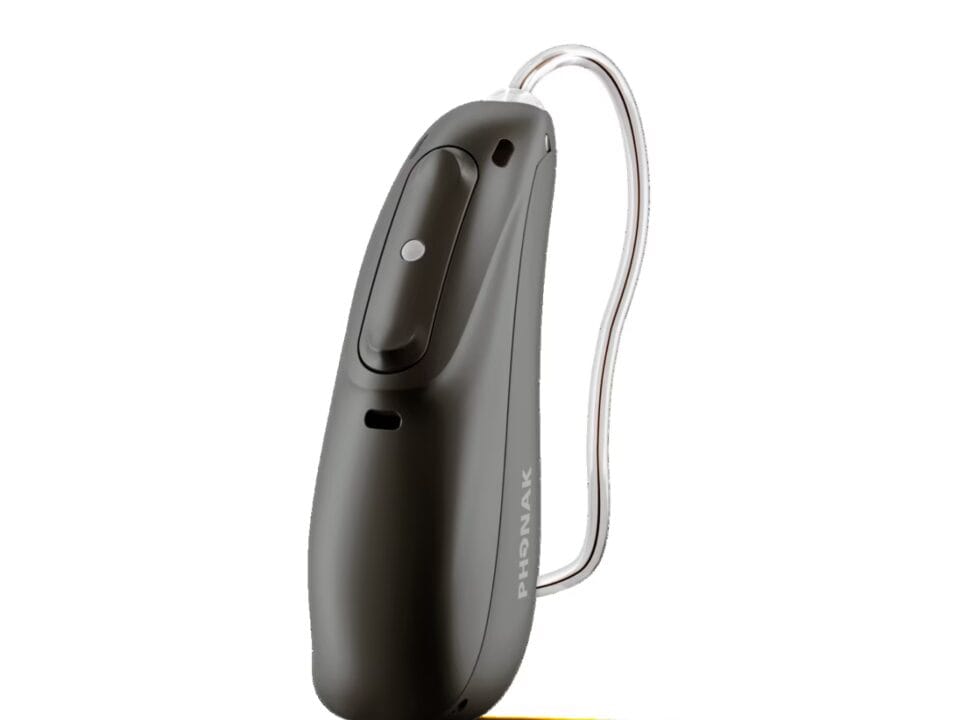
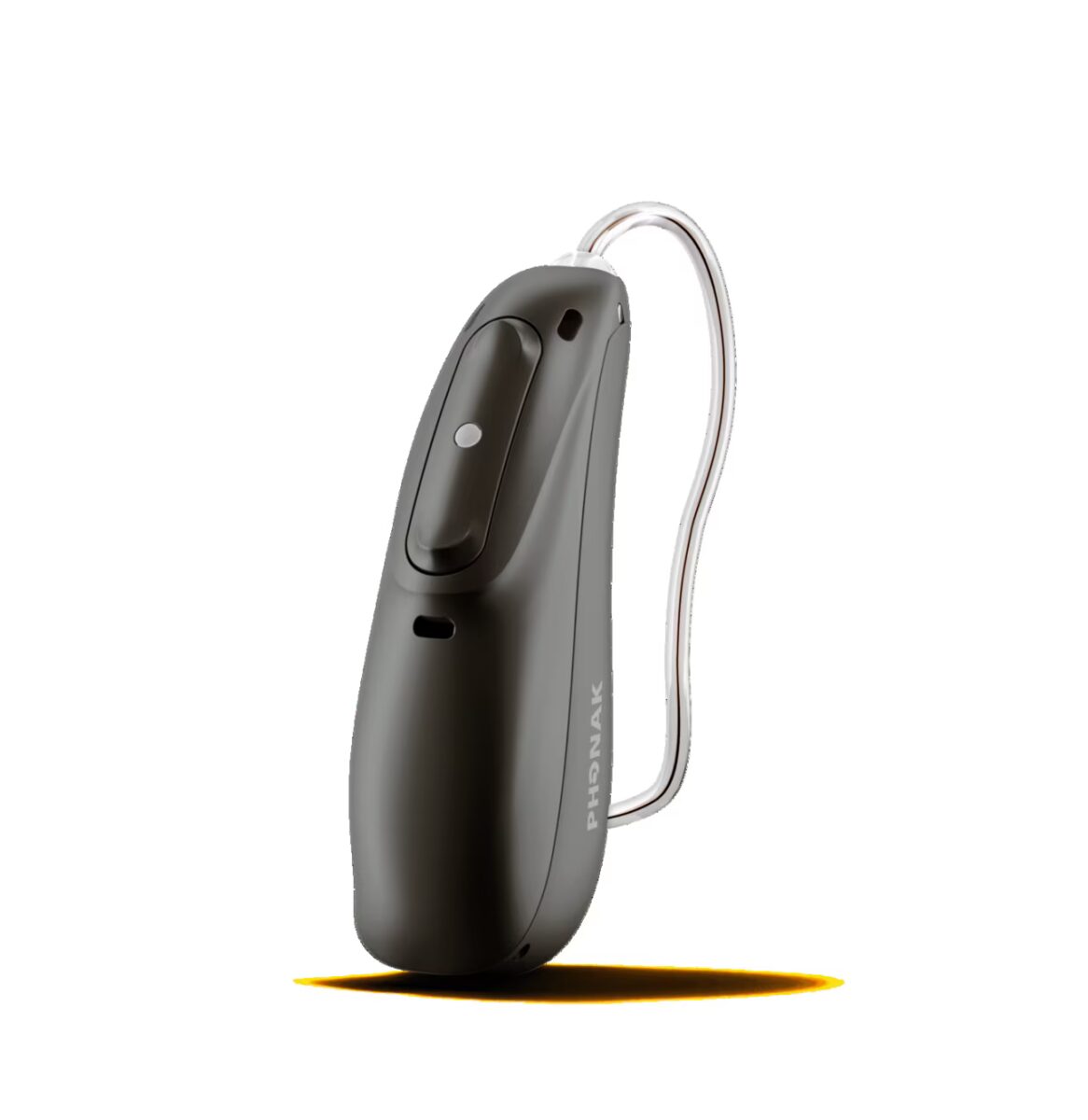
Phonak Lumity , strong manual “Music” setups and easy switching
Phonak’s AutoSense OS reliably distinguishes between media and speech and can handle Music in various settings. However, we still prefer adding a manual Music program for gigs, allowing you to jump in/out with the push-button or myPhonak app. This gives you predictable stage behaviour.
Starkey Genesis AI , punchy, low-artifact sound with dedicated profiles
Genesis AI’s new processor is fast and clean; users report very natural, streamed, and live Music after proper fitting. It also offers a dedicated Music program in the app/fitting suite, as well as excellent durability for sweaty stages.
Signia Integrated Xperience (IX)with a proven heritage in “HD Music”.
Signia’s lineage includes multiple music-tuned programs (live/recorded/performer), and the current IX platform continues to win fans in the music industry when fitted by someone who knows how to tame the processing for Music.
Bottom line: If your top priority is zero “digital” feel, Widex Moment is a perennial favourite. If you want research-backed music processing and excellent speech, Oticon Intent is superb. For connectivity and streaming, ReSound Nexia is hard to beat. If you’re a button-tapper who wants fast program switching on stage, Phonak Lumity is excellent. Starkey and Signia both deliver convincing musicality when fitted with the correct settings.
Why music challenges hearing aids (and how 2025 tech helps)
Music has a broader bandwidth and bigger crest factors than speech. The very algorithms that make conversation effortless, such as multi-band compression, aggressive noise reduction, frequency lowering, transient control, and beamforming, can squash dynamics or smear harmonics. Modern “music” programs pull back those levers to keep dynamics intact, while newer processing paths (e.g., Widex’s sub-millisecond pipeline) reduce latency that causes phasey tone with open vents.
The settings that matter (our clinic playbook)
When we create a Music program, we typically:
- Relax compression (higher kneepoints, lower ratios; slower time constants) to preserve dynamics.
- Turn off or minimise noise reduction, directionality/beamforming and transient managers; keep mics more omnidirectional for natural room tone.
- Disable frequency-lowering in the Music program (often dulls cymbal/upper-harmonic detail).
- Widen input dynamic range and watch MPO so peaks (snare hits, brass stabs) don’t clip yet remain safe.
- Tame feedback control only as much as needed; over-aggressive feedback managers can “warble” sustained notes.
- Match venting to the gig: open for acoustic sets and practice; more occluding/custom for loud stages to raise feedback margins and protect hearing.
- Give you a fast switch: one tap from conversation to Music, and back again (e.g., myPhonak, Oticon, ReSound, Starkey, Signia apps).
Bring your instrument to the fitting if possible — we adjust with you actually playing or using high-quality reference tracks in our sound-treated rooms. It makes a world of difference.
Extra tools musicians should consider
- Custom musician earplugs (flat attenuation) and ER filters (ER-9/15/25) maintain frequency balance while reducing overall volume. Great for rehearsals, drum sheds and loud stages where you don’t need gain. We fit these in-clinic.
- In-ear monitor workflow, some players use custom tips with IEMs for isolation and consistent mixes, alternating with hearing aids off-stage. Ask us about safe levels and switching strategies.
- Auracast/LE Audio, starting to appear in public spaces; Nexia is ready if your venues adopt broadcast audio.
What to look for when choosing
- Latency & phase: if you play acoustic instruments and use open fittings, ultra-low delay (e.g., Widex PureSound) can sound more “real.”
- A dedicated music engine: programs like Oticon MyMusic start closer to a good baseline for tone and dynamics. D
- Connectivity and app control: performers often need quick on-the-fly tweaks and reliable streaming (ReSound Nexia, Starkey Genesis AI, Phonak Lumity).
- Physical durability: sweat, rain, and long sets are real. Look for water-resistant shells and dependable chargers (Starkey, Phonak, and Oticon all fare well here).
How we fit musicians at The Audiology Place
- Comprehensive assessment, including high-frequency audiometry where appropriate.
- Real-Ear Measurements (REM) for your speech program and live, music-led fine-tuning for your Music program.
- Program pairs you can swap between instantly (Conversation ⇄ Music).
- On-going tweak sessions: we expect to refine after your first rehearsal/gig.
- Independent choice of brand: We cater to all major brands and match the device to your instrument, venue, and budget, not the other way around.
Our sound-treated rooms in Forestville (Northern Beaches) give us the control to dial in dynamics without room artefacts, and yes, feel free tobring your guitar/violin/woodwind instrument if you can.
Quick picks by use-case
- Singer-songwriters & acoustic players: Widex Moment (PureSound); Oticon Intent (MyMusic).
- Streaming-heavy listeners & modern venues: ReSound Nexia (LE Audio/Auracast), Starkey Genesis AI (robust streaming + app).
- Gigging band members who need fast program control: Phonak Lumity with a manual Music program + myPhonak.
- Engineers/producers who obsess over EQ balance: Signia IX or Widex Moment with careful multi-band gains and minimal processing.
Final note
“Best” is the one that sounds right to you after proper setup. The leap in 2025 is less about raw amplification and more about more innovative signal paths and music-aware fitting.
If you’re a performer or passionate listener, book a Musicians & Music Lovers fitting with Dr Signe Steers. We’ll measure, program, and then fine-tune with your actual instrument or reference tracks until you’re smiling, because when the tone is correct, you play better.