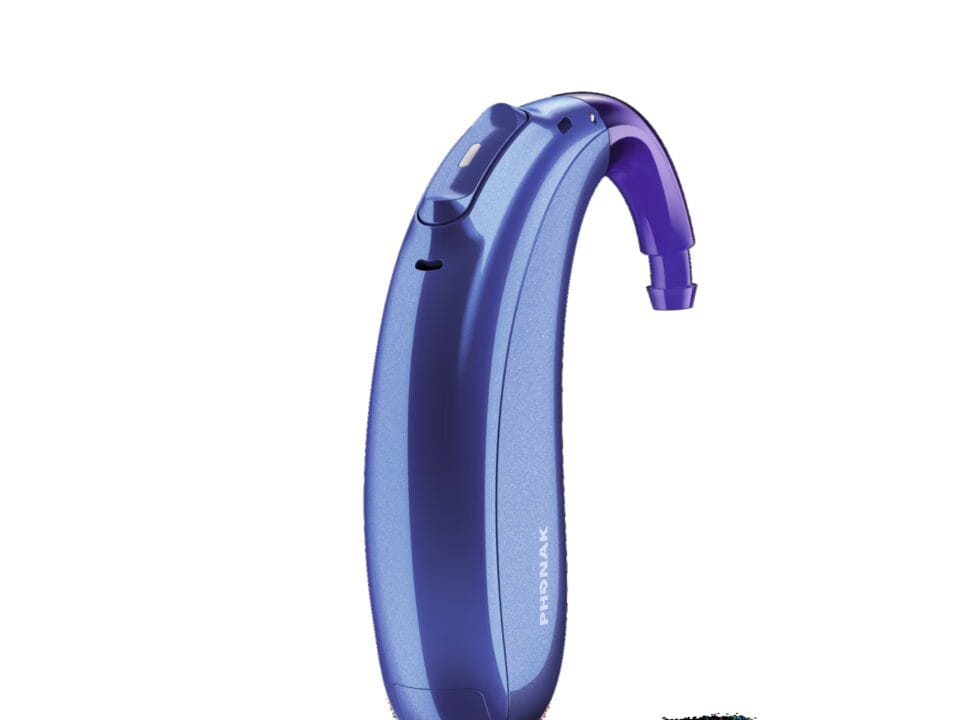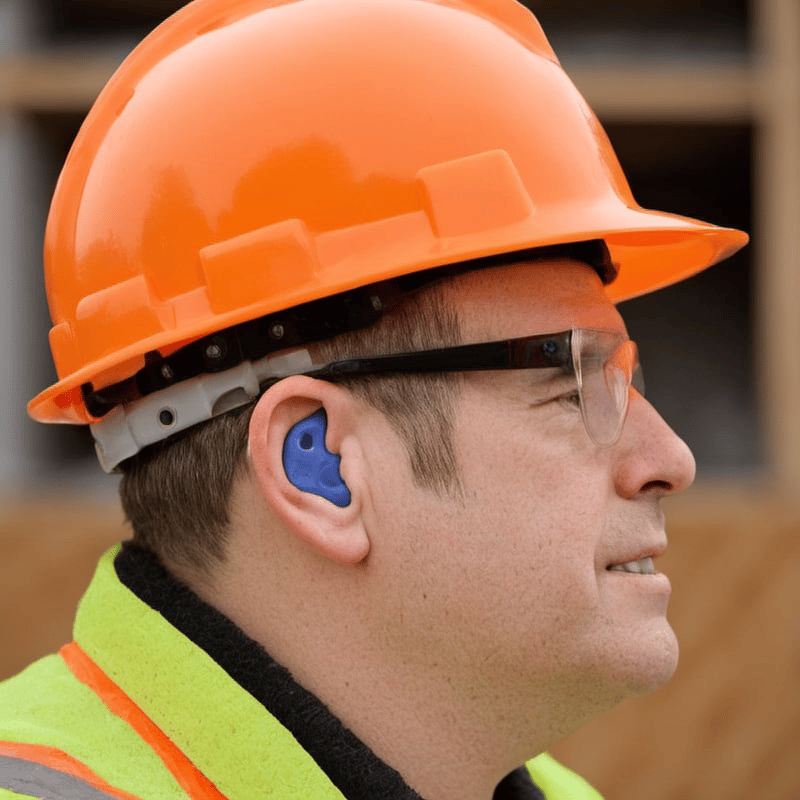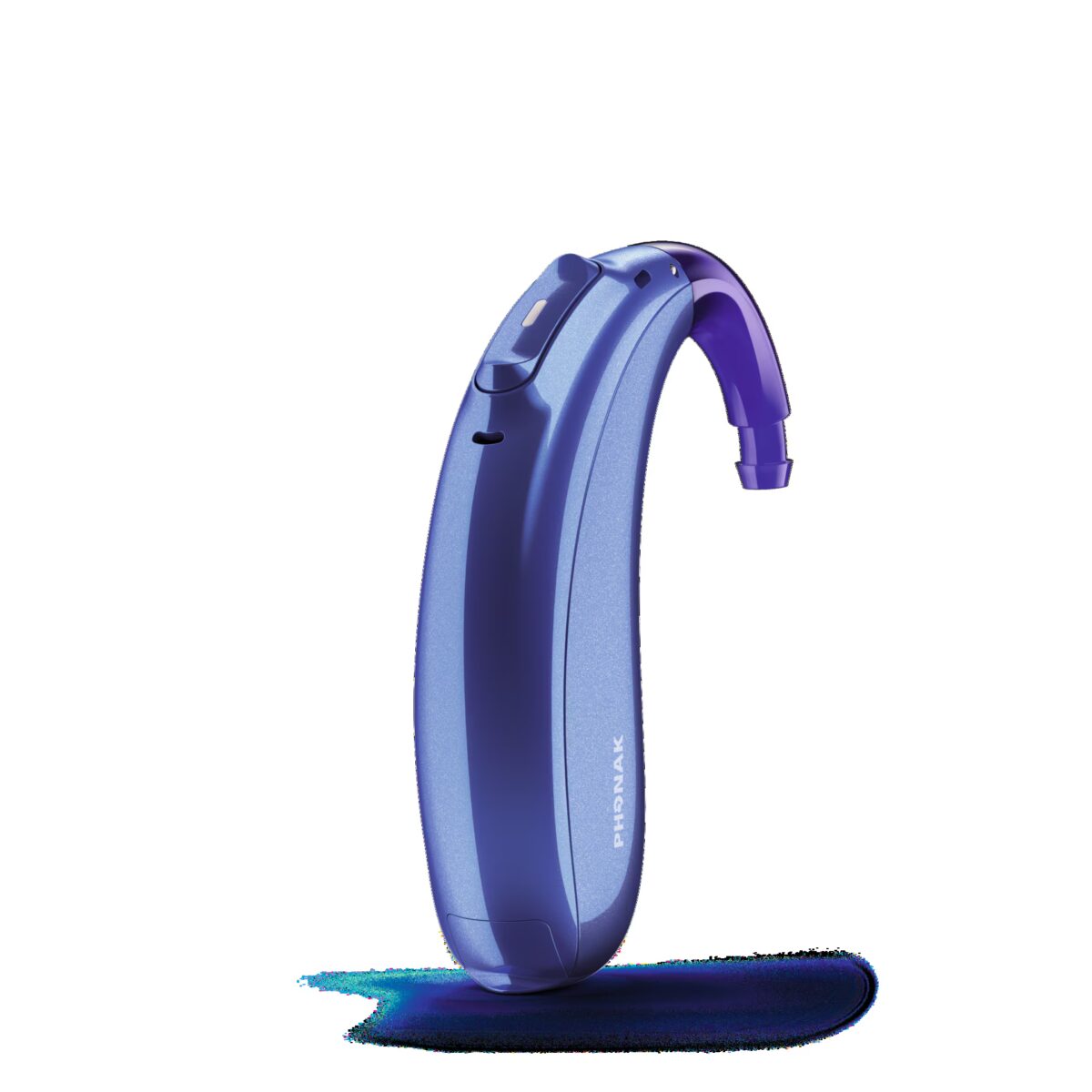
If you’re struggling to understand conversations even when wearing hearing aids, you might have wondered whether a cochlear implant would work better.
It’s a reasonable question. Both devices are designed to improve hearing, both have components worn behind the ear, and both process sound electronically. But they work in fundamentally different ways.
A hearing aid makes sound louder and clearer so your existing hearing system can detect it. A cochlear implant bypasses damaged parts of the inner ear and sends electrical signals directly to the auditory nerve.
That distinction explains why a hearing aid might provide excellent results for someone with substantial hearing loss, yet deliver limited benefit to another person with a similar audiogram.
It also explains why turning up the volume isn’t always the answer.
Cochlear implants are not simply more powerful hearing aids. They’re a different approach to hearing rehabilitation, generally considered when conventional amplification isn’t providing sufficient access to speech.
And despite what many people assume, you don’t necessarily need to be completely deaf to be considered for one.
What Is a Hearing Aid?
A hearing aid is a small electronic device that amplifies and processes sound to compensate for hearing loss.
Modern digital hearing aids are considerably more sophisticated than simple amplifiers.
They use microphones, digital signal processing and miniature speakers to deliver sound at levels appropriate for the individual’s hearing.
A properly fitted hearing aid can:
- Amplify softer sounds that would otherwise be inaudible.
- Provide different amounts of amplification at different frequencies.
- Adjust its processing according to the listening environment.
- Help reduce the effects of competing background noise.
- Improve access to speech and environmental sounds.
- Connect to compatible phones and other audio devices.
Importantly, hearing aids depend on the user’s remaining auditory function.
They deliver acoustic energy into the ear canal, where sound travels through the middle ear to the cochlea.
The sensory structures within the cochlea must still be capable of converting enough of that sound into useful neural information.
For many people with mild, moderate and even severe sensorineural hearing loss, this works very well.
But there’s a limit to what amplification can accomplish.
Why louder sound doesn’t always mean clearer speech
Imagine listening to someone speaking through a badly distorted speaker.
Turning up the volume might make the voice easier to detect, but it won’t necessarily make the words intelligible.
A similar problem can occur with sensorineural hearing loss.
When sensory hair cells and associated structures within the cochlea are damaged, the auditory system may lose both sensitivity and its ability to represent the finer details of sound accurately.
Speech can become louder without becoming proportionately clearer.
People sometimes describe this as:
“I can hear that you’re talking, but I can’t understand what you’re saying.”
This is particularly noticeable when trying to follow conversation in restaurants, meetings or other noisy environments.
It doesn’t automatically mean that a cochlear implant is needed. Sometimes hearing aids simply haven’t been fitted correctly.
That’s why appropriate hearing aid verification and speech testing should come before assuming conventional amplification has reached its limits.
What Is a Cochlear Implant?
A cochlear implant is an electronic medical device designed to provide access to sound by electrically stimulating the auditory nerve.
Unlike a hearing aid, it requires surgery.
A cochlear implant has two main components.
The external component usually includes microphones, a sound processor and a transmitting coil. Depending on the system, the processor may sit behind the ear or be worn off the ear.
The internal component is surgically implanted beneath the skin. It includes a receiver-stimulator connected to an array of electrodes inserted into the cochlea.
Rather than simply amplifying sound, the system converts acoustic information into patterns of electrical stimulation.
How does a cochlear implant work?
The process involves several stages.
- Microphones detect sound. The external processor collects sounds from the surrounding environment.
- The processor analyses the sound. Digital technology divides and processes the sound information, including aspects of its frequency and intensity.
- Information is transmitted to the implant. A transmitting coil sends coded signals through the skin to the internal receiver.
- Electrodes stimulate the auditory nerve. The implanted electrode array delivers carefully controlled electrical impulses within the cochlea.
- The brain interprets the signals. The auditory nerve carries this information to the brain, which gradually learns to interpret it as meaningful sound.
The implant effectively bypasses much of the normal sensory transduction process that relies on functioning cochlear hair cells.
However, it still depends on the auditory nerve and other parts of the auditory pathway being capable of processing the signals.
A cochlear implant does not restore normal biological hearing.
The electrical information it delivers is different from the rich acoustic information produced by a healthy cochlea.
Nevertheless, for appropriately selected patients, this information can provide substantially better access to speech than conventional hearing aids.
The US National Institute on Deafness and Other Communication Disorders provides a useful explanation of cochlear implant technology and its limitations.
Cochlear Implant vs Hearing Aid: The Key Differences
Although both devices address hearing loss, their suitability depends on different factors.
| Feature | Hearing aid | Cochlear implant |
|---|---|---|
| How it works | Amplifies and processes acoustic sound | Converts sound into electrical stimulation of the auditory nerve |
| Surgery required | No | Yes |
| Where it works | Through the existing auditory system | Bypasses damaged cochlear sensory structures |
| Typical candidates | People who benefit sufficiently from acoustic amplification | People whose hearing loss is not adequately managed by hearing aids |
| Natural hearing | Does not surgically alter the inner ear | Surgery can reduce or eliminate remaining natural hearing in the implanted ear |
| Programming | Hearing aid fitting and verification | Specialist implant programming, often called mapping |
| Rehabilitation | Adjustment, counselling and communication strategies | Mapping, auditory adaptation and rehabilitation |
| Hearing in background noise | Varies with hearing loss and device performance | Often improves, but remains challenging for many users |
| Sound quality | Uses amplified acoustic hearing | Electrical hearing may sound unfamiliar or different |
| Maintenance | Batteries, cleaning, servicing and replacement | External processor maintenance, specialist follow-up and possible future upgrades |
Neither device is universally better.
The right choice depends on the nature of the hearing loss, the amount of usable residual hearing, speech understanding, medical suitability and individual communication goals.
When Are Hearing Aids the Better Option?
For most people seeking help with hearing loss, conventional hearing aids are the first option to consider.
They are non-surgical, adjustable and effective across a wide range of hearing difficulties.
Hearing aids are particularly useful when the cochlea retains enough function to make amplified sound meaningful.
The severity of the hearing loss is important, but it doesn’t tell the whole story.
Someone with moderately severe hearing loss might achieve excellent speech understanding with appropriately fitted hearing aids.
Another person with a similar hearing profile might struggle to understand speech despite receiving enough amplification.
That difference is why audiologists assess more than simply the quietest tones someone can hear.
The importance of real-ear measurement
Before concluding that hearing aids aren’t working, it’s important to establish whether they’re delivering the correct amplification.
At The Audiology Place, we use Real Ear Measurement (REM) to verify hearing aid fittings.
This involves placing a thin probe microphone inside the ear canal to measure the actual sound reaching the eardrum.
Those measurements are compared with evidence-based prescriptive targets for the individual’s hearing loss.
Without verification, a hearing aid may be providing too little amplification at frequencies critical for speech understanding.
The person might conclude that hearing aids cannot help them, when the real problem is an inadequate fitting.
However, even optimally programmed hearing aids cannot overcome every form of cochlear damage.
Once amplification has been appropriately verified, speech understanding becomes an important measure of whether a different hearing solution should be considered.
Read more about real-ear measurement and hearing aid fitting at The Audiology Place.
When Should You Consider a Cochlear Implant?
Historically, cochlear implants were primarily considered for people with profound hearing loss in both ears.
That is no longer the whole picture.
Modern cochlear implant candidacy has expanded to include some people with substantial residual hearing, asymmetric hearing loss and single-sided deafness.
The central question is increasingly:
How well can this person understand speech with appropriately fitted hearing aids?
You may benefit from a cochlear implant assessment if:
- Your hearing aids make speech louder but not sufficiently clearer.
- You struggle to understand conversations despite appropriate amplification.
- You depend heavily on lip-reading even when wearing hearing aids.
- You regularly miss words despite being able to hear someone’s voice.
- One ear has considerably poorer speech understanding than the other.
- Your hearing has progressively deteriorated and conventional amplification provides diminishing benefit.
- Your audiologist identifies poor aided speech recognition.
These symptoms don’t establish that you’re eligible for a cochlear implant.
They indicate that a more detailed assessment may be appropriate.
New Australian research: the 60/70 referral guideline
An important Australian study published in March 2026 offers a more practical way for audiologists to identify adults who may benefit from cochlear implant evaluation.
Researchers from Ear Science Institute Australia and the University of Western Australia reviewed clinical data from 1,141 adults referred for cochlear implant assessment.
They investigated the usefulness of different hearing and speech-recognition measurements in predicting cochlear implant candidacy.
The researchers proposed an Australian-adapted 60/70 referral rule.
Under this approach, referral for specialist assessment should be considered when either ear demonstrates:
- An unaided pure-tone average of at least 60 dB HL, measured across 500, 1,000 and 2,000 Hz; and
- An unaided phoneme recognition score of 70% or less.
In the study population, this combination identified candidates with 87% sensitivity and 78% specificity.
Those figures mean the criteria were useful as a screening tool, but were not perfectly accurate.
Some people who might benefit from a cochlear implant would not meet those thresholds.
Importantly, the 60/70 rule is a proposed referral guideline, not a definitive eligibility requirement or a rule for approving surgery.
The researchers were adapting the established American 60/60 approach to Australian speech-testing practices.
The result is particularly relevant because Australian audiologists may use phoneme scores rather than the whole-word recognition measures commonly referenced in US guidance.
The study was published in the International Journal of Audiology.
Scientific research:Sucher et al. (2026), Reviewing the 60/60 Referral Criteria for Cochlear Implant Candidacy Evaluation in the Australian Context.
Why speech understanding matters more than an audiogram alone
An audiogram tells an audiologist the softest sounds a person can detect at different frequencies.
It doesn’t fully describe how effectively someone understands speech.
Consider two hypothetical patients.
Patient A has severe hearing loss but can repeat most conversational speech when wearing properly fitted hearing aids.
Patient B has a similar degree of hearing loss but understands only a small proportion of speech even with verified amplification.
Their audiograms may look broadly similar, but their functional hearing needs are very different.
Patient B is more likely to warrant investigation of cochlear implant suitability.
This distinction is reflected in the American Cochlear Implant Alliance’s 2024 adult candidacy recommendations, which emphasise individual ear assessment, optimised hearing aids and aided speech recognition.
Read the 2024 adult cochlear implant candidacy guidelines.
Can You Use a Cochlear Implant and a Hearing Aid Together?
Yes. In fact, this is an established approach to treating certain types of hearing loss.
It’s known as bimodal hearing.
A person using bimodal hearing typically wears a cochlear implant in one ear and a conventional hearing aid in the other.
The cochlear implant provides electrical stimulation, while the hearing aid provides acoustic amplification.
The brain combines information from both ears.
Why would someone use both devices?
Different forms of hearing can provide complementary information.
A cochlear implant may offer improved access to speech information in an ear that cannot understand speech effectively with amplification alone.
Meanwhile, the opposite ear may still benefit from acoustic hearing, particularly at lower frequencies.
Together, they may help with:
- Understanding speech in background noise.
- Hearing a broader range of sound information.
- Perceiving aspects of pitch and sound quality.
- Identifying where sounds originate.
- Improving everyday communication.
A 2024 systematic review examined bimodal hearing in adults and found that combining a cochlear implant with a contralateral hearing aid can provide speech-perception advantages, particularly in noisy environments.
The benefits vary between individuals and depend partly on residual hearing and how effectively the devices are programmed together.
Scientific research:State-of-the-Art on the Impact of Bimodal Acoustic Stimulation on Speech Perception in Noise in Adults: A Systematic Review.
Can a hearing aid and cochlear implant work in the same ear?
In selected patients, yes.
This is called electric-acoustic stimulation, or EAS.
Some people retain useful low-frequency hearing but have very poor high-frequency hearing.
Specialised systems can combine acoustic amplification for residual low-frequency hearing with electrical stimulation for higher-frequency information.
This is sometimes referred to as hybrid hearing.
However, preserving natural hearing during cochlear implant surgery is not guaranteed.
Whether EAS is suitable depends on the person’s hearing profile, anatomy and the recommendations of the specialist cochlear implant team.
Do Cochlear Implants Work Better Than Hearing Aids?
For appropriately selected people who receive insufficient benefit from hearing aids, cochlear implants can produce substantial improvements in speech recognition.
But the results vary, and it’s important not to treat cochlear implantation as a guaranteed restoration of hearing.
What does the research show?
A major Australian-led scoping review published in PLOS ONE in 2020 examined outcomes across 201 studies of adults receiving cochlear implants.
The review included studies from a range of countries and clinical settings.
Across studies with sufficient data, average word-perception scores improved from approximately:
8.2% before implantation to 53.9% after implantation.
The researchers also reported that approximately 82% of adults who had developed hearing loss after acquiring spoken language achieved a speech-perception improvement of at least 15 percentage points.
These are substantial results.
However, they shouldn’t be interpreted as a prediction for any particular patient.
The studies used different assessments, populations and follow-up periods, and the review was not a single randomised head-to-head comparison between cochlear implants and hearing aids.
Outcomes varied considerably.
Some people achieved very high speech-recognition scores, while others experienced more limited improvement.
Scientific research:Boisvert et al. (2020), Cochlear Implantation Outcomes in Adults: A Scoping Review.
Why don’t cochlear implants restore normal hearing?
The normal cochlea contains thousands of inner and outer sensory hair cells organised to analyse the complex frequency structure of sound.
A cochlear implant provides information through a much smaller number of stimulating electrode contacts.
Although modern processing strategies are sophisticated, the electrical signal cannot reproduce every feature of normal cochlear processing.
This is particularly relevant to pitch, music and listening in background noise.
Someone using a cochlear implant may develop excellent speech understanding in a quiet room while still experiencing difficulties at a busy restaurant.
Music may sound different because electrical stimulation conveys some aspects of pitch and timbre less precisely than a healthy auditory system.
Nevertheless, many people develop substantial improvements in their ability to communicate.
The brain’s capacity to adapt to new auditory information plays an important role in those outcomes.
What Does Hearing Through a Cochlear Implant Sound Like?
There’s no universal experience.
People who receive cochlear implants often describe the initial sound as unfamiliar.
Some report that speech sounds electronic, robotic or distorted when the device is first activated.
Others find certain voices unusually high-pitched or difficult to distinguish.
Over time, many users become better at interpreting these electrical signals.
The brain learns relationships between patterns of stimulation and familiar sounds.
This adjustment can take weeks or months, and improvement may continue for longer.
However, not everyone’s experience is the same, and some listening difficulties can persist.
It’s also worth recognising that someone born with profound hearing loss may have a very different experience from an adult who previously had normal hearing.
The underlying auditory history matters.
What Happens During Cochlear Implant Assessment?
Getting a cochlear implant involves considerably more than selecting a device.
The process typically includes several stages.
Step 1: Comprehensive hearing assessment
An audiologist establishes the type, degree and configuration of hearing loss.
Testing generally includes pure-tone audiometry and speech-recognition measures.
The clinician will also discuss how hearing loss affects everyday communication.
Step 2: Assessment of hearing aid benefit
Before determining that hearing aids are insufficient, their performance needs to be assessed.
This may involve verifying hearing aid fittings and conducting speech testing while the patient wears appropriately programmed devices.
The aim is to understand how much useful speech information the hearing aids provide.
Step 3: Referral to a specialist cochlear implant team
If the results suggest possible candidacy, the patient can be referred for specialist evaluation.
This normally involves an audiologist experienced in cochlear implantation and an ear, nose and throat surgeon.
The team may also involve speech pathologists, rehabilitation clinicians and other professionals.
Step 4: Specialist investigations
The implant team may conduct detailed aided speech-perception testing, medical examinations and imaging.
CT or MRI imaging may be required to assess the anatomy of the inner ear and auditory pathway.
The team will discuss the likely benefits, limitations and risks of implantation.
Step 5: Surgery
Cochlear implant surgery is performed under general anaesthesia.
The surgeon places the internal receiver beneath the skin and inserts the electrode array into the cochlea.
According to Australia’s Healthdirect, the procedure generally takes one to three hours.
Some patients stay in hospital overnight, although arrangements vary.
Step 6: Activation and programming
The cochlear implant isn’t simply switched on during surgery and immediately used like a hearing aid.
After surgery, the external processor is fitted and activated according to the implant team’s clinical protocol.
Activation may occur relatively soon after surgery or several weeks later, depending on the patient’s circumstances and the service.
An implant audiologist then programs the electrical stimulation delivered by the device.
This is commonly called mapping.
Mapping typically requires multiple appointments as the user adapts to the implant.
Step 7: Auditory rehabilitation
Learning to interpret electrically delivered sound is an important part of successful implantation.
Rehabilitation may involve listening exercises, speech-recognition practice, communication training and regular follow-up.
Research suggests that auditory training can improve some measures of speech understanding in adults receiving cochlear implants.
However, the evidence varies in quality, and the most effective training approach may differ between patients.
Scientific research:Systematic Review of Auditory Training Outcomes in Adult Cochlear Implant Recipients and Meta-Analysis of Outcomes (2024).
What Are the Disadvantages and Risks of Cochlear Implants?
Cochlear implants are established medical devices, but they have limitations that deserve careful consideration.
Surgery and anaesthesia
Unlike hearing aids, cochlear implantation requires an operation under general anaesthesia.
The risks include infection, bleeding and complications associated with surgery.
Facial nerve injury is an uncommon but potentially serious complication.
Loss of residual hearing
Surgery can damage remaining natural hearing in the implanted ear.
Modern surgical techniques and electrode designs aim to preserve residual hearing where possible, but preservation cannot be guaranteed.
This can be an important consideration for people who still have useful acoustic hearing.
Meningitis risk
Cochlear implant recipients have an increased risk of certain forms of bacterial meningitis.
Vaccination, particularly against pneumococcal disease, is therefore an important consideration before surgery.
Patients should follow the vaccination recommendations of their implant team and treating doctor.
Sound quality and performance limitations
Cochlear implants do not provide normal hearing.
People may continue to experience difficulties understanding speech in background noise, distinguishing some voices or appreciating music.
Ongoing maintenance
The internal implant is designed for long-term use, but the external sound processor requires ongoing maintenance.
Batteries, microphones, cables and other components may need servicing or replacement.
Processor upgrades may also become relevant as technology changes.
MRI considerations
Many modern cochlear implants are compatible with MRI under specific conditions.
However, those conditions depend on the exact implant model.
Some older systems may require additional precautions or magnet management.
Anyone with a cochlear implant should inform their medical and radiology teams before undergoing MRI.
Are Cochlear Implants Suitable for Children?
Cochlear implants can be an important option for children with significant sensorineural hearing loss who receive insufficient access to sound through hearing aids.
For children, hearing technology decisions are closely connected to speech, language and communication development.
Early access to an appropriate language environment is essential, whether that includes spoken language, sign language or both.
For families pursuing spoken-language outcomes, early identification of hearing loss, appropriate amplification and timely cochlear implant evaluation can be particularly important.
A 2020 review in the International Journal of Pediatric Otorhinolaryngology examined the hearing and speech benefits of cochlear implantation in children.
The researchers found strong evidence supporting the benefits of early implantation for appropriate candidates, although outcomes were influenced by several factors, including age at implantation, additional medical conditions and social circumstances.
Scientific research:Hearing and Speech Benefits of Cochlear Implantation in Children: A Review of the Literature.
Does every child with severe hearing loss need an implant?
No.
The decision depends on the child’s hearing, benefit from hearing aids, medical circumstances, communication needs and family preferences.
A diagnosis of severe hearing loss does not automatically mean that a cochlear implant is the most appropriate option.
Nor should cochlear implantation be presented as the only valid approach to supporting a deaf child’s development.
Families should receive balanced information about hearing technology, communication choices and available supports.
Can Older Adults Get Cochlear Implants?
Yes.
There is no single upper age limit that automatically excludes someone from cochlear implant assessment.
Older adults may benefit significantly from implantation when they have poor speech understanding with hearing aids.
The decision depends on overall health, surgical suitability, hearing history, communication needs and realistic expectations of benefit.
Importantly, chronological age alone is not a reliable measure of likely hearing improvement.
The 2020 Australian-led scoping review concluded that cochlear implantation can benefit adults of any age who have limited speech-perception ability with conventional amplification.
Older adults should therefore not be dismissed as potential candidates simply because of their age.
What About Cochlear Implants for Hearing Loss in One Ear?
Cochlear implants may also be considered for some people with single-sided deafness or asymmetric hearing loss.
Single-sided deafness generally describes severe or profound hearing loss in one ear with substantially better hearing in the other.
This can interfere with sound localisation and make it difficult to understand speech when competing noise is present.
Traditional management options include routing sound to the better-hearing ear using a CROS hearing aid or certain bone-conduction systems.
These can improve awareness of sounds arriving from the poorer-hearing side.
However, they don’t restore independent auditory input to the poorer ear.
A cochlear implant offers a different approach by providing auditory stimulation to that ear.
For appropriately selected patients, this may improve aspects of speech understanding, spatial hearing and sometimes tinnitus.
Suitability and funding vary, so specialist evaluation is necessary.
How Much Does a Cochlear Implant Cost in Australia?
Cochlear implants involve several different costs, including the implant system, surgery, hospital services, specialist assessments, programming and ongoing maintenance.
However, eligible Australians may be able to access publicly funded cochlear implantation, so the total cost isn’t necessarily something a patient needs to pay personally.
Funding pathways can include:
- Public cochlear implant programs: Eligible patients may receive funded assessment, surgery, implant devices and follow-up services through participating public services.
- Private health insurance: Certain hospital policies may cover the implant and relevant hospital procedures, although benefits, exclusions, waiting periods and out-of-pocket costs vary.
- Department of Veterans’ Affairs: Eligible veterans may qualify for relevant hearing and implant-related funding.
- Hearing Services Program support: Certain eligible recipients can access maintenance services, repairs and replacement parts through Hearing Australia.
- NDIS: Some eligible participants may receive funding for particular hearing-related supports or processor costs, subject to their circumstances and applicable rules.
It’s important to distinguish funding for the original surgery from funding for later maintenance and speech processor upgrades.
For example, the Australian Government Hearing Services Program doesn’t automatically fund an adult’s future processor upgrades.
Funding eligibility should be confirmed with the relevant provider before making treatment decisions.
Further information is available through Hearing Australia’s cochlear implant services and Cochlear Australia’s funding information.
What If Your Hearing Aids Don’t Seem to Work Anymore?
If you’ve reached the point where hearing aids aren’t providing the clarity you need, the next step shouldn’t automatically be buying a more expensive pair.
Nor should you immediately assume that you need a cochlear implant.
The first question is whether your current hearing aids are delivering the best possible result for your hearing.
Several issues can make hearing aids seem less effective:
Changes in hearing: Hearing loss can progress, meaning settings that worked previously may no longer be appropriate.
Incorrect amplification: Hearing aids programmed using manufacturer default settings may not deliver enough sound at important speech frequencies.
Physical problems: Blocked receivers, damaged components, poorly fitting earmoulds or earwax can affect sound delivery.
Limited speech discrimination: Even with correct amplification, the auditory system may no longer be able to interpret speech sufficiently well.
The last possibility is particularly relevant when considering cochlear implantation.
But distinguishing these causes requires more than a quick hearing screen.
Why comprehensive testing matters
A detailed assessment should examine the patient’s hearing thresholds, speech recognition, current hearing aid performan