
An audiologist holds a university qualification in audiology (in Australia, usually a postgraduate Master’s degree, and sometimes a Doctorate) and is trained to assess and manage hearing and balance disorders across all ages. An audiometrist holds a vocational (diploma-level) qualification and typically focuses on adult hearing assessment and hearing aid fitting. Both can provide excellent hearing care, but their scope of practice differs significantly, and knowing which professional you need can save you time, money, and sometimes months of frustration.
Some people see three or four different providers without getting answers, simply because it isn’t clear who is best placed to help with their particular problem. The confusion is understandable. Both professionals work with hearing, both can fit hearing aids, and both might call their workplace an “audiology clinic.” But the differences matter, particularly if you’re dealing with anything beyond straightforward age-related hearing loss.
What Audiologists Are Trained to Do
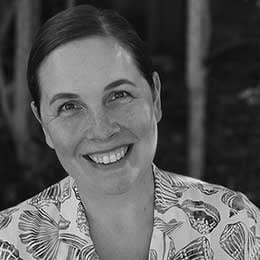
In Australia, audiologists usually complete an undergraduate degree followed by a postgraduate Master’s degree in audiology, with supervised clinical placements, and then a period of supervised clinical practice. Some go on to a Doctor of Audiology; Dr Signe Steers, our principal audiologist, holds one.
This training covers auditory and vestibular (balance) disorders. Audiologists are trained to assess infants through to elderly patients, conduct complex diagnostic testing beyond basic hearing thresholds, manage tinnitus, assess auditory processing disorders, perform vestibular assessment, and provide rehabilitation that goes well beyond hearing aid fitting. The scope includes otoacoustic emissions testing, auditory brainstem response testing, videonystagmography for balance assessment, real ear measurement for hearing aid verification, and diagnostic immittance testing including acoustic reflex thresholds and decay.
When I assess a patient, I’m not just measuring how loud a sound needs to be before you hear it. I’m determining where in your auditory system the problem sits, why it’s occurring, whether it requires medical referral, and what realistic outcomes look like for your specific presentation. That requires understanding of cochlear mechanics, neural transmission, cognitive factors affecting speech perception, and the medical conditions that affect hearing from Meniere’s disease to acoustic neuroma.
Paediatric audiology is also audiologist territory. Testing a six-month-old or assessing a child for auditory processing disorder requires different skills and equipment from fitting hearing aids for age-related hearing loss. If your GP refers a baby or young child for a hearing assessment, it should be with an audiologist.
What Audiometrists Are Trained to Do
Audiometrists complete a vocational, diploma-level qualification, followed by supervised clinical experience. Their training focuses on hearing assessment and hearing aid fitting and management, mainly for adults. A qualified, experienced audiometrist can be excellent within that scope, and some are very thorough with hearing aid fine-tuning.
Their scope of practice is set by their professional body. It centres on hearing assessment and hearing aid services, while complex diagnostic work, auditory processing assessment, vestibular testing, comprehensive tinnitus management and the assessment of babies and young children sit with audiologists.
This doesn’t make them “less than” audiologists. It makes them differently trained for a different scope. If you’re 65 with straightforward age-related hearing loss and you want hearing aids fitted properly, a good audiometrist can absolutely help you. Where the limitations become important is when your presentation isn’t straightforward or when diagnostic questions exist.
When the Difference Actually Matters
Here’s where I see patients fall through gaps because they weren’t seeing the right professional for their needs:
Babies and young children. Age-appropriate testing for babies and young children, such as visual reinforcement and play audiometry, is done by audiologists. At The Audiology Place we offer children’s hearing tests from six months of age.
Tinnitus without hearing loss, or tinnitus that’s significantly more bothersome than the hearing loss would predict. Basic tinnitus counselling might fall within an audiometrist’s scope, but comprehensive tinnitus assessment and management, particularly when it’s complex or distressing, is best done by an audiologist. We’re looking at tinnitus characteristics, hyperacusis screening, psychological impact assessment, and often coordinating care with psychologists, ENT specialists, or other providers.
Auditory processing concerns. If your child (or you) can hear fine on a hearing test but struggle to understand speech in noise far more than expected, can’t follow multi-step instructions, or have difficulty with learning despite normal hearing thresholds, auditory processing disorder might be the issue. This assessment is complex, requires specific equipment and training, and is done by audiologists.
Unclear diagnosis. If your hearing loss is asymmetrical (different between ears), sudden, fluctuating, or associated with dizziness, ear fullness, or pain, you need diagnostic assessment by an audiologist before anyone should be talking about hearing aids. Hearing aids are not the first step if the problem needs medical attention, from impacted wax to a vestibular schwannoma.
Hearing aids haven’t worked previously, or you’re struggling despite wearing them. If you’ve tried hearing aids before without success, an audiologist can conduct speech-in-noise testing, real ear measurement verification, and assess whether the issue is the devices, the fitting, your expectations, or something else entirely. Sometimes we discover the hearing aids were programmed to manufacturer first-fit rather than verified to your ear, sometimes we find auditory processing issues that mean hearing aids alone won’t solve the problem, and sometimes we identify that you actually don’t have enough hearing loss to benefit from amplification yet but need other strategies.
Balance or dizziness concerns related to hearing problems. The vestibular system and the auditory system are intimately connected. If you have hearing loss plus dizziness, vertigo, or balance problems, an audiologist can conduct vestibular assessment to help determine the cause and appropriate management or referral pathway.
How to Check Credentials Directly
There is no government registration of audiologists or audiometrists in Australia (they are not regulated by AHPRA), so professional body membership is the main check. Audiologists are usually members of Audiology Australia (formerly the Audiological Society of Australia) or the Australian College of Audiology (ACAud). Audiometrists are usually members of ACAud, which incorporates the Hearing Aid Audiology Society of Australia (HAASA). Audiology Australia has a “Find an audiologist” directory on its website.
Don’t be afraid to ask directly about qualifications when you book an appointment. A reputable clinic will tell you immediately whether you’ll be seeing an audiologist or audiometrist, what their qualifications are, and whether they’re appropriate for your particular concern. If you’re getting vague answers or pushback when you ask about credentials, that’s a red flag.
Also look for where the professional trained. Australian university audiology programs include the University of Melbourne, Macquarie University, University of Queensland, and several others. If someone tells you they’re an audiologist, you should be able to ask where they completed their degree and get a straight answer.
What About Online Hearing Tests?
This is a separate issue, but relevant. Neither audiologists nor audiometrists can conduct a comprehensive hearing assessment online. You can do basic screening online, but diagnostic assessment requires calibrated equipment in a sound-treated environment, visual inspection of your ears, immittance testing to assess middle ear function, and often speech testing in noise.
Buying hearing aids based on an online test or mail-order assessment is a gamble. Hearing aids programmed without verification using real ear measurement (where we measure what’s actually happening in your ear canal) are essentially guesswork. They might be close to what you need, or they might be significantly under-amplifying or over-amplifying. You won’t necessarily know the difference if you have nothing to compare it to.
The Bottom Line
For straightforward adult hearing loss and hearing aid fitting, both audiologists and audiometrists can provide good care. Choose based on the individual professional’s experience, their clinic’s reputation, and whether they conduct real ear measurement (you should specifically ask about this regardless of who you see).
For anything involving children, complex diagnostic questions, tinnitus, balance issues, auditory processing concerns, or situations where you need clear answers about why your hearing is the way it is, see an audiologist.
The qualification difference isn’t snobbery: it’s scope of practice, and that matters for your outcomes. At The Audiology Place in Epping and Forestville, you’ll always see an audiologist, because we see many complex cases, children and tinnitus presentations.
If you’re unsure which professional you need, call and describe your specific concern. Any reputable practice will tell you honestly if they’re the right fit or if you’d be better served elsewhere. That’s not something you should have to guess about.