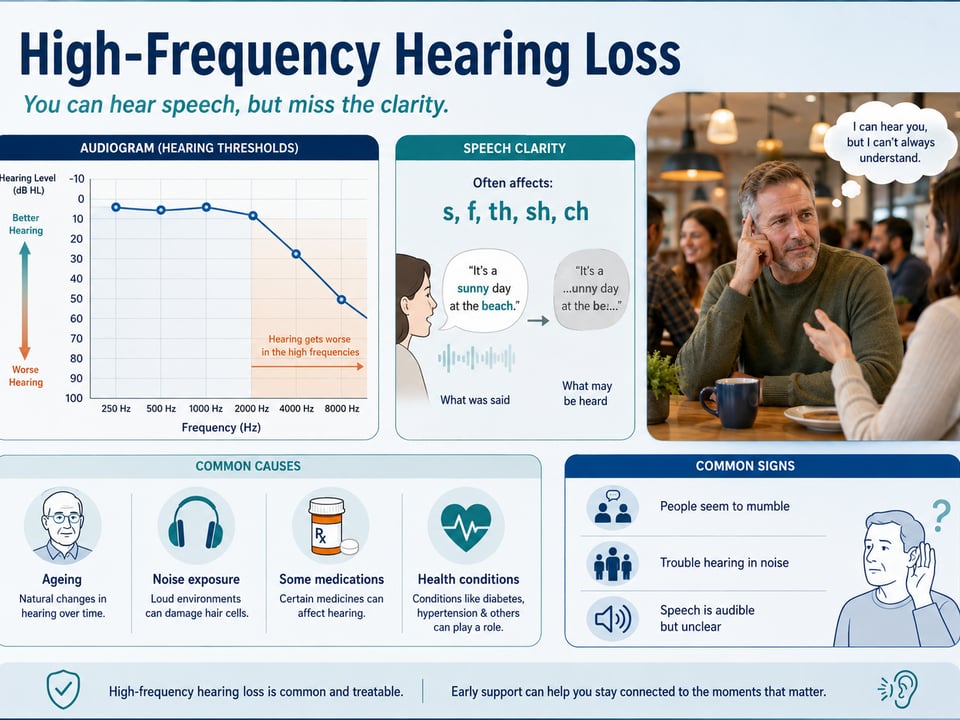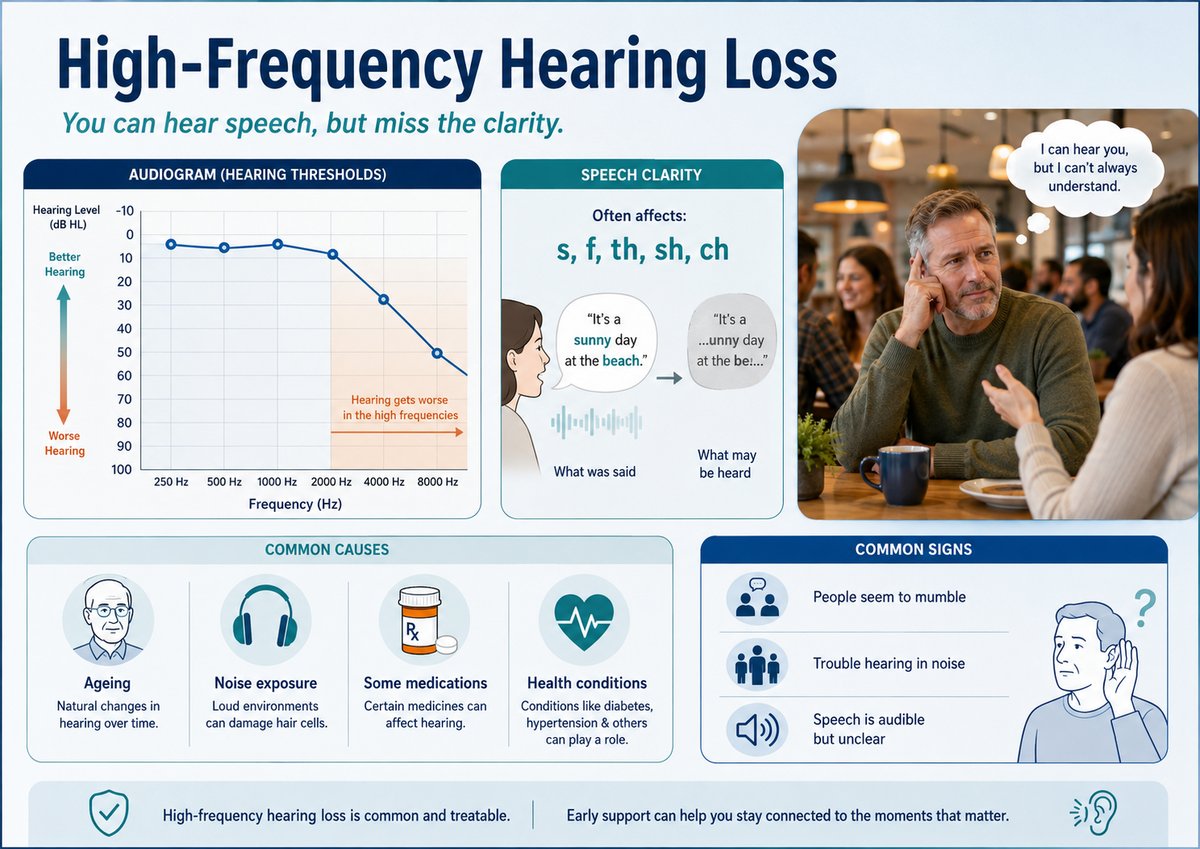

If you can pass a hearing test but still can’t follow conversation in restaurants, you’re not imagining it, and you’re definitely not alone. The mismatch between what a pure tone audiogram shows and what you experience at your daughter’s birthday dinner is one of the most frustrating gaps in hearing care, and it comes down to how your brain separates one voice from the chaos around it.
This ability, called the cocktail party effect, is something most people take for granted until it stops working properly. After fifteen years of fitting hearing aids and running speech-in-noise tests, I can tell you that “I’m fine one-on-one, but put me in a noisy room and I’m lost” is the single most common complaint I hear in clinic. Understanding why this happens, and what actually helps, requires looking beyond the audiogram and into how your auditory system makes sense of competing sound.
What the Cocktail Party Effect Actually Is
British cognitive scientist Colin Cherry named the phenomenon in 1953 after observing how people at parties could focus on a single conversation despite dozens of other voices, clinking glasses, and background music. It’s a remarkable feat of neural processing that we perform constantly without conscious effort, at least when the system is working as designed.
Your brain doesn’t just passively receive sound. It actively constructs auditory scenes by grouping acoustic elements that likely belong together and segregating those that don’t. In 1990, psychologist Albert Bregman formalised this as “auditory scene analysis,” describing the specific cues your brain uses to pull voices apart: shared fundamental frequency (the pitch of someone’s voice), synchronised onsets (sounds that start at the same moment), spatial location (where the sound is coming from), and continuity over time.
When you’re listening to your partner across a restaurant table, your brain is using all these cues simultaneously. It groups the acoustic frequencies that share the same pitch contour, that arrive from the same location in space, and that follow the rhythm and continuity of a single speaker. Everything else (the couple arguing two tables over, the espresso machine, the background music) gets suppressed, pushed into the background of your conscious awareness.
When the System Breaks Down: Two Types of Masking
Not all noise interferes with speech in the same way, and the distinction matters for both diagnosis and treatment.
Energetic masking is the simpler problem: noise physically covering up the speech signal. Think of a loud ventilation system or traffic rumble that makes softer speech sounds inaudible. The acoustic energy of the noise overlaps with the frequencies you need to hear speech, particularly consonants in the 2000–4000 Hz range. If the noise is loud enough, it doesn’t matter how well your brain can separate sound sources. The information simply isn’t reaching your ear.
Informational masking is more insidious. This happens when the noise itself is similar to what you’re trying to hear, usually other people talking. Even when the competing voices are quieter than the person you’re listening to, they can interfere with your brain’s ability to parse the acoustic scene. The grouping cues overlap. Multiple voices share similar pitch ranges, similar spectral content, similar temporal patterns. Your auditory cortex has to work much harder to decide which syllable belongs to which speaker.
Research by Mesgarani and Chang, published in Nature in 2012, used direct recordings from the auditory cortex in surgical patients and found something remarkable: neurons in the auditory cortex actually represent the voice you’re attending to while actively suppressing the competing talker. Your brain is constantly making a choice about what to amplify and what to filter out. When that process fails, either because the acoustic cues are degraded or because the competing voices are too similar, comprehension collapses.
Why Hearing Loss Makes Everything Worse
Even mild hearing loss fundamentally disrupts the cues your brain relies on for auditory scene analysis. The outer hair cells in your cochlea act as biological amplifiers that sharpen frequency tuning. When they’re damaged, the cochlear filters broaden. You lose spectral resolution, the ability to distinguish between sounds that are close together in pitch.
This smearing effect means that the acoustic signatures that should help you separate one voice from another become muddied. Synchronised onsets blur. Pitch cues overlap. Spatial information degrades because your brain needs accurate timing differences between your two ears to localise sound, and hearing loss disrupts those microsecond-level cues.
The practical consequence shows up starkly in speech-in-noise testing. We use tests like the QuickSIN (Quick Speech in Noise) or adaptive sentence tests to measure how much louder speech needs to be than background noise for you to understand it. Normal hearing typically requires a signal-to-noise ratio around -2 dB, meaning you can understand speech even when it’s quieter than the noise around it. With hearing loss, you might need the speech to be +5 dB or more above the noise.
Here’s why a few decibels matter so much: on the steep part of the speech intelligibility curve, a 1 dB improvement in signal-to-noise ratio can translate to several percentage points of word recognition. The difference between catching 60% and 75% of what someone says is the difference between exhausting guesswork and relatively comfortable conversation.
What Actually Helps: Technology and Strategy
This is where directional microphones earn their keep. Modern hearing aids use multiple microphones to create a polar pattern that preferentially amplifies sound from in front of you while reducing sound from the sides and behind. The technology has improved dramatically even in the past five years. Adaptive directionality adjusts in real time, and some premium devices can form narrow beams toward specific speakers.
But directionality is not magic. It typically improves signal-to-noise ratio by 3–5 dB in ideal conditions, which sounds modest until you remember that speech intelligibility curve. Those few decibels can mean the difference between giving up on the conversation and actually participating in dinner with your family. It won’t restore normal auditory scene analysis (your brain’s processing is still working with degraded input), but it tips the scales enough to matter.
When I’m fitting hearing aids, I verify directional benefit on real-ear measurement (REM) and with aided speech-in-noise testing, because individual ear canal acoustics and hearing loss configurations affect how much benefit you’ll actually get. Not everyone responds the same way, and generic manufacturer claims about “95% noise reduction” are meaningless without personalised verification.
Practical Steps You Can Take Now
Whether you’re pursuing treatment or simply trying to navigate social situations more successfully, these strategies come directly from what actually works in clinical practice:
Choose your position carefully. Sit with your back to the wall so competing noise sources are in front of you where you can see them. Your brain integrates visual cues (lip reading, facial expressions) to improve comprehension, sometimes by as much as 20%. Avoid sitting in the middle of the room where noise comes from all directions.
Request specific seating. Ask for a corner table or booth rather than the centre of a dining room. Padded booths provide some acoustic absorption. Avoid sitting near the kitchen, bar, or loudspeakers.
Time your visits. Early dinners (5:30–6:30 pm) are typically quieter than peak times. Weekday lunches are often easier than weekend brunches.
Reduce the distance. Sound intensity drops with distance. If you’re struggling to hear someone across a large table, moving even one seat closer makes a measurable difference.
Be direct about your needs. “I have trouble hearing in background noise. Can we move to a quieter spot?” is a perfectly reasonable request. Most people are accommodating when you’re specific rather than just saying “What?” repeatedly.
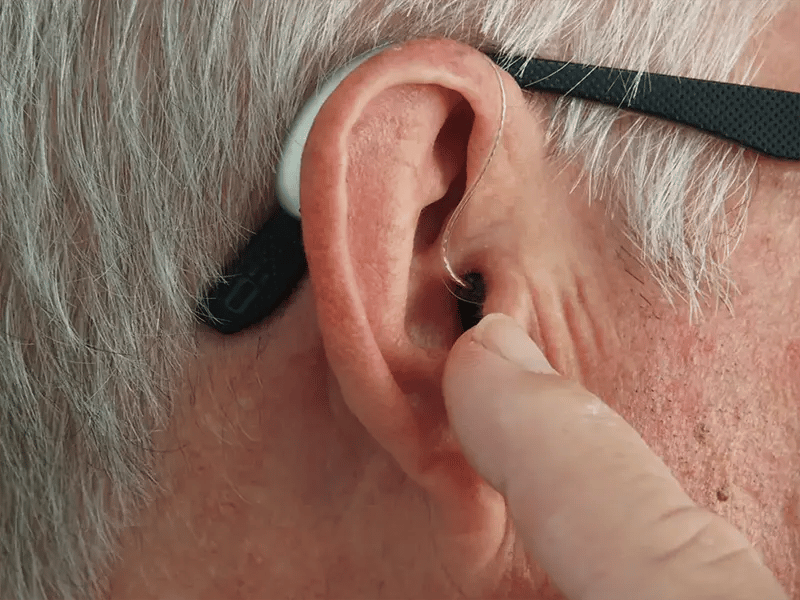
If you’re already wearing hearing aids and still struggling in noise, that deserves a proper reassessment. We should be checking that devices are programmed correctly with REM, that directionality is functioning and verified, and that you’re using appropriate programs for different environments. Sometimes the issue is inadequate amplification in the high frequencies where consonants live. Sometimes it’s a device limitation: entry-level hearing aids typically have less sophisticated noise management and directionality than premium models.
When to Seek Assessment
If you’re avoiding restaurants, family gatherings, or meetings because you can’t follow conversation, it’s time for a proper speech-in-noise evaluation, not just a beep test. Standard audiometry can look entirely normal while speech-in-noise scores reveal significant functional impairment.
At The Audiology Place, a comprehensive assessment includes pure tone audiometry, speech testing in quiet and in noise, and tympanometry to rule out middle ear issues. We’re independent, so device recommendations are based on your actual performance and needs, not sales targets or manufacturer partnerships. Some patients need premium technology with sophisticated directionality and noise reduction; others do perfectly well with mid-range devices and good counselling about communication strategies.
The cocktail party problem is fundamentally a brain problem that gets worse with hearing loss. We can’t restore your 25-year-old auditory cortex, but we can improve the signal it receives and give you the tools and strategies to function better in the environments that matter to you.
If you’re tired of smiling and nodding through conversations you can’t follow, that’s reason enough to book an assessment. Hearing clearly in background noise isn’t a luxury. It’s what keeps you connected to the people and activities that make life worth living.
This article provides general information about hearing and auditory processing. It is not medical advice. If you’re experiencing hearing difficulties, book a comprehensive assessment with an audiologist to evaluate your individual situation.