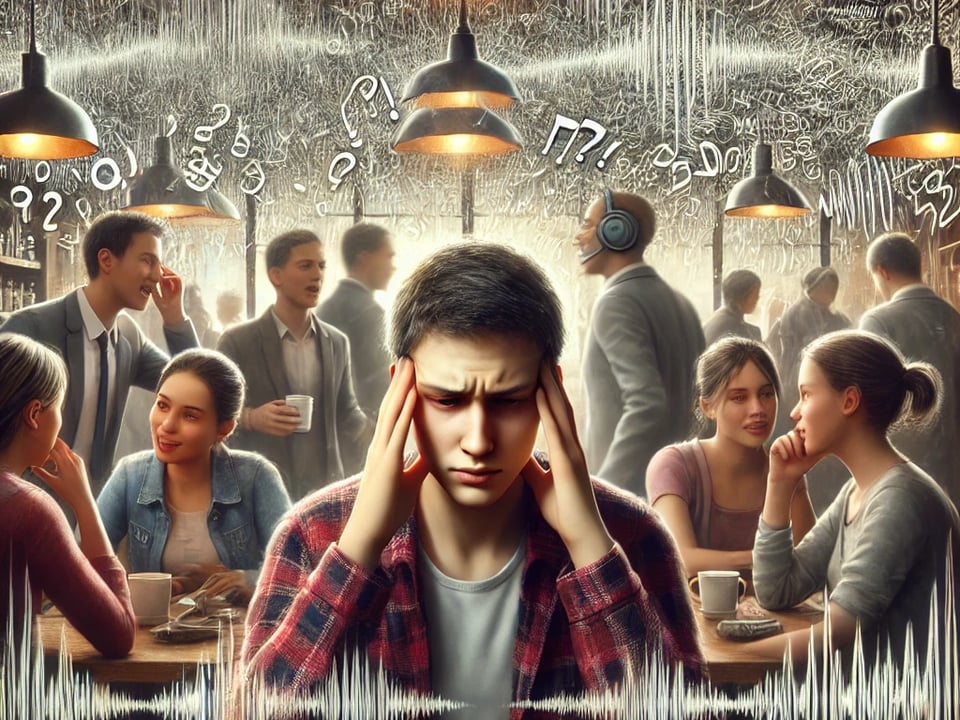


If your child consistently covers their ears at everyday sounds—not just at a fire alarm or hand dryer, but at the vacuum cleaner, the shopping centre, or normal conversation—it’s worth investigating. Covering ears during genuinely loud events is protective and normal. Persistent avoidance of ordinary environmental noise, especially when it affects daily functioning, suggests something more than just preference, and that’s when parents should seek assessment.
I’ve assessed hundreds of children whose parents describe them as having “sensitive hearing,” and the underlying cause varies widely. Some have measurable hyperacusis. Others have sensory processing differences, anxiety that manifests as sound avoidance, or auditory features associated with autism spectrum disorder. A smaller number have auditory processing disorder, though that diagnosis requires careful differentiation and typically can’t be made reliably until a child is at least seven years old. The first step is always the same: rule out a primary hearing problem, then work systematically through the possible contributors.
What Does Normal Sound Sensitivity Look Like?
Young children have a narrower tolerance window than adults, and that’s developmentally appropriate. Toddlers and preschoolers often startle at sudden, loud noises—dogs barking, a door slamming, a motorbike accelerating. They might cover their ears at a birthday party when everyone sings, or complain during a school assembly with a poorly adjusted microphone. These are all reasonable responses to genuinely intense auditory input, especially in a small person whose auditory system is still maturing and whose ability to predict and contextualise sound is limited.
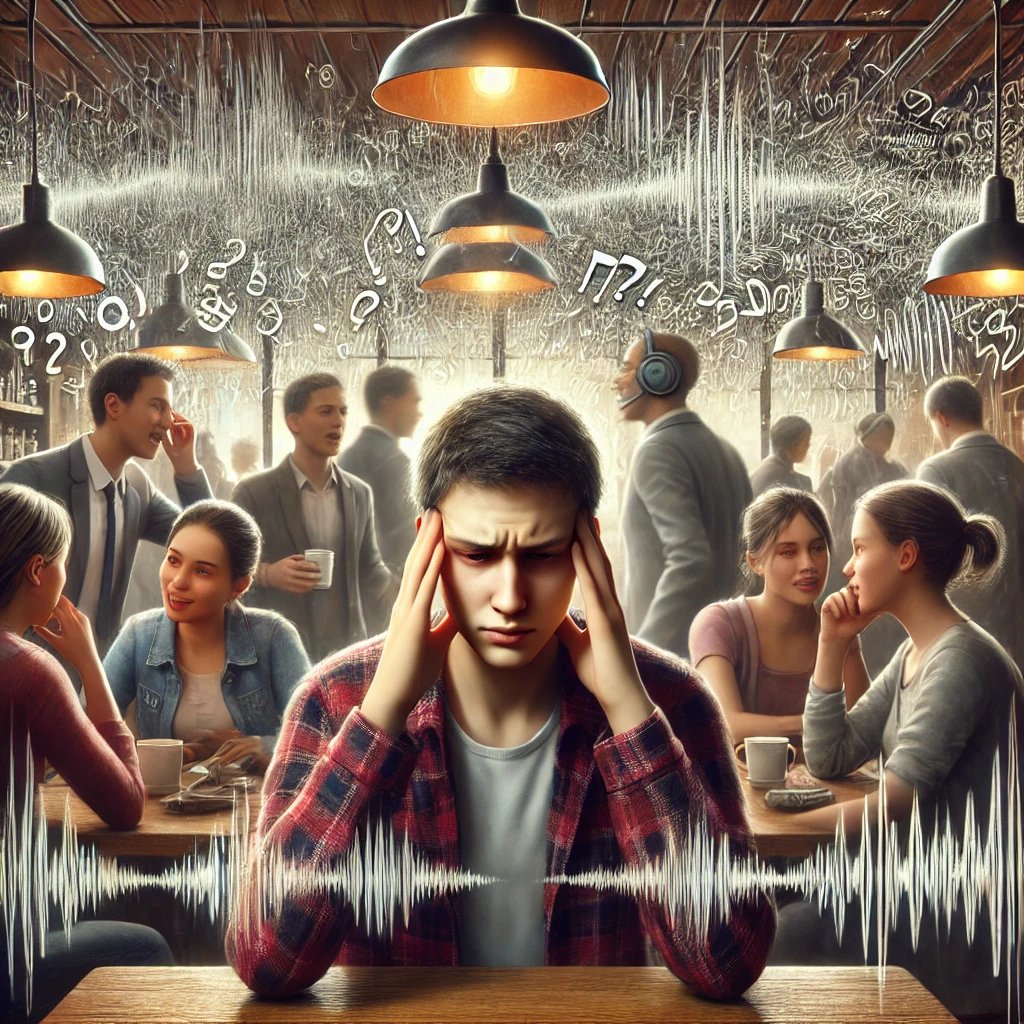
What separates normal sensitivity from clinical concern is consistency, context, and impact. If your child covers their ears only when sound levels exceed roughly 85–90 dB SPL—think blenders, lawn mowers, hand dryers, and peak crowd noise—then their behaviour is protective, not pathological. If they do it during normal speech, moderate television volume, or while walking through a quiet supermarket, that’s a different picture. And if the behaviour leads to school refusal, meltdowns, social withdrawal, or an inability to participate in age-appropriate activities, assessment is warranted regardless of the specific decibel trigger.
Potential Causes of Auditory Sensitivity in Children
Hyperacusis is a reduced tolerance to sound that most people find comfortable. It’s not about hearing being too good—audiometric thresholds are usually normal—but about the loudness perception being disproportionately intense. Children with hyperacusis may have discomfort starting at levels as low as 50–60 dB HL during loudness discomfort level (LDL) testing, well below the typical adult threshold of 90–100 dB HL. Hyperacusis can be idiopathic, or it may occur alongside migraine, head injury, or certain genetic conditions like Williams syndrome.
Sensory processing disorder is broader than auditory sensitivity alone. Children with SPD often have difficulty modulating input across multiple senses—they may also be tactile defensive, avoid certain clothing textures, or struggle with visual clutter. The auditory component presents as difficulty filtering background noise, heightened startle responses, and distress in busy environments like shopping centres or school halls. SPD is not a distinct medical diagnosis in DSM-5 or ICD-11, but it’s widely recognised by occupational therapists and clinicians working with neurodevelopmental presentations.
Autism spectrum disorder frequently includes atypical sensory responsivity, and auditory sensitivity is one of the most commonly reported features by parents. A 2015 study in the *Journal of Autism and Developmental Disorders* found that over 90% of children with ASD had some form of sensory processing difference, with auditory over-responsivity among the most prevalent. Not every child who covers their ears has autism, but if sound sensitivity occurs alongside social communication differences, restricted interests, or repetitive behaviours, it’s worth raising with your GP or paediatrician.
Auditory processing disorder is often conflated with sound sensitivity, but they’re not the same. APD refers to difficulty processing and interpreting auditory information despite normal hearing thresholds, and it typically manifests as trouble following multi-step instructions, poor speech-in-noise performance, and difficulty distinguishing similar-sounding words. Some children with APD do show heightened distractibility or distress in noisy settings, but the core issue is inefficient central processing, not volume intolerance. Formal APD testing isn’t reliable before age seven, because auditory maturation is incomplete before then.
Anxiety can present with auditory hypervigilance. Children who are anxious—whether due to generalised anxiety disorder, trauma history, or acute situational stressors—may become hyper-aware of environmental sounds and misinterpret neutral auditory input as threatening. This often improves with psychological support rather than audiological intervention.
What Assessment Involves
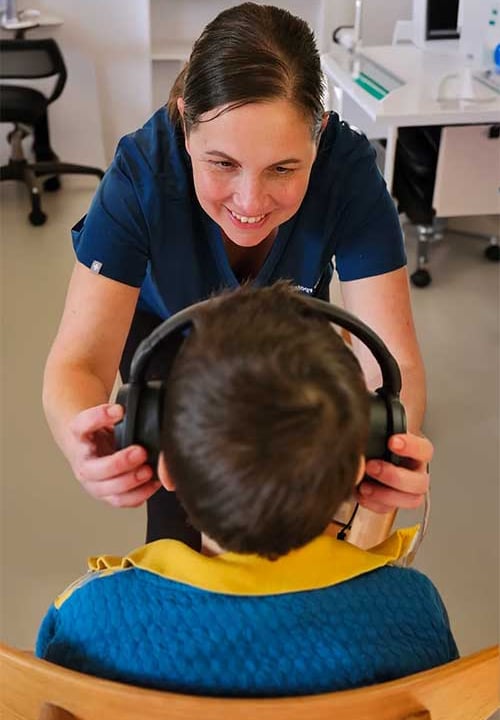
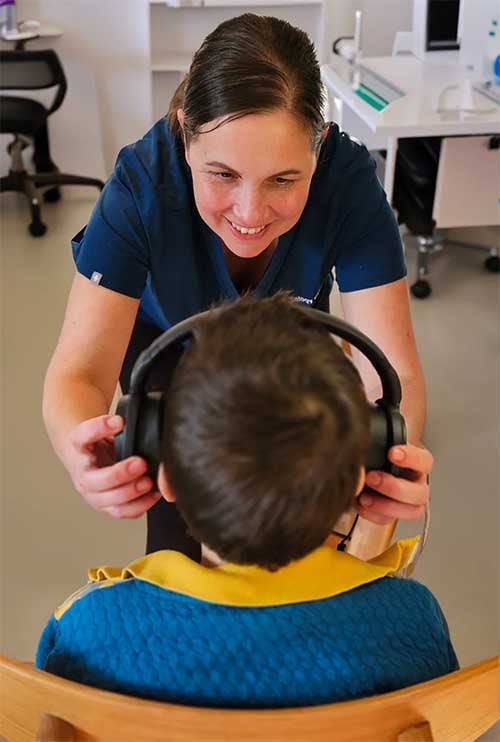
If your child’s sound sensitivity is affecting their daily life, start with a paediatric audiologist. At our clinic, the first appointment is a comprehensive hearing assessment: pure tone audiometry (or play audiometry for younger children), tympanometry to check middle ear function, and otoacoustic emissions to assess outer hair cell function in the cochlea. This establishes whether hearing thresholds are normal and whether there’s any conductive component—like glue ear—that might distort sound quality and contribute to discomfort.
If hearing is normal, the next step is a detailed case history. I ask about the specific situations that trigger distress, whether sensitivity has always been present or emerged after an event, and whether there are other sensory, developmental, or behavioural concerns. I also ask about family history—hyperacusis, migraine, anxiety, and ASD all have genetic components.
Some children tolerate loudness discomfort level testing, which quantifies their threshold for uncomfortable sound. Others—particularly younger or more anxious children—can’t reliably complete it, and I won’t push if it’s causing distress. Questionnaires like the Sensory Profile 2 can provide useful context, and I often refer to occupational therapy or psychology for more detailed sensory or behavioural assessment if the clinical picture suggests SPD or anxiety.
If there’s suspicion of auditory processing issues, I’ll discuss age-appropriate testing options, but I’m transparent with parents: before age seven, what we’re really assessing is auditory development and speech-in-noise performance, not diagnosing APD in the strict sense. Paediatric APD diagnosis requires maturity-adjusted norms and multimodal assessment, and even then, there’s ongoing debate in the field about diagnostic criteria.
When to Seek Help
Seek assessment if your child’s auditory sensitivity is:
– Persistent across multiple settings and not limited to objectively loud events
– Leading to avoidance of normal childhood activities like playgrounds, parties, or school assemblies
– Accompanied by meltdowns, aggression, or significant distress
– Occurring alongside other developmental, sensory, or behavioural concerns
– Worsening over time rather than improving with maturation
It’s also worth seeking assessment if *you’re* worried, even if the behaviour seems borderline. Parental instinct often picks up on patterns that are harder to articulate, and early identification of sensory or developmental differences improves outcomes.
What Happens After Diagnosis?
Management depends on the underlying cause. For hyperacusis, we might use sound therapy or gradual desensitisation, though the evidence base in paediatrics is still developing. For SPD, occupational therapy is usually first-line, often incorporating strategies to improve sensory modulation across multiple domains. If anxiety is the primary driver, cognitive-behavioural therapy or family therapy may be appropriate. If auditory sensitivity is part of a broader ASD presentation, a multi-disciplinary approach—often coordinated by a paediatrician—is the standard.
Rarely, we’ll trial ear protection for specific high-intensity settings, but I’m cautious about overuse. Constant reliance on earplugs or noise-cancelling headphones can paradoxically increase sensitivity over time by reducing auditory system exposure and recalibrating the brain’s tolerance threshold downward. Protection should be strategic—used during unavoidably loud events like concerts or construction—not as a daily crutch.
Most children with auditory sensitivity do not have a serious underlying condition, but persistent, functionally limiting sound avoidance deserves clinical assessment. The good news is that with the right evaluation and management, the majority of children improve, whether through maturation, targeted therapy, or environmental accommodations. If you’re concerned, don’t wait for your child to “grow out of it.” Start with a hearing test, and go from there.