
The decision between rechargeable and battery-powered hearing aids comes down to your daily routine, dexterity, and tolerance for small tasks—not which technology is inherently “better.” After fitting thousands of devices over the years, I can tell you that both systems work reliably when matched to the right person, and the five-year cost difference is negligible enough that it shouldn’t be your primary deciding factor.
What matters more is whether you’re the kind of person who plugs in their phone every night without thinking, or whether you travel to places where power access is unpredictable. Let me walk you through what actually differentiates these technologies in practice, because the marketing material from manufacturers rarely discusses the trade-offs honestly.
How Rechargeable Hearing Aids Actually Work
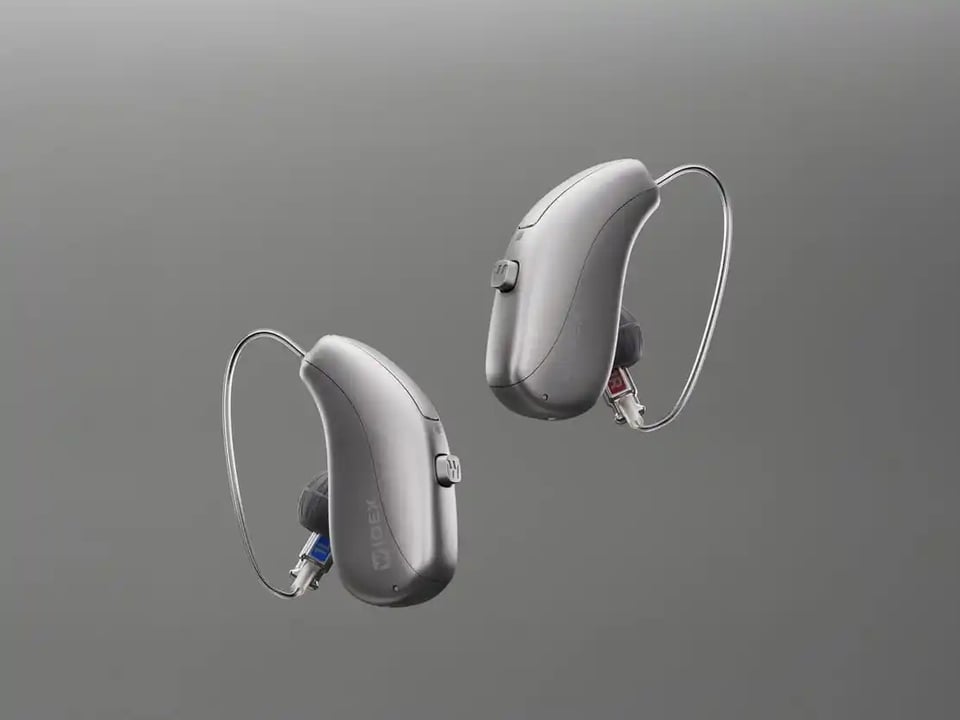
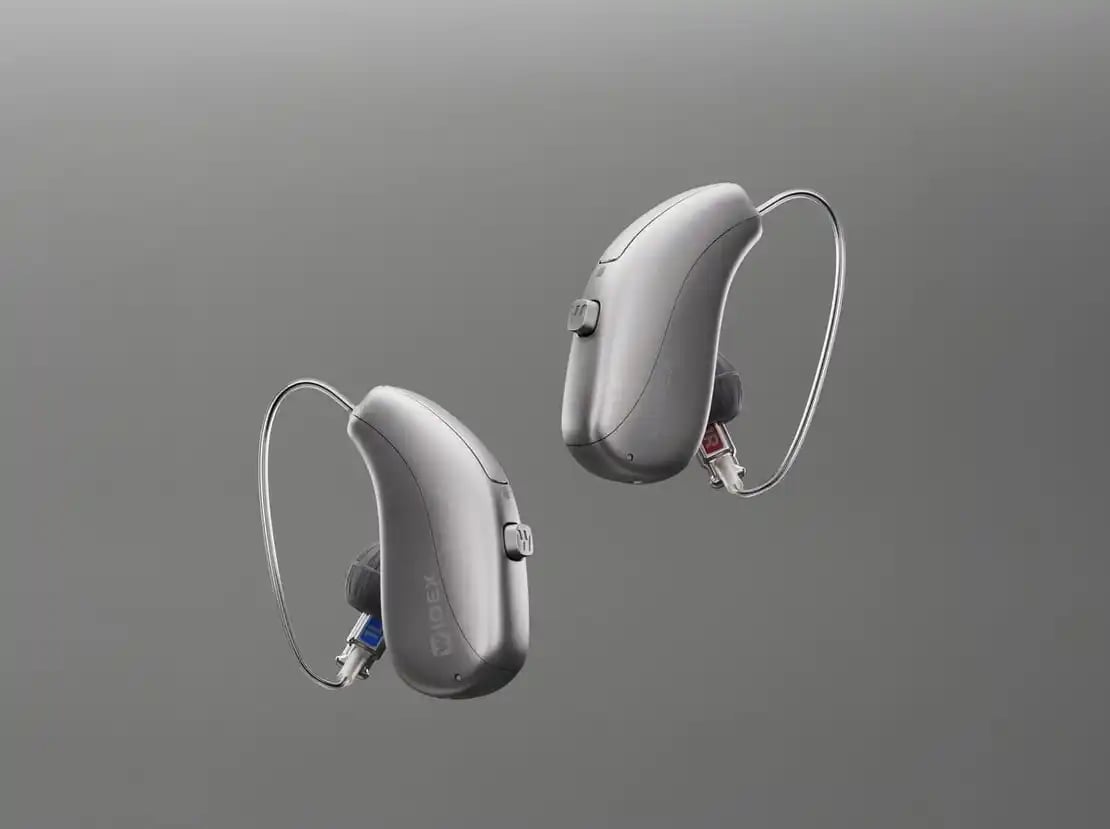
Modern rechargeable hearing aids use sealed lithium-ion batteries, the same core technology in your smartphone. You place the devices in a charging dock overnight—most need four to six hours for a full charge—and they’ll run for 18 to 30 hours depending on how much streaming you do and what amplification level you require. If you’re streaming phone calls or music via Bluetooth for several hours daily, expect to land closer to that 18-hour mark. For someone wearing aids primarily for conversation without heavy streaming, 24-plus hours is typical.
The battery itself is built into the hearing aid and not user-replaceable. It will hold a useful charge for roughly three to five years before degradation becomes noticeable—you’ll start finding the devices don’t quite make it through a full day anymore. At that point, the manufacturer needs to replace the internal battery, which costs between $200 and $400 per device depending on the brand. This isn’t a defect; it’s the natural lifespan of lithium-ion cells. You wouldn’t expect your phone battery to perform like new after four years of daily charge cycles, and the same physics applies here.
Most manufacturers now include the charging case as standard, though premium models sometimes offer portable cases with built-in backup charges—useful if you’re away from mains power but can plan ahead. The environmental argument for rechargeables is straightforward: you’re not throwing away 100-plus disposable zinc-air cells per ear per year, which adds up across the millions of hearing aid users globally.
The Case for Disposable Zinc-Air Batteries
Zinc-air disposable batteries remain the workhorse of the hearing aid world for good reason. They’re available at every pharmacy, many supermarkets, and online. A pack of six typically costs $8 to $12, and depending on the physical size of the battery and your usage pattern, each cell lasts anywhere from three days to two weeks. The smaller the hearing aid, the smaller the battery, and the shorter the lifespan—it’s simple geometry.
Size 10 batteries (the smallest, used in completely-in-canal devices) might give you three to five days. Size 312 (common in receiver-in-canal models) usually delivers five to seven days. Size 13 (older behind-the-ear styles) can push past ten days, and the largest, size 675 (typically used in power BTEs for severe-to-profound loss), might last two weeks. These are averages; heavy streaming or high-gain settings will drain them faster.
The functional advantage is straightforward: if the battery dies, you swap in a new one and you’re operational again in ten seconds. No need to find a power point, no waiting for a charge. For someone who spends weeks at a time in remote areas—I’m thinking of patients who work in mining, do extended hiking trips, or live off-grid—disposables remove the infrastructure dependency. Pack a year’s supply of batteries in a tackle box and you’re sorted.
The dexterity requirement is real, though. Those little tabs you peel off to activate the battery, the fiddly battery door, the need to orient the cell correctly—these become genuine barriers for patients with arthritis, tremor, or reduced vision. I’ve had patients in tears of frustration trying to change batteries with painful hands. It’s not a trivial consideration if you’re over seventy with joint issues.
What the Five-Year Cost Actually Looks Like
Let’s talk numbers, because this is where marketing gets slippery. For disposable batteries, if you’re changing them weekly and paying $10 for a six-pack, you’re spending roughly $85 per ear per year, or $850 over five years. For two ears, that’s $1,700. Add another couple of hundred if your usage is heavier or you’re buying batteries less efficiently.
For rechargeables, the devices themselves often cost slightly more upfront—typically $200 to $500 more per pair, depending on the manufacturer—but this varies and sometimes there’s no difference at all. Then factor in one battery replacement around year four at $300 to $400 per device, so $600 to $800 for a pair.
When you run the numbers, you’re looking at a difference of a few hundred dollars either way over five years—not the dramatic savings or costs that some sources claim. This is why I tell patients the financial argument is essentially a wash. Make the decision based on lifestyle and preference, not trying to save money.
Who Should Choose Rechargeable Hearing Aids
Rechargeables suit people with established routines. If you charge your phone, watch, and toothbrush every night, adding hearing aids to that ritual is effortless. They’re ideal for anyone with dexterity problems—arthritis, Parkinson’s, reduced fine motor control—because docking the devices requires far less precision than changing a tiny battery.
They’re also better for anyone who finds the cognitive load of remembering to buy and carry spare batteries burdensome. I’ve seen patients with early cognitive changes who manage rechargeables beautifully because the routine is simple and visible (the charging dock sits on the bedside table), whereas keeping track of battery supplies became a source of anxiety.
Environmental concerns are legitimate here. If reducing waste matters to you, rechargeables are the more sustainable choice over the lifecycle of the devices, even accounting for the lithium-ion production and eventual disposal.
Who Should Stick With Disposable Batteries
Choose disposables if your schedule is genuinely unpredictable—shift workers, people who travel frequently to places with unreliable power, or anyone whose daily routine varies dramatically week to week. Forgetting to charge your hearing aids when you’re working rotating night shifts can leave you without access to sound during waking hours, whereas disposables give you a swap-and-go solution.
Remote and extended travel still favours disposables, despite the emergence of portable charging solutions. If you’re trekking in Nepal or working on remote stations in the Northern Territory for weeks at a time, batteries and a backup set of aids are more reliable than depending on solar chargers or generator access.
Some patients simply prefer the autonomy. They don’t like the idea of a battery that will eventually need professional replacement, or they’ve had bad experiences with other rechargeable devices failing at inconvenient times. That’s a valid preference.
What We Actually Recommend at The Audiology Place
We fit both systems routinely and don’t have a financial incentive to push one over the other—the manufacturer pricing is essentially equivalent for us, and we’re not trying to sell you batteries down the track. The conversation during your fitting appointment focuses on your daily patterns, your hand function, where you live and work, and what feels manageable.
For most patients over sixty-five with typical urban or suburban lifestyles, rechargeables have become the default recommendation because they genuinely simplify daily management. For younger patients who travel extensively, work in remote locations, or have specifically requested disposables after using them successfully for years, we fit those without hesitation.
We also keep a supply of disposable battery-compatible models for patients who want to trial rechargeables but feel anxious about committing. You can start with disposables and switch to rechargeable models later if your circumstances or preferences change—hearing aids are typically replaced every five to seven years anyway.
The Practical Reality After Thousands of Fittings
The dirty secret of this debate is that most patients adapt to either system within a fortnight and stop thinking about it. The technology anxiety beforehand—”What if I forget to charge them?” or “What if I can’t manage the batteries?”—rarely materialises into ongoing problems once the routine is established.
The patients who struggle are usually dealing with broader issues: cognitive decline that makes any routine difficult to maintain, severe arthritis that impairs both charging dock use *and* battery changing, or chaotic living situations where establishing any health-related routine is challenging. In those cases, we’re often involving family members or carers in the discussion and sometimes looking at assistive listening devices as adjuncts.
If you’re reading this and still uncertain which system suits you, the honest answer is that both will work. Book an appointment and we’ll talk through your specific situation properly—not to upsell you, but because the five-minute conversation about your daily life will give a clearer answer than any amount of general advice online. The best rechargeable hearing aids are the ones you’ll actually wear, whether they plug in at night or run on zinc-air cells you swap out weekly.