
For many older Australians, the cost of hearing aids can be a major concern. Fortunately, the Australian Government’s Hearing Services Program (HSP) provides access to fully subsidised hearing aids and audiology services for eligible pensioners and veterans. To qualify, individuals must hold certain concession or veteran cards, which act as proof of eligibility.
This article explains which cards make you eligible, which cards do not, what the program covers, and what types of hearing aids are included.
Which Pensioner and Veteran Cards Provide Eligibility?
The following concession and veteran cards are recognised by the HSP:
Pensioner Concession Card (Centrelink): The most common eligibility pathway for retirees receiving the Age Pension.
Department of Veterans’ Affairs (DVA) Gold Card: Covers all health conditions, including hearing loss.
DVA White Card: Eligibility applies if the card specifically lists hearing-related conditions.
Repatriation Health Card: In cases where it covers all conditions or explicitly includes hearing loss.
Sickness Allowance Recipients: In certain cases, individuals receiving Sickness Allowance via Centrelink can qualify.
Centrelink Referral from a GP: Some Centrelink recipients may be referred into the program by their doctor.
These cards must be valid and held by the individual, although in some cases a spouse may also qualify under the program if the primary cardholder is eligible.
Important Note: The Commonwealth Seniors Health Card
A common source of confusion is the Commonwealth Seniors Health Card. This card provides discounts on medications and some medical services, but it does not grant eligibility for free hearing aids under the Hearing Services Program. Seniors holding only this card will need to explore other funding options such as private health insurance or self-funding.
What the Hearing Services Program Provides
Eligible pensioners and veterans gain access to a package of services, including:
Comprehensive hearing assessments delivered by accredited audiology providers.
Fully subsidised hearing aids, chosen from an approved list of devices.
Ongoing maintenance and support for the devices, usually involving a small annual fee (about $50 for batteries, cleaning, and servicing).
Counselling, rehabilitation, and follow-up care to ensure the devices are effective in real-world listening environments.
If a participant requires replacement hearing aids, the program generally funds new devices every five years, though earlier replacement can be approved in special clinical circumstances (for example, if hearing changes significantly).
Fully Subsidised Hearing Aids
The Hearing Services Program requires providers to always offer fully subsidised devicesas an option, at no cost to the patient. These devices are modern, digital hearing aids with features such as:
Automatic volume adjustment
Noise reduction
Directional microphones (to focus on speech in noise)
Feedback suppression (reducing whistling)
Telecoil technology (for use with hearing loops in public spaces)
Some fully subsidised models are discreet, in-the-ear devices, while others are powerful behind-the-ear models for more significant hearing loss.
Examples of Fully Subsidised Devices
The Australian Government’s Hearing Services Program (HSP) funds hundreds of fully subsidised hearing devices. These cover a wide spectrum of hearing needs, from powerful aids for severe hearing loss to small, discreet devices designed for cosmetic appeal. Here are some examples from the current Fully Subsidised Device Schedule:
Category 1 (High Power)
Designed for people with severe to profound hearing loss, these are robust behind-the-ear (BTE) aids capable of delivering strong amplification while maintaining clarity.
Oticon Xceed 3 UP BTE675 – Features advanced noise reduction and feedback management, directional microphones, and telecoil compatibility for hearing loops in public venues.
Phonak Terra+ BTE-UP – Offers powerful amplification, multiple listening programs, and digital signal processing to enhance speech clarity even in noisy environments.
Starkey Evolv AI 1000 BTE Power Plus – Incorporates feedback suppression, wireless connectivity for accessories, and telecoil technology, with AI-based processing for more natural sound.
These aids are larger but durable, and they prioritise performance over discretion.
Category 2 (Standard BTE and RIC)
Aimed at those with moderate to severe hearing loss, these aids balance strong performance with more compact designs. They’re popular because they include many of the features people look for without requiring an additional cost.
Oticon Jet 1 BTE PP – Lightweight and comfortable, with digital noise reduction, adaptive directionality, and multiple program settings.
ReSound Key 4 KE467-DW – Features feedback cancellation, directional microphones, and wireless compatibility with accessories like remote controls and TV streamers.
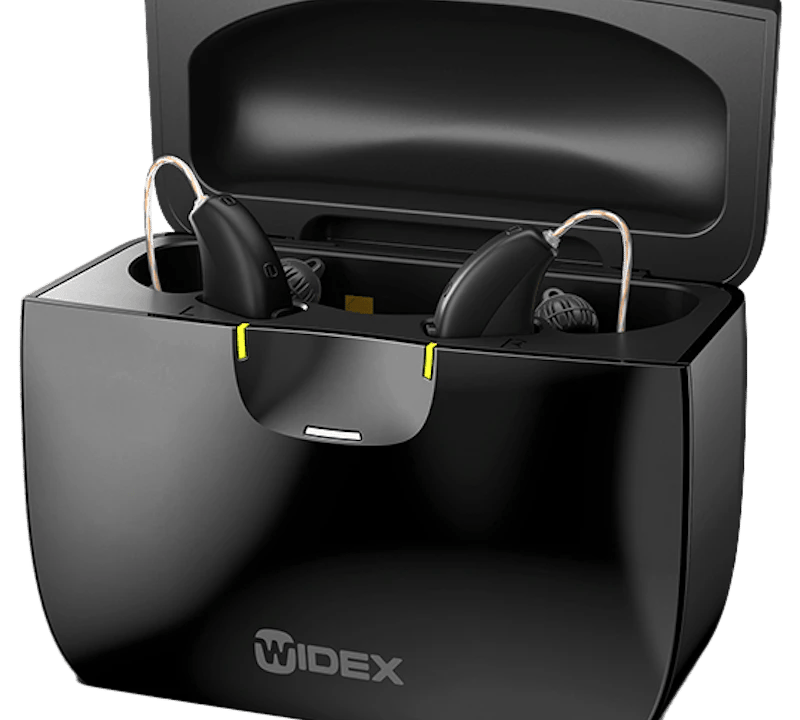
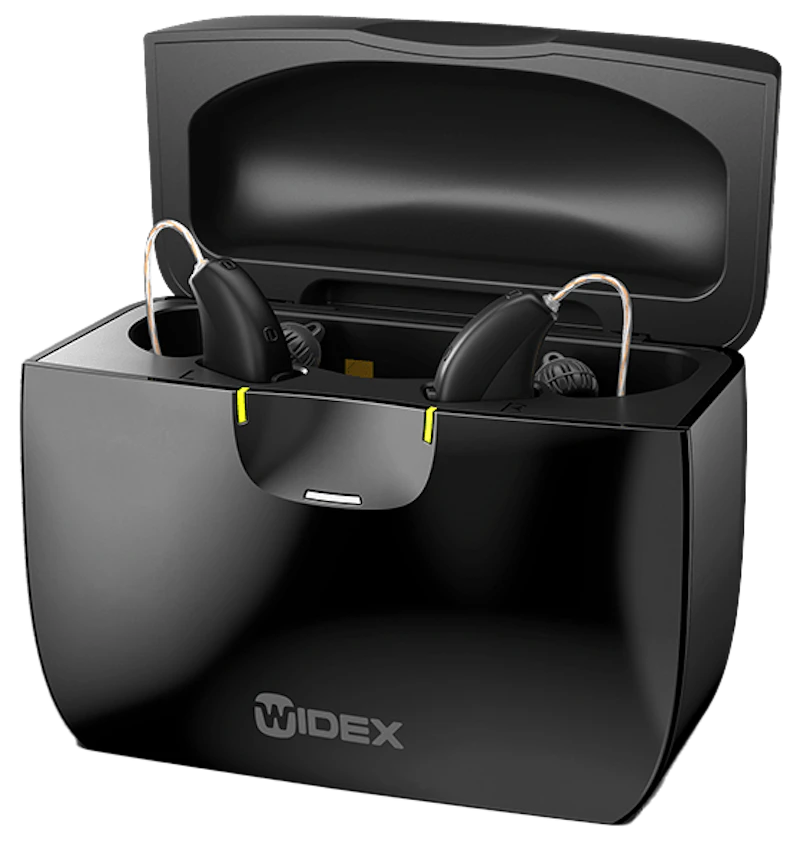
Widex Magnify 50 BTE 13D – Offers natural sound processing, noise reduction, and telecoil functionality, with Widex’s renowned emphasis on clear speech in quiet and noisy environments.
Many Category 2 models also come in Receiver-in-Canal (RIC) styles, which are discreet yet powerful, making them a versatile option for everyday use.
Category 3 (Smaller/Discreet)
These are in-the-ear (ITE), in-the-canal (ITC), and completely-in-canal (CIC) devices, designed for individuals with mild to moderate hearing loss who prefer discreet aesthetics.
Specsavers Advance 218 CIC – A tiny device that sits completely in the ear canal, making it nearly invisible. Includes basic noise reduction and directional microphones.
Oticon Jet PX 2 ITC – A custom-moulded device offering digital processing, feedback control, and natural sound handling, suitable for those wanting discretion without sacrificing performance.
Widex Magnify 50 XP – Known for its clear, natural sound and comfort, with noise reduction features and feedback suppression built in.
These devices are cosmetically appealing but may not offer the same level of power as larger BTE models.
Partially Subsidised Options
While a wide variety of hearing aids are free, some pensioners may prefer devices with more advanced features such as Bluetooth streaming, rechargeable batteries, or enhanced smartphone connectivity. These are available under a partially subsidised arrangement:
The government contributes the cost equivalent of a fully subsidised device.
The patient pays the “gap” for the higher-end model.
Providers must give a clear written quote outlining device cost, subsidy, and out-of-pocket expenses.
This system ensures that while basic devices are free, patients can upgrade to premium technology if they choose.
How to Access the Program
Check your eligibility – confirm that you hold one of the concession or veteran cards listed above.
Choose a provider – accredited providers include national chains like Audika, Amplifon, Specsavers, Hearing Australia, and many independent clinics such as The Audiology Place.
Book a hearing test – your provider will handle registration with the HSP and complete the necessary paperwork.
Select your device – your audiologist will recommend fully subsidised models, and you can decide whether to stay with those or consider partially subsidised upgrades.
Ongoing support – once fitted, you’ll have access to maintenance and follow-up services to keep your hearing aids in good working order.