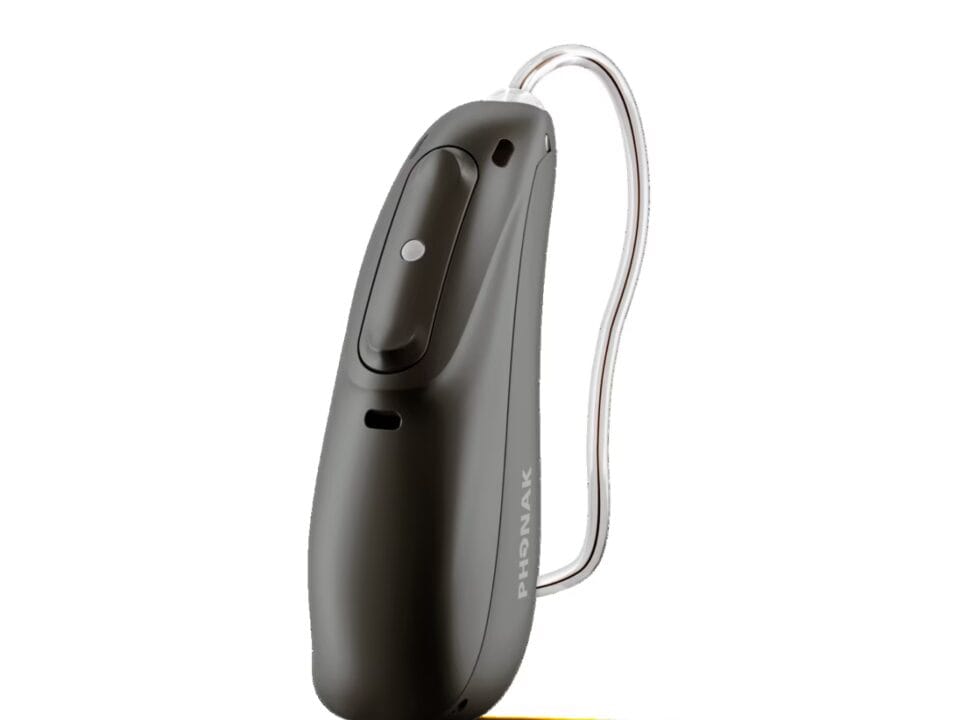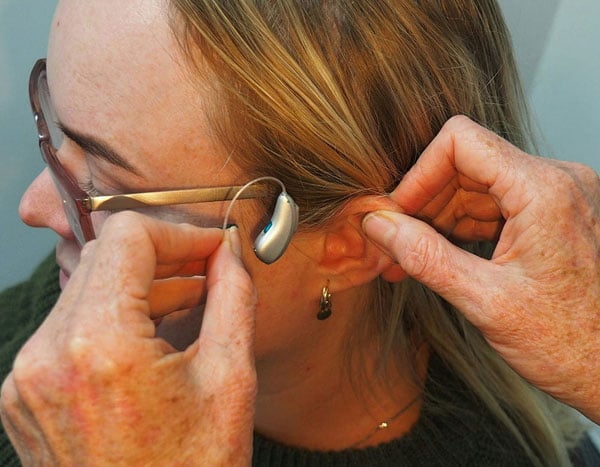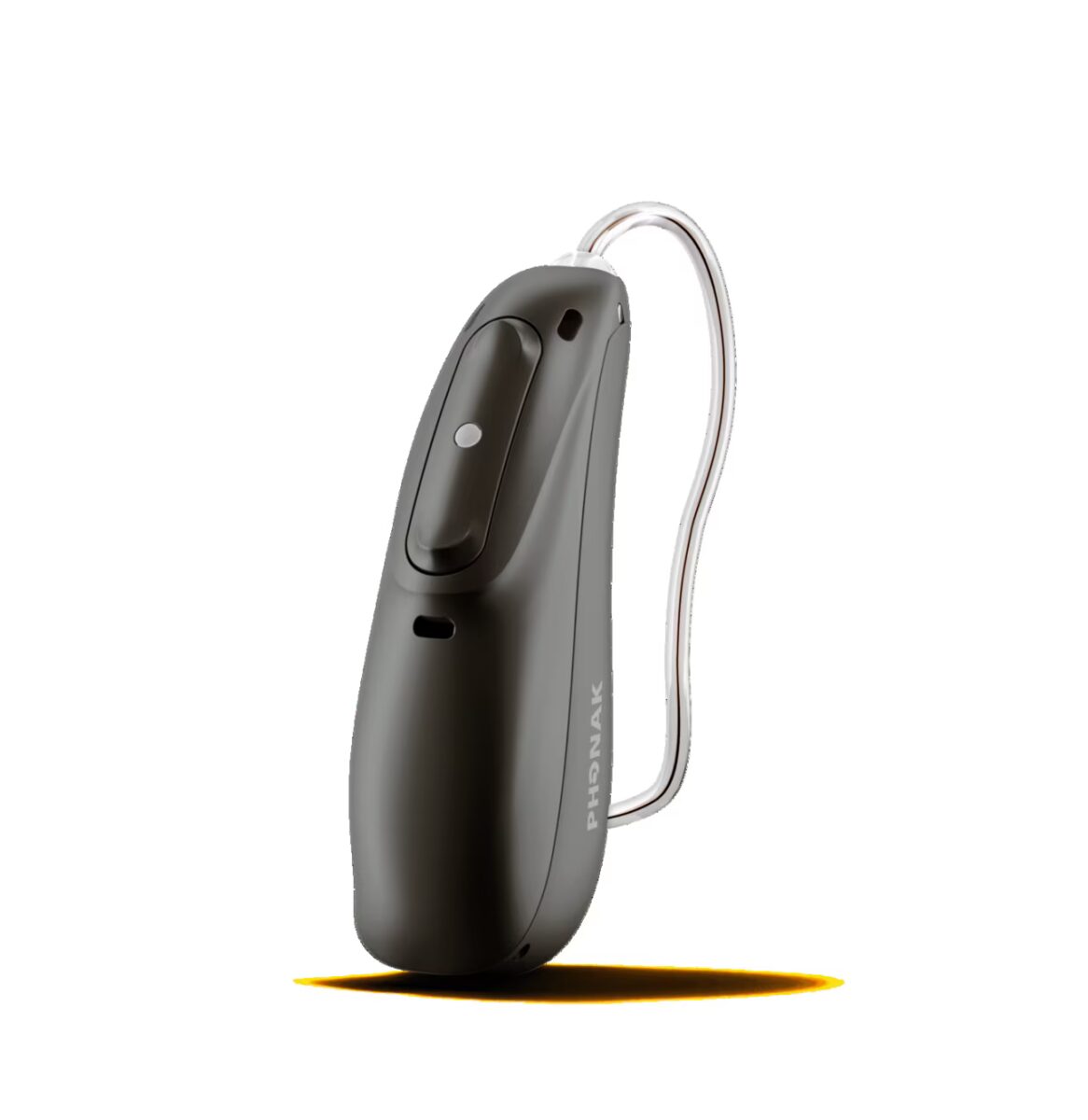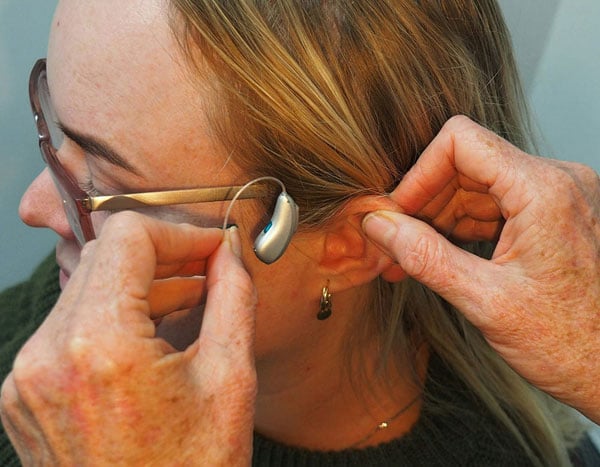

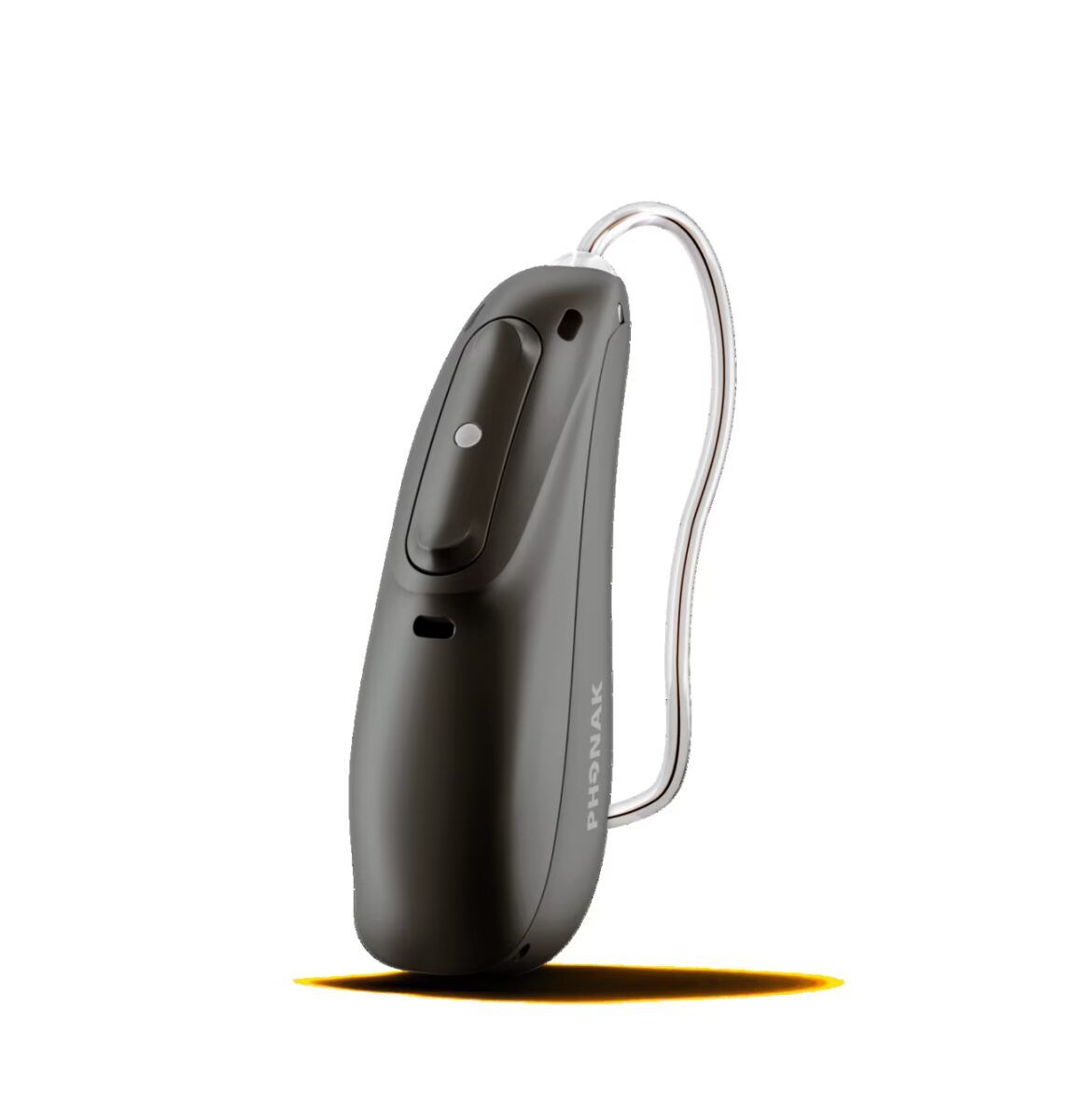
The hardware inside a Phonak Audéo Lumity 30 is identical to the hardware in a Lumity 90. Same chip, same microphones, same receiver, same Bluetooth antenna. What you’re paying for when you step up through the performance levels is software—specifically, how much processing power is unlocked and how intelligently the hearing aid responds when your acoustic environment gets messy. For most people shopping between tiers, the real question isn’t “what’s different,” it’s “will I actually hear the difference in my life?”
After fitting a few thousand Phonak devices across every performance level, here’s what separates them in practice, who needs what, and where the sweet spot sits for Australian buyers navigating private pricing or the Hearing Services Program.
The Hardware Is the Same. The Software Isn’t.
Every Phonak device in a given platform—Lumity, Paradise, whatever comes next—uses the same physical components regardless of whether it’s badged 30, 50, 70, or 90. The circuit board, the processing chip, the microphone array: all identical. What Phonak sells you at each tier is access to increasingly sophisticated algorithms that run on that chip.
Think of it like buying a car where the engine is the same across four trim levels, but the higher models unlock adaptive cruise control, better traction management, and a suspension that reads the road ahead. You’ll get from A to B in any version. The question is how much the car does for you along the way.
This isn’t unique to Phonak—it’s standard practice across Oticon, Widex, Signia, and the rest. And it’s not cynical; it’s engineering efficiency. Building four separate circuit boards would drive manufacturing costs through the roof. The tiering model lets manufacturers serve both the pensioner who needs basic amplification for TV and the barrister who needs seamless performance across a dozen acoustic environments daily.
What Actually Changes Between 30, 50, 70, and 90
The meaningful differences sit in three areas: automatic program channels, noise reduction capability, and directionality sophistication.
**Automatic program channels** determine how finely the hearing aid can split the frequency range and apply different gain, compression, and processing strategies to each slice. A Lumity 30 offers 12 channels; a 90 offers 20. In practical terms, more channels mean the aid can amplify the speech frequencies you need without over-amplifying background rumble or high-frequency clatter. For someone with a steeply sloping high-frequency loss—common in noise-induced and age-related hearing loss—more channels give the audiologist finer control during real-ear measurement to match your prescription without feedback or distortion. For flatter losses, the difference shrinks.
**Noise reduction** is where the tiers diverge most. The 30 has basic environmental detection. The 90 runs StereoZoom 2.0, Speech Enhancer, Dynamic Noise Cancellation, and an adaptive algorithm that updates gain and directionality every few milliseconds based on what the microphones detect. In a noisy café, a 30 will amplify what’s in front of you and damp down some background hum. A 90 will identify the speech signal, enhance its modulation, suppress competing talkers from the sides, and adjust on the fly as the acoustic scene shifts when someone scrapes a chair or the coffee grinder starts.
Does this matter if you spend most of your time at home with one other person? Not much. Does it matter if you’re in open-plan offices, group dinners, or reverberant meeting rooms multiple times a week? Absolutely. The 70 and 90 are materially better in those environments. I’ve had patients downgrade from 90 to 70 without complaint; I’ve never had a patient step down from 70 to 50 and stay happy if they’re socially or professionally active.
**Directionality** sophistication scales similarly. The 30 offers fixed directionality—front focus, essentially. The 90 offers adaptive, narrow, and dynamic directionality that can create a beam focus in noise or widen out when you’re in quiet. The 70 sits in between with adaptive directionality but less granular steering. In a quiet room, you won’t notice. In a noisy restaurant or a car with the windows down, the difference is the gap between following conversation comfortably and feeling like you’re catching every third word.
Who Actually Needs Each Tier
Phonak 30: You’re retired or semi-retired, your days are quiet, and most conversations happen one-on-one at home or in controlled environments. You’re not attending meetings, you don’t go to restaurants weekly, and background noise isn’t a daily stressor. You want audibility and clarity for TV, phone, and chat over the kitchen table. The 30 will do that well. If you’re on the Hearing Services Program, this is often the fully subsidised tier, and for many recipients, it’s entirely sufficient.
Phonak 50: You’re occasionally in busier environments—weekend family dinners, the local RSL, shopping centres—but your baseline is still fairly quiet. You want a step up in automatic adjustments so you’re not manually switching programs or straining as much when things get lively. The 50 handles light-to-moderate noise better than the 30 but will still struggle in the harder scenarios. It’s the tier I see people regret most often, because it’s not quite enough for regular noise exposure but costs meaningfully more than the 30.
Phonak 70: This is the sweet spot for most active adults. You’re still working, you have regular social commitments, you’re in cafés, you attend meetings or dinners with more than two people, and you need the aids to work across a genuine range of environments without constant fiddling. The 70 offers enough automatic smarts that you’re not thinking about the devices much—they just handle what’s in front of them. Fitting-wise, the 70 gives me enough adjustment latitude to fine-tune for more complex prescriptions without running into processing limitations. If you’re weighing 70 vs 90 and you’re not in extremely demanding acoustic environments daily, the 70 is usually enough. Price difference in private practice is often $1,500–$2,500 AUD, and for many people, that’s better spent elsewhere.
Phonak 90: You need best-in-class performance in difficult environments regularly. You’re in boardrooms, lecture halls, noisy wards, open-plan offices, or frequent social settings where speech-in-noise performance is the difference between full participation and social withdrawal. You’ve probably already tried a lower tier and found it lacking. The 90 is also the right choice if you have a particularly tricky loss—severe high-frequency drop-off, asymmetric loss, or recruitment issues—where maximum processing flexibility helps the audiologist get closer to your target prescription during real-ear verification.
Real-World Price Bands and the Hearing Services Program
In Australian private practice, expect roughly:
– **30 tier:** $2,500–$3,500 per pair
– **50 tier:** $3,500–$4,800 per pair
– **70 tier:** $4,800–$6,500 per pair
– **90 tier:** $6,500–$9,000+ per pair
Prices vary by clinic, included services, and whether you’re buying the rechargeable or disposable battery model. Those figures typically include the fitting appointment, real-ear measurement, follow-ups for the first year, and sometimes a warranty extension or loss-and-damage cover.
If you’re eligible for the Hearing Services Program (pension, DVA, NDIS), you’ll access Phonak devices at a much lower out-of-pocket cost. The program covers up to a certain dollar threshold; if you choose a 70 or 90, you’ll pay the gap between the program’s contribution and the full cost. For many recipients, that means the 30 is fully covered, the 50 requires a modest top-up, and the 70 or 90 requires a more significant contribution—but still far less than private pricing. DVA gold card holders often have broader access without top-up, depending on assessed need.
A Well-Fitted 70 Beats a Poorly Fitted 90
This is the bit that matters more than any spec sheet. A hearing aid is only as good as the verification behind it. If your audiologist doesn’t perform real-ear measurement—putting a probe tube in your ear canal to measure actual output against your prescriptive target—you’re guessing. And a guessed 90 will perform worse than a verified 70.
I’ve re-fit patients who’ve come from other clinics with top-tier devices that were never properly programmed. They’d spent $8,000 and were still straining. After real-ear verification and proper gain adjustments, the same aids—sometimes even a tier lower—worked as intended. The technology matters, but the fitting matters more.
What to Actually Ask Your Audiologist
Don’t ask “which is best?” Ask:
– “Based on my audiogram and my daily environments, which tier will make a functional difference for me?”
– “Do you perform real-ear measurement as standard?”
– “What’s the price difference between the 70 and 90, and what will I gain for that extra cost in my specific case?”
– “Can I trial a 70 first and upgrade if needed, or am I locked in?”
Most reputable clinics—independent ones especially—will let you trial for 30 or 60 days and swap tiers if the fit isn’t right. If a clinic pushes the 90 without asking detailed questions about your lifestyle and測試ing your speech-in-noise performance, that’s a red flag.
The 30 is genuinely enough for quiet lives. The 90 is genuinely better in hard noise. For most people, between 70 hits the pragmatic middle: sophisticated enough to handle real-world complexity, affordable enough not to feel punitive, and flexible enough in the hands of a competent clinician to meet most prescriptive targets.
If you’re unsure where you sit, ask for speech-in-noise testing—most clinics can run a quick adaptive test that simulates café or party noise—and let that guide the decision. And if someone tells you that you *must* have the 90 without backing it up with your test results and a clear rationale, get a second opinion.