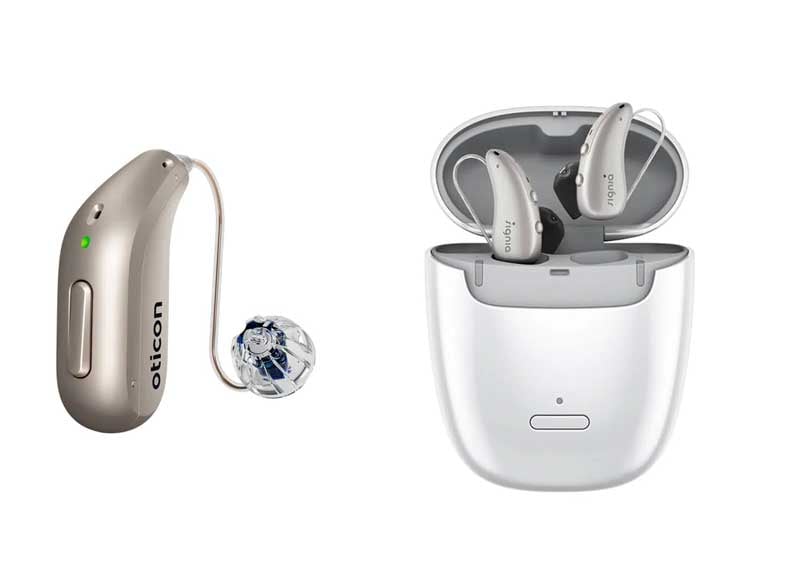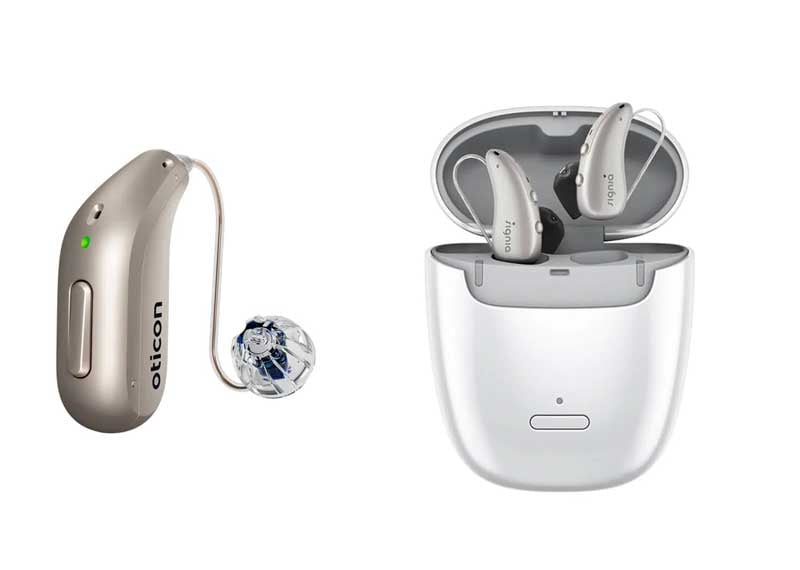

The fundamental difference is this: over-the-counter hearing aids are consumer devices you buy and adjust yourself for perceived mild to moderate hearing loss, while prescription hearing aids are medical devices programmed by an audiologist based on comprehensive diagnostic testing of your actual hearing thresholds, speech discrimination ability, and ear health. One is a retail transaction; the other is a clinical intervention following a proper diagnosis.
I’ve seen this question surface more frequently since the US FDA authorised OTC hearing aids in 2022, and now patients in Australia are asking whether they should skip the audiology appointment and order a pair online. It’s a reasonable question—and one that deserves a straight answer, not a sales pitch dressed up as advice.
What Actually Qualifies as an OTC Hearing Aid?
In the United States, OTC hearing aids are regulated devices intended for adults aged 18 and older with *self-perceived* mild to moderate hearing loss. They’re sold directly to consumers without a prescription, medical exam, or hearing test. You fit them yourself using an app or preset programs, and there’s no professional verification that the amplification matches your hearing loss, let alone that hearing loss is your actual problem.
The Australian regulatory picture is different and worth understanding clearly. The Therapeutic Goods Administration (TGA) regulates hearing aids as medical devices, but as of 2024, there is no distinct OTC hearing aid category in Australian law equivalent to the FDA framework. What you’ll find marketed as “OTC” or “hearing amplifiers” online are either imported devices following US FDA OTC standards (which may or may not comply with TGA requirements), unregulated personal sound amplification products (PSAPs), or grey-market imports. Some are legitimate. Many are not. None come with the accountability of the Australian regulatory system unless explicitly TGA-registered.
This regulatory ambiguity matters clinically, because it means Australian consumers are often buying devices without the consumer protections, performance standards, or output limits that exist in the US OTC framework—let alone the diagnostic safeguards built into the prescription pathway.
What You’re Actually Getting: OTC vs Prescription
When a patient buys an OTC device, they’re typically getting a pre-programmed amplification curve designed for a generic “mild to moderate loss” profile. Many use smartphone apps that run you through a self-administered hearing check—basically, you tap a button when you hear beeps. The app then applies a gain formula and that’s your fitting. There’s no assessment of your word recognition at different volume levels, no measurement of middle ear function, no otoscopic exam to check for wax impaction or infection, and no verification that what the device is delivering into your ear canal actually matches the prescription targets for your specific loss.
I’m not dismissing these devices outright. Some are engineered well. But they’re operating on assumptions—that your hearing loss is straightforward, symmetrical, sensorineural, not medical, and that you can troubleshoot feedback, occlusion, streaming connectivity, and program changes on your own.
Prescription hearing aids, by contrast, start with diagnosis. That means pure tone audiometry across frequencies from 250 Hz to 8000 Hz (sometimes higher), bone conduction testing to rule out conductive pathology, tympanometry to assess middle ear function, speech discrimination testing in quiet and ideally in noise, and a proper look in your ears. For most of my patients, this takes about 45 minutes. You can’t replicate that with an app.
Once we have a diagnostic audiogram, we select devices—often from multiple manufacturers, not a single brand—and program them to match prescriptive targets like NAL-NL2 or DSL, which are evidence-based formulas that account for your specific hearing thresholds at each frequency. Then we verify the fitting using real-ear measurement (REM), where a probe microphone sits in your ear canal and measures the actual sound pressure level the hearing aid is delivering at your eardrum. Without REM, you’re guessing. With it, you know.
Adjustability is another axis. Prescription devices allow for fine-tuning across dozens of parameters: compression ratios, expansion settings, noise reduction algorithms, directional microphone behaviour, frequency lowering for high-frequency dead regions, and gain adjustments in 2 dB steps across 12 or more channels. OTC devices offer far less granularity—usually just overall volume, a few preset programs, and maybe a basic treble/bass slider.
The Australian Context: Who Pays, Who’s Eligible
In Australia, hearing healthcare funding is fragmented but generous for eligible groups. If you’re 21 or over and meet the program’s eligibility criteria, you may qualify for devices fully subsidised by the Australian Government Hearing Services Program, which covers the aids and the fitting, with ongoing maintenance available for a small annual fee. Conditions apply under the Australian Government Hearing Services Program. Pensioners, veterans via DVA, and people receiving certain benefits are automatically eligible.
Private health insurance typically provides rebates on hearing aids, often between $500 and $1,500 per aid depending on your level of cover, though you’ll want to check your specific fund and whether your annual limits have been exhausted.
Prescription hearing aids purchased privately in Australia generally range from around $1,500 to $4,000 per device, depending on the technology level. That usually includes the initial fitting, follow-up appointments for the first year, REM verification, and adjustments. Some practices charge separately for services; we don’t, because it creates perverse incentives to under-service patients.
OTC devices imported from the US or bought online range from around $300 to $2,000 AUD per pair. They’re not rebatable through private health insurance or government schemes, because they’re not dispensed following a professional service. You own them outright, but you’re also entirely on your own for troubleshooting, adjustments, and knowing whether they’re safe or effective for you.
Who Actually Suits an OTC Device?
I’ll be direct: there’s a narrow cohort for whom OTC devices are a reasonable option, and a much larger group for whom they’re a costly delay in getting proper treatment.
OTC hearing aids may be appropriate if you:
– Have genuinely mild, possibly early moderate hearing loss that’s been formally diagnosed previously, and you’re looking for a low-cost interim solution or a backup pair
– Are tech-literate and comfortable self-managing an app-driven fitting process without clinical support
– Have symmetrical sensorineural hearing loss with no medical red flags (no sudden loss, no dizziness, no unilateral tinnitus, no ear discharge, no pain)
– Don’t have significant speech-in-noise difficulties beyond what you’d expect for mild loss—because OTC devices generally lack the sophisticated noise reduction and directionality that complex listening environments demand
They are *not* appropriate—and this is where I see real harm—if you haven’t had a proper hearing test in the past year, if you have asymmetrical hearing loss (more than 15 dB difference between ears at two or more frequencies), if you’re experiencing sudden changes, if you have a history of middle ear disease, or if your primary complaint is difficulty understanding speech in background noise rather than just volume. Those scenarios require diagnostic assessment, and sometimes medical referral, not a consumer purchase.
The Risk You Don’t Hear About: Missing the Diagnosis
Here’s what keeps me up at night about the OTC trend: the cases we see where someone spent six months struggling with an OTC device for a hearing problem that wasn’t even sensorineural hearing loss.
I’ve seen impacted cerumen that cleared with microsuction, restoring normal hearing. I’ve seen otosclerosis that needed stapedectomy referral. I’ve seen chronic otitis media with effusion, cholesteatoma, sudden sensorineural hearing loss outside the window for steroid intervention because the patient thought they’d “try an online hearing aid first,” vestibular schwannomas (rare, but real), and Ménière’s disease in early stages. None of these should be treated with amplification as a first step, and some require urgent medical or surgical intervention.
Australian audiologists are trained to identify red flags and refer appropriately. The Royal Australian and New Zealand College of Ophthalmologists… sorry, wrong specialist—audiologists work under the Audiological Society of Australia’s scope of practice and are required to refer to ENT specialists or GPs when we identify or suspect medical pathology. An app can’t do that. A retail transaction has no diagnostic safety net.
What Happens in a Prescription Fitting (and Why It Matters)
When you come in for a prescription hearing aid fitting at an independent audiology clinic, the process generally looks like this:
Initial consultation and diagnostic testing (week 1): Full audiometric battery, case history, otoscopy, discussion of communication needs, lifestyle factors, manual dexterity, and budget. We talk about realistic expectations—hearing aids are not glasses for your ears; they don’t restore normal hearing, but they improve audibility and, when fit properly, speech understanding.
Device selection and fitting (week 2–3): We program the selected devices to your audiogram, verify output with REM, teach you how to insert them, use the controls, change batteries or charge them, and troubleshoot common issues. You go home wearing them.
Follow-up fine-tuning (week 4–6): You return after living with the devices in real-world environments, and we adjust based on your feedback—too much wind noise, not enough clarity in the car, occlusion when chewing, whatever the issue is. This appointment is as important as the first fitting, because real-world performance doesn’t always match clinic measurements.
Ongoing support (as needed): Cleaning, re-tubing for behind-the-ear models, firmware updates, hearing retests every one to two years, adjustments as your hearing changes. This isn’t a one-and-done transaction; it’s long-term clinical management of a progressive condition.
None of that exists with OTC. You might get email support or a FAQ page. You won’t get REM. You won’t get a differential diagnosis. You won’t get someone who’ll spend 20 minutes troubleshooting why your left aid whistles when you smile.
Making the Decision: A Framework
If you’re trying to decide between OTC and prescription, ask yourself these questions:
Do you know—from a diagnostic audiogram performed by an audiologist or ENT in the past 12 months—that you have mild to moderate symmetrical sensorineural hearing loss with no medical concerns? If no, book a hearing test. Don’t guess.
Is your primary difficulty just volume (TV, conversation in quiet), or is it clarity, especially in noise? If clarity and noise are the problems, you need professional fitting with validated speech-in-noise testing and directional/noise-reduction algorithms that are properly configured. OTC won’t cut it.
Are you comfortable with technology, troubleshooting on your own, and accepting that the device may not be optimally fitted to your hearing loss? If no, the frustration of an OTC device will likely outweigh the cost savings.
Can you afford the upfront cost of prescription devices, or do you qualify for government or insurance support? If you’re eligible for the Hearing Services Program, there is zero financial reason to go OTC. If you’re paying privately and cost is a major barrier, talk to your audiologist about entry-level prescription devices—there are good options in the $1,500–$2,000 per aid range that still come with professional fitting and support.
OTC hearing aids are a tool, not a revolution. They lower the cost barrier for a specific subset of people with straightforward, previously-diagnosed, mild hearing loss who are willing and able to self-manage. For everyone else—which is most people with hearing loss—they’re a gamble that delays proper care, risks missing medical conditions, and often ends with a drawer full of expensive frustration.
I’m not opposed to OTC devices on principle. I’m opposed to people bypassing diagnosis and fitting because they’ve been led to believe that hearing loss is a simple problem with a simple retail solution. It’s not. It’s a heterogeneous medical condition that requires assessment, and in most cases, professional intervention.
If you’re in Australia and considering OTC devices, my advice is this: book a diagnostic hearing test first. It’ll cost you around $80–$150 if you’re not eligible for bulk-billing, and it’ll give you the information you actually need to make an informed choice. If your hearing loss is genuinely mild, symmetrical, and uncomplicated, and you want to try an OTC option as a first step, at least you’re doing it with your eyes open. And if it’s not—if there’s something medical, or your loss is more complex than you thought—you haven’t wasted months treating the wrong problem.
We’re not precious about people choosing OTC devices when they’re appropriate. We are precious about people getting a proper diagnosis first. That’s not a sales pitch. That’s basic clinical care.