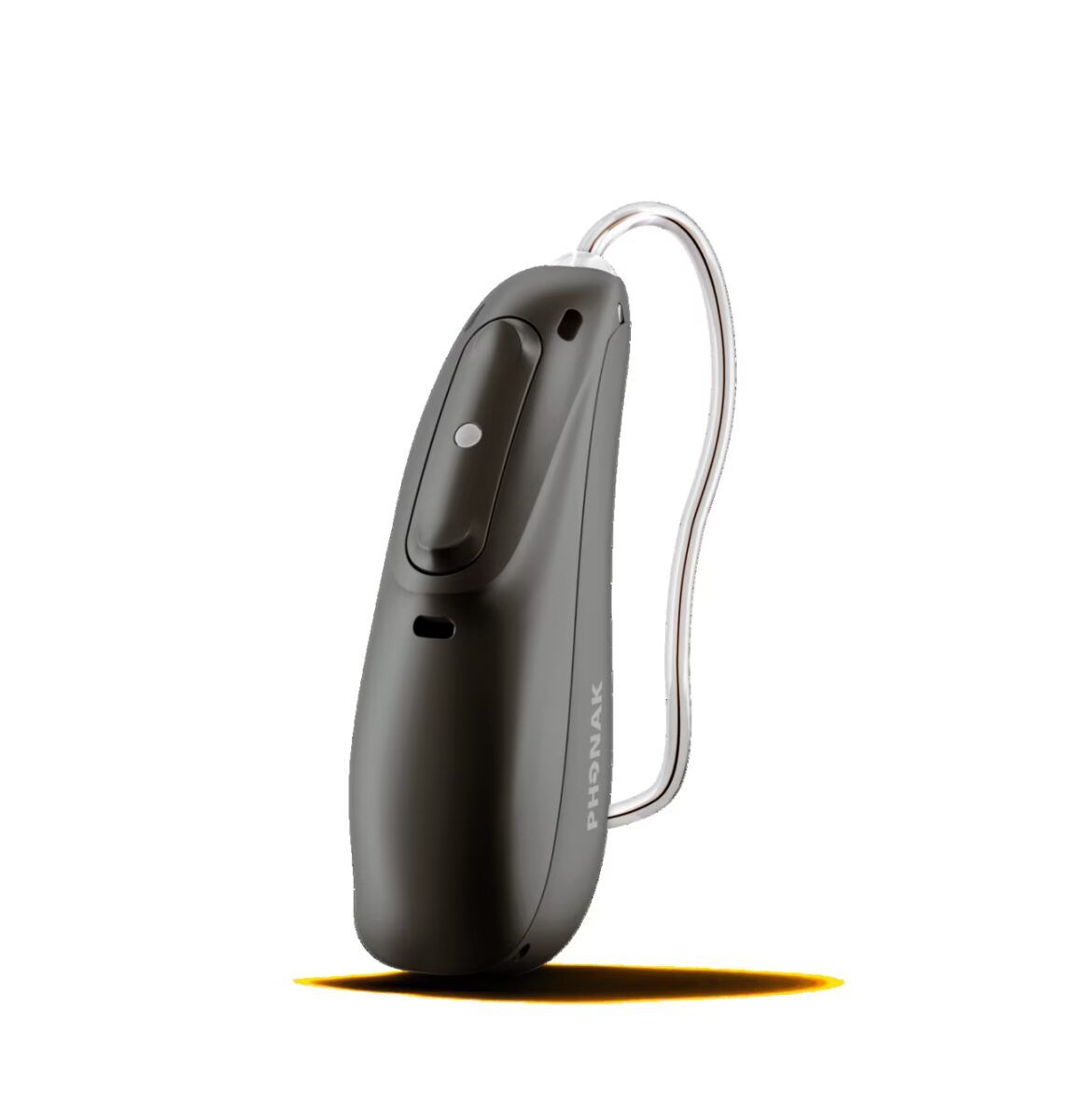
The most common complaint we hear in clinic isn’t “I can’t hear anything”—it’s “I can hear people talking, but I can’t understand what they’re saying.” If you’re struggling to follow conversations in restaurants, at family gatherings, or anywhere with competing noise, you don’t need more volume. You need technology and fitting protocols specifically designed to restore speech intelligibility, and the difference between a hearing aid that amplifies everything and one that clarifies speech comes down to how it’s programmed and verified.
The issue you’re experiencing has a clinical name: reduced speech discrimination in noise. Your audiogram might show only mild hearing loss, but your word recognition scores—particularly on speech-in-noise testing—tell a different story. This disconnect happens because hearing loss doesn’t affect all frequencies equally, and the high-frequency consonant sounds that carry meaning (the difference between “cat” and “cap,” or “fish” and “fist”) are usually the first to go. When background noise fills in the gaps, your brain gets overwhelmed trying to separate signal from static.
Why “I Can Hear But Can’t Understand” Happens
Most people assume hearing loss just turns down the volume on everything equally, like a master control knob. In reality, it’s more like an equaliser where some frequencies drop out entirely while others remain intact. You might hear the low-frequency vowel sounds just fine—that’s the presence of speech, the sense that someone is talking—but miss the high-frequency consonants that actually convey the words.
Add background noise into the mix and the problem compounds. Your brain normally uses subtle timing and loudness differences between your two ears to filter out competing sounds and focus on the person in front of you. Hearing loss degrades these cues. The café chatter, the restaurant clatter, the air conditioning hum—they all compete on equal footing with the speech you’re trying to follow. This is why you might function perfectly well in quiet environments but feel completely lost the moment you step into a busy venue.
I’ve had patients score 90% or better on word recognition testing in quiet conditions, then drop to 40% when we add background noise at a realistic signal-to-noise ratio. That’s the gap we need to close, and it requires more than just making things louder.
Technology That Actually Addresses Speech Clarity
The hearing aids that perform best for speech understanding in noise share several core features, though the implementation varies by manufacturer.
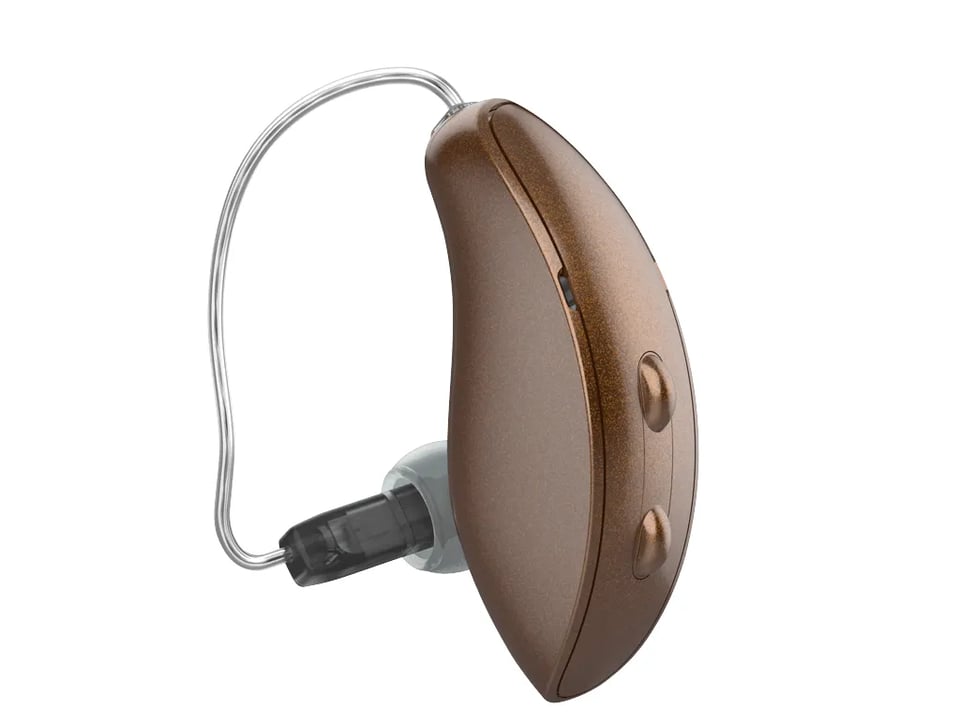
Directional microphone systems are non-negotiable. These use multiple microphones on each hearing aid to determine where sound is coming from, then digitally enhance speech from in front of you while suppressing noise from the sides and behind. The sophistication varies dramatically between models. Premium devices now use adaptive directionality that automatically adjusts the focus pattern based on your listening environment, and some can even create a narrow “beam” focused on a single speaker. In real-world testing—not manufacturer claims, but independent studies—properly fitted directional systems can improve speech understanding in noise by 3 to 5 dB, which translates to understanding roughly 30-40% more words.
Noise reduction algorithms work alongside directionality, identifying sounds that don’t have speech-like patterns (the steady hum of traffic, the clatter of dishes) and reducing gain in those frequency regions. The key word is “reduction,” not elimination. These algorithms can’t completely remove background noise without also affecting speech, but they can make listening less effortful. I’ve had patients tell me they didn’t realise how exhausted social situations made them until they experienced noise reduction that actually worked.
Frequency lowering or compression technology addresses a specific problem: when your high-frequency hearing loss is so severe that even maximum amplification can’t make those sounds audible, or when amplifying them causes feedback. These features take high-frequency speech information and shift it down into a range you can actually hear. Phonak’s SoundRecover, Widex’s Audibility Extender, and similar technologies from other manufacturers can be genuinely helpful for people with severe high-frequency loss, though they require careful fitting. Done poorly, speech sounds unnatural. Done well, patients often don’t notice the processing—they just notice they’re understanding better.
Brands With Proven Speech Clarity Features
I’ll be direct: most modern hearing aids from reputable manufacturers have decent speech-in-noise technology. The meaningful differences appear at the premium tier, and even then, the fitting matters more than the brand name. That said, some manufacturers have invested more heavily in specific clarity features.
Phonak has consistently performed well in speech-in-noise scenarios across multiple independent studies. Their Speech Enhancer feature specifically targets the frequency range where consonants live, applying gain selectively to boost those sounds. The Autosense OS environment classifier does a solid job of recognising “speech in noise” situations and activating the appropriate program automatically. I’ve fitted a lot of Phonak devices for patients with your exact complaint, and the success rate is high when combined with proper verification.
Oticon takes a different philosophical approach they call “BrainHearing.” Rather than aggressive noise suppression, their strategy preserves more of the soundscape and relies on giving your brain better access to the full acoustic scene. The theory is that your brain is better at selective attention than any algorithm, provided it receives adequate input. Their More and Real platforms use a deep neural network trained on millions of sound scenes. Some patients love the open, natural sound. Others find it overwhelming. It’s genuinely patient-dependent.
Signia (formerly Siemens) has Own Voice Processing, which addresses a common complaint: that your own voice sounds strange or hollow in hearing aids. By recognising and processing your voice separately, they reduce the occlusion effect that makes many people reject hearing aids early on. For speech clarity specifically, their Speech and Noise Management system performs well, particularly in their Charge&Go and Pure models.
I’m not listing these brands because I have commercial relationships with them—I don’t. I’m listing them because I’ve seen the clinical outcomes across hundreds of fittings. But here’s what matters more than the brand name on the device: whether your clinician actually verified that the hearing aid is delivering the programmed gain at your eardrum.
The Critical Factor: Real Ear Measurement
You can have the most sophisticated hearing aid on the market, but if it’s not programmed and verified correctly, it’s just an expensive amplifier that may or may not be helping your speech understanding. This is where Real Ear Measurement (REM) becomes essential.
REM involves placing a thin probe microphone in your ear canal alongside the hearing aid, then measuring the actual sound pressure level reaching your eardrum across all frequencies. We compare this against evidence-based prescriptive targets (usually NAL-NL2 or DSL) that predict optimal audibility for speech. Without REM, your audiologist is guessing. With it, we know.
I’ve seen patients who’ve worn hearing aids for years without benefit come in for a second opinion. We run REM and discover their devices are under-amplifying by 10-15 dB in the frequencies critical for consonant perception. We adjust to target, verify again, and suddenly they’re understanding speech they’ve been missing. It’s not a miracle—it’s basic professional competency. Yet research shows only about 30% of hearing aid fittings in Australia include REM. That’s not good enough.
How We Actually Identify and Solve Your Problem
When you present with “I can hear but can’t understand,” we don’t just run a standard audiogram and hand you a hearing aid. The diagnostic process needs to identify exactly where your speech understanding breaks down.
We start with comprehensive pure tone audiometry to map your hearing thresholds, but we always follow with speech testing in both quiet and noise. The QuickSIN (Quick Speech-in-Noise) test or the HINT (Hearing In Noise Test) gives us a quantified measure of how much your speech understanding degrades when background noise is present. This becomes your baseline. If you need a 10 dB advantage (meaning speech needs to be 10 dB louder than the background noise) to understand 50% of words, we know the gap we need to close with amplification and technology.
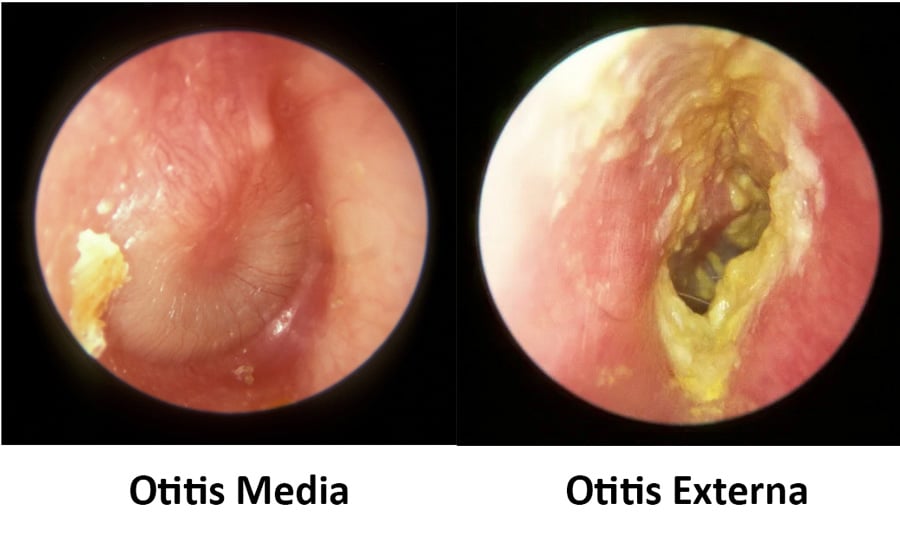
Tympanometry rules out middle ear pathology that might be contributing—fluid, Eustachian tube dysfunction, or ossicular chain problems that are medically treatable and won’t respond to hearing aids. If we find these, you’re getting a referral to an ENT, not a sales pitch.
Once we’ve established that hearing aids are appropriate, device selection considers your specific speech-in-noise deficit, your listening environments, and your dexterity with small devices. We program to prescriptive targets, verify with REM to ensure we’ve hit those targets, and then—critically—we bring you back for aided speech-in-noise testing. Did we actually improve your QuickSIN score? If not, we adjust until we do.
What You Should Ask Your Audiologist
If you’re shopping for hearing aids specifically to improve speech clarity, ask these questions before committing:
– “Will you perform Real Ear Measurement to verify the fitting?” If the answer is anything other than yes, walk out.
– “Can you test my speech understanding in noise before and after fitting?” You need objective evidence that the devices are working for your specific problem.
– “What’s your follow-up protocol?” Speech clarity often requires fine-tuning over several appointments as you experience the devices in your real listening environments.
You should also ask about trial periods. In New South Wales, you have cooling-off rights, but beyond that, any reputable clinic offers at least 30 days to trial devices in your actual life. Speech-in-noise performance in a clinic doesn’t always predict real-world outcomes, so you need time to test them at the restaurant, at the bowling club, in the car.
I need to be honest: hearing aids will improve your speech understanding in noise, but they won’t restore it to normal. The best current technology might get you 50-70% of the way back to where you were before hearing loss. Background noise will still be challenging. Cocktail party situations will still require effort.
This isn’t a failing of hearing aids—it’s a reality of auditory processing. Your auditory nerve and brainstem have been receiving degraded input for years, and some of that central processing decline isn’t reversible with peripheral amplification. The earlier you address hearing loss, the better your outcomes, because you’re preventing that central auditory deprivation from becoming entrenched.
If someone promises you’ll hear “like normal” or “better than people with normal hearing,” run. That’s marketing rubbish. What you should expect is meaningful improvement in your most important listening situations, reduced listening effort, and better quality of life. For most patients with speech-in-noise complaints who receive properly fitted, premium-tier devices, that’s exactly what happens.
When Hearing Aids Aren’t Enough
Sometimes the speech-in-noise deficit is severe enough that even optimally fitted hearing aids don’t provide adequate benefit. In these cases, we discuss assistive listening devices—remote microphone systems that your conversation partner wears, streaming their voice directly to your hearing aids and bypassing the background noise problem entirely. These work remarkably well in specific situations (one-on-one conversations in very noisy venues, lectures, business meetings) though they’re not practical for every social scenario.
For patients with profound high-frequency loss and poor word recognition scores even in quiet (typically below 50%), cochlear implant evaluation might be appropriate. The candidacy criteria have expanded significantly in recent years, and some patients qualify even with moderate loss in one frequency range if their speech discrimination is poor enough.