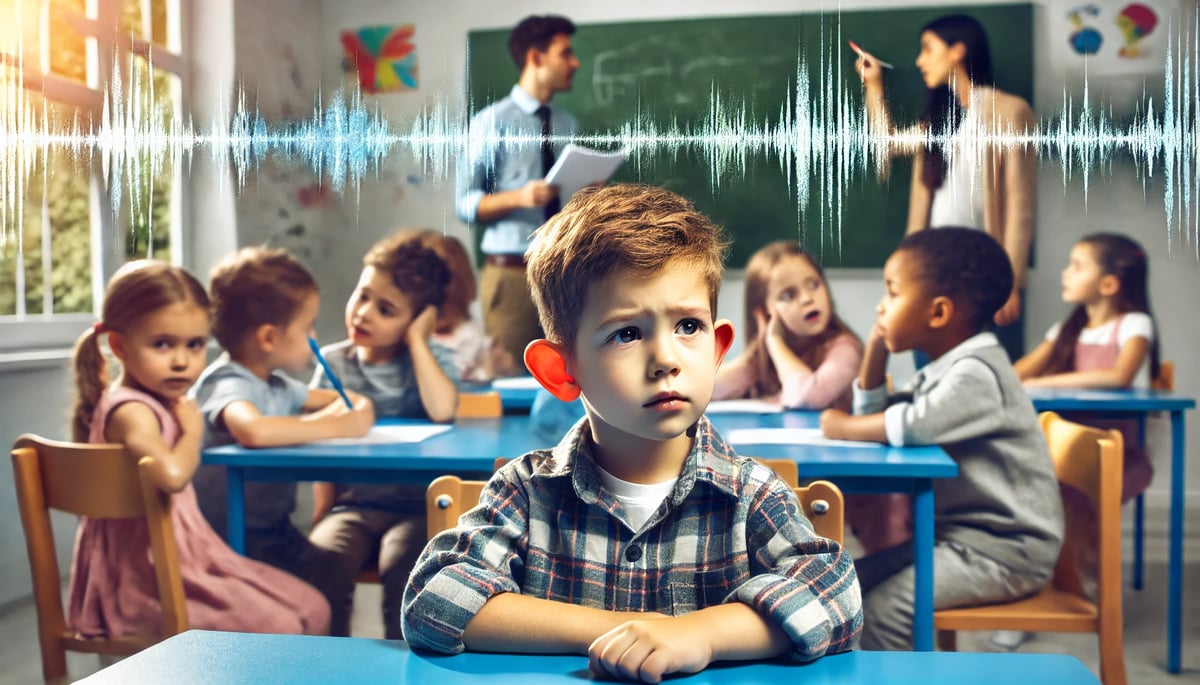
Your child’s auditory brain has a narrow window in which to wire itself properly, and that window depends entirely on sound getting through. When hearing loss, whether from glue ear or permanent sensorineural loss, blocks or distorts sound during the first few years of life, the auditory cortex doesn’t sit patiently waiting. It rewires for other tasks, and once that happens, even perfect hearing aids or cochlear implants later in childhood may never deliver age-appropriate speech understanding.
The evidence on this is strong, and the public health system in NSW is good, yet some children still slip through the cracks. This article covers what parents need to know about auditory brain development, why timing matters so much, and what the referral pathway looks like in Australia.
The Auditory Cortex Has an Expiry Date
The landmark work here comes from Anu Sharma and colleagues at the University of Colorado, who measured cortical auditory evoked potentials (specifically the P1 response latency) in children with cochlear implants. The P1 wave reflects activity in the auditory cortex, and its latency (the time it takes to fire after a sound) normally shortens as the brain matures and myelinates its auditory pathways.
Sharma’s data showed a clear split. Children who received cochlear implants before about 3.5 years of age reached age-appropriate P1 latencies within months of switch-on. Most children implanted after about 7 years did not, even after years of device use. Children implanted between 3.5 and 7 years showed variable outcomes.
This isn’t abstract neuroscience. It translates directly into how well a child can understand speech in noise, learn to read, and keep up in a mainstream classroom.
Closer to home, the Longitudinal Outcomes of Children with Hearing Impairment (LOCHI) study, led by the National Acoustic Laboratories, tracked Australian children with hearing loss from diagnosis through school age. Among many findings, LOCHI reinforced that earlier fitting of hearing devices and earlier enrolment in early intervention were associated with better language outcomes.
Newborn Hearing Screening in NSW: SWISH
New South Wales runs the Statewide Infant Screening – Hearing (SWISH) program, which offers every newborn a hearing screen as soon as possible after birth, either in hospital or at a local community location. The aim is to pick up significant hearing loss early and connect babies with diagnostic testing, hearing devices and early intervention as soon as possible.
The system works best when families understand what the result means and follow up. A “refer” result does not mean your baby definitely has hearing loss; it means the test couldn’t confidently rule it out, and diagnostic testing is required. The next step is a diagnostic auditory brainstem response (ABR) assessment, done by an audiologist at a hospital, ideally while the baby sleeps.
If your baby did not get a clear result on the SWISH screen, the hospital should arrange the diagnostic follow-up. If you’ve lost the paperwork or moved, contact your local SWISH coordinator or your GP rather than waiting. If permanent hearing loss is confirmed, children and young people under 26 receive government-funded hearing services through Hearing Australia, under the Community Service Obligations part of the Hearing Services Program.
Glue Ear: The Invisible Speech Delay
Otitis media with effusion, or glue ear, is a conductive hearing loss caused by fluid sitting in the middle ear space behind an intact eardrum. It’s extremely common in young children, because their Eustachian tubes are short and horizontal and don’t drain well. Most cases resolve on their own within three months, but some children have persistent or recurrent glue ear throughout the preschool years, resulting in a fluctuating mild to moderate conductive hearing loss during exactly the period when they’re supposed to be learning the sound structure of language.
The prevalence is higher among Aboriginal and Torres Strait Islander children, particularly in remote communities, where rates of chronic suppurative otitis media (CSOM), a more severe middle ear infection with a perforated eardrum, remain high. This is one of Australia’s enduring health inequities, and it affects educational outcomes.
Parents often don’t notice glue ear because the child isn’t in pain and can still hear loud sounds. What they do notice, eventually, is unclear speech, requests to repeat, or the TV volume creeping up. By then, the child may have spent six or twelve months hearing a muffled, inconsistent version of speech sounds, particularly the high-frequency consonants (/s/, /f/, /th/) that carry grammatical information.
Glue ear is diagnosed and managed with tympanometry (a quick, non-invasive test that measures middle ear pressure) and confirmed by an ENT specialist looking at the eardrum. If it persists beyond three months and is affecting hearing or speech, the usual management is ventilation tubes (grommets). Some GPs still say “let’s wait and see,” which is reasonable for the first three months, but not reasonable if your four-year-old is already behind in speech and has had flat tympanometry for half a year.
What Happens at The Audiology Place
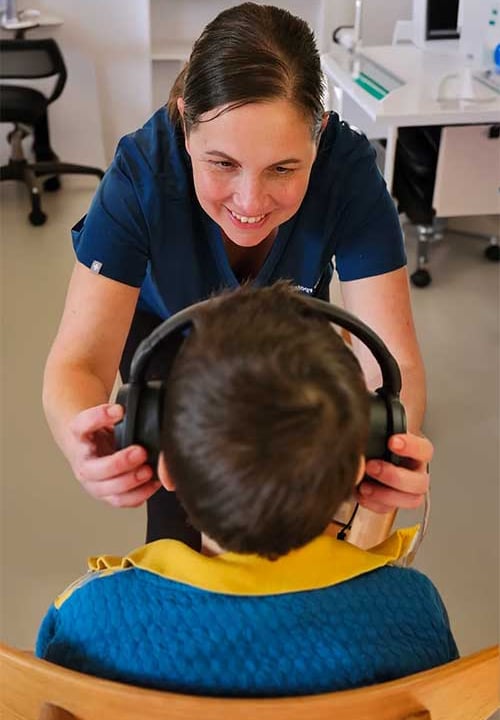
We provide comprehensive hearing assessments for children from six months of age at our Epping and Forestville clinics, using age-appropriate techniques: visual reinforcement audiometry (VRA) for infants, conditioned play audiometry for toddlers, and standard audiometry once they’re old enough to press a button. Every paediatric assessment includes tympanometry to rule out middle ear fluid.
We do not provide cochlear implant candidacy assessments, paediatric ABR under sedation, or hearing aid fitting for children under the Hearing Services Program: those are managed by Hearing Australia or hospital audiology departments. What we do provide is the diagnostic piece when parents suspect a problem, including checks of hearing and middle ear function before and after an ENT review.
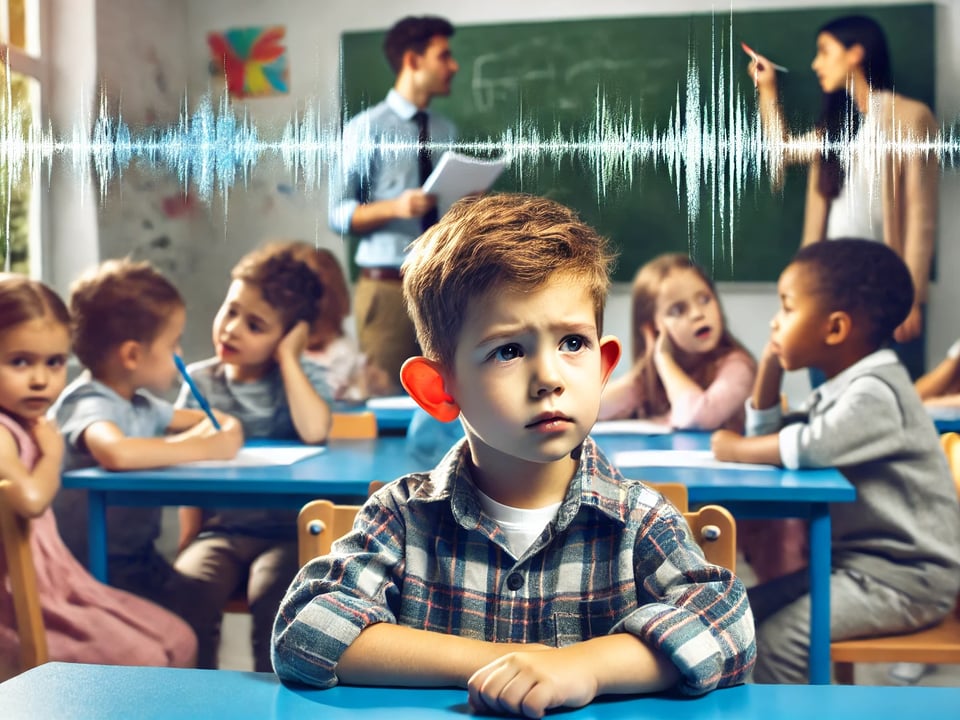
We also see school-aged children for auditory processing assessments, which is a separate topic, but it’s worth noting here because parents often confuse the two. Auditory processing disorder (APD) is diagnosed after hearing sensitivity is confirmed to be normal; it describes difficulty processing speech in noise or complex auditory tasks despite normal cochlear function. It’s not the same as hearing loss, and standard hearing aids are not the usual treatment. If your child can’t hear because of glue ear or sensorineural loss, that needs to be fixed first before anyone can properly assess auditory processing.
Practical Steps for Parents
If your newborn did not get a clear result on the SWISH screen, make sure the diagnostic ABR appointment happens. If you’ve lost track of the referral, contact your SWISH coordinator or GP. Do not wait for someone to call you back.
If your toddler isn’t meeting speech milestones, isn’t responding to their name, or has had multiple ear infections, see your GP and specifically ask for a referral for a hearing test and ENT review. Tympanometry will pick up glue ear immediately; if the tympanogram is flat (type B) and has been for more than three months, push for an ENT appointment.
If your child has been diagnosed with permanent hearing loss, whether mild or profound, time is the variable you cannot get back. Hearing aids should be fitted as soon as possible after diagnosis. If you’re already with Hearing Australia, they will manage that. If you’re considering a private paediatric fitting instead, make sure the audiologist has paediatric experience, uses real-ear measurement to verify the fitting, and has a clear plan for regular reviews.
If your child may be a cochlear implant candidate, candidacy is assessed by a specialist implant team (in Sydney, for example, at Sydney Children’s Hospital, The Children’s Hospital at Westmead or NextSense). Your audiologist or Hearing Australia will refer into that pathway, and the team will explain how surgery and devices are funded.
The Bottom Line
The auditory brain doesn’t wait. If sound is blocked or distorted during the first three to four years of life, cortical reorganisation begins, and the opportunity for normal auditory development narrows. Newborn screening in NSW is solid, government-funded services for children are well established, and the evidence for early intervention is strong. What still fails, sometimes, is the middle bit: the parents who didn’t understand the refer result, the GP who said “he’ll grow out of it,” the six-month wait for an ENT appointment while glue ear persists.
If you’re reading this because you’re worried about your child’s hearing, you’re already ahead. Get the hearing test, get the tympanometry, and if there’s a problem, act on it now. The auditory cortex is listening, but only for a little while longer.
References
Sharma A, Dorman MF, Spahr AJ. A sensitive period for the development of the central auditory system in children with cochlear implants: implications for age of implantation. Ear Hear. 2002;23(6):532-539.
Ching TYC, Dillon H, Button L, et al. Age at intervention for permanent hearing loss and 5-year language outcomes. Pediatrics. 2017;140(3):e20164274.
NSW Ministry of Health. Statewide Infant Screening – Hearing (SWISH) Program. Available at: health.nsw.gov.au