Living on the Northern Beaches means living outdoors. The ocean is a five-minute drive. The bush tracks start at the end of the street. You surf before work, swim at lunch, run in the evening, and stand on the sideline of your kid’s football game on Saturday morning in wind that could strip paint. All of which is to say: your ears take a beating here that they would not take in, say, Parramatta.
This matters because the Northern Beaches lifestyle creates a specific set of hearing problems that generic hearing advice doesn’t address. Surfer’s ear. Tinnitus from years of exposure to wind and water. Auditory processing issues that make busy cafes in Manly feel like a wall of noise. Misophonia triggered by sounds you can’t escape. And, for those already wearing hearing aids, the question of whether your devices can survive the life you actually lead.
I’ve been treating patients across these issues for close to 20 years, many of them from this exact postcode. What follows is the guide I wish I could hand everyone who walks through the door.
Surfer’s Ear: The Northern Beaches Signature Condition
If you’ve surfed the Northern Beaches for any length of time, there is a reasonable chance that bony growths have started forming inside your ear canals. This condition, called exostosis (or surfer’s ear), develops when cold water and wind repeatedly hit the ear canal. The body responds by growing new bone to protect the canal. It’s a defence mechanism. The problem is that it doesn’t stop.
Research puts the prevalence among surfers somewhere between 38% and 73%, depending on the water temperature and how long they’ve been at it. Australian studies sit at the higher end of that range. A 2023 systematic review found the condition was directly correlated with time spent in cold and windy conditions, and that surfers in cooler waters were up to six times more likely to develop it than those in tropical waters.
Sydney’s ocean temperature sits around 18–19°C through winter. That’s cold enough to trigger exostosis in anyone surfing regularly over several years.
The progression is slow and sneaky. Most people don’t notice anything until the canal has narrowed enough to trap water after every session. That trapped water leads to recurring ear infections. Eventually, you notice hearing loss on one side, or both. By the time you’re in the audiologist’s chair, the growths may have blocked 60% or more of the canal.
Surgery (exostectomy) exists and works, but the recovery is not trivial. You’ll have packing in the ear for weeks, limited hearing during that time, and strict water avoidance. The simpler option is prevention: custom-moulded swim plugs that seal the canal while still letting you hear conversation and wave sets. An audiologist can take the impressions and have these made to fit your ears exactly. They’re not the foam plugs you buy from Chemist Warehouse. They’re shaped to your anatomy and designed for what you actually do.
If you surf, kayak, dive, or swim at Freshwater, Curl Curl, Dee Why, or anywhere else along this stretch of coast, get your ears checked before symptoms appear. The growths are irreversible once formed. Prevention costs a fraction of surgery.
Tinnitus: When the Ocean Stays in Your Head
Tinnitus is the perception of sound when no external sound exists. Ringing, buzzing, hissing, roaring. For some people it’s a high-pitched whine. For others it’s a low hum. It can be constant or come and go. It’s often louder in quiet rooms, which is why many tinnitus patients dread bedtime.
On the Northern Beaches, the most common triggers I see are noise exposure (surfing, power tools, live music, motorcycles) and age-related hearing loss in the higher frequencies. These aren’t mutually exclusive. A 55-year-old tradesperson who’s surfed Narrabeen since the ’80s often ticks both boxes.
What most people don’t realise is that tinnitus is usually a symptom, not a disease. When the ear loses access to certain frequencies, the brain tries to compensate. It turns up the internal gain, hunting for signal. The ringing you hear is the brain’s response to missing input.
This is why hearing aids are one of the most effective treatments. A properly fitted hearing aid restores the frequencies your brain has been straining to hear. With that input restored, the brain dials down its internal amplification. The tinnitus doesn’t vanish for everyone, but in most cases it recedes significantly. Many modern hearing aids also include built-in sound therapy: fractal tones, white noise, or nature sounds that can be tuned to sit just below your tinnitus signal, giving your brain something neutral to latch onto instead.
The fitting matters enormously. A hearing aid that isn’t verified with real-ear measurements may amplify the wrong frequencies, or not enough of the right ones, and leave tinnitus untouched. At our clinic, every fitting includes real-ear measurements to confirm that the sound reaching your eardrum matches the prescription. It’s the difference between an educated guess and an accurate result.
If you’re managing tinnitus without professional support, or if you’ve been told there’s nothing that can be done, that’s worth challenging. Treatment options have improved dramatically, and the earlier you start, the easier the brain adapts.
Auditory Processing Disorder: When Hearing is Fine But Understanding Isn’t
Auditory processing disorder (APD) is one of the most misunderstood conditions in hearing health. People with APD can hear sounds perfectly well. Their ears work fine. The problem is in how the brain processes those sounds, particularly speech in noisy environments.
A child with APD might pass a standard hearing test and still struggle to follow the teacher in a busy classroom. An adult might hear every word in a quiet office but fall apart in a restaurant or at a barbecue. The sounds arrive at the brain, but the brain can’t sort them quickly enough. Competing signals pile up. Speech blurs into background noise.
APD is diagnosed by audiologists through a battery of specialised tests that deliberately stress the auditory system. These are not the same as a standard hearing test. The assessment takes around 90 minutes to two hours and evaluates how the brain handles degraded speech, competing signals, rapid input, and information arriving at both ears simultaneously. Children need to be at least seven years old for reliable testing, because the auditory pathways are still developing before that age.
The condition is often confused with ADHD, autism spectrum disorder, or general learning difficulties. It can coexist with any of those, which makes accurate diagnosis even more important. Getting the label right determines the treatment. An ADHD strategy won’t fix an auditory processing deficit, and vice versa.
At The Audiology Place, we test for APD in both children and adults. Our clinic includes sound-treated rooms designed for this type of assessment, and Dr Signe Steers has spent close to two decades in paediatric audiology, including teaching roles at the University of Sydney and A.T. Still University’s Doctor of Audiology programme. We regularly see patients referred from across Sydney who’ve been told their hearing is ‘normal’ but know something isn’t right.
Management typically involves a combination of environmental modifications (acoustic treatment, assistive listening devices), direct auditory training, and compensatory strategies. The goal isn’t a cure. It’s building the tools and the awareness to work with the brain you have.
Misophonia: The Condition Nobody Takes Seriously Until It Ruins Dinner
Misophonia is a strong emotional and physiological reaction to specific sounds. Chewing. Sniffing. Pen clicking. Throat clearing. Breathing. For people with misophonia, these sounds don’t just annoy. They provoke rage, panic, or an overwhelming need to leave the room. The reaction isn’t voluntary. It isn’t a personality flaw. It’s a brain-based condition involving hyperconnectivity between the auditory system and the emotional processing centres.
It typically begins in childhood, often between the ages of 8 and 12, and tends to get worse over time if left untreated. Studies report that around 77% of sufferers experience worsening symptoms from onset. The condition is more common in females and frequently co-occurs with anxiety disorders, tinnitus, and ADHD.
For years, people with misophonia were told they were overreacting. They were told to toughen up. Family meals became battlefields. Shared offices became prisons. The silence around the condition has only recently started to break, partly because brain imaging research now confirms what patients always knew: misophonia produces measurable changes in brain activation when trigger sounds are present.
Treatment is not about avoiding trigger sounds. Avoidance feels logical but actually reinforces the brain’s threat response, making triggers more powerful over time. Effective management uses a combination of sound therapy (introducing neutral background sound to reduce the contrast of triggers), counselling, desensitisation techniques, and in some cases ear-level sound-generating devices that act as a buffer between the patient and their environment.
At our Forestville clinic, we assess and treat misophonia using a multidisciplinary, evidence-based approach. We work with patients and their families to build a personalised management plan. Treatment takes time and consistency. It’s not a one-appointment fix. But the condition can improve, and for many patients, the relief of simply being taken seriously is the first step.
Hearing Aids for the Northern Beaches Lifestyle: Water, Sweat, and Everything In Between
One of the most common questions I hear is: “Can I still surf with hearing aids?” The honest answer is that it depends on the device and what you’re prepared to manage. No hearing aid on the market is designed for deliberate submersion in salt water. But the technology has closed the gap dramatically.
The industry standard for water and dust resistance is the IP rating. IP68 is the highest commonly available for hearing aids, meaning the device is completely dust-tight and can withstand immersion in fresh water up to one metre for 30 minutes. Most leading manufacturers now offer IP68-rated devices. Phonak’s Infinio range, which has been put through over 10,000 hours of durability testing, carries an IP68+ rating. Starkey’s Omega AI line uses a proprietary ten-layer waterproof coating. Both survive sweat, rain, humidity, and accidental splashes with no drama.
For active Northern Beaches patients, I generally recommend a receiver-in-canal (RIC) style hearing aid with the highest available water resistance rating from whichever manufacturer best matches their hearing profile. The device doesn’t get chosen based on the marketing. It gets chosen based on your audiogram, your lifestyle, and how the aid performs when verified with real-ear measurements on your actual ears.
A few practical notes. If you exercise heavily, a nightly drying routine matters. A hearing aid dehumidifier removes moisture that accumulates from sweat over the day. If you surf, remove the devices before entering the water and use custom swim plugs instead. After salt water exposure, wipe them down before recharging. These are small habits that protect a significant investment.
As an independent clinic, we fit every major brand. We don’t have sales targets from any manufacturer. We don’t receive commissions that incentivise one device over another. When we recommend a hearing aid, it’s because the data says it’s the best match for your ears and your life.
Why an Independent Audiologist Matters
Most hearing aid clinics in Australia are owned by hearing aid manufacturers. This isn’t a conspiracy theory. It’s a publicly available fact. These corporate-owned clinics employ audiologists who can only recommend products from their parent company’s brand portfolio. There’s nothing illegal about this, but you should know about it before you sit down for a fitting.
At The Audiology Place, we’re not owned by any manufacturer. We don’t stock only one brand’s products. There are no quotas to meet, no preferred-supplier agreements pushing us toward a particular device. We fit Phonak, Starkey, Oticon, Widex, Signia, ReSound, and others. If the best device for your hearing and your lifestyle comes from a brand that a corporate-owned clinic doesn’t carry, you’ll still get it from us.
Independence also changes what happens when you don’t need a hearing aid. A surprising number of patients walk through our door expecting to be sold a device and walk out with a diagnosis that points in a different direction: wax removal, a medical referral, auditory training, or simply reassurance that their hearing is age-appropriate and doesn’t require intervention. We earn our living from accurate diagnostics and honest advice, not from shifting units.
When Should You Get Your Hearing Checked?
If you notice any of these, book an assessment sooner rather than later:
You’re asking people to repeat themselves more than you used to. Conversations in cafes or restaurants have become harder. You’re turning the TV up past where your partner is comfortable. You feel like you hear but don’t understand. You’ve noticed ringing, buzzing, or hissing in your ears. Your ears feel blocked after surfing or swimming, even after the water should have drained. Certain everyday sounds provoke a strong emotional reaction that feels out of proportion. Your child’s teacher says they’re struggling to follow instructions in the classroom.
You don’t need a GP referral to see an audiologist, though having one allows you to claim a portion of the assessment through Medicare. Our initial consultation is thorough: we assess hearing sensitivity across the full frequency range, test speech understanding in noise, evaluate middle ear function, and discuss your symptoms, lifestyle, and goals before recommending anything.
Get in Touch
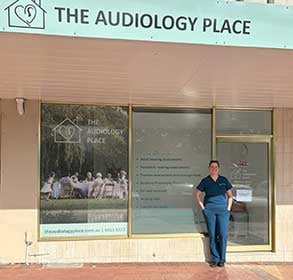
The Audiology Place is located at Unit 12/14 Starkey Street, Forestville NSW 2087, just south of Coles off Warringah Road. We serve patients from across the Northern Beaches, Frenchs Forest, Killarney Heights, Chatswood, and wider Sydney.
Phone: (02) 9315 8327
Email: admin@theaudiologyplace.com.au
We have two-hour parking directly out front and additional parking underneath Coles. Bus routes 273 and 278 from QVB and Chatswood stop nearby.
No referral required. No sales pressure. Just a straight answer about what’s going on with your hearing and what, if anything, to do about it.