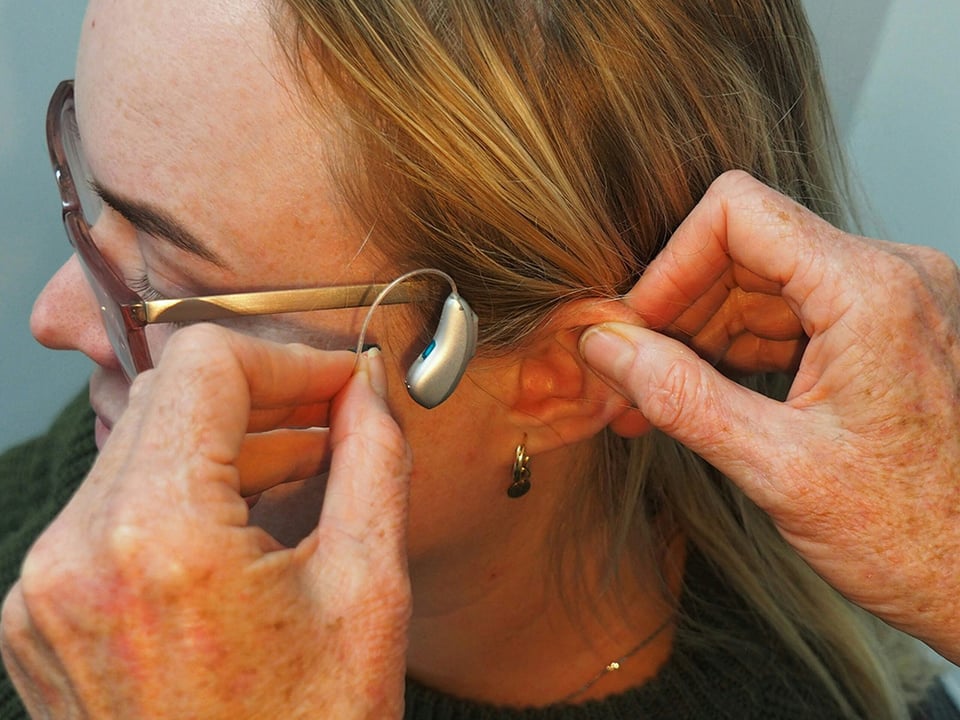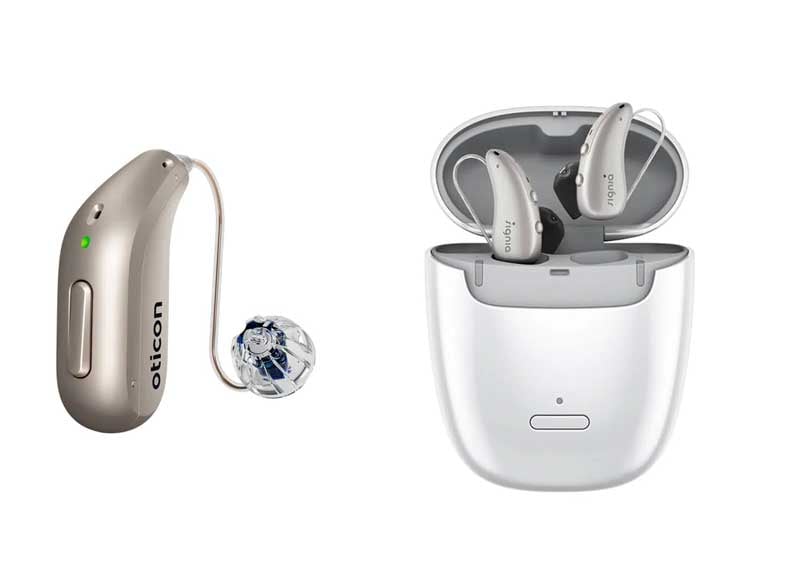


Small differences in hearing between your ears are completely normal. Most people have a 5 to 10 decibel variance that causes no real-world problems. But when one ear tests 15 decibels or more below the other, particularly in the speech frequencies between 500 and 4000 Hz, that asymmetry needs proper investigation. The causes range from benign (a lifetime of holding your phone to the same ear) to urgent (sudden sensorineural hearing loss that needs treatment within days), which is why audiologists follow specific protocols when asymmetric hearing loss shows up on testing.
I’ve seen this presentation hundreds of times. Someone comes in convinced they’re going deaf in one ear, or more commonly, they’ve noticed they struggle when a particular person sits on their ‘bad side’ at dinner. Sometimes the asymmetry is flagged during a routine hearing test and comes as a complete surprise. Either way, the question is always the same: why is this happening, and should I be worried?
When Ear Differences Are Nothing to Worry About
Your ears are separate biological structures that have weathered slightly different exposures over your lifetime. Perfect symmetry would actually be unusual. During pure tone audiometry (the standard beep test where you press a button when you hear tones at different frequencies), we routinely see one ear performing marginally better than the other across certain frequencies.
Inter-aural differences up to 10 decibels are considered within normal limits. You won’t notice this clinically. Your brain integrates input from both ears, and small variances don’t affect speech understanding or sound localisation in any meaningful way. I see plenty of patients with textbook-normal hearing who show a 5 or 10 dB right-left difference and have never noticed anything amiss.
The asymmetry only becomes clinically significant when it reaches 15 decibels or greater at two or more consecutive frequencies, or when it appears suddenly. That’s when we move from ‘normal biological variation’ to ‘requires investigation’.
What Causes Meaningful Asymmetric Hearing Loss
Unilateral Noise Exposure
This is far more common than most people realise. Right-handed shooters who’ve spent years at the range without proper protection develop worse high-frequency hearing loss in their left ear, the one exposed to muzzle blast. Carpenters who hold power tools on a dominant side, musicians who sit in front of the brass section with one ear constantly exposed, even people who’ve spent 30 years holding a landline phone to the same ear while typing. These exposures are cumulative and asymmetric.
I’ve tested tradies with 40 dB differences between ears, entirely explained by occupational noise exposure patterns they’d never consciously registered. The notch at 4000 Hz, the classic noise-induced hearing loss signature, appears much deeper in one ear than the other.
Acoustic Neuroma (Vestibular Schwannoma)
This is the diagnosis everyone fears, and the one we’re obligated to rule out when asymmetric sensorineural hearing loss appears. Acoustic neuromas are benign tumours that grow on the vestibular nerve, and they’re quite rare. Incidence is roughly 1 in 100,000 per year. They present with progressive unilateral hearing loss, often accompanied by tinnitus in the affected ear and sometimes balance issues.
The Australian audiological standards are clear: asymmetric sensorineural hearing loss of 15 dB or more at two consecutive frequencies between 500 and 4000 Hz, or 15 dB or more at any single frequency between 1000 and 8000 Hz, warrants referral for MRI imaging to exclude retrocochlear pathology. This isn’t negotiable. It doesn’t matter if the patient is 75 and the hearing loss has been gradual. The protocol exists because missing an acoustic neuroma has serious consequences, and early detection dramatically improves outcomes.
Most referrals come back negative, which is exactly the point of the protocol.
Ménière’s Disease
Ménière’s typically affects one ear, at least initially. The hallmark is fluctuating low-frequency hearing loss accompanied by episodic vertigo, aural fullness, and tinnitus. During testing, we’ll see the hearing thresholds at 250 and 500 Hz significantly worse in the affected ear, often with 20 or 30 dB asymmetry, while the high frequencies remain relatively preserved, at least early in the disease course.
The fluctuation is key. A patient with Ménière’s might test one way in June and completely differently in August, depending on where they are in the disease cycle. This is why we perform serial audiometry when Ménière’s is suspected.
Sudden Sensorineural Hearing Loss
This is the true emergency in audiology. Sudden sensorineural hearing loss (SSHL) is defined as 30 decibels or greater hearing reduction across three consecutive frequencies, occurring within 72 hours. It usually affects one ear. Patients often wake up with it, or notice it when they try to use the phone.
SSHL requires same-day or next-day referral to an ENT specialist. Treatment with corticosteroids is most effective when started within two weeks, ideally within days. The outcomes vary. Some people recover fully, some partially, some not at all, and delayed treatment significantly worsens prognosis. If you experience sudden hearing loss in one ear, this is not a ‘wait and see’ situation. You need testing immediately.
Chronic Ear Disease and Conductive Causes
Not all asymmetric hearing loss is sensorineural. Conductive hearing loss, caused by problems in the outer or middle ear rather than the inner ear or nerve, commonly affects one side. A cholesteatoma, chronic otitis media, otosclerosis, or even impacted wax in one ear will create asymmetry that shows up clearly on testing.
Tympanometry helps us differentiate. If we see normal middle ear function bilaterally but asymmetric hearing thresholds, we’re dealing with sensorineural loss and the investigation pathway changes. If tympanometry shows reduced compliance or negative pressure in the worse ear, we’re looking at a conductive component that might be medically or surgically treatable.
The Investigation Pathway
When asymmetric hearing loss appears during testing at our clinic, the first step is a thorough case history. Has the loss been sudden or gradual? Is there tinnitus, and if so, is it one-sided? Any dizziness or balance issues? Any history of ear infections, trauma, noise exposure, or ototoxic medication?
We then perform full diagnostic audiometry: pure tone air and bone conduction testing, speech discrimination testing, and tympanometry at minimum. Speech-in-noise testing can reveal functional deficits that pure tone audiometry misses, particularly when one ear is doing the heavy lifting.
If the asymmetry meets referral criteria (again, the threshold is 15 dB or more at appropriate frequencies for sensorineural loss), we write a referral to an ENT specialist, usually requesting MRI with and without gadolinium contrast to rule out retrocochlear pathology. Medicare covers much of the cost of the scan if it’s deemed clinically necessary, though out-of-pocket expenses vary.
For sudden hearing loss, the referral is urgent. For gradual asymmetric loss in an otherwise well patient, it’s important but less time-critical. Either way, the investigation happens. We don’t dismiss asymmetric hearing loss as ‘probably nothing’.
What to Do If One Ear Seems Worse
If you’ve noticed one ear seems worse than the other, book proper diagnostic audiometry with a qualified audiologist who can interpret the results in context and start appropriate follow-up if needed. A free screening at a shopping centre kiosk won’t do that.
Most of the time, investigation reveals nothing sinister. The asymmetry is explained by noise exposure patterns, age-related changes that happened to progress differently in each ear, or an old middle ear issue you’d forgotten about. The only way to know is to test and, when indicated, to image.
Real reassurance comes from following the clinical pathway that rules out the conditions that matter. Being told ‘it’s probably fine’ is not the same thing. That’s what evidence-based practice looks like, and it’s what you should expect from any competent audiology clinic.