You swallow, and your ear pops. You yawn, and it happens again. Perhaps you hear a faint crackling sound when you move your jaw, or one ear keeps feeling blocked until something clicks and your hearing briefly returns to normal.
If your ear keeps popping, the most likely explanation is a change in pressure inside your middle ear. This is usually related to the Eustachian tube, a small passage connecting your middle ear to the back of your nose and throat.
Occasional ear popping is completely normal. It’s one of the ways your ears regulate pressure. But frequent popping, particularly when accompanied by muffled hearing, discomfort or a persistent blocked sensation, can indicate that something isn’t working as it should.
The cause isn’t always a blocked Eustachian tube, either. Earwax, middle ear fluid, jaw problems and even an Eustachian tube that stays too far open can produce similar sensations.
Understanding the difference is important because the right treatment depends on what’s actually causing the problem.
What Actually Happens When Your Ear Pops?
Your ear is divided into three main sections: the outer ear, middle ear and inner ear.
The middle ear is an air-filled space behind your eardrum. For your eardrum to vibrate efficiently, the air pressure on either side needs to be reasonably balanced.
This is where the Eustachian tube comes in.
Each ear has its own Eustachian tube, connecting the middle ear to the upper part of the throat behind the nose.
Most of the time, the tube remains closed. However, muscles around it briefly open the passage when you swallow, yawn or perform certain jaw movements.
This allows air to move between the middle ear and the back of the nose, helping equalise pressure.
That little pop you hear is often the sound or sensation associated with the Eustachian tube opening and pressure changing inside your middle ear.
It’s the same mechanism responsible for your ears popping during a flight or while driving through the mountains.
When everything is functioning normally, you might barely notice it.
When the tube becomes inflamed, obstructed or unusually open, however, those sensations can become frequent or uncomfortable.
An international clinical consensus published in Clinical Otolaryngology identifies popping, pressure, fullness and muffled hearing as characteristic symptoms of Eustachian tube dysfunction.
9 Reasons Your Ear Might Keep Popping
1. Eustachian Tube Dysfunction
One of the most common explanations for persistent ear popping is Eustachian tube dysfunction, often abbreviated to ETD.
Normally, the Eustachian tube opens briefly to regulate middle-ear pressure.
In obstructive or dilatory Eustachian tube dysfunction, the tube doesn’t open as effectively as it should.
Air can gradually be absorbed from the middle-ear space, producing negative pressure relative to the outside environment.
This may cause the eardrum to retract slightly and can create a sensation of fullness or blockage.
When the tube eventually opens, air moves through it, sometimes producing a noticeable pop or crackle.
Common symptoms include:
- Repeated popping or clicking, particularly when swallowing
- A blocked or underwater sensation
- Muffled hearing that comes and goes
- Pressure inside one or both ears
- Mild discomfort
- Sometimes tinnitus or ringing
ETD can develop after a cold, during periods of nasal inflammation or in association with allergies.
For many people, it settles as the underlying inflammation improves. However, some people experience persistent symptoms.
Clinically, Eustachian tube dysfunction lasting longer than three months is generally classified as chronic.
An important distinction is that Eustachian tube dysfunction is not simply a label for any unexplained ear pressure. Diagnosis requires consideration of symptoms alongside examination findings, which may include evidence of abnormal middle-ear pressure.
2. Colds, Sinus Congestion and Allergies
If your ears have started popping during or after a cold, there’s a reasonable explanation.
The Eustachian tube opens into the upper part of the throat behind the nose, an area that can become inflamed during respiratory infections.
When the surrounding tissues swell, the tube may struggle to open and close normally.
This can create an uncomfortable cycle:
- The tube doesn’t open adequately.
- Pressure builds up or becomes negative inside the middle ear.
- Your ear begins to feel blocked.
- Swallowing or yawning temporarily opens the tube.
- You hear a pop and experience momentary relief.
- The pressure imbalance gradually returns.
Hay fever and allergic rhinitis can create similar problems.
In Sydney, seasonal allergies may contribute to persistent nasal congestion and associated ear symptoms.
One reason this can be frustrating is that your nasal congestion may have improved while your ears still feel blocked.
Middle-ear pressure can take longer to normalise than the original cold symptoms.
If symptoms persist, however, it’s worth checking whether there’s also fluid behind the eardrum or another explanation.
3. Changes in Air Pressure: Flying, Diving and Altitude
Your ears are designed to accommodate ordinary changes in air pressure.
But sometimes the surrounding pressure changes faster than the Eustachian tube can compensate.
This is particularly noticeable during:
- Aeroplane take-off and landing
- Scuba diving
- Driving through mountainous areas
- Rapid changes in elevation
When an aeroplane descends, cabin pressure increases. If the Eustachian tube can’t admit air into the middle ear quickly enough, the pressure difference can pull the eardrum inward.
This produces the familiar blocked-ear sensation experienced during flights.
When the Eustachian tube finally opens, the pressure equalises and you hear a pop.
This form of pressure-related difficulty is sometimes called baro-challenge-induced Eustachian tube dysfunction.
Interestingly, someone with this condition may have completely normal ear pressure measurements when examined at ground level.
The problem only becomes apparent during a pressure change.
More severe cases can result in ear barotrauma, including pain, middle-ear fluid or injury to the eardrum.
If your ears remain painful or your hearing is reduced after flying or diving, you should have them examined.
4. Fluid Behind the Eardrum (Glue Ear)
Sometimes the problem isn’t simply pressure. There may be fluid in the middle-ear space.
This condition is called otitis media with effusion, commonly known as glue ear.
When the Eustachian tube isn’t functioning properly, fluid can accumulate behind the eardrum.
Unlike a typical middle-ear infection, this fluid may be present without significant pain or fever.
Instead, people often describe:
- Muffled hearing
- A persistent blocked sensation
- Crackling or popping
- Changes in hearing when swallowing
- An uncomfortable feeling of pressure
Glue ear is particularly common in young children, whose Eustachian tubes are smaller and more susceptible to obstruction.
However, adults can develop it too, especially following respiratory infections.
The fluid can persist for several weeks or occasionally months, even after the initial illness resolves.
Most uncomplicated cases improve naturally, but persistent fluid can interfere with hearing.
The Australian Government’s Healthdirect guide to glue ear explains how middle-ear fluid affects hearing and when assessment is appropriate.
If you’re an adult with persistent fluid or blockage in just one ear, particularly without a recent cold, arrange a medical assessment. While common conditions are usually responsible, an ENT specialist may need to exclude less common causes of Eustachian tube obstruction.
5. Earwax Build-Up
It’s easy to assume that popping ears mean you have too much earwax.
Sometimes earwax does contribute to unusual sensations, but there is an important distinction.
Earwax is located in the outer ear canal, whereas Eustachian tube pressure problems occur behind the eardrum.
A build-up of wax can cause:
- Muffled hearing
- Fullness or pressure
- Itching
- Tinnitus
- Occasionally crackling sensations or unusual noises
However, earwax doesn’t normally cause the Eustachian tube itself to malfunction.
This is why clearing earwax won’t necessarily resolve an ear that keeps popping when you swallow.
At The Audiology Place, we can examine the ear canal to see whether wax is contributing to the symptoms.
Where wax is impacted, we offer professional microsuction earwax removal.
But if your ear canal is clear and you still have a blocked sensation, the next step is investigating the middle ear rather than repeatedly trying to remove wax.
6. Jaw Problems and Temporomandibular Joint Dysfunction
Not every clicking or popping sensation near your ear comes from your ear.
Your temporomandibular joint, or TMJ, sits immediately in front of the ear canal.
It’s the joint that allows your jaw to open, close and move sideways.
Problems involving this joint or its surrounding muscles are collectively known as temporomandibular disorders, or TMD.
These can produce sensations that are surprisingly similar to ear problems.
Symptoms may include:
- Clicking or popping when chewing
- Ear fullness
- Pain in front of the ear
- Jaw stiffness
- Headaches
- Discomfort when opening the mouth widely
- Teeth grinding or clenching
The distinction is that TMJ-related popping is often associated with jaw movement rather than a change in middle-ear pressure.
In a 2017 study of 112 patients presenting with ear fullness, researchers investigated temporomandibular disorders in people whose initial ear-related treatments had not resolved their symptoms.
All 112 patients had normal tympanometry findings, and the researchers identified TMD in the study group.
Many reported improvements following treatment directed at the jaw disorder.
This was an observational study, not a controlled clinical trial, so it cannot establish that TMD causes most unexplained ear fullness.
Nevertheless, it demonstrates why clinicians should consider the jaw when someone reports ear pressure despite normal middle-ear measurements.
If your ear clicks whenever you chew, open your mouth or move your jaw sideways, the problem may not be inside your ear at all.
7. A Eustachian Tube That Stays Too Open
Most discussions of Eustachian tube dysfunction focus on a tube that won’t open properly.
But the opposite can happen.
In a condition called patulous Eustachian tube dysfunction, the tube remains abnormally open.
Because the passage stays open, sounds generated inside your body can travel unusually easily towards the middle ear.
People may experience:
- Hearing their own voice unusually loudly
- Hearing their breathing inside their ear
- A hollow or echoing sensation
- Ear fullness
- Unusual pressure sensations
The experience of hearing your own voice or breathing sounds unusually prominently is called autophony.
Patulous Eustachian tube dysfunction has sometimes been associated with substantial weight loss, although many cases have no obvious trigger.
Symptoms may worsen during exercise and sometimes improve when lying down.
This condition requires a different approach from obstructive Eustachian tube dysfunction.
Treatments intended to force an obstructed tube open may be unhelpful when the tube is already staying open too much.
A 2019 scientific review of patulous Eustachian tube dysfunction explains why the symptoms can be difficult to distinguish from other middle-ear conditions.
8. Middle Ear Infections
A middle-ear infection can also produce popping or pressure sensations.
During an infection, inflammation and fluid accumulation can alter middle-ear pressure and affect eardrum movement.
You may experience:
- Earache or significant pain
- Reduced hearing
- Fever
- A blocked sensation
- Popping or crackling
- Occasionally fluid draining from the ear
Middle-ear infections are particularly common in children, although adults can develop them.
It’s important to distinguish an active infection from fluid that remains after an infection has resolved.
They can produce similar hearing symptoms but may require different management.
If your ear popping is accompanied by substantial pain, fever or discharge, see your doctor rather than trying to repeatedly force your ear to pop.
9. Unusual Muscle Movements Inside the Ear
Less commonly, repeated clicking or popping noises may be related to small muscles inside the middle ear.
Two muscles, the tensor tympani and stapedius, normally help regulate the mechanical behaviour of the middle-ear system.
In rare cases, involuntary muscle contractions can produce repetitive clicking, fluttering or tapping sounds.
This is sometimes described as middle ear myoclonus.
Unlike ordinary Eustachian tube popping, these sounds may be rhythmic or occur repeatedly without swallowing, yawning or changing altitude.
Some people describe a fluttering sensation rather than a conventional pop.
Middle ear myoclonus is uncommon and should not be assumed to explain ordinary crackling sensations.
However, persistent rhythmic clicking deserves assessment, particularly when the usual middle-ear investigations are normal.
A 2022 systematic review of middle ear myoclonus examined the available evidence and highlighted the limited research supporting different treatment approaches.
What Does the Type of Ear Popping Tell You?
The circumstances surrounding your symptoms can provide useful clues.
| What you’re noticing | Possible explanation |
|---|---|
| Popping when swallowing or yawning | Normal pressure equalisation or Eustachian tube dysfunction |
| Popping after a cold | Eustachian tube inflammation or middle-ear fluid |
| Popping during flights | Difficulty equalising pressure |
| Popping with muffled hearing | Middle-ear pressure problems, fluid or earwax |
| Clicking when chewing | Temporomandibular joint dysfunction |
| Hearing your own breathing loudly | Possible patulous Eustachian tube |
| Popping with pain and fever | Possible middle-ear infection |
| Repetitive rhythmic clicking | Occasionally middle-ear muscle contractions |
These patterns are clues, not diagnoses. Different ear conditions can produce remarkably similar symptoms.
Why Does Only One Ear Keep Popping?
It’s possible for Eustachian tube dysfunction to affect one ear while the other functions normally.
Each ear has its own Eustachian tube, and the degree of inflammation, obstruction or middle-ear pressure imbalance may differ between sides.
Other possibilities include earwax affecting one canal, fluid behind one eardrum or a jaw problem affecting one side.
However, persistent one-sided symptoms deserve particular attention, especially if they include hearing loss, tinnitus or a sense of blockage that doesn’t resolve.
A clinician may need to investigate the middle ear and occasionally the structures behind the nose where the Eustachian tube opens.
If one ear suddenly becomes blocked and hearing drops, don’t assume it’s simply wax or pressure. Sudden sensorineural hearing loss can feel very similar to an ordinary blocked ear and requires urgent medical attention.
Why Do My Ears Pop Every Time I Swallow?
Swallowing activates muscles that briefly open the Eustachian tubes.
This is a normal physiological process.
Most people don’t notice it unless there’s an unusual pressure difference, inflammation or another factor making the movement more noticeable.
If your ears pop every time you swallow but you have no pain, hearing changes or persistent pressure, it may simply reflect normal Eustachian tube activity.
However, if the popping is accompanied by a blocked feeling or temporary changes in hearing, middle-ear pressure dysfunction becomes a more likely explanation.
Why Does My Ear Keep Popping but It Isn’t Blocked?
Not all popping sensations are associated with an actual obstruction.
The Eustachian tube may be opening normally but producing a noticeable click.
Jaw movement can also create sounds that seem to come from inside the ear.
A patulous Eustachian tube or, much less commonly, involuntary middle-ear muscle contractions may produce unusual auditory sensations without conventional blockage.
This is why an ear examination and middle-ear pressure assessment can be helpful when symptoms are persistent.
A normal-looking ear canal doesn’t necessarily mean there is no problem, but it does help narrow the possibilities.
How Do You Stop Your Ears from Popping?
If the popping is caused by ordinary pressure changes or a mild episode of Eustachian tube dysfunction, several simple strategies may provide relief.
1. Swallow, yawn or sip water
Swallowing and yawning help activate the muscles that open the Eustachian tube.
This may allow middle-ear pressure to equalise naturally.
Chewing gum can also encourage swallowing, which is one reason people often use it during flights.
2. Try gentle pressure equalisation
One technique is the Valsalva manoeuvre.
This involves closing your mouth, pinching your nostrils and blowing out very gently against the closed nose.
The aim is to encourage air through the Eustachian tube.
However, forceful blowing can injure the ear.
Stop immediately if you experience pain or dizziness. Don’t repeatedly force pressure into an ear that won’t clear.
If you have a suspected ear infection, perforated eardrum, recent ear surgery or significant ear pain, seek medical advice before attempting pressure-equalisation manoeuvres.
3. Address nasal allergies where appropriate
If allergic rhinitis is contributing to nasal inflammation, treating the allergy may help manage the underlying condition.
However, it’s worth understanding that nasal sprays aren’t a universally effective treatment for Eustachian tube dysfunction.
A randomised controlled trial published in 2011 found that an intranasal corticosteroid did not significantly improve middle-ear pressure measurements or symptoms compared with placebo.
A subsequent systematic review and meta-analysis published in The Laryngoscope concluded that intranasal corticosteroids were not reliably effective for chronic Eustachian tube dysfunction.
That doesn’t mean nasal steroid sprays are ineffective for allergic rhinitis. It means treating nasal allergy and correcting Eustachian tube dysfunction are not necessarily the same thing.
A GP or pharmacist can advise which treatment, if any, is appropriate for your symptoms.
4. Avoid trying to clean out a pressure problem
Cotton buds, ear candles and home ear-cleaning tools won’t resolve pressure problems behind the eardrum.
In fact, cotton buds can push wax further into the canal and make a separate problem worse.
If wax is suspected, have it checked rather than assuming it’s the cause.
5. Be cautious with flying and diving
If you have significant nasal congestion or difficulty equalising your ears, flying or scuba diving may make symptoms worse.
For divers in particular, attempting to descend when the ears won’t equalise can cause significant injury.
Don’t force a dive when you cannot clear your ears.
For air travel, discuss significant pre-existing ear symptoms with your doctor before flying.
Can Ear Popping Be Treated?
Yes, although treatment depends entirely on the cause.
Short-lived Eustachian tube dysfunction following a cold may require little more than time and monitoring.
Middle-ear fluid often clears naturally, but persistent fluid that affects hearing may require medical treatment or ENT assessment.
For children with persistent glue ear, options can include monitoring, hearing support or grommets.
A 2023 Cochrane review found that autoinflation may provide some short-term benefit for children with glue ear, although the evidence for improved hearing was uncertain.
For adults with chronic obstructive Eustachian tube dysfunction, an ENT specialist may sometimes consider procedures such as balloon dilation of the Eustachian tube.
This involves inserting a small balloon through the nose to temporarily dilate the cartilaginous portion of the tube.
It is not an appropriate treatment for every type of Eustachian tube dysfunction, and careful diagnosis is necessary before considering it.
Other causes require entirely different approaches. Earwax can be removed professionally, jaw disorders may benefit from dental or musculoskeletal management, and infections require appropriate medical assessment.
The first step is establishing which structure is actually responsible for your symptoms.
When Should You Worry About Ear Popping?
Occasional painless popping is usually harmless.
However, you should arrange an assessment if:
- Your ear keeps popping for more than a week or two without improvement.
- You have persistent muffled hearing or a blocked sensation.
- The symptoms affect only one ear and don’t settle.
- You experience recurring ear pain.
- You have ongoing tinnitus or unusual sounds.
- Your hearing seems to fluctuate.
- Symptoms persist after a cold or respiratory infection.
You should seek prompt medical attention if ear popping is accompanied by significant pain, fever, ear discharge or dizziness.
Sudden hearing loss is a medical emergency.
If you suddenly notice substantially reduced hearing in one or both ears, including hearing loss that feels like a blocked ear, attend an emergency department promptly.
Don’t spend several days trying to clear the ear with drops or pressure-equalisation exercises.
You should also seek emergency medical care for hearing symptoms accompanied by facial weakness, other sudden neurological symptoms or a significant head injury.
Australian guidance on these warning signs is available from Healthdirect.
How Does an Audiologist Investigate Ear Popping?
At The Audiology Place, we use several diagnostic tools to understand what is happening inside the ear.
Simply looking for wax is only part of the assessment.
Otoscopy
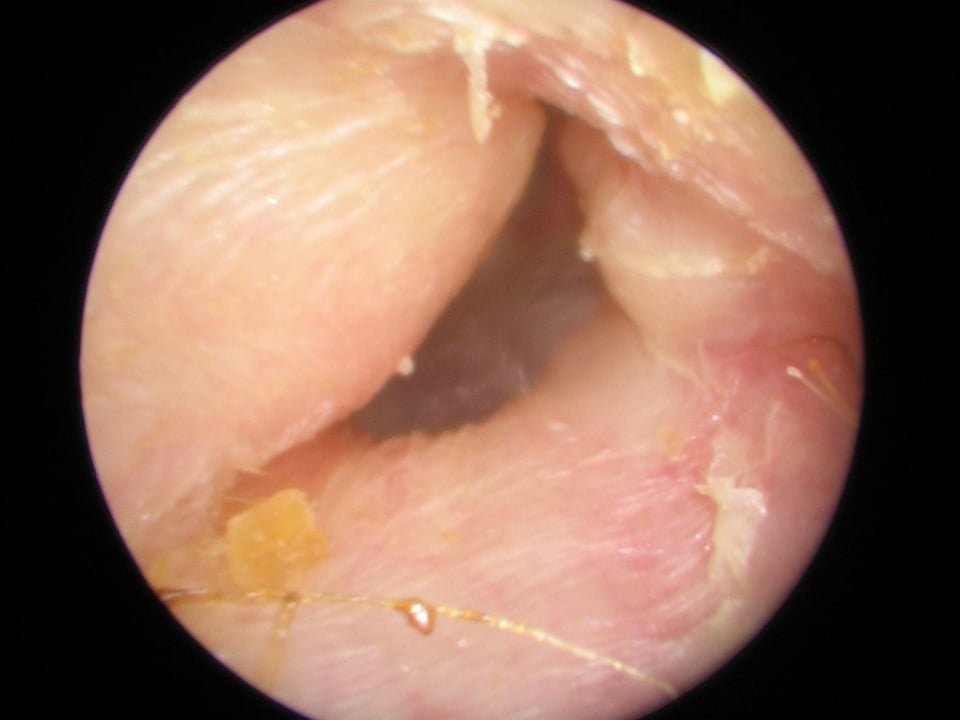
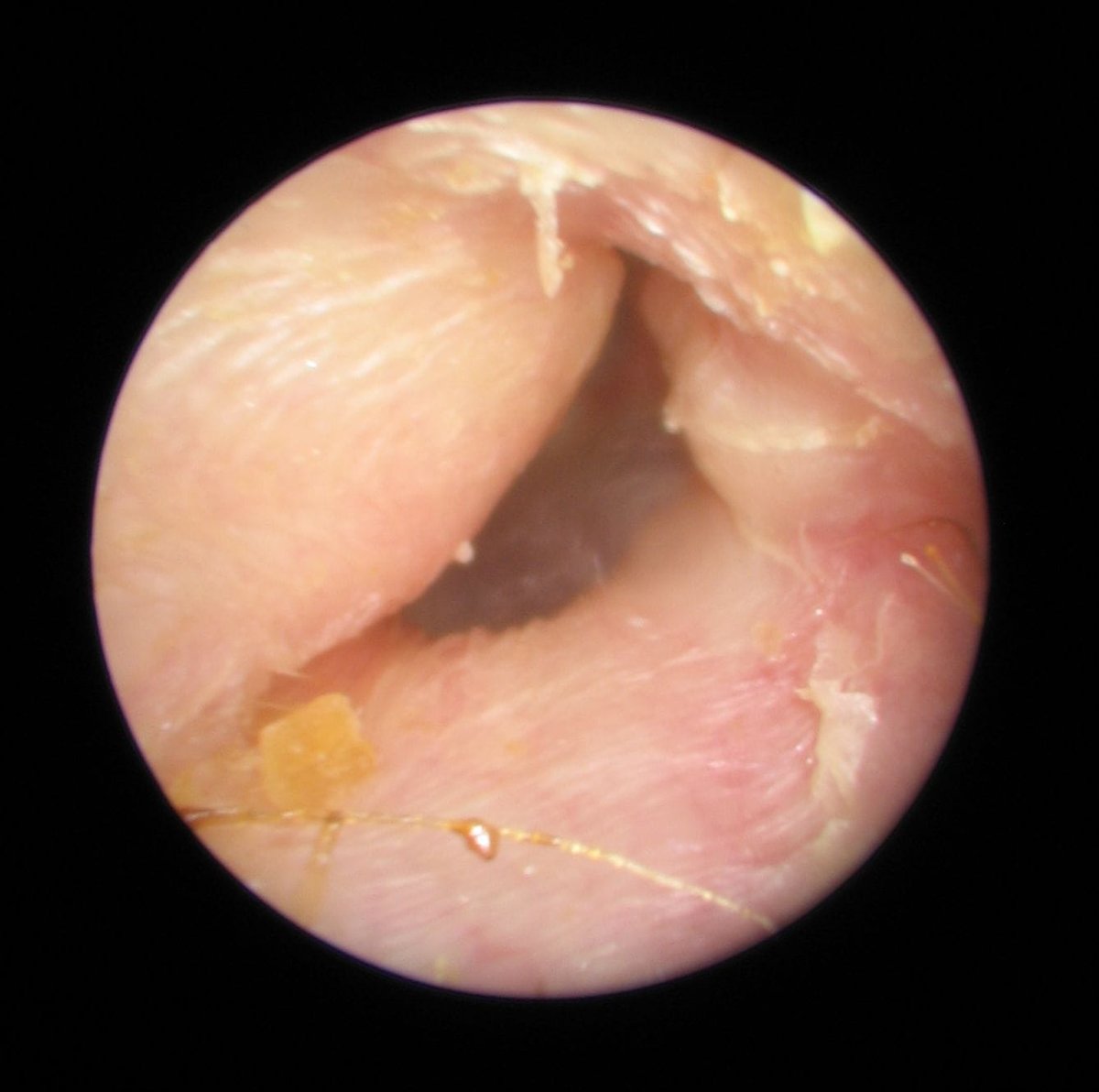
An otoscope allows us to examine the ear canal and eardrum.
This can reveal impacted wax, visible abnormalities of the eardrum and signs suggestive of middle-ear problems.
Tympanometry
Tympanometry is particularly useful when investigating ear pressure and blocked-ear sensations.
A small probe is placed in the ear canal, and the equipment changes the air pressure slightly while measuring how the eardrum and middle-ear system respond.
The resulting graph, called a tympanogram, helps assess middle-ear function.
For example:
Type A tympanogram: Generally consistent with normal middle-ear pressure and mobility.
Type C tympanogram: Shows a peak at negative middle-ear pressure, which can support an assessment of Eustachian tube dysfunction.
Type B tympanogram: A relatively flat tracing that may occur when fluid is present behind the eardrum, although other explanations are possible.
These results need to be interpreted alongside the examination and hearing assessment.
A normal tympanogram also doesn’t rule out every Eustachian tube problem, particularly when symptoms occur only during flying or diving.
Pure-tone audiometry
A comprehensive hearing test helps establish whether hearing has been affected.
By comparing air-conduction and bone-conduction hearing thresholds, we can investigate whether a hearing problem is associated with sound transmission through the outer or middle ear, or with the inner ear.
This distinction can help identify causes such as middle-ear fluid and distinguish them from sensorineural hearing loss.
Acoustic reflex testing
Acoustic reflex measurements provide further information about middle-ear function and parts of the auditory pathway.
They may be useful as part of a broader diagnostic assessment, depending on the symptoms and other test findings.
Medical referral where necessary
An audiologist can assess hearing and middle-ear function, but not every cause of ear popping can be diagnosed through audiological testing alone.
If we identify findings that require medical investigation, or symptoms suggest a condition affecting the nose, throat, jaw or other structures, we can recommend appropriate follow-up with a GP or ENT specialist.
Frequently Asked Questions
Is it bad if my ears keep popping?
Not necessarily. Occasional popping is normal and reflects pressure equalisation. Frequent popping with pain, muffled hearing or persistent fullness may indicate Eustachian tube dysfunction or another ear condition.
Why do my ears pop more in the morning?
Some people notice ear pressure symptoms more after waking, potentially because of changes in nasal congestion, sleeping position or Eustachian tube function. However, morning popping alone isn’t enough to identify a cause.
Can stress cause ear popping?
Stress doesn’t directly establish a middle-ear pressure disorder, but it can contribute to jaw clenching and muscle tension. These may produce clicking sensations around the ear. If symptoms occur with jaw movement, TMD may be worth investigating.
Why does my ear keep popping after a cold?
Inflammation around the Eustachian tube can persist after other cold symptoms improve. Middle-ear fluid may also remain after an infection. If hearing remains muffled or symptoms don’t improve, have your ears examined.
Can earwax cause popping sounds?
Earwax can cause blocked hearing and sometimes unusual crackling sensations. However, true pressure-equalisation popping generally involves the Eustachian tube, not wax in the outer ear canal.
Can ear popping cause hearing loss?
The popping itself is not usually harmful. However, an underlying condition such as persistent middle-ear fluid or significant pressure dysfunction can affect hearing. Severe pressure changes may occasionally injure the ear.
Why does my ear pop when I move my jaw?
Jaw movement can activate muscles associated with Eustachian tube opening. Clicking may also originate from the temporomandibular joint, which sits very close to the ear.
How long does Eustachian tube dysfunction last?
Mild cases following a cold may settle within days or weeks. More persistent problems can continue for months. Symptoms lasting longer than three months are generally classified as chronic and warrant further investigation.
Should I have a hearing test if my ears keep popping?
If the symptoms are persistent, recurrent or accompanied by a change in hearing, a comprehensive hearing assessment that includes tympanometry can be useful.
Ear Popping That Won’t Go Away? Get Your Ears Checked
An occasional pop when you swallow or yawn is part of normal ear function.
But repeated popping, particularly when accompanied by muffled hearing, pressure or a persistent blocked sensation, can be a sign that something else is happening.
The difficulty is that several different conditions can feel almost identical.
A blocked ear canal, fluid behind the eardrum, abnormal middle-ear pressure and even jaw dysfunction can all produce a similar sensation.
At The Audiology Place, we provide comprehensive diagnostic hearing assessments at our independent audiology clinics in Forestville and Epping.
Our assessments include otoscopy, tympanometry and detailed hearing testing, helping us establish whether your symptoms are associated with earwax, middle-ear function or another hearing-related problem.
If further medical investigation is needed, we’ll explain the findings and recommend an appropriate next step.
We also provide professional microsuction earwax removal when wax is contributing to the problem.
Learn more about our comprehensive hearing tests or book an appointment at The Audiology Place.
Forestville | Epping | (02) 9315 8327
Scientific References and Further Reading
- Schilder, A.G.M. et al. (2015).Eustachian Tube Dysfunction: Consensus Statement on Definition, Types, Clinical Presentation and Diagnosis. Clinical Otolaryngology, 40(5), 407–411. Read the paper.
- Mehta, A.E. et al. (2022).Medical Management for Eustachian Tube Dysfunction in Adults: A Systematic Review and Meta-Analysis. The Laryngoscope, 132, 849–856. Read the paper.
- Gluth, M.B. et al. (2011).Management of Eustachian Tube Dysfunction with Nasal Steroid Spray: A Prospective, Randomized, Placebo-Controlled Trial. Archives of Otolaryngology–Head & Neck Surgery, 137(5), 449–455. Read the trial.
- Webster, K.E. et al. (2023).Autoinflation for Otitis Media with Effusion in Children. Cochrane Database of Systematic Reviews. Read the review.
- Peng, Y. (2017).Temporomandibular Joint Disorders as a Cause of Aural Fullness. Clinical and Experimental Otorhinolaryngology, 10(3), 236–240. Read the paper.
- Bance, M. et al. (2019).Patulous Eustachian Tube (PET), a Practical Overview. World Journal of Otorhinolaryngology–Head and Neck Surgery, 5(3), 137–142. Read the review.
- Tucci, D.L. et al. (2019).Clinical Consensus Statement: Balloon Dilation of the Eustachian Tube. Otolaryngology–Head and Neck Surgery, 161(1), 6–17. Read the statement.
- Healthdirect Australia.Glue Ear (Otitis Media with Effusion).Australian clinical information.
- NICE (2023).Otitis Media with Effusion in Under 12s: Diagnosis and Management. NG233. Read the guideline.
This article provides general educational information and should not replace individual medical advice. Persistent or worsening symptoms should be assessed by an appropriate healthcare professional.