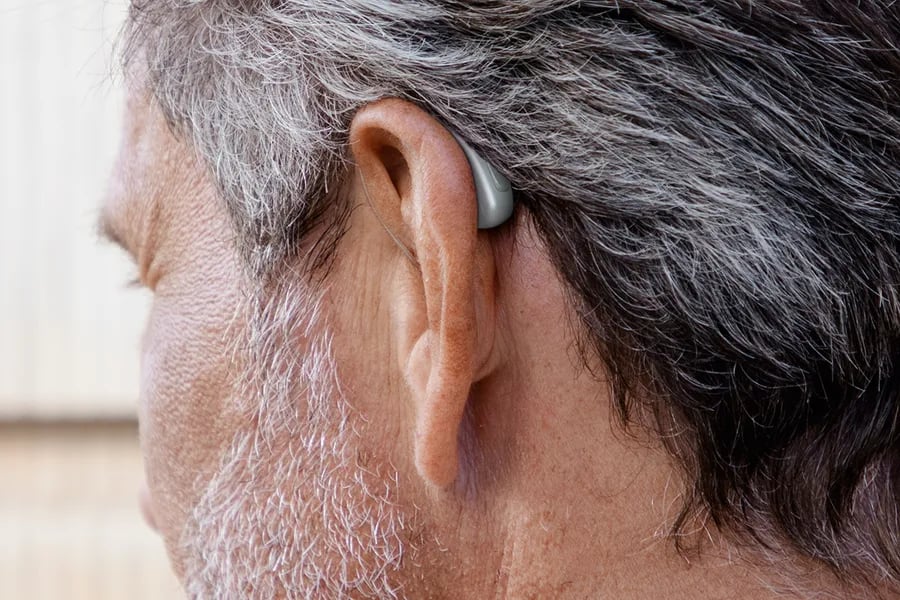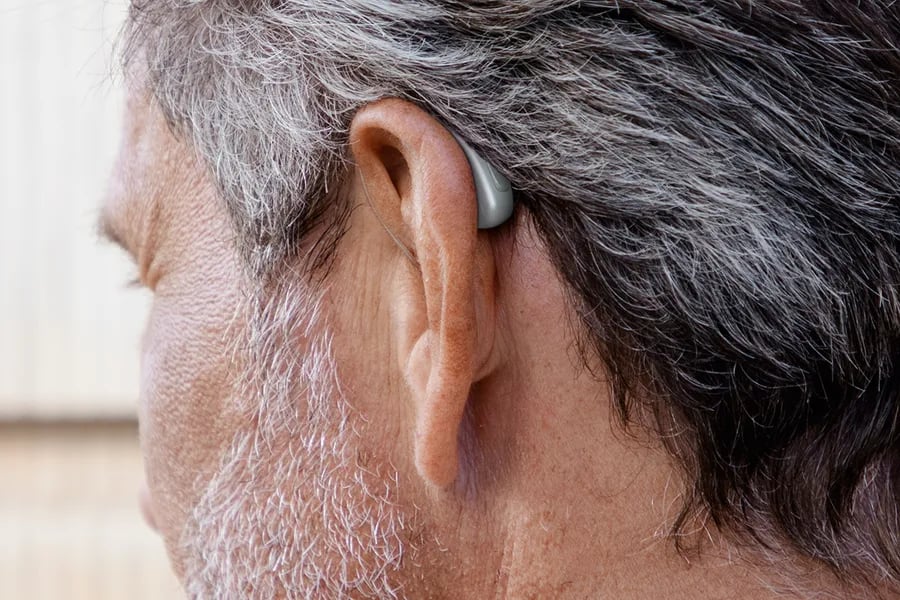

Artificial Intelligence (AI) has become one of the most exciting advances in hearing technology. In 2025, the best hearing aids no longer just amplify sound; they actively interpret complex soundscapes, separate speech from background noise, and adapt to a user’s personal listening habits in real-time. This leap is made possible by AI, specifically deep neural networks, on-device AI chips, and machine learning algorithms that continually improve with use.
But not all AI in hearing aids is the same. Some devices run AI directly inside the hearing aid (for instance, sound processing), while others use smartphone apps or cloud-based systems to personalise and fine-tune settings. Below, we’ll explore the leading AI-enabled hearing aids available in 2025 and explain how each uses AI to improve your hearing experience.
Starkey Edge AI
Starkey was one of the first brands to bring AI into hearing aids, and their Edge AI line remains one of the most advanced.
Sound engine powered by AI: Starkey Edge AI devices use deep neural networks to classify complex soundscapes, distinguishing between speech, background noise, wind, and music.
Real-time sound processing: The AI chip adapts instantly to changes in the environment — a quiet living room one moment, a noisy café the next.
Health and safety features: Beyond hearing, Starkey Edge AI includes fall detection, activity tracking, and even cognitive engagement monitoring, which can be valuable for older users.
Connectivity: Wireless streaming for calls, TV, and music is standard, and the rechargeable models offer all-day battery life.
For patients seeking a truly multifunctional device that goes beyond amplification, Starkey Edge AI is at the forefront.
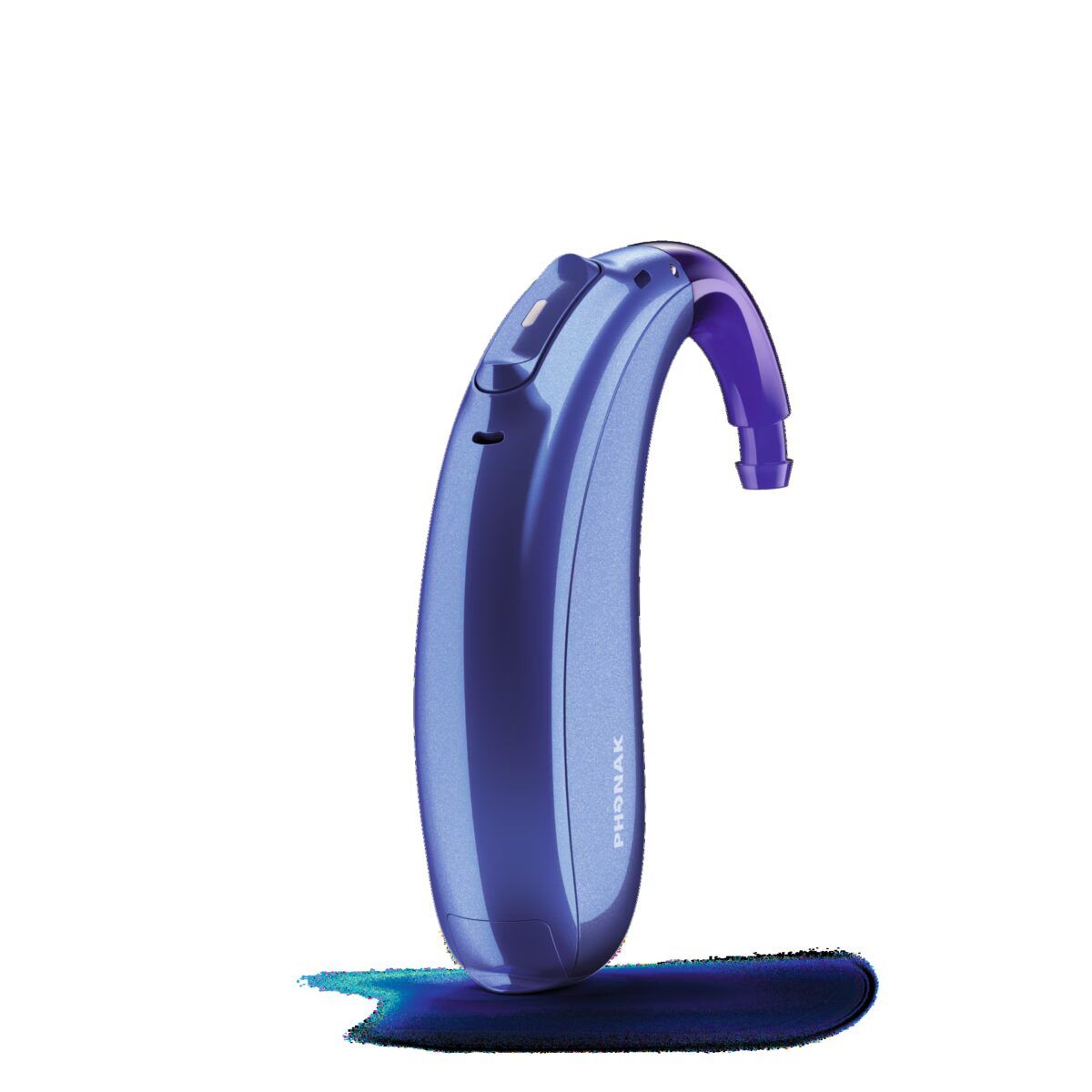
Phonak Sphere Infinio
Phonak has long been known for reliability, and in 2025, its Sphere Infinio models raise the bar by introducing dual-chip AI architecture.
Dedicated AI chip: One chip manages traditional amplification, while the second is dedicated solely to AI sound processing.
Real-time speech clarity: The AI engine enhances voices while suppressing noise, making it easier to understand in notoriously difficult situations, such as restaurants or group conversations.
Adaptive learning: Over time, the device “learns” a user’s preferences — for example, how they like to hear in meetings versus at home — and automatically adjusts.
Spatial awareness: Instead of flattening sound, AI preserves natural 360-degree awareness, allowing users to still discern the direction from which sounds are coming.
This is one of the most true AI hearing aids, with nearly all processing done on-device for speed, privacy, and adaptability.
ReSound Vivia
ReSound’s Vivia is promoted as the world’s smallest AI hearing aid, showing that big technology can now fit into tiny designs.
Compact design: A discreet Receiver-in-Canal (RIC) form factor that hides behind the ear.
Personalised AI sound settings: Users benefit from AI-driven fine-tuning, which continually adapts sound balance based on the environment.
Noise performance: In early clinical trials, Vivia users reported a reduction in listening effort in background noise of more than 30%.
App integration: Through the ReSound Smart 3D app, users can allow the AI to “train” on their adjustments, refining the settings automatically over time.
For those wanting a smaller, lifestyle-friendly device with AI inside, Vivia is an appealing option.
Oticon More SI
Oticon pioneered the use of deep neural networks (DNNs) trained on millions of natural sound scenes. The 2025 Oticon More SI builds on this legacy.
DNN-based processing: Instead of guessing what sounds to enhance, the AI system has been trained on vast amounts of real-world audio. This helps it identify speech and preserve natural sound contrast more accurately.
Balance of sounds: Unlike older aids that only boosted voices, Oticon More SI preserves the entire soundscape, ensuring users can hear voices while also maintaining spatial awareness and subtle environmental cues.
Adaptive amplification: The AI fine-tunes amplification continuously as environments shift.
Oticon More SI appeals to users who want natural, balanced hearing rather than heavily filtered sound.
Widex Moment with SoundSense Learn
Widex has carved out a niche by focusing on pure, natural sound quality, and its AI features are designed to support this.
ZeroDelay technology reduces sound processing delays to under a millisecond, eliminating the “tinny” effect commonly associated with older hearing aids.
SoundSense Learn: A machine learning feature that allows users to make quick “A/B” choices in the app (“Do you prefer option A or option B?”). Over time, the AI builds a profile of preferences and applies them automatically.
Personalisation: Each Widex Moment essentially becomes unique to its user, as the AI learns what sound balance works best for them.
For users who value sound purity and personalised fine-tuning, Widex Moment is a strong AI-enabled option.
Signia Assistant
Signia takes a different approach by embedding an AI-powered chat assistant in its smartphone app.
Virtual audiologist: The Signia Assistant utilises AI to guide users through real-time adjustments, much like chatting with a professional within the app.
Machine learning database: The assistant draws on millions of user interactions worldwide, adapting recommendations to your specific situation.
Automatic programming: Once adjustments are made, the AI remembers and applies similar changes in comparable future environments.
This approach empowers users to take a more hands-on approach to their hearing care, supported by AI-driven guidance.
What Makes AI in Hearing Aids Different?
Unlike standard digital hearing aids, AI-enabled devices:
Learn continuously from the user’s environment and preferences.
Separate speech from noise more effectively, especially in challenging environments such as restaurants or family gatherings.
Reduce listening effort, allowing users to feel less fatigued at the end of the day.
Offer health and lifestyle features, from fall detection to brain activity tracking, in some cases.
Clinical studies have shown that AI hearing aids can improve speech understanding in noise by up to 45% and reduce listening effort by as much as 35% compared to traditional digital aids.
On-Device AI vs App-Based AI
It’s worth noting that not all AI in hearing aids works the same way.
On-device AI (real-time): Brands like Phonak Sphere Infinio and Starkey Edge AI use dedicated chips inside the hearing aid itself, ensuring immediate, low-latency sound adaptation. This protects privacy and provides seamless adjustments.
App-based or hybrid AI: Brands like Signia and Widex rely more on smartphone apps, where machine learning helps personalise settings. These may require some user input but allow more complex AI computations.
Both systems have strengths: on-device AI is faster and more private, while app-based AI offers deeper customisation.
The Future of AI Hearing Aids
Looking ahead, AI in hearing aids is expected to:
Become standard in all premium models.
Expand health monitoring (heart rate, fall detection, cognitive tracking).
Provide voice-controlled adjustments without needing a phone or manual input.
Utilise even larger datasets to enhance sound naturalness and further reduce background noise.
For patients, the result will be hearing aids that feel less like medical devices and more like personalised, intelligent companions.