
If you’re a pensioner living with hearing loss in Australia, you may be wondering whether you qualify for Government-subsidised hearing aids. The good news is that many pensioners are eligible for fully subsidised hearing devices through the Australian Government Hearing Services Program (HSP). Understanding exactly what’s available, who qualifies, and how the process works can help you access the hearing care you need without financial stress.
In this article, we’ll walk you through everything you need to know about fully subsidised hearing aids for pensioners in Australia—including eligibility criteria, the types of devices available, what’s covered under the program, and the step-by-step application process.
Most pensioners walk into our clinic expecting to pay for hearing aids. Some have been quoted thousands of dollars at other places and assumed treatment was out of reach. Then they show us their Pension Concession Card, and the conversation changes.
The Australian Government’s Hearing Services Program (HSP) covers fully subsidised hearing aids for eligible pensioners. No out-of-pocket cost for the device. Batteries and maintenance are available under an optional maintenance agreement for a small annual fee. Replacement aids every three years if your hearing changes or your current devices stop meeting your needs. The program has been running for decades and works well, assuming you’re with a provider who explains your options properly.
That last bit matters. The HSP framework is the same wherever you go, but how it’s presented to you varies considerably. Some providers steer pensioners toward expensive top-up devices when fully subsidised options would serve them well. Others gloss over the top-up pathway when it might genuinely help. Because The Audiology Place is independent of any manufacturer, we have no sales quotas or commissions tied to particular brands. Our recommendations sit on clinical grounds rather than commercial ones.
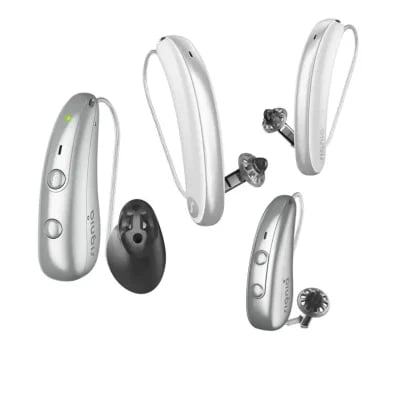
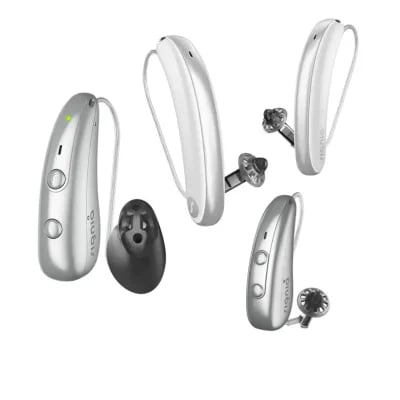
Manufacturers organise their hearing aids in tiers, usually three to five levels deep. The fully subsidised range covers the entry tier from each brand. Phonak Terra+ sits at the bottom of Phonak’s current line. Oticon Jet at the bottom of Oticon’s. ReSound Key, Starkey’s Evolv AI 1000, Widex Magnify 50, Signia Intuis 4.1, all entry tier. The aids work. The processing is current generation. They’re just not loaded with every feature the manufacturer offers.
What you trade off at entry tier is mostly performance in difficult listening situations. Quiet conversations, one-on-one chats, watching TV, talking to grandkids on the phone, entry tier handles all of these well. Where it starts to struggle is in environments with multiple competing voices, lots of background noise, fast turn-taking conversation, or large rooms with reverberation. Restaurants, family gatherings, busy cafés, and lawn bowls clubs on a Friday night.
Move up a tier and you generally get sharper directional microphones, stronger noise reduction, more processing channels, and faster scene classification. Move up another tier and you typically add direct Bluetooth streaming from phones and TVs, more sophisticated environmental detection, and AI features that learn your preferences over time. The top tier from each brand is what manufacturers showcase in their marketing, including new release naming and impressive demo videos.
Costs vary enormously by brand, model, and clinic. As a rough guide, mid-tier aids tend to run somewhere between several hundred and around two thousand dollars per aid above the subsidy. Premium aids push higher, often into the two-to-four thousand range per aid, sometimes well beyond that. Most pensioners wear two aids, which doubles the figure. Some clinics build aftercare and warranties into their pricing, others itemise. Always ask for the total in writing, including what’s covered, what costs extra, and for how long.
Whether the upgrade is worth it depends entirely on what you’ll do with it. Rechargeable batteries are genuinely useful if arthritis makes tiny zinc-air batteries fiddly. Bluetooth streaming changes the experience if you’re often on the phone for work or like audiobooks while gardening. Sharper directional microphones earn their keep if you’re regularly in noisy rooms. None of these features compensates for entry-tier aids being insufficient for your specific listening life. They’re upgrades, not corrections. If entry tier suits your day-to-day, paying for premium adds polish you may not actually use.
What “fully subsidised” actually means
When we talk about fully subsidised hearing aids under the HSP, we mean devices the Australian Government pays for in full, with no out-of-pocket cost for the device. The current schedule covers around 150 device options across most major manufacturers. Phonak, Oticon, ReSound, Starkey, Signia, Widex, Bernafon, Unitron, Beltone, and others are all represented. Behind-the-ear (BTE), receiver-in-canal (RIC), in-the-ear (ITE), in-the-canal (ITC), and completely-in-the-canal (CIC) styles are available. The schedule also covers fully subsidised BiCROS and CROS devices for single-sided hearing loss, plus Alternative Listening Devices like TV listening systems and personal amplifiers.
These are typically entry-level models from each manufacturer’s current line, things like the Phonak Terra+, Oticon Jet, ReSound Key, Starkey Evolv AI 1000, Widex Magnify 50, and Signia Intuis 4.1. The technology is current, just not premium-tier. Most fully subsidised aids include:
- Digital signal processing across multiple frequency bands matched to your audiogram
- Several listening programs for different environments
- Feedback cancellation, so the aids don’t whistle
- Noise reduction and basic directional microphones
- Telecoil for hearing loops in churches, theatres, and many public venues
- Compatibility with TV streamers and other accessories, depending on the model
For most pensioners, this is genuinely enough. Quiet conversations with grandchildren, restaurant catch-ups, watching the news without the volume cranked up. The entry-tier devices handle these situations well. The notion that subsidised aids are second-rate hangs over from an older era. It’s no longer accurate.
When a top-up makes sense, and when it doesn’t
The HSP also lets you pay the gap between the government subsidy and a premium device if you want technology beyond the fully subsidised range. Costs vary considerably depending on the model and clinic, generally running from a few hundred dollars to several thousand per aid.
Premium aids do offer features the entry-tier devices don’t:
- Sharper directional microphones that lock onto speech in noisy environments
- Direct Bluetooth streaming from iPhones and most newer Android phones
- Rechargeable batteries with a charging case
- More processing channels for complex listening environments like busy restaurants, lectures, or large family gatherings
- Better wind handling for outdoor activities
- Wider frequency response, which sounds more natural with music
Whether any of that is worth paying for depends entirely on you. A retired teacher who’s mostly home, watches television, and chats with family doesn’t need premium technology. A keen lawn bowler who plays in clubs three nights a week, runs a small consultancy from home, and Bluetooth-streams audiobooks while gardening might genuinely benefit from a higher tier.
A good audiologist will help you work that out without pushing you in either direction. If a top-up doesn’t suit your situation, you should walk out with fully subsidised aids and no guilt about it. If it genuinely fits, the maths should be laid out clearly: what you’re paying, what you’re getting, what the alternatives are.
What the program covers beyond the device
The programme covers far more than the device itself. The supporting care adds up to real value over time.
The hearing assessment. A diagnostic evaluation by a qualified audiologist. That covers pure-tone audiometry, speech testing, tympanometry, and other tests where clinically warranted. We work out the type and degree of your hearing loss and rule out anything that needs medical attention.
Fitting with Real Ear Measurement. Hearing aids are programmed to your specific hearing loss, then verified using Real Ear Measurement, where a small probe microphone in your ear canal confirms the device is delivering the prescribed amplification. This is the gold standard for hearing aid fitting and we use it on every fitting at TAP. Surveys of Australian audiology practice suggest a significant portion of fittings still skip REM. Without it, you’re guessing whether the aids are actually doing what they’re meant to do.
Batteries. Fully subsidised clients on the optional maintenance agreement get batteries for the life of the aids. Over a few years, that adds up.
Adjustments and follow-ups. Most people need fine-tuning over the first few months as their brain adjusts to amplified sound. Voices can sound tinny at first. Your own voice might startle you. Plates clinking in a café might feel piercing. These things settle, but the aids often need adjustment along the way. Follow-up appointments during this period are part of the programme.
Annual reviews. Once you’re settled, an annual check keeps things on track. Hearing changes. Aids need cleaning and reprogramming. We pick up problems before they become problems.
Replacement every three years. If your hearing has shifted or the aids are no longer serving you well, you’re eligible for new ones. If your hearing deteriorates significantly before then, replacement can come sooner.
Repairs and maintenance. Wear-and-tear repairs are covered. Loss, damage from drops, and theft generally aren’t, though some clinics offer optional insurance and home contents insurance often covers loss.
Who qualifies
The main eligibility groups are:
- Holders of a Pension Concession Card
- Department of Veterans’ Affairs Gold Card holders (any condition) or White Card holders with hearing loss noted
- Holders of a Pensioner Concession Card issued by Centrelink
- Members of the Australian Defence Force
- Some recipients of certain Centrelink income support payments
- Dependents of any of the above
The official eligibility checker is at hearingservices.gov.au. If you’re unsure, an accredited provider can confirm during your initial enquiry.
What the process looks like at TAP
We’ve walked hundreds of pensioners through the HSP and the process is more straightforward than people expect. Here’s how it typically goes.
You ring the clinic. Phone (02) 9315 8327 and tell us you’re a pensioner interested in HSP hearing care. We’ll confirm your eligibility on the spot if you have your card details handy.
You come in for a hearing assessment. Bring your Pension Concession Card or DVA card, your Medicare card, and any history of ear infections, surgery, or other ear-related conditions. The assessment takes about an hour, and at the end of it you’ll have a clear picture of your hearing.
We discuss options. If hearing aids are recommended, we’ll go through the fully subsidised range and the top-up pathway. We talk about what your day-to-day listening looks like, including work, hobbies, social life, and family, and which technology level suits.
Fitting appointment. The aids are ordered, then fitted at a follow-up appointment. We program them to your audiogram, verify with Real Ear Measurement, and walk you through how to use, clean, and care for them.
Adjustment period. You’ll have follow-ups over the next few weeks and months as we fine-tune.
Ongoing care. Annual reviews, batteries when you need them, adjustments, repairs.
We’re at Unit 12/14 Starkey Street, Forestville, on Sydney’s Northern Beaches. Easy to reach from Freshwater, Curl Curl, Dee Why, Manly, Frenchs Forest, and Killarney Heights. The 273 and 278 buses run from QVB and Chatswood, and there’s parking out front (two-hour timed) and under Coles.
Common questions
Can I pick any hearing aid brand?
The fully subsidised category covers most major manufacturers, including Phonak, Oticon, ReSound, Starkey, Signia, Widex, Unitron, and Bernafon. You won’t have access to every model on the market, but you’ll have several options across brands and styles. Top-up opens the range further.
What if my hearing gets worse?
The aids can be reprogrammed at no cost when your hearing changes. If the change is significant, you may qualify for replacement aids before the three-year mark.
Can I get a second opinion?
Yes. You’re entitled to consult another accredited provider if you have concerns about what you’ve been told.
What if I lose or damage them?
Loss and damage outside ordinary wear-and-tear aren’t covered automatically. Some providers sell insurance for an extra fee. Home contents policies often cover loss too, so check yours.
Do I have to use hearing aids if I’m fitted with them?
No. The aids are yours to use as you see fit. If you find you don’t get on with them, talk to your audiologist. It’s usually a fitting issue rather than fundamental incompatibility, and most problems can be solved with adjustment.
What good HSP care looks like
Whatever clinic you choose, you should expect:
- A clear explanation of fully subsidised options before any top-up discussion
- Clinical reasoning for any recommendation, not commercial reasoning
- Written details of any costs you’d be asked to pay
- Real Ear Measurement at fitting (ask if it’s been done)
- Genuine willingness to fit you with fully subsidised aids if that’s what suits
If you’re feeling pressured toward a top-up that doesn’t seem to fit your needs, that’s a red flag. Get a second opinion.
When to see a doctor first
Hearing loss has many causes. Most age-related hearing loss develops gradually and responds well to hearing aids, but some situations need medical assessment before a fitting. See your GP urgently if you have:
- Sudden hearing loss developing over hours or days
- Hearing loss with pain, discharge, or fullness in the ear
- Hearing loss after a head injury or loud noise exposure
- One-sided hearing loss without obvious cause
- Vertigo or significant balance problems alongside hearing changes
These need investigation before hearing aids enter the picture.
Getting started
If you’re a pensioner who’s been putting off hearing care because you assumed it would be expensive, you’ve probably been carrying a financial worry that doesn’t actually apply to you. The HSP exists for exactly this reason: to remove cost as a barrier to hearing care for the people who need it most.
The first step is a phone call. We can confirm your eligibility, book your hearing assessment, and walk you through what to expect. From there, the rest of the process unfolds at your pace.
Phone: (02) 9315 8327
Address: Unit 12/14 Starkey Street, Forestville NSW 2087
Email: admin@theaudiologyplace.com.au
For the official HSP eligibility checker and provider directory, visit hearingservices.gov.au.
The Audiology Place is an accredited provider under the Australian Government Hearing Services Program. Conditions apply under the Australian Government Hearing Services Program. Information in this article is current as of publication. For the most up-to-date eligibility criteria and programme inclusions, refer to hearingservices.gov.au.
Always read the instructions for use. Follow the instructions for use.