
We asked 425 Australians one open question, with no multiple choice and no prompts: what words come to mind when you think of hearing aids? Just the first thing in their heads.
Here is a sample of what came back. “Old, aging, parents, ugly, expensive.” “Deaf, bulky, burden.” “Scary and for old people.” “Old ladies.” “Difficult, unsightly.” “Old, geriatric, iconic.”
Read enough of them and a single image assembles itself. A large beige lump, worn by somebody’s grandmother, expensive and faintly embarrassing, whistling in a quiet room. It is a vivid picture. It is also, for the most part, a museum piece.
The people with the oldest picture are the youngest
You would expect the outdated image to live in the minds of older Australians, the ones old enough to remember the devices of the 1980s. Our 2026 Hearing Services Survey found the reverse.
When we asked whether not wanting to feel old would put them off hearing aids, half of the under-30s said yes. Among the over-75s, the people actually wearing them, it was one in eight. Fifty per cent against 12.5.
The dread is heaviest in the people furthest from needing anything. A twenty-five-year-old, decades away from their first fitting, carries the strongest version of the stereotype. By the time hearing loss actually arrives, most of that fear has quietly burned off, worn down by proximity to the real thing. The stigma belongs to people who have never held a modern device.
Faces you already know
The “for old people” idea does not survive a look at who actually wears them now.
Take Daymond John. The FUBU founder and Shark Tank investor, 56, has worn hearing aids for years, after decades of standing too close to the speakers on music tours. He put the whole stigma to bed in a single line to CNN: “You think of your grandparents wearing hearing aids, not me.” He controls his from an app on his phone and streams calls straight into his ears, and, as he points out, you would never know he had them in.
Or Derrick Coleman, who won a Super Bowl as an NFL running back while legally deaf, wearing hearing aids under his helmet. Not the frail-grandparent picture the survey respondents were carrying.
What those two have in common is not age. It is noise. The damage that used to wait until someone’s seventies now turns up in people in their forties and fifties, from concerts, headphones and loud workplaces. Which is the real reason the twenty-five-year-olds in our survey should be paying it more attention, not less.
How small they actually are now
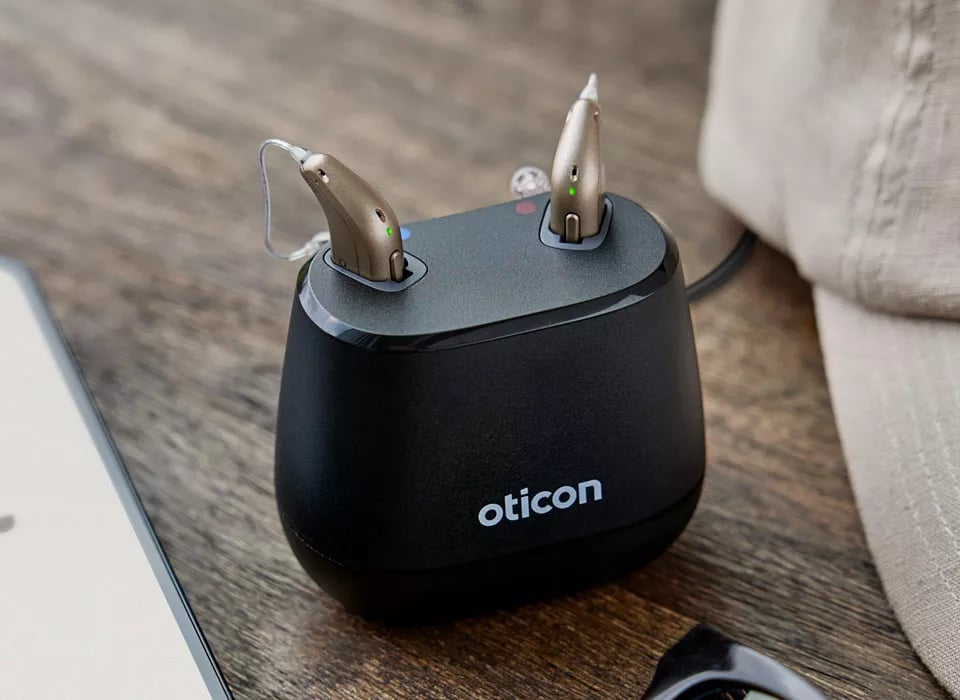
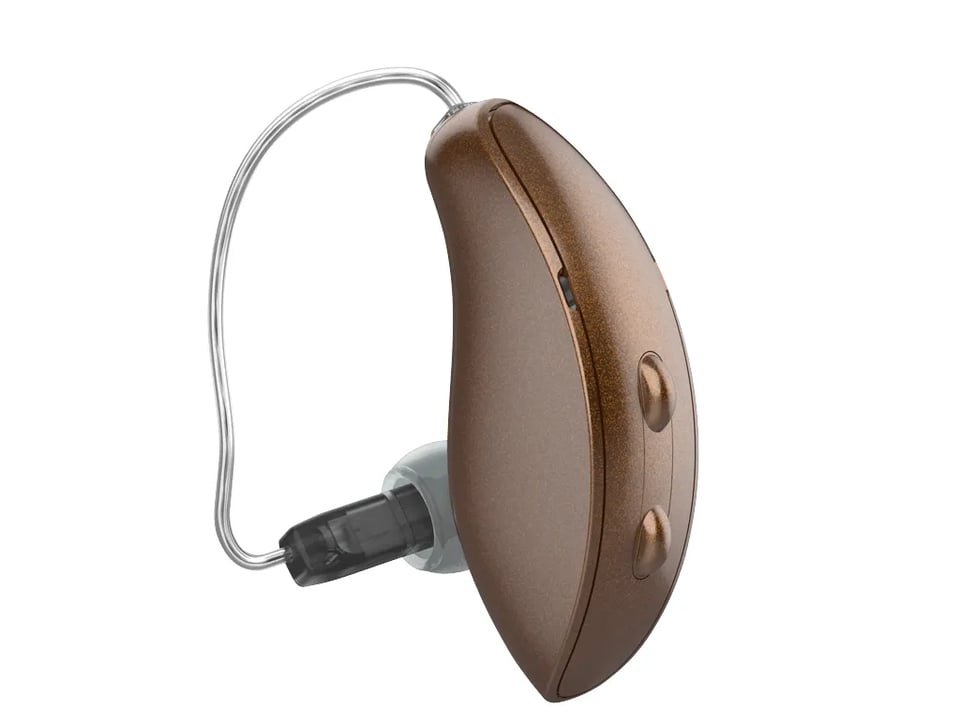
The associations people gave us were not wrong about the past. They were describing the wrong decade. A few respondents who had looked recently already knew: “They are a lot smaller than they used to be.” “Handy and very discreet now.” “They are more compact now. Has bluetooth connection.”
Here is what is actually on the shelf in 2026. At the invisible end, custom devices sit so deep in the ear canal that nobody across the table can see them. The Phonak Virto Infinio Titanium is built from a medical-grade titanium shell and disappears into the ear. The Signia Silk is a same-day, instant-fit device you can walk out wearing, no weeks of waiting for a mould. The Phonak Lyric goes in and stays in, worn around the clock for months at a time, through showers and sleep, and is changed by your audiologist rather than by you.
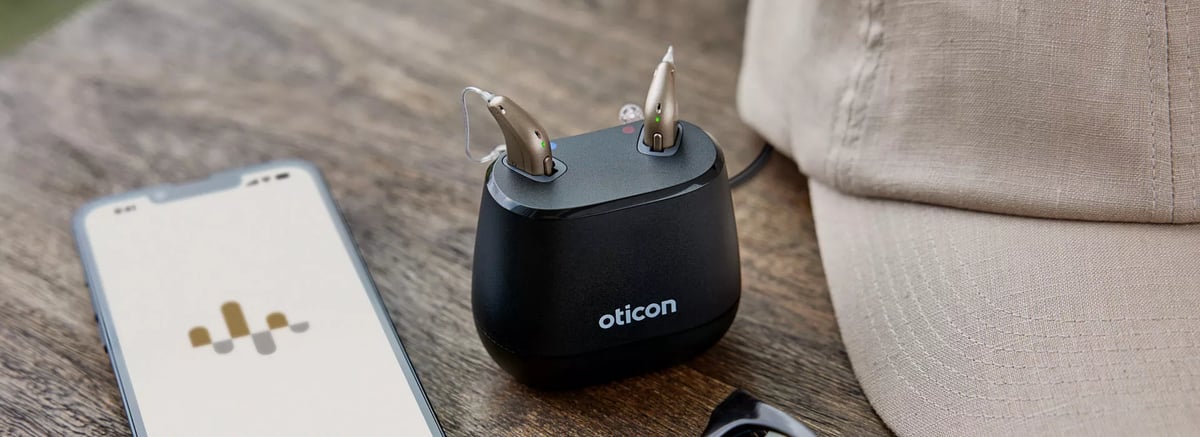
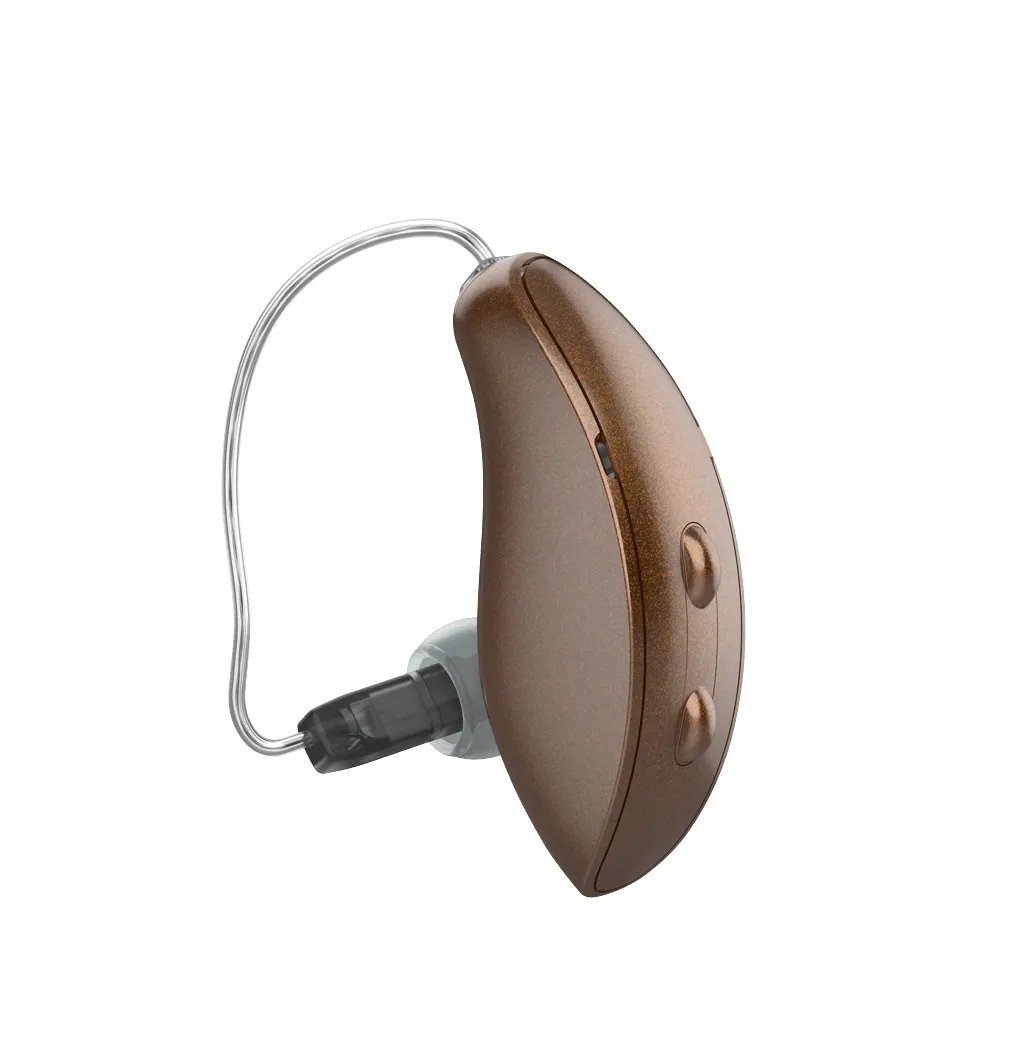
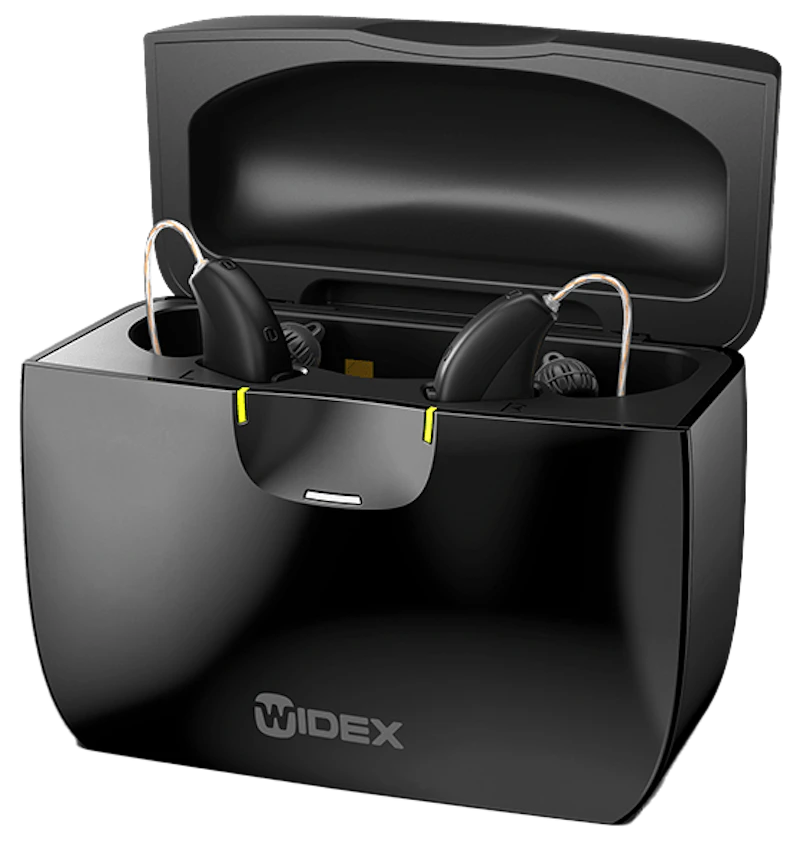
Then there are the ones that sit behind the ear on a wire thinner than a shoelace, from Oticon, Starkey, Widex and ReSound. You have to be looking to spot them, and they are where the heaviest technology lives. The honest position is this: the smallest, most invisible aids suit milder hearing loss, and the ones that do everything sit discreetly behind the ear. Which one belongs in your ear depends on your ear, which is the whole reason you see a clinician rather than a website.
What they do that your ears can’t
One of the sharpest responses in the survey read simply: “help but don’t fix hearing.” That person is right, and it is worth saying plainly. A hearing aid will not hand back the hearing of a twenty-year-old. Anyone who promises that is selling, not fitting.
What today’s devices do instead is add things your natural ears never had. They stream phone calls and music straight into your ear over Bluetooth. They pipe the television directly to you at your own volume, while everyone else in the room keeps theirs where they like it. The newest models run genuine artificial intelligence, neural processors like Starkey’s or Oticon’s Deep Neural Network, that pick a single voice out of a noisy cafe and lift it clear of the clatter in real time. Some track your steps, detect a fall and send an alert, or translate a language spoken across the table. Your own ears do none of that. In the noisy places where hearing matters most, a modern aid can leave you hearing better than the people around you, not worse.
What they cost, and what you might not pay
Cost was the top barrier in the survey by a wide margin, named by 57.9 per cent. “Modern hearing aids are smaller and less obvious than what they once were,” one respondent wrote. “Very very expensive.”
The expense is real, and worth being straight about. Entry-level hearing aids in Australia start from around $2,000, rising with the technology inside them. Our full breakdown of what hearing aids actually cost in Australia lays out the tiers and what each one buys. Two things get lost in the sticker shock, though. Eligible pensioners and veterans can access fully subsidised devices through the Government Hearing Services Program, sometimes at no cost at all. And the worst outcome is the most common one: a person who needs help talks themselves out of it over a price they never actually enquired about, picturing a device that no longer exists.
The gap between the two pictures
There is a version of this that is nobody’s fault. A young person’s only reference for a hearing aid is a grandparent’s, glimpsed years ago, and that image sets like concrete long before it is ever tested against a current one. The picture ages while the technology moves on, and the two drift apart in silence.
Closing that gap does not take a campaign. It takes one appointment, in which someone shows you what the thing actually looks like now, sitting invisibly in a palm. Most people are startled. That is usually the moment the stereotype dies.
The survey figures here come from The Audiology Place’s 2026 Hearing Services Survey, a study of 425 Australian adults. If you would like to see what modern hearing aids actually look like, book an adult hearing assessment or talk to us about hearing aids with an independent audiologist in Sydney.