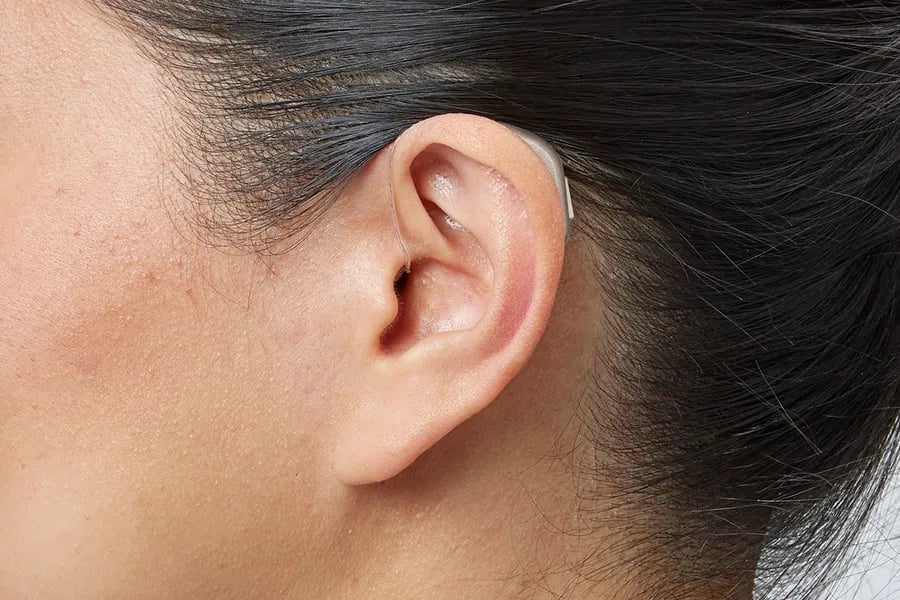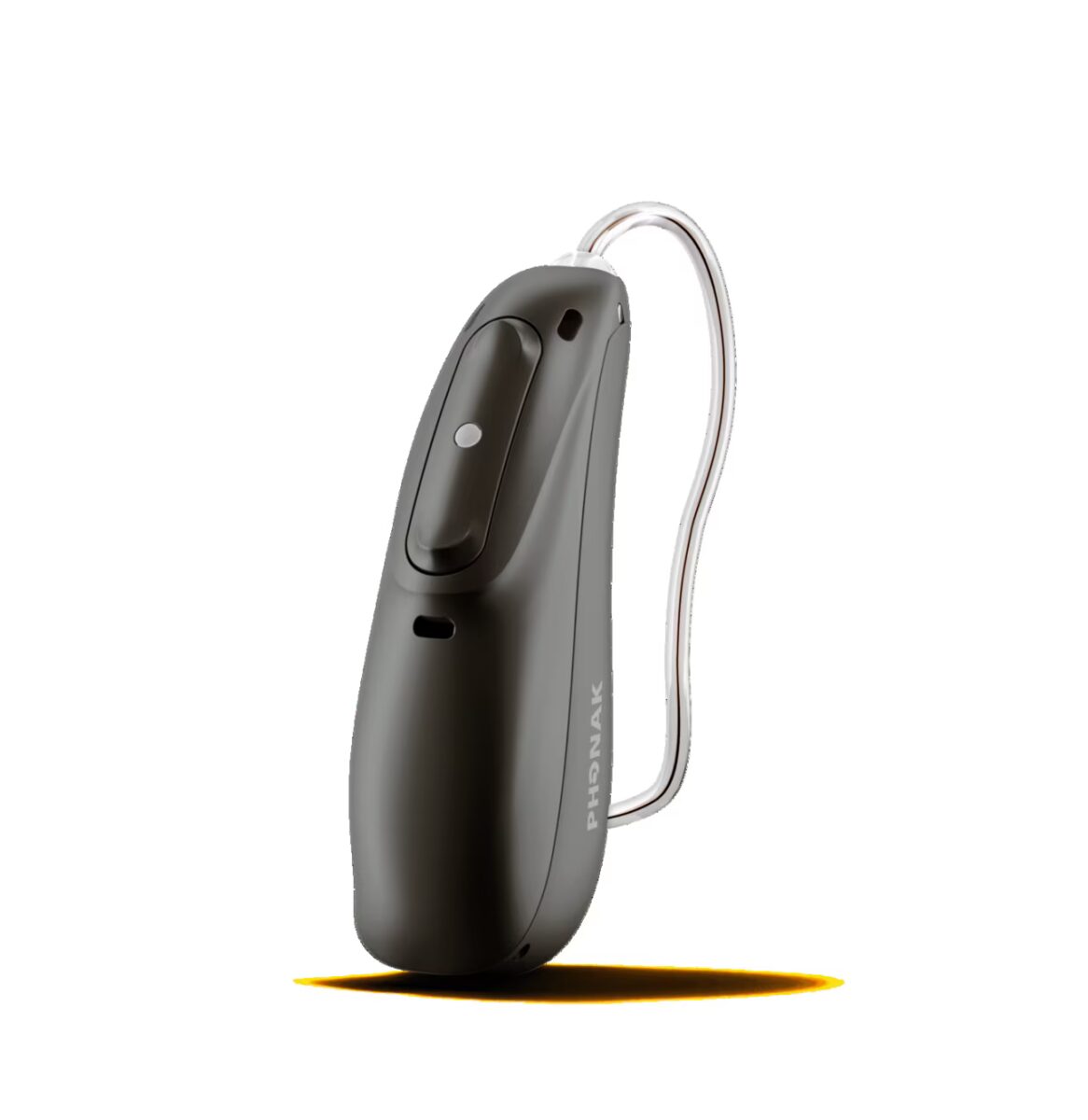

The honest answer: Signia and Phonak are both premium European manufacturers with excellent outcomes, but they’ve made fundamentally different engineering choices about what matters most in hearing aid design. Signia prioritises how your own voice sounds to you and how the devices track multiple moving speakers in social settings. Phonak prioritises raw speech-in-noise performance through its DEEPSONIC chip and offers the only truly universal Bluetooth system plus the Roger remote microphone ecosystem that no other manufacturer can match.
After fitting both brands across thousands of patients, the question isn’t which is objectively better—it’s which brand’s engineering priorities match the listening situations that cause you the most fatigue and withdrawal.
The Philosophy Split
Most hearing aid comparison content online lists features as if they’re all equal. They’re not. Every manufacturer makes trade-offs, and understanding those trade-offs is more useful than reading another listicle about “crystal-clear sound” and “advanced technology.”
Signia’s current flagship platform, Integrated Xperience (IX), is built around a split-processing architecture. Instead of one processor handling everything, it runs two: one focuses on the conversation in front of you, the other handles everything else in the environment. The flagship feature, RealTime Conversation Enhancement, uses motion sensors and acoustic analysis to detect when multiple speakers are moving around you—at a dinner party, around a kitchen island, in a café—and continuously adjusts which direction gets priority. According to Signia’s own white papers, this approach measurably reduces listening effort in multi-talker scenarios compared to traditional beamforming. I’ll attribute that properly: these are company-funded studies, not independent research, but the clinical premise is sound and the subjective feedback from patients in rotating-speaker environments has been consistently positive.
The other major Signia differentiator is Own Voice Processing 2.0. This dedicates processing power to recognising your own voice and processing it separately from everything else, so you don’t sound like you’re talking inside a barrel. For patients who’ve tried aids before and hated the occlusion effect—that hollow, booming sensation when you speak—this is often the single feature that determines whether they’ll wear the devices full-time or leave them in the drawer.
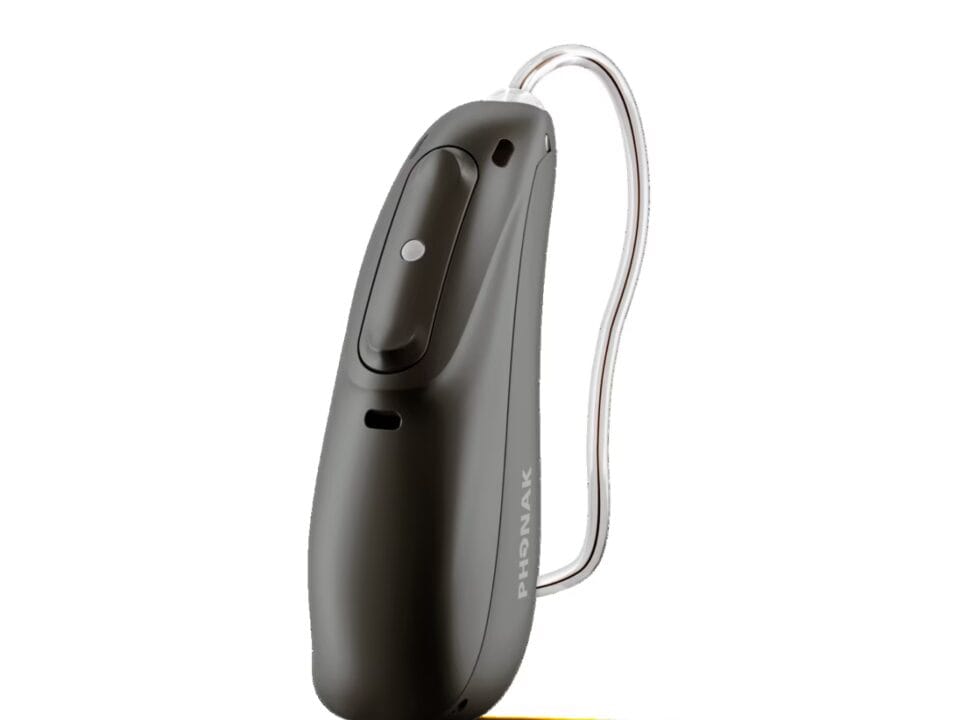
Phonak’s flagship, the Audéo Sphere Infinio, takes a different route. Its headline feature is the DEEPSONIC chip, a dedicated neural-network processor that runs 53 times per second to separate speech from noise in real time. This isn’t marketing abstraction—Phonak has published data showing significant improvement in signal-to-noise ratio in environments like crowded restaurants and reverberant halls. Where Signia focuses on tracking shifting conversations, Phonak focuses on digging speech out of relentless background noise.
But Phonak’s most defensible advantage isn’t the chip—it’s the Roger system. Roger is a suite of remote microphones (Roger On for one-on-one handoff, Roger Table Mic for boardrooms and family dinners, Roger Touchscreen Mic for lecture halls) that transmit directly to Phonak hearing aids on a proprietary frequency. The speech-in-noise benefit is measurable and substantial, typically 10 to 15 dB improvement in noisy groups. No other manufacturer offers a comparable ecosystem. Oticon, Widex, ReSound—they all have partner mics, but none approach Roger’s range, latency, or flexibility. If you’re a university student, a professional who chairs meetings, or someone who frequently finds themselves across the table from soft-spoken grandchildren in noisy restaurants, Roger changes the equation entirely.
Bluetooth and Connectivity: A Significant Practical Difference
Phonak uses Bluetooth Classic, which means it connects to everything—Android, iPhone, laptops, airline entertainment systems—without proprietary streaming protocols or app dependencies. You pair it like you would a set of wireless earbuds.
Signia uses Bluetooth Low Energy (on the IX platform) and proprietary streaming protocols for iOS, with broader Android compatibility than previous generations but still not quite universal. In practice, most patients stream from their phones without issue, but if you regularly take Zoom calls on a Windows laptop or want to connect to a wider range of Bluetooth devices without fuss, Phonak’s Classic implementation is more forgiving.
The Own-Voice Question: Why It Matters More Than You’d Think
I’ve had patients return aids within the trial period for exactly one reason: “I can’t stand the sound of my own voice.” Not because the aids didn’t help with clarity or background noise, but because every time they spoke, it felt wrong.
Signia’s OVP 2.0 is purpose-built to solve this. It analyses the bone-conduction signature of your voice and applies separate processing so your voice sits naturally in the mix rather than dominating it. Does it work perfectly for everyone? No. Some patients still need vent adjustments or custom moulds. But the hit rate is considerably higher than brands without dedicated own-voice processing.
Phonak has improved occlusion management through venting strategies and the StereoZoom 2.0 algorithm, but it doesn’t use a separate own-voice pathway. For many patients this is irrelevant—they adapt within a week or two. But for others, especially those with good low-frequency hearing who need open domes, Signia’s approach is noticeably more comfortable from day one.
Who Each Brand Suits: Matching Engineering to Your Hardest Day
Here’s how I tend to frame it in the clinic:
Consider Signia IX if:
– You spend significant time in dynamic social settings where speakers move around—standing-room events, family gatherings in open-plan kitchens, outdoor barbecues.
– You’ve tried hearing aids before and returned them because your own voice sounded unnatural or booming.
– You have bothersome tonal tinnitus and want the option of Notch Therapy, which Signia embeds as a programmable feature.
– Your primary frustration is group conversation rather than one-on-one dialogue in extreme noise.
Consider Phonak if:
– You regularly face truly hostile acoustic environments—crowded RSL clubs, reverberant lecture theatres, busy hospital wards.
– You need or want Roger accessories because you chair meetings, attend conferences, or have regular scenarios where a remote mic would be transformative.
– You connect hearing aids to multiple non-Apple devices—Windows laptops, Android tablets, older Bluetooth sources—and want universal compatibility without troubleshooting.
– You prioritise maximum audibility and noise suppression over own-voice naturalness and are willing to adapt over the first few weeks.
What About Price?
At the premium tier—Signia IX 7 or Phonak Sphere Infinio 90—you’re looking at comparable retail pricing, typically $8,000 to $10,500 per pair in the independent audiology market in Australia. Both brands offer mid- and entry-level technology tiers (Signia 5/3, Phonak 70/50) that retain core features but with fewer automatic programs and less granular noise management. Those sit between $4,500 and $7,500 per pair.
If you’re eligible for the Hearing Services Program (pensioners, veterans, certain concession card holders), both brands are fully covered at the top voucher level, though you’ll need to confirm which specific models your provider has access to.
Private health funds typically rebate a flat amount per device regardless of brand—check your extras policy, but expect around $500 to $1,200 per aid depending on your level of cover.
The Fitting Matters More Than the Brand
I’ll close with the least exciting but most important truth: the audiologist matters more than the badge on the device. Both Signia and Phonak are sophisticated platforms that require Real Ear Measurement to verify that the prescription is actually being delivered to your eardrum, not just programmed into the software. They need speech-in-noise testing to establish realistic expectations, and they need proper acclimatisation counselling so you don’t expect miracles on day one and give up by day seven.
A well-fitted mid-tier device will outperform a flagship that’s been programmed to first-fit and never verified. Choose your clinician as carefully as you choose your brand.
If you’d like to trial either platform with proper REM verification and a structured acclimatisation plan, we fit both at The Audiology Place. Book a full diagnostic appointment—not a free screening—and we’ll match the technology to your actual hearing loss and listening priorities, not to what’s on sale this quarter.
Always read the instructions for use. Follow the instructions for use.