
Lenire Provider in Sydney
The Audiology Place is one of two clinics in New South Wales trained to assess for and fit Lenire, a tinnitus treatment device included in the Australian Register of Therapeutic Goods in September 2025. We fit it at our Forestville and Epping clinics.
Lenire pairs sound played through headphones with mild electrical pulses on the tongue. You use it at home for two 30-minute sessions a day over at least 12 weeks, with reviews at the clinic along the way. It does not cure tinnitus. In the published trials, most people whose tinnitus was at least moderately bothersome reported that it intruded less on their daily life.
Every patient starts with a tinnitus assessment, because Lenire does not suit everyone and one-sided, pulsing or recent tinnitus needs investigating first. You do not need a GP referral.
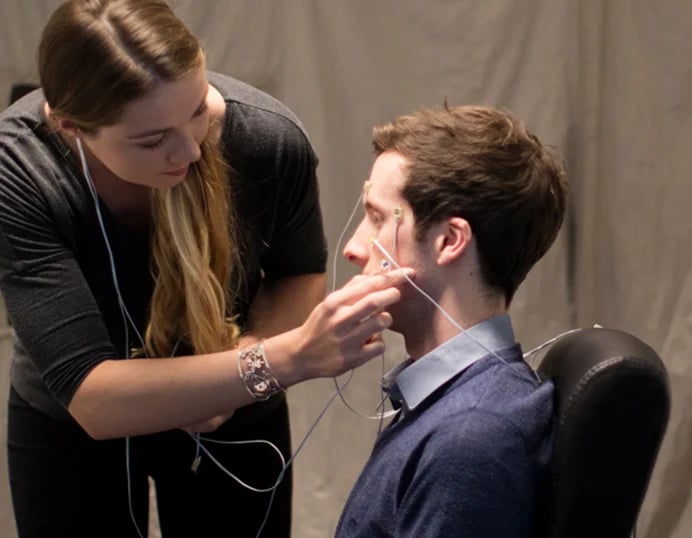
Lenire at a glance
Who it is for
Adults 18 and over with chronic tinnitus that only they can hear, ideally tinnitus that is at least moderately bothersome.
Time commitment
Two 30-minute sessions a day at home for a minimum of 12 weeks, with clinic reviews at around six and twelve weeks.
Cost
$7,990 for the treatment program, covering the device, fitting and set-up, and follow-up care over six months.
Where
Forestville on the Northern Beaches and Epping in Sydney’s northern suburbs. No referral needed.
How Lenire works
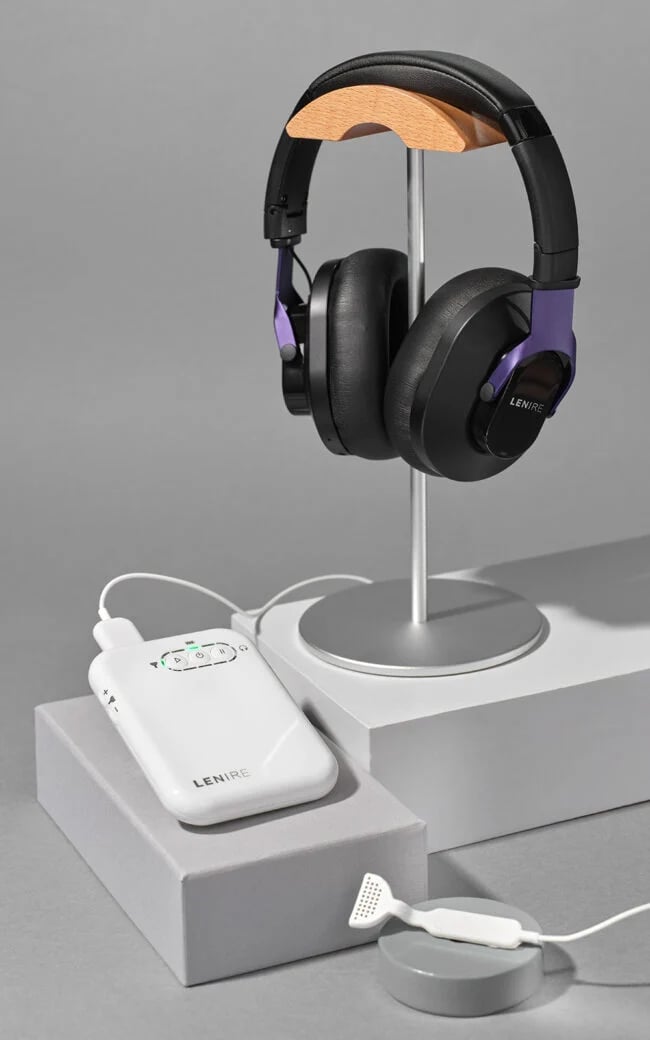
Lenire uses bimodal neuromodulation, which means stimulating two senses at the same time. Wireless headphones play tones layered with soundscapes while a small mouthpiece called the Tonguetip delivers mild electrical pulses to the surface of your tongue. Pairing the two is designed to change how the brain processes the tinnitus signal, so that over time it draws less of your attention.
A handheld controller runs each session and lets you adjust the volume and the strength of the tongue pulses. Most people describe the pulses as a light tingle, a little like sparkling water. Your audiologist sets the sound programs to your hearing and tinnitus profile at the fitting and changes them at the six-week review, which is why Lenire is supplied only through trained clinics and cannot be bought online.
For a longer explanation, read our overview of Lenire tinnitus treatment.
Is Lenire right for you?
Lenire is intended for adults with chronic subjective tinnitus, the kind only you can hear. The trial data shows the benefit concentrates in people whose tinnitus is at least moderately bothersome. In people with mild tinnitus, adding tongue stimulation did not clearly outperform sound therapy alone, so for milder tinnitus we may suggest starting with sound therapy instead.
Lenire may suit you if
- You are 18 or older
- Your tinnitus has been there for months rather than weeks
- It affects your sleep, concentration or mood
- Your hearing and ear health have been checked
- You can set aside an hour a day for at least 12 weeks
We will look at other options first if
- Your tinnitus is in one ear only, pulses in time with your heartbeat, or started suddenly. These need medical investigation first (see pulsatile tinnitus red flags)
- Your tinnitus has a physical source someone else can hear (objective tinnitus)
- You have Ménière’s disease, for which Lenire has not been evaluated
- You have a pacemaker or other active implant, are pregnant, or have epilepsy
- You have reduced feeling in your tongue, mouth sores or lesions, an oral piercing, or head and neck neuralgia
What the research shows
Lenire has been tested in three manufacturer-sponsored clinical trials involving more than 600 people, plus reviews of patients treated in ordinary clinics. That is more evidence than most tinnitus treatments have. The figures quoted in advertising tend to be the most flattering ones, so the table below sets out who took part in each study and what it measured.
| Study | Who took part | What it found |
|---|---|---|
| TENT-A1 (Science Translational Medicine, 2020) | 326 adults randomised to different stimulation settings for 12 weeks, then followed for 12 months | 86.2% of those who used the device as directed improved on the Tinnitus Handicap Inventory (THI) at 12 weeks, and 80.1% of them were still improved 12 months later. This counts any improvement, not only clinically meaningful change. |
| TENT-A2 (Scientific Reports, 2022) | 191 adults testing four combinations of settings, switched partway through treatment | The main treatment arms reduced THI scores by an average of 18.5 points at 12 weeks. At 12 months, 91.0% of the 111 participants still being followed had sustained improvement. |
| TENT-A3 (Nature Communications, 2024) | 112 adults: six weeks of sound alone, then six weeks of sound plus tongue stimulation | Across the whole group, adding tongue stimulation did not significantly outperform sound alone. In people with moderate or worse tinnitus, 58.6% responded to the combined treatment against 43.2% to sound alone. |
| Clinic review (Communications Medicine, 2025) | 220 patients treated at one US clinic, with no control group | 91.5% had a clinically meaningful reduction in THI score, defined as at least seven points, after 12 weeks. |
A few limits are worth knowing before you decide. No trial has compared Lenire with a sham device, so some improvement in every study may reflect expectation and natural fluctuation. The manufacturer funded the trials. They measured how much tinnitus bothers people, not how loud it is. Around a third of trial participants had a temporary increase in tinnitus during treatment, which usually settled. No published data show benefit beyond 12 months after treatment.
In the United States, the FDA granted Lenire De Novo authorisation in 2023 to temporarily relieve tinnitus symptoms in adults with at least moderate tinnitus. In Australia it is included in the ARTG as a Class IIa medical device (ARTG 511728).
We have written a full review of the Lenire trials for anyone who wants the detail.
What treatment involves at our clinics
- Tinnitus assessment, about 90 minutes. We test your hearing, including extended high frequencies, check the health of your ears, match the pitch and loudness of your tinnitus, and use the Tinnitus Handicap Inventory and Tinnitus Functional Index, the same questionnaires used in the Lenire trials. You leave knowing whether we think Lenire is worth pursuing.
- Fitting. If Lenire suits you, we configure the device to your hearing and tinnitus profile and take you through a full session.
- Weeks one to six at home. Two 30-minute sessions a day.
- Six-week review. We remeasure your tinnitus and move you to the second stimulation setting. In the trials, that change contributed to the result.
- Weeks six to twelve at home. The same routine on the new settings.
- Twelve-week review and follow-up. We compare your scores with your baseline and decide with you whether to keep using the device. Follow-up care continues to six months.
Some people notice a change within the first few weeks. Others see little until later in the course, and some do not respond at all. If you are coming from the Central Coast, the Hunter or the Illawarra, the first assessment has to be in person, but review appointments can often be handled remotely.
See Lenire treatment, step by step for more on each stage.
Lenire cost and funding
If Lenire is suitable for you, the treatment program is $7,990. That covers the Lenire device, fitting and set-up, and professional follow-up care over six months.
- Medicare does not cover Lenire.
- It is not funded under the Australian Government Hearing Services Program.
- Some private health extras policies may contribute. Ask your fund about the Lenire device itself, not a hearing aid item, as cover varies between funds.
We publish the price so you can weigh it up before booking. More detail is in our guide to Lenire cost in Australia.
Why see us for Lenire
Only two clinics in New South Wales have completed Lenire provider training, and we are one of them. We are also independent. No hearing aid or device manufacturer owns the practice, and no one here is paid commission on what we recommend. If we do not think Lenire will help you, we will say so and suggest something more useful.
Tinnitus assessments are led by Dr Signe Steers, a Doctor of Audiology with nearly 20 years in clinical practice. She lectures at the University of Sydney and A.T. Still University and sits on the board of Independent Audiologists Australia. Tinnitus, hyperacusis and misophonia make up a large share of the practice’s work.
Forestville clinic
Unit 12/14 Starkey Street, Forestville NSW 2087
Serving the Northern Beaches and lower North Shore. Near the Coles off Warringah Road, with wheelchair-accessible entry.
Epping clinic
Shop 3, 22-28 Cambridge Street, Epping NSW 2121
Serving Epping, Eastwood, Carlingford, Beecroft and Ryde. About five minutes’ walk from Epping Station, with street-level, wheelchair-accessible entry.
If Lenire is not the right fit
Lenire is one option among several. When tinnitus comes with hearing loss, correctly prescribed hearing aids for tinnitus often give the most consistent relief. Sound therapy, counselling and cognitive behavioural therapy all have good evidence behind them, and many people do best with a combination. Your assessment covers all of these, so it is worth having whether or not you go ahead with Lenire. Our tinnitus treatment page explains each approach.
Common questions about Lenire
Where can I get Lenire in NSW?
Two clinics in New South Wales are trained Lenire providers. The Audiology Place fits Lenire at Forestville on the Northern Beaches and at Epping. Because there are so few providers, we see patients from across Sydney and regional NSW.
Do I need a GP referral for Lenire?
No. You can book an assessment directly. If your history suggests something that needs medical investigation, such as tinnitus in one ear or pulsatile tinnitus, we will tell you and refer you to your GP or an ENT specialist first.
Can I buy Lenire online?
No. Lenire is supplied only through clinics that have completed provider training, because it has to be configured to your hearing and tinnitus and adjusted partway through treatment.
Is Lenire approved in Australia?
Lenire was included in the Australian Register of Therapeutic Goods in September 2025 as a Class IIa medical device (ARTG 511728) for adults with chronic subjective tinnitus. In the United States, the FDA granted it De Novo authorisation in 2023.
Does the tongue stimulation hurt?
No. Most people describe the pulses as a light tingle or fizz. You control the strength with the handheld controller and set it to a level that feels comfortable.
Can Lenire make my tinnitus worse?
Around a third of trial participants had a temporary increase in tinnitus during treatment, which usually settled before the end of the course. If you notice this, let us know so we can review it with you.
What happens after the 12 weeks?
We compare your results with your baseline scores and talk through whether continued use makes sense. Follow-up care is included for six months. Some people keep using the device because they find the sessions calming, while others stop once they have the result they wanted.
Can I have my reviews remotely?
The initial assessment has to be in person. For people travelling a long way, review appointments can often be handled remotely, and we will work that out with you at the first visit.
Book a Lenire assessment
If tinnitus is affecting your sleep, concentration or mood, start with an assessment at Forestville or Epping. We will measure your hearing and your tinnitus, then tell you plainly whether Lenire is worth pursuing or whether another approach would suit you better.
Book an assessmentCall (02) 9315 8327Email us
Always read the instructions for use. Follow the instructions for use. If symptoms persist, talk to your health professional.
References
- Therapeutic Goods Administration. ARTG entry 511728: Lenire tinnitus therapy auditory/translingual electrical stimulation system.
- US Food and Drug Administration. De Novo classification order DEN210033, Lenire, 2023.
- Conlon B, Langguth B, Hamilton C, et al. Bimodal neuromodulation combining sound and tongue stimulation reduces tinnitus symptoms in a large randomized clinical study. Science Translational Medicine. 2020;12(564). doi:10.1126/scitranslmed.abb2830
- Conlon B, Hamilton C, Meade E, et al. Different bimodal neuromodulation settings reduce tinnitus symptoms in a large randomized trial. Scientific Reports. 2022;12:10845. doi:10.1038/s41598-022-13875-x
- Boedts M, Buechner A, Guerit F, et al. Combining sound with tongue stimulation for the treatment of tinnitus: a multi-site single-arm controlled pivotal trial. Nature Communications. 2024;15. doi:10.1038/s41467-024-50473-z
- McMahan EE, Lim HH. Retrospective chart review demonstrating effectiveness of bimodal neuromodulation for tinnitus treatment in a clinical setting. Communications Medicine. 2025. PMC12037789.
The Audiology Place supplies Lenire commercially. Last updated October 2026.