120 decibels (dB) is extremely loud. It’s roughly equivalent to standing close to an emergency siren or operating a particularly loud chainsaw. At this level, even a few seconds of exposure can damage your hearing.
For perspective, a normal conversation is around 60 decibels. But 120 decibels isn’t simply twice as loud. Because decibels use a logarithmic scale, a 120 dB sound has approximately one million times the sound intensity of a normal conversation.
That’s an enormous difference, and it’s why understanding decibels matters when protecting your hearing.
What Does 120 Decibels Sound Like?
Most people have experienced sounds approaching 120 decibels, although they may not have realised just how loud they were.
The World Health Organization identifies standing near an emergency siren as an example of exposure to approximately 120 dB. Other potential sources include loud machinery and amplified music close to powerful speakers.
Here’s how 120 decibels compares with familiar sounds.
| Sound | Approximate level |
|---|---|
| Whisper | 30 dB |
| Normal conversation | 60 dB |
| Heavy traffic | 85 dB |
| Hair dryer | 100 dB |
| Someone shouting close to your ear | 110 dB |
| Emergency siren nearby | 120 dB |
| Jackhammer | 130 dB |
| Aeroplane taking off, at close range | 140 dB |
These are illustrative levels, not fixed measurements. Actual exposure depends on the equipment, distance, surroundings and how the sound is measured.
A chainsaw, for example, may produce substantially different noise levels depending on its type and how close you’re standing. Likewise, a concert might average 100 dB but reach significantly higher levels near the speakers.
The important figure isn’t necessarily how loud the source is. It’s how much sound reaches your ears.
Why Is 120 dB So Much Louder Than 100 dB?
One of the most misunderstood things about sound is the decibel scale.
Decibels are logarithmic, meaning that relatively small increases in the number represent very large increases in sound intensity.
Every increase of 10 decibels represents a tenfold increase in sound intensity.
For example:
- 110 dB has 10 times the sound intensity of 100 dB.
- 120 dB has 100 times the sound intensity of 100 dB.
- 120 dB has 1,000,000 times the sound intensity of 60 dB.
Our ears don’t perceive those changes in quite the same way. A 10 dB increase is generally perceived as roughly twice as loud, although this depends on the sound.
So, while 120 dB may not feel 100 times louder than 100 dB, it contains 100 times the sound intensity.
That difference matters enormously when we consider hearing damage.
How Long Can You Be Exposed to 120 Decibels?
At 120 decibels, the recommended exposure time is measured in seconds, not minutes.
The World Health Organization’s safe listening guidance provides estimated weekly listening allowances for different sound levels.
At 80 dB, the recommended allowance is approximately 40 hours per week. At 100 dB, it drops to just 20 minutes.
At 110 dB, it’s around two and a half minutes.
At 120 dB, the WHO’s estimated allowance is just 12 seconds per week.
These figures are based on models of cumulative sound exposure. They aren’t a guarantee that listening for a particular number of seconds is harmless. Individual susceptibility, previous noise exposure and the nature of the sound all affect the risk.
For Australian workplaces, Safe Work Australia sets an occupational noise exposure standard of 85 dB(A) averaged over eight hours, alongside a separate peak noise limit of 140 dB(C).
These measure different aspects of exposure. The existence of a 140 dB peak limit certainly doesn’t mean that continuous exposure at 120 dB is safe.
The practical message is simple: if you’re exposed to sound approaching 120 decibels, reduce the exposure immediately.
Can 120 Decibels Cause Permanent Hearing Damage?
Yes. Exposure to sound at 120 dB can damage the delicate structures within your inner ear.
Inside the cochlea are thousands of sensory hair cells that help convert sound vibrations into electrical signals the brain can interpret.
Loud sound can damage these cells and the structures connected to them. The louder the sound and the longer the exposure, the greater the risk.
Unlike some other cells in the body, damaged human cochlear hair cells do not naturally regenerate.
Noise exposure can cause several hearing problems.
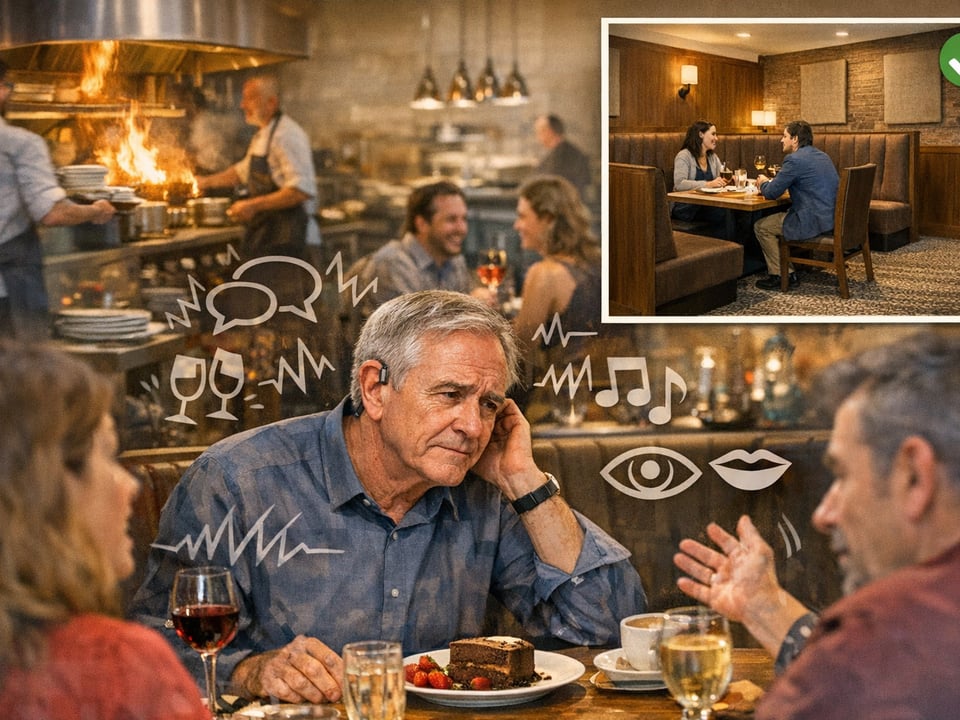
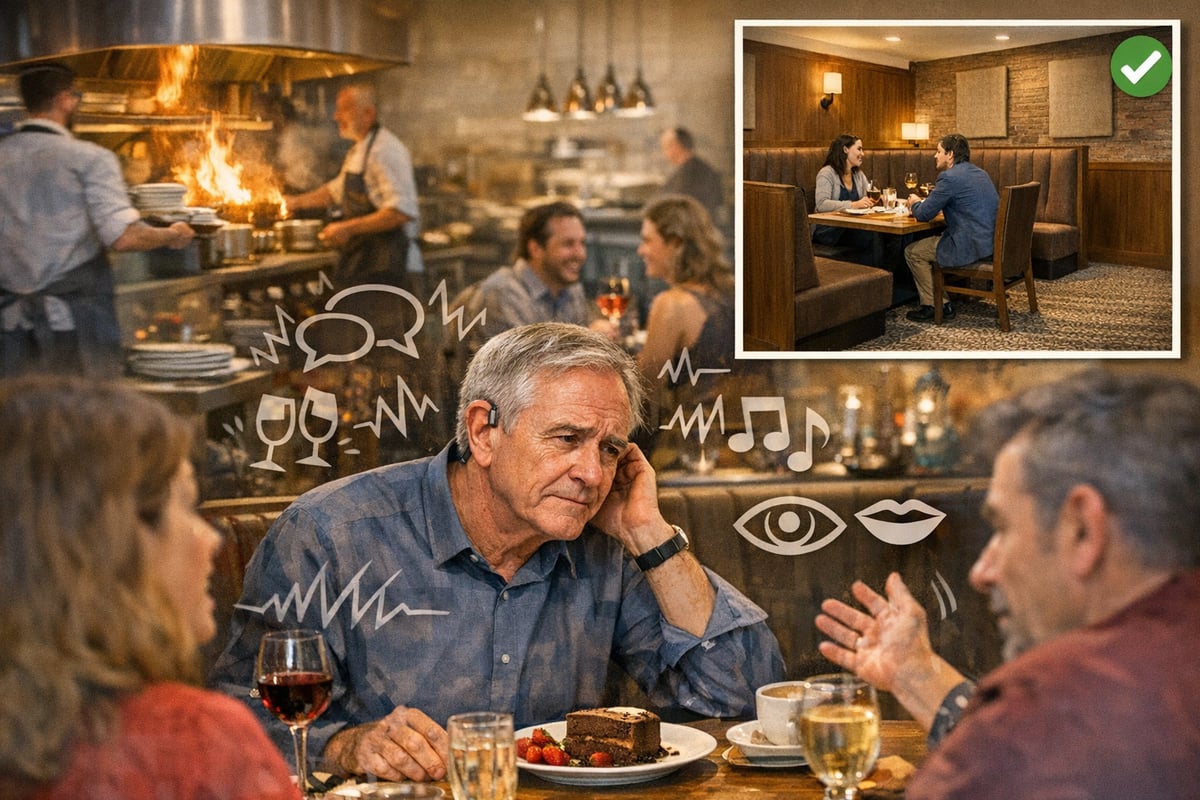
Noise-induced hearing loss: Damage can make it harder to hear particular frequencies, especially higher-pitched sounds. Over time, people may find it increasingly difficult to understand speech in restaurants or other noisy environments.
Tinnitus: Ringing, buzzing or hissing in the ears following loud noise exposure can be a sign that the auditory system has been affected. Sometimes tinnitus settles; sometimes it persists.
Temporary changes in hearing: After a concert or another loud event, sounds may seem muffled. Although hearing can recover, this should be treated as a warning sign rather than evidence that no damage occurred.
Very intense, sudden sounds such as explosions or fireworks at close range can also cause immediate acoustic trauma.
Is 120 Decibels Painful?
For some people, yes.
Sounds around 120 dB can be intensely uncomfortable and may approach the threshold at which sound becomes painful.
However, the pain threshold varies considerably between individuals. It’s also affected by the frequency and character of the sound.
More importantly, hearing damage can occur without any pain at all.
You shouldn’t use discomfort as your guide to whether a sound is dangerous. By the time something actually hurts your ears, the exposure may already be hazardous.
How Can You Protect Your Hearing from 120 dB Sounds?
The best protection is to avoid unnecessary exposure in the first place.
If you’re attending a concert, using loud equipment or working in an environment where noise levels are high, there are several practical steps you can take.
Increase your distance from the sound source. Moving further away from speakers, machinery or other loud sources can significantly reduce the sound reaching your ears.
Wear appropriate hearing protection. Properly fitted earplugs or earmuffs reduce noise exposure. Musicians can also use specially designed filtered earplugs that lower volume while maintaining more natural sound quality.
Reduce the time you’re exposed. The relationship between volume and duration matters. Take regular breaks in quieter environments, although breaks alone won’t make extremely loud exposure safe.
Check the actual noise level. Smartphone sound-level apps can provide a useful indication of environmental noise, but their accuracy varies. Professional measurements are preferable when assessing workplace or other hazardous exposure.
Don’t rely on your ears to tell you when it’s too loud. Your hearing can adapt to a noisy environment, making the sound seem less overwhelming even when exposure remains hazardous.
What If Your Ears Are Ringing After Loud Noise?
If you’ve attended a concert, worked around loud machinery or been exposed to a sudden loud sound, pay attention to any changes in your hearing.
Ringing, buzzing, muffled hearing or difficulty following conversations can indicate that your auditory system has been affected.
Move away from the noise and avoid further loud exposure. If ringing persists or you’re concerned about a change in hearing, arrange a professional assessment.
Sudden hearing loss needs urgent medical attention, particularly after loud noise exposure. If you suddenly lose hearing or experience a substantial new reduction in hearing, attend an emergency department rather than waiting for a routine hearing appointment.
At The Audiology Place, we can assess hearing changes using more than a basic screening test.
Depending on your symptoms and history, a comprehensive hearing assessment may include pure-tone audiometry, extended high-frequency testing, speech-in-noise assessments and otoacoustic emissions to evaluate aspects of inner-ear function.
These tests help us understand whether your hearing has changed and what might be contributing to your symptoms.
How Loud Is Too Loud?
You don’t need to reach 120 decibels before sound becomes potentially harmful.
Regular exposure to noise around 85 dB can increase the risk of hearing loss, depending on duration. Even recreational activities such as listening to loud music through headphones can contribute to cumulative noise exposure.
There isn’t a single volume that’s safe regardless of how long you listen.
The relationship between loudness, duration and frequency of exposure is what matters.
And because noise-induced hearing loss is generally permanent, prevention is considerably better than trying to manage the consequences.
Concerned About Your Hearing?
At The Audiology Place, we provide comprehensive hearing assessments and tinnitus care at our independent audiology clinics in Forestville on Sydney’s Northern Beaches and Epping in Sydney’s north-west.
Whether you’ve noticed ringing after a concert, regularly work around loud machinery or simply want to understand your hearing health, we can help establish what’s happening and explain your options.
Our focus is on understanding your hearing, not simply selling hearing aids.
Book a hearing assessment or call (02) 9315 8327.