If you’ve been told your hearing is “within normal limits” but still can’t follow conversations in cafés, meetings, or family gatherings, you’re not imagining it. A standard hearing test, the pure-tone audiogram we’ve all sat through in a quiet booth, only measures whether the faintest sounds reach your brain. It doesn’t test whether your auditory system can pull speech out of competing noise, and it misses a form of damage that can occur even when your hearing thresholds look perfect on paper.
This phenomenon goes by several names in the research literature: hidden hearing loss, cochlear synaptopathy, or noise-induced synaptopathy. The term isn’t marketing spin. In animal studies it describes real, measurable damage to the connections between sensory cells and auditory nerve fibres, damage that doesn’t show up on a conventional audiogram but can profoundly affect how you hear in the real world.
What the Animal Research Actually Shows
The foundational work comes from Sharon Kujawa and Charles Liberman at Massachusetts Eye and Ear and Harvard Medical School, published in 2009. They exposed laboratory mice to noise levels high enough to cause a temporary threshold shift: the muffled, ringing sensation you might recognise after a loud concert or a day on a construction site. The animals’ hearing thresholds returned to normal within about two weeks. By the measures we use in a standard hearing test, they had recovered completely.
But when the researchers examined the inner ears post-mortem, they found something unsettling: up to about half of the synapses connecting inner hair cells to auditory nerve fibres in the affected region had been lost, and they did not come back. Follow-up work in guinea pigs (Furman and colleagues, 2013) suggested the loss was selective. Low spontaneous-rate auditory nerve fibres, thought to be important for coding louder sounds and sound in background noise, were the most vulnerable. High spontaneous-rate fibres, which respond to quiet sounds and largely determine pure-tone thresholds, were mostly spared.
In other words, an ear can lose a large share of its nerve connections and still produce a normal audiogram.
The Gap Between Mice and Humans
To be plain about it, we don’t have the same quality of evidence in humans. You can’t biopsy a living human cochlea, and post-mortem studies are scarce and complicated by age, medication history, and cause of death. The animal data is compelling, repeatable, and biologically plausible, but translating it directly to human patients requires caution.
Some human studies have found correlations between noise exposure history and poor speech-in-noise performance despite normal audiograms. Others have found no such link, or weak ones that disappear when you control for age and high-frequency hearing loss. Attempts to measure synaptopathy indirectly, using auditory brainstem responses, envelope following responses, or middle-ear muscle reflexes, have produced mixed results. The field is still working out which tests are sensitive and specific enough to be clinically useful.
Clinically, though, the pattern is familiar: a younger tradesperson or musician with normal thresholds who struggles to follow conversation at a noisy dinner table. Whatever the underlying cause turns out to be, these people exist, and the real question is whether we’re measuring the right things to help them.
Who’s at Risk
Noise exposure is the obvious culprit. Tradespeople (carpenters, mechanics, miners), military personnel, shooters, and musicians can report difficulty in noise years before their pure-tone thresholds shift. But the exposure doesn’t need to be occupational. A decade of front-row gigs, earbuds at full volume on the commute, or even a single acoustic trauma (a firecracker, a car airbag) may be enough.
Age interacts with noise history in ways we’re still unpicking. Some researchers suspect that early noise exposure accelerates age-related hearing loss or unmasks synaptopathic damage as you lose redundancy elsewhere in the system. The upshot: a normal audiogram at 35 doesn’t mean you’ll still have normal speech perception at 55, especially if you’ve been careless with your ears.
What We Actually Test For
When someone comes to The Audiology Place reporting difficulty in noise despite a normal hearing test elsewhere, we don’t just repeat the audiogram and send them on their way. A more thorough hearing assessment stresses the auditory system in ways a pure-tone audiogram can’t. It can include:
Speech-in-noise testing. The QuickSIN (Quick Speech-in-Noise) test presents sentences against four-talker babble at progressively worse signal-to-noise ratios. We’re looking for a signal-to-noise ratio loss: how much louder speech needs to be, relative to the noise, for you to understand it compared to someone with genuinely normal hearing. A loss of 3 to 7 dB is considered mild; above 7 dB suggests real difficulty. It takes only a few minutes and often explains more than the audiogram does.
The LiSN-S (Listening in Spatialized Noise–Sentences), developed here in Sydney at the National Acoustic Laboratories. It measures your ability to use spatial cues (where sounds are coming from) to separate speech from noise. Poor performance can point to auditory processing issues, and it’s particularly useful in kids and young adults whose thresholds are rock-solid but whose parents or teachers report they “don’t listen.”
Extended high-frequency audiometry (testing above the standard 8 kHz, out to 16 kHz or beyond) sometimes picks up early noise damage before it migrates into the speech frequencies. It’s not a perfect proxy for synaptopathy, but it adds information, especially in younger patients.
Tympanometry and acoustic reflex testing round out the picture by ruling out middle-ear contributions and, in some protocols, providing indirect evidence of auditory nerve function.
What You Can Actually Do About It
If testing confirms you have speech-in-noise difficulty despite normal or near-normal thresholds, the management isn’t as straightforward as fitting a hearing aid. Traditional amplification is designed to make quiet sounds audible; if your thresholds are already normal, more volume isn’t the answer.
That said, some modern hearing devices and assistive listening technology can help by improving signal-to-noise ratio: enhancing speech and suppressing background noise using directional microphones, noise reduction algorithms, or remote-microphone systems. We’re selective about who we trial these with, and we’re clear about what they can and can’t do.
Environmental modifications matter more than people expect. Choosing where you sit in a restaurant (back to the wall, away from the kitchen), advocating for better acoustics at work (carpet, ceiling panels, closed doors during meetings), and being direct with communication partners about your needs aren’t cop-outs: they’re pragmatic.
Hearing protection going forward is essential. There’s currently no proven treatment that restores lost synapses, so protecting the ones you have matters. Custom musicians’ earplugs, foam plugs for the workshop, and turning down the earbuds aren’t about being precious: they’re about preserving what you’ve got left.
Why This Matters Beyond the Clinic
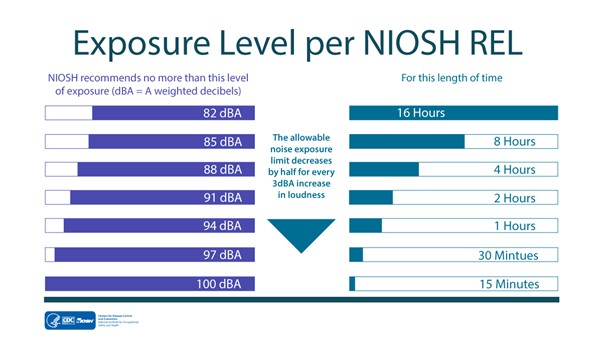
The existence of hidden hearing loss has implications for occupational health screening, noise regulations, and how we counsel young people about safe listening. A pass on a workplace audiogram doesn’t mean the noise exposure is harmless. Temporary threshold shifts may not be harmless, even when they recover. Threshold testing alone can miss part of the picture, which helps explain why some people are told their hearing is fine when their experience says otherwise.
I’m not claiming every case of difficulty in noise is cochlear synaptopathy: auditory processing disorder, high-frequency loss, cognitive factors and, rarely, a vestibular schwannoma can all contribute. But the research gives us a biologically plausible explanation for a pattern we see clinically, and that’s worth taking seriously.
If you’ve been dismissed because your audiogram is normal, you’re not imagining it, and you’re not alone. The test can be normal while your hearing in noise isn’t. And there are better ways to measure what’s actually going on.