
Yes, earbuds can permanently damage your hearing. The World Health Organization estimates that more than a billion young people worldwide are at risk of hearing loss from unsafe listening practices, including loud music through personal audio devices. What makes this particularly concerning from a clinical perspective is that this damage is cumulative, irreversible, and often unnoticed until it’s already significant.
The typical noise-induced pattern, a notch around 4000 Hz on a pure tone audiogram, used to be associated mainly with workers who had spent decades in industrial noise. Today, long hours of loud personal listening are recognised as a risk too, and the same pattern can appear in young people who have never set foot on a construction site.
Understanding the Dose: Why Volume and Duration Both Matter
The fundamental principle behind noise-induced hearing loss is deceptively simple: exposure equals volume multiplied by duration. We call this the “dose.” You can damage your hearing with extremely loud sounds over short periods (think a single concert or firecracker), or with moderate sounds over extended periods, which is exactly what happens with daily earbud use.
The delicate hair cells in your cochlea don’t differentiate between industrial machinery and your earbuds. They respond to sound pressure levels and exposure time. Once these hair cells are damaged or destroyed, they don’t regenerate. There’s no treatment that brings them back.
Australia’s workplace noise standard sets the exposure limit at 85 dB averaged over eight hours, and every 3 dB increase halves the safe time. At 88 dB, that’s four hours. At 91 dB, two hours. Many phones and earbuds can reach 100 dB or more, and at that level the same daily allowance is used up in about 15 minutes. The World Health Organization’s Make Listening Safe guidance for personal listening is more cautious again, at around 80 dB for up to 40 hours a week for adults.

The problem is that most people have no intuitive sense of what 85 dB sounds like, and music doesn’t feel dangerous the way a jackhammer obviously does.
The 60/60 Rule: Practical but Not Perfect
The widely promoted 60/60 rule (listen at no more than 60% of maximum volume for no more than 60 minutes at a time) is a reasonable starting point, but it’s a blunt instrument. Maximum volume varies significantly between devices and headphone types. Sixty percent on one pair of earbuds might be comfortable; on another it could be far too loud.
What I tell patients is this: if someone standing an arm’s length away can hear your music, it’s too loud. If you need to raise your voice to speak over your own music, it’s too loud. If you remove your earbuds after listening and the world sounds noticeably quieter or muffled, you’ve exceeded a safe dose.
That temporary muffled sensation, called a temporary threshold shift (TTS), is your auditory system’s distress signal. It usually recovers within hours to days, but repeated episodes are thought to add to permanent damage, some of which may not show on a standard audiogram (see hidden hearing loss). People who eventually complain that “everyone mumbles now” have often had regular TTS for years.
Noise-Cancelling Technology: An Unexpected Ally
This surprises people: noise-cancelling headphones can be safer for your hearing, despite seeming more immersive. They let you hear your content clearly at lower volumes.
Without noise cancellation, most people compensate for background noise by turning up the volume. On a noisy train, it’s easy to push your music well past safe levels just to hear it. Effective noise cancelling cuts much of that background rumble, so you can listen comfortably at a lower volume.
Because every 3 dB matters, even a modest drop in listening volume makes a real difference to your daily noise dose. Good noise-cancelling headphones are one of the few preventive purchases I recommend without reservation.
Warning Signs You’re Already Doing Damage
Most people don’t realise they have hearing damage until it interferes with speech understanding, which typically happens after years of exposure. But there are earlier warning signs that you’re in the danger zone:
Tinnitus after listening. If you remove your earbuds and notice ringing, buzzing, or hissing in your ears, you’ve overexposed yourself. Temporary tinnitus is a clear sign of temporary threshold shift. Ignore it repeatedly and it often becomes permanent. Some people in their twenties develop constant tinnitus this way, not from a single acoustic trauma but from years of dismissing these warning signs.
Needing to increase volume progressively. If you find yourself creeping the volume up over weeks and months to achieve the same listening experience, that’s often your hearing declining. You’re chasing a baseline that’s shifting because you’re damaging it.
Muffled hearing after use. As mentioned, this temporary threshold shift indicates you’ve fatigued your auditory system. Once or twice after an unusually loud event is one thing. Several times a week means you’re in a cycle of damage.
Difficulty understanding speech in noise. This is the hallmark of early noise-induced hearing loss. Pure tone audiometry might still show “normal” thresholds, but speech-in-noise testing can reveal problems. You’ll notice this as needing subtitles, struggling in restaurants, or asking people to repeat themselves when there’s background noise.
Practical Prevention: What Actually Works
The most effective prevention is also the least palatable: use earbuds less, at lower volumes. But since that advice is approximately as useful as telling people to exercise more and eat less, here are strategies people actually stick with:
Enable volume limits on your device. Both iOS and Android allow you to set maximum volume limits. On an iPhone, look under Settings > Sounds & Haptics > Headphone Safety, where you can reduce loud audio above a chosen decibel level. Android settings vary by manufacturer but are usually under Sound or Volume settings. Choose a conservative limit and give yourself a week or two to adapt.
Use listening time tracking. Many smartphones track headphone audio levels and duration. On an iPhone, the Health app shows your headphone audio levels and flags when your weekly exposure has been loud. If you regularly see loud-exposure warnings, you’re accumulating a risky dose.
Take actual breaks. The 60/60 rule’s second component, the break, is perhaps more important than the volume limit. Your auditory system needs recovery time. Continuous exposure, even at moderate levels, doesn’t allow for metabolic recovery of the hair cells. I recommend at least 10-15 minutes of quiet for every hour of listening.
Consider over-ear headphones for long sessions. Many people find them more comfortable for long sessions at lower volumes, especially noise-cancelling models. For extended listening (long flights, study sessions), they’re worth the bulk.
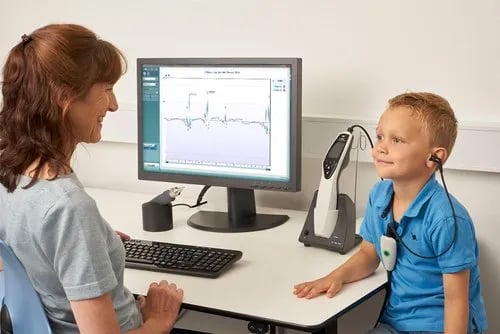
Get a baseline hearing test. If you’re a regular earbud user, particularly if you listen for multiple hours daily, get a baseline hearing test. Hearing tests by audiologists generally aren’t covered by Medicare, though some private health extras policies contribute. A baseline gives you objective data to track against. If you’re showing early changes at your next test in a year or two, you know you need to change behaviour before it progresses.
The Cumulative Damage Reality
The insidious aspect of noise-induced hearing loss from earbuds is that it accumulates silently over years. Unlike sudden acoustic trauma from an explosion or gunshot, where the damage and the cause are immediately apparent, chronic listening happens in doses that seem individually harmless.
Each day of listening at 95 dB for two hours adds to your lifetime noise dose. There’s no reset. Your auditory system doesn’t get a fresh start each morning. By the time you notice the damage, usually manifesting first as difficulty hearing conversation in background noise, you’ve typically lost hair cells across a frequency range critical for speech understanding.
I can’t restore those cells. Hearing aids can amplify what’s left, but they can’t give you back normal hearing. The technology has improved dramatically, modern hearing aids are genuinely impressive, but they’re a compensatory tool, not a cure. And for someone in their twenties or thirties facing decades of progressive hearing loss, that’s a confronting reality.
The good news is that prevention is achievable. Unlike age-related hearing loss, which is partly inevitable, or genetic hearing loss, which you can’t control, noise-induced hearing loss is largely preventable.
Your future hearing is being determined by decisions you’re making right now, today, on your commute or at the gym. Most of those decisions feel inconsequential in the moment: turning the volume up two notches to hear over the train noise, leaving your earbuds in for an extra hour because you’re enjoying a podcast. But they compound.
If you’re experiencing any of the warning signs mentioned earlier, or if you’re just aware that you’ve been listening at high volumes regularly, consider booking a hearing assessment. Not because you definitely have damage, but because establishing a baseline now lets you track changes and adjust behaviour before those changes become significant.
This isn’t about fear-mongering. It’s about recognising that the technology we use daily has physiological consequences that aren’t immediately obvious. Your ears don’t send you clear feedback until significant damage has occurred. By then, you’re managing a permanent condition rather than preventing one.