
Industrial deafness—more accurately, noise-induced hearing loss (NIHL)—is one of the most common causes of permanent hearing change we see in the clinic. Years of exposure to machinery, tools, engines, impact noise, and alarms typically erode the delicate hair cells of the inner ear, especially at higher frequencies. On an audiogram, this often shows as a “notch” between 3–6 kHz (usually around 4 kHz). In everyday life, it often feels like people are mumbling, speech is unclear in pubs or lunchrooms, and tinnitus (ringing or buzzing) is a common occurrence. The right hearing aid can make a profound difference—but only when it’s selected and fitted for the specific patterns and challenges of NIHL, and when it works alongside proper hearing protection at work.
Below, I’ll walk you through what matters most, which features actually help with speech clarity in noisy environments, and how we at The Audiology Place tailor fittings for individuals with a history of industrial noise exposure.
What matters most for NIHL
1) Speech-in-noise performance, not just “volume”
NIHL doesn’t just reduce loudness; it reduces the ear’s ability to separate speech from background noise. That’s why the top priority is directionality and binaural beamforming—two microphones in each ear working together to focus on speech from the front while softening competing noise from the sides and behind. Modern systems can adapt that focus as the talker or the listener moves, which is particularly helpful in open workshops, warehouses and canteens.
2) Advanced noise reduction and impulse control
Grinding, hammering and clattering create “impulse noise” that can be uncomfortable for ears affected by NIHL, which often comes with recruitment (sudden jumps from soft to loud). Look for hearing aids with strong impulse sound suppression and adaptive noise reduction that reduces steady noise (such as fans and engines) without dulling speech.
3) Frequency lowering for inaccessible highs
If high-frequency regions are too damaged to benefit from amplification, simply increasing the volume won’t help. Frequency lowering (sometimes called frequency compression or transposition) moves key speech cues—like /s/, /f/, /t/—into a lower, accessible range. When indicated, this can dramatically improve clarity for NIHL.
4) Sophisticated compression (loudness management)
NIHL shrinks your comfortable listening window. Wide dynamic range compression with smart attack/release settings can lift soft speech without making loud sounds harsh. This is vital for all-day comfort in variable noise environments.
5) Dust, moisture and durability
Industrial work is challenging on devices. Choose robust, IP68-rated hearing aids with good sealing, nano-coatings, and optional rechargeable batteries (no battery door = fewer entry points for dust and sweat). Rechargeables also simplify daily handling after long shifts.
6) Connectivity for work and home
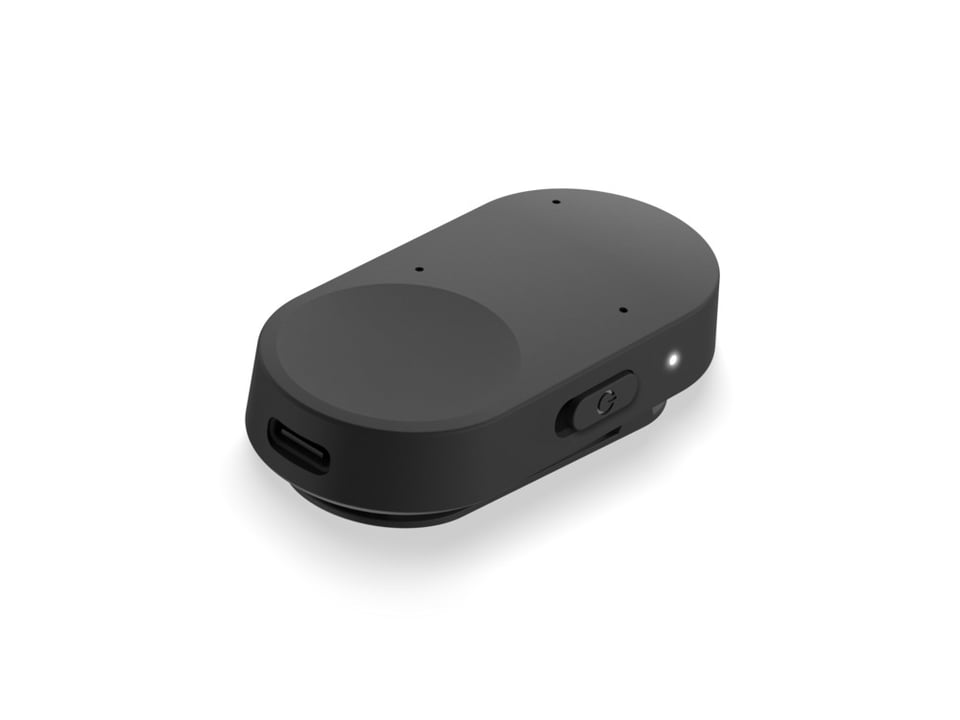
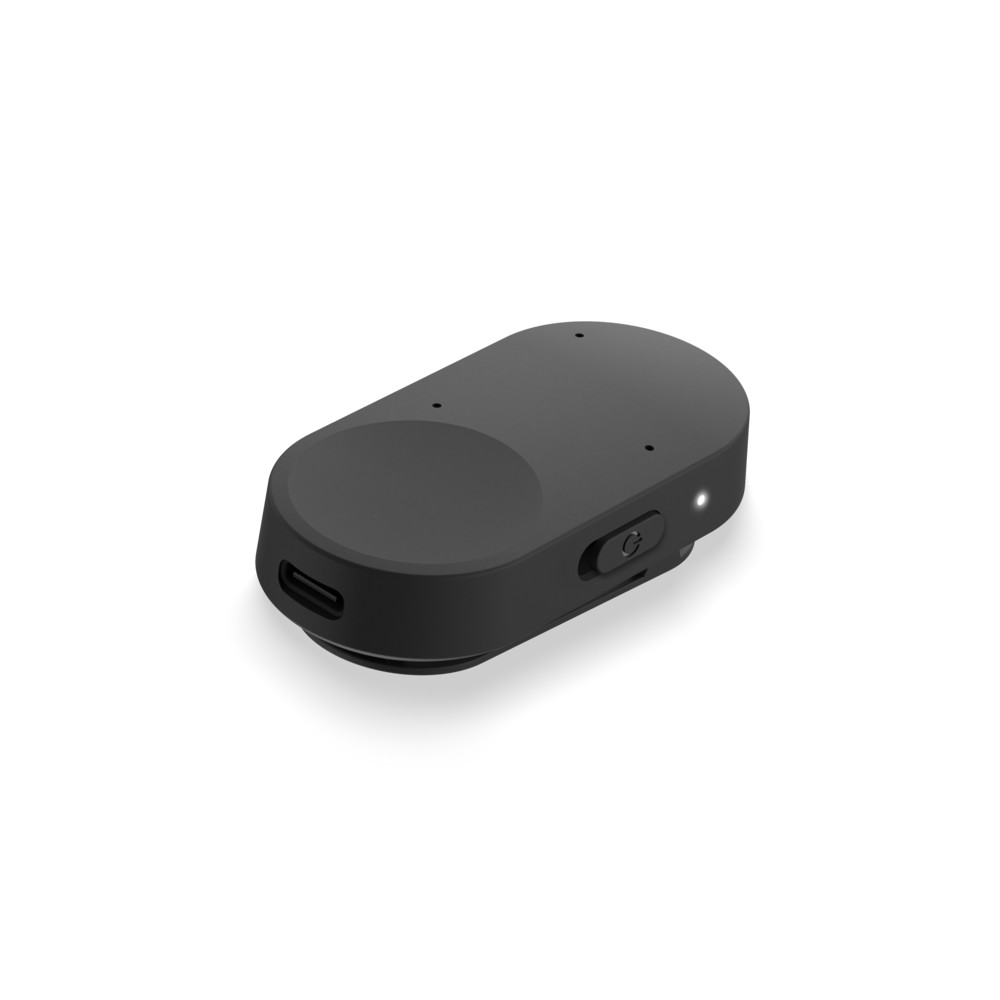
Bluetooth® connectivity and (where relevant) telecoil support can be practical for phones, tablets, and assistive listening in meeting rooms. For the workshop floor, accessories like remote microphones (clip-on or table mics) can beam a supervisor’s voice directly to your hearing aids—hugely helpful in noisy briefings.
7) Tinnitus support
If you have ringing, choose devices with built-in tinnitus programs (such as sound therapy and masking options) and app-based controls. Managing tinnitus can improve focus and sleep, which in turn can indirectly enhance communication.
8) PPE compatibility
Hearing aids are not hearing protection. In hazardous noise environments, you still need to use earplugs or earmuffs. The best hearing aid for you is one that plays nicely with PPE: low-profile shapes that fit comfortably under muffs, custom earmolds that retain well under helmets, and a dedicated “under-muffs” program that limits microphones to avoid feedback.
Open-fit domes vs custom earmoulds
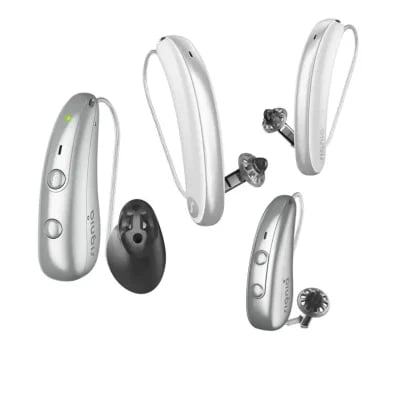
Many NIHL audiograms exhibit a “sloping” pattern, characterised by better low-frequency hearing and poorer high-frequency hearing. For mild to moderate sloping losses, open-fit receiver-in-canal (RIC) styles are popular because they feel natural and airy. However, open fittings can reduce the effectiveness of directionality and noise reduction, and they can leak sound, risking feedback under earmuffs.
If your work routinely involves PPE, a custom earmould with an appropriately small vent often provides better retention, improved directionality, and a more stable seal (resulting in less feedback). For severe high-frequency loss—especially if we’re using frequency lowering—custom tips are usually the more precise choice.
Remote microphones: a genuine game-changer
Even the best hearing aids have limitations in noisy environments. A remote microphone placed near the talker improves the signal-to-noise ratio more than any on-ear algorithm can on its own. For toolbox talks, training sessions or noisy meetings, this single accessory often delivers the biggest “wow” in clarity.
Safety and communication on the job
Never substitute hearing aids for proper hearing protection in hazardous noise.
If you need to hear radio calls or communicate with coworkers while protected, ask us about level-dependent earplugs/earmuffs, in-ear communication solutions, or hearing-protection-compatible setups that integrate with hearing aids or dedicated communication systems.
We can build a dedicated “PPE” program in your hearing aids (reduced mic sensitivity, feedback control tuned for muffs, alerts managed appropriately).
Special scenarios
Asymmetrical loss: If one ear is significantly worse (for instance, due to years of exposure to a jackhammer), we will carefully examine the medical signs and may recommend an ENT review. In some cases, a CROS solution (routing sound from the poorer side to the better ear) is appropriate.
Wind and outdoor work: Choose aids with effective wind noise management and consider mic-mode shortcuts that can bee switched on thefly when stepping outdoors.
Long shifts: Prioritise devices with all-day battery life and fast charging docks.
How we fit hearing aids for industrial deafness at The Audiology Place
Comprehensive diagnosis
Your first appointment with us is a complete diagnostic consultation (allow 90 minutes). We take a thorough case history, including noise exposures, tinnitus, and communication demands at work and home, and then perform a comprehensive test battery. This may include high-frequency testing, tympanometry, OAEs (for outer hair cell function) and speech-in-noise measures to quantify the exact difficulty you face in complex environments.
Evidence-based prescription and verification
We don’t guess. We use real-ear measurements (REM) to verify that your hearing aids deliver the prescription (gain at each frequency) in your own ear canal. If we’re using frequency lowering, we verify that key consonant cues are audible and comfortable. For NIHL, those details really matter.
Programs tailored to your day
Most of our NIHL fittings include multiple programs:
Everyday speech clarity (adaptive directionality)
High noise (more substantial noise reduction, impulse control)
Under earmuffs (mic settings designed to minimise feedback)
Music (more natural dynamics)
Switching can be automatic, manual via button, or controlled by an app—whichever suits you.
Accessories and training
If your job involves briefings or group work, we’ll trial a remote mic and show you the best placement. We’ll also coach you on communication strategies (facing the talker, lighting, managing distance), tinnitus tools, and how to combine hearing aids with proper PPE.
Follow-up and ongoing care
Hearing rehabilitation is a process, not a single appointment. We schedule follow-ups to fine-tune settings as your brain adapts and as we observe how the devices perform in your real environments. We provide indefinite support for maintenance, wax management and repairs—because reliability is everything when you rely on your hearing at work.
Funding and support
Depending on your eligibility, we can help you navigate options such as the Commonwealth Hearing Services Program (HSP) and relevant workers’ compensation pathways. We’ll provide the clinical reports you need and guide you through what’s covered. (We’re independent, so our recommendations are brand-agnostic and focused on your needs.)
So… which hearing aids are “best”?
There isn’t a single model that suits every pattern of industrial deafness. The “best” hearing aid is the one that:
Delivers proven speech-in-noise performance for your audiogram and listening demands
Offers frequency lowering if high-frequency regions are inaccessible
Is robust enough for your environment (IP rating, sweat/dust resistance)
Plays nicely with your PPE and can be programmed for under-muff use
Has the battery life and connectivity yyou’llactually use
Is fitted with REM, verified against your targets, and supported with follow-up and the right accessories (often a remote mic)
As an independent clinic, we work with all major manufacturers and will narrow the field based on your test results, workplace realities, and personal preferences. For many with NIHL, a receiver-in-canal device with a custom mould, strong beamforming, impulse suppression, and frequency lowering—plus a remote microphone—delivers the best real-world clarity.