
Why Your Child’s Hearing Deserves Expert Attention
Your four-year-old is watching Bluey at volume 47. You’ve called her name three times from the kitchen. Nothing. She’s staring at the screen like you don’t exist.
Is she ignoring you? Lost in her own world? Or is something else going on?
At The Audiology Place, Dr Signe Steers sees this scenario weekly. Parents arrive frustrated, worried, sometimes at the end of their rope. They’ve been told their child might have ADHD. Or autism. Or they’re just “strong-willed.” Often, nobody has thought to check the most obvious thing first: whether this child can actually hear properly.
The answer matters more than you might think. Hearing difficulties are surprisingly common in young children. About 15% of school-aged kids have at least some degree of hearing loss. Many cases are temporary and treatable. But when they go undetected, even mild hearing issues can derail speech development, school performance, and social confidence.
The good news? Most childhood hearing problems can be identified, managed, and often resolved. You just need to know what to look for.
What’s Actually Going On in Those Little Ears
Children’s hearing problems fall into a few common categories. Understanding them helps you recognise the signs early.
Glue Ear: The Silent Troublemaker
Glue ear (otitis media with effusion) is the most common cause of temporary hearing loss in young children. Sticky fluid accumulates in the middle ear, usually after a cold or infection, and muffles incoming sound like cotton wool stuffed in the ear canal.
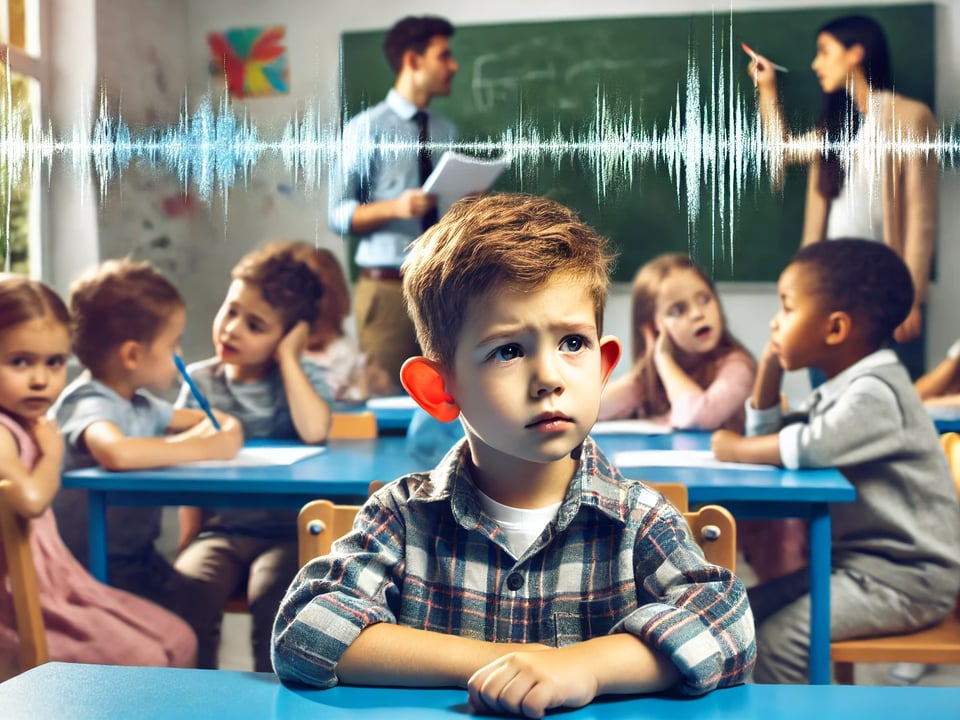
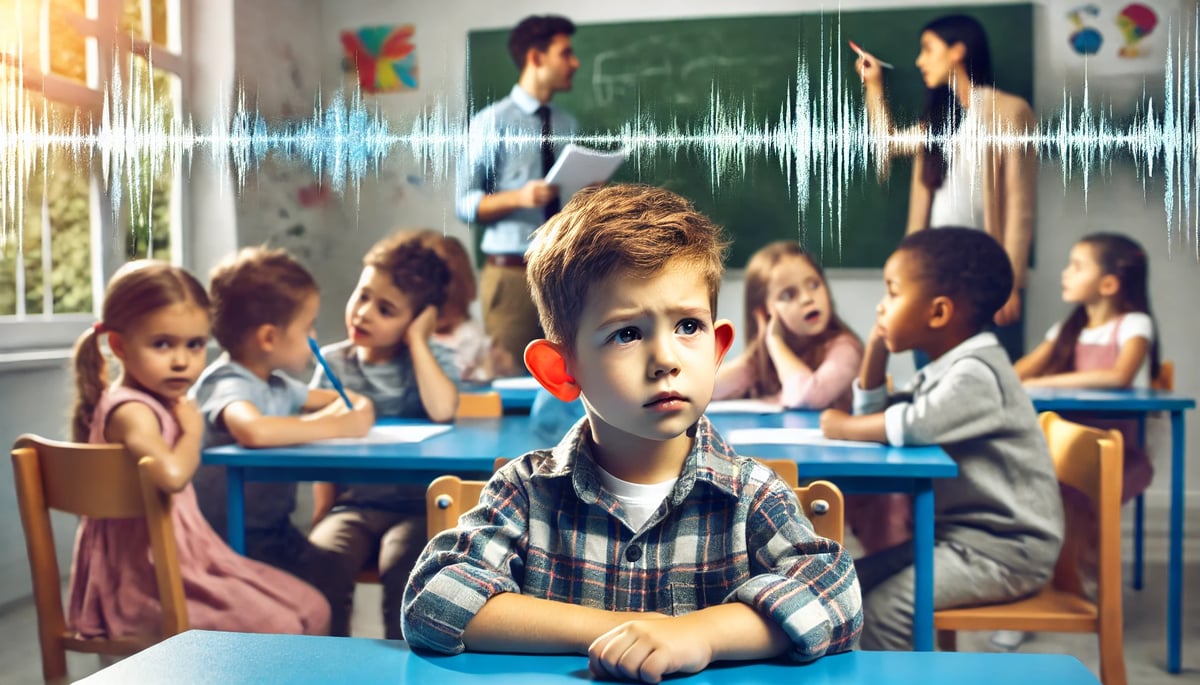
Kids with glue ear often look like they’re daydreaming or deliberately ignoring you. They’ll turn the TV up. They’ll say “what?” constantly. They might get unusually cranky or tired because straining to hear all day is exhausting work.
The tricky part? Glue ear comes and goes. Your child might hear perfectly on Monday and struggle on Wednesday. This inconsistency can look like selective listening or attitude problems to parents and teachers who don’t know what’s happening.
Most cases care lear within three months. But persistent glue ear can affect speech development and school readiness. At The Audiology Place, we use tympanometry to detect fluid behind the eardrum, even when it’s not visible during a standard GP examination. If treatment is needed, tiny ventilating tubes (grommets) can make an immediate difference.
Colds and Ear Infections: Temporary But Disruptive
Every Northern Beaches parent knows the drill. Winter arrives, the kids start swimming at Narrabeen or Freshwater, and suddenly everyone’s got a cold that won’t quit. What many don’t realise is that congestion and ear infections cause genuine temporary hearing loss.
During a bad cold, your child’s ears may feel plugged and sounds may seem distant or underwater. They’re not being difficult when they don’t respond. They genuinely can’t hear you clearly.
This usually resolves when the infection clears. But frequent ear infections can create a pattern of fluctuating hearing that confuses everyone. Good days alternate with bad days. The child never knows when sounds will be clear or muffled. It’s disorienting, and it shows up as inconsistent behaviour.
If your child has recurring ear troubles, get their hearing checked once they’re well. You want to confirm everything has returned to normal.
Congenital Hearing Loss: Present From Birth
Some children are born with permanent hearing loss due to genetic factors or conditions around birth. Thanks to newborn hearing screening in NSW hospitals, most babies with congenital hearing loss are identified in the first weeks of life. About 1 to 3 per 1,000 children have some level of hearing loss from birth.
Early detection changes everything. When hearing loss is identified and managed early (with hearing aids or other supports), children often develop language skills right alongside their hearing peers. The brain is remarkably adaptable in those early years. Give it access to sound, and it figures out what to do with it.
One important note: passing the newborn hearing screen doesn’t guarantee hearing will stay normal. Some forms of hearing loss develop later, due to illness, medication, or delayed genetic factors. Continue watching for signs as your child grows. Not startled by loud sounds? Not babbling by 9 months? Not responding to their name by 12 months? These warrant a proper assessment.
Listening Fatigue: When Hearing Is Hard Work
Here’s something that catches many parents off guard. Children with even mild hearing loss, or fluctuating hearing from glue ear, have to work significantly harder to understand speech. Their brains are constantly filling in gaps, predicting words, straining to make sense of muffled input.
This is exhausting. A child who comes home from daycare or school utterly wiped out might not be lazy or difficult. They may have spent six hours doing cognitive heavy lifting to follow basic instructions.
Listening fatigue shows up as irritability, withdrawal, “tuning out” in noisy environments, or meltdowns that seem disproportionate to the situation. At a birthday party in Dee Why or a crowded café in Manly, these kids hit their limit fast. The noise overwhelms their already-strained hearing system.
If you notice your child consistently crashes after complicated listening situations, their ears or brain might be working overtime. It’s worth investigating.
Before You Chase Other Diagnoses, Check the Ears
Dr Steers has a rule she wishes every paediatrician, GP, and teacher would adopt: when a child isn’t responding, seems distracted, has speech delays, or struggles in school, rule out hearing problems first.
Why? Because undiagnosed hearing loss mimics a surprising number of developmental and behavioural conditions. Kids get labelled with ADHD, autism, auditory processing disorder, or oppositional defiance when the real issue is they can’t hear properly. This leads families down wrong paths, sometimes for years.
Auditory Processing Disorder: Not What You Think
Auditory Processing Disorder (APD) affects the brain’s ability to interpret sounds, but here’s the catch: APD can only be diagnosed if peripheral hearing is entirely normal. The ears must be working flawlessly before you can conclude the problem lies in how the brain processes what the ears are sending.
At The Audiology Place, APD assessment for school-aged children (typically 7+) is part of what we do. But we always start with comprehensive hearing tests. It would be irresponsible to diagnose a processing problem when a simple hearing issue might explain everything.
ADHD vs. Hearing Loss: The Overlap Is Striking
Attention-deficit/hyperactivity disorder is characterised by inattention, distractibility, and difficulty following instructions. Sound familiar? Those same symptoms describe a child who can’t hear well.
A kid who’s missing words will seem inattentive. They’ll look like they’re daydreaming when they’re actually struggling to catch what the teacher said. They’ll give off-topic responses because they misheard the question. They might fidget and seem restless because they’ve disengaged from a conversation they can’t follow.
It’s not uncommon for children to be medicated for ADHD when the real issue was hearing loss all along. A 30-minute hearing test could have saved everyone a lot of frustration.
Best practice is simple: do the hearing test first. If hearing is normal, you’ve ruled out one possibility and can confidently pursue other assessments. If hearing isn’t normal, you’ve found something fixable.
Autism Spectrum Disorder: Hearing Checks Are Essential
Some early signs of autism overlap with signs of hearing loss. Not responding to their name. Delayed speech. Seeming to be “in their own world.” Standard paediatric guidelines recommend a formal hearing evaluation for any child being assessed for autism.
This isn’t about ruling autism in or out. It’s about ensuring that hearing issues aren’t complicating the picture or being mistaken for something else. Undetected hearing loss can coexist with autism, and addressing it makes everything easier.
Oppositional Behaviour: Or Just Not Hearing You?
Imagine a child who only hears half of what you say. From the adult’s perspective, it looks like deliberate defiance. You give an instruction, the child doesn’t follow it. You repeat yourself, get frustrated, the child gets defensive. The cycle escalates.
Children who can’t communicate or hear properly may resort to acting out, and this sometimes leads to labels like Oppositional Defiant Disorder. Before concluding that a child is intentionally misbehaving, it’s worth confirming they can actually hear your instructions.
A hearing test is quick, non-invasive, and completely painless. If it finds a problem, addressing it might resolve the behaviour issues entirely. If hearing is normal, you’ve eliminated one variable and can focus your attention elsewhere.
How to Tell the Difference: Hearing Problem or Something Else?
The outward signs of hearing difficulty and attention or behaviour issues overlap considerably. But there are clues that can help you work out what’s really going on.
Watch for Patterns Across Settings
A child with ADHD tends to show inattention and impulsivity everywhere, regardless of listening conditions. A child with hearing difficulty behaves differently depending on the environment.
Does your child seem perfectly attentive during quiet one-on-one time, like reading a bedtime story, but “zone out” in noisy group settings? That’s a sign the noise and distance are making it hard to hear.
Notice How They Respond to Visual vs. Verbal Cues
Children with hearing issues often do much better when information is presented visually. If your child ignores verbal instructions but follows along readily when you demonstrate or use gestures, hearing could be the problem.
Similarly, a child who doesn’t respond when you call from another room but snaps to attention when you appear in their line of sight is showing a classic hearing-related pattern.
Pay Attention to Speech Development
Hearing and speech are tightly connected. Children who don’t hear the full range of speech sounds may talk late, pronounce words incorrectly, or have a limited vocabulary for their age.
A child with normal hearing but ADHD might have age-appropriate pronunciation and vocabulary. They just use them inconsistently. A child with hearing loss may show specific patterns of unclear speech because they’re not picking up certain sounds.
Observe the Nature of the “Not Listening”
There’s a difference between a child who doesn’t hear and a child who hears but resists.
A hearing-impaired child might have a blank or puzzled expression when you speak, or they start doing what you asked only after you repeat yourself at closer range. They might watch other kids to figure out what to do because they missed the verbal instruction.
A child with a behavioural issue might hear the instruction clearly and refuse outright. The difference is subtle but telling.
Kids with hearing trouble can also become frustrated or irritable. Not out of defiance, but because constantly straining to hear is upsetting. They aren’t choosing to misbehave. They’re reacting to confusion and fatigue.
Consider Academic Performance
Once a child is in school, learning patterns become revealing. Hearing issues often show up as misunderstood instructions, difficulty with phonics (because certain letter sounds aren’t being heard clearly), or withdrawal during large group activities.
Research shows that children with untreated hearing loss (even moderate loss) can fall one to four grade levels behind their peers. They’re not incapable. They’re simply missing too much of the teaching. With proper support, they often catch up rapidly.
When in doubt, get a professional hearing assessment. It’s the only way to know for sure, because hearing loss is invisible and easily missed without proper testing.
Why Early Detection Changes Everything
Finding and addressing a child’s hearing problem early can reshape their entire developmental trajectory. This isn’t an exaggeration. The evidence is clear.
Language and Learning Depend on Hearing
Children learn to speak by hearing speech. Miss the input during critical early years, and the brain misses out on essential language development. This snowballs into delayed talking, unclear speech, reading difficulties, and sometimes behavioural issues stemming from communication frustration.
The longer hearing issues go undetected, the more these delays compound. But when hearing loss is identified and addressed early, many children develop language skills on a near-normal timeline. They enter school ready to learn alongside hearing peers.
Young brains are remarkably flexible. Give them access to sound through medical treatment, hearing aids, or therapy, and they can catch up on listening and speech skills that were initially missed.
Avoiding Misunderstanding and Misbehaviour Labels
A child who can’t hear well and doesn’t understand why may become frustrated, act out, or withdraw socially. They might get labelled as “difficult,” which damages self-esteem and affects how teachers and parents respond to them.
Identifying hearing issues early lets everyone understand the real reason behind the behaviour. Simple accommodations follow: seating the child at the front of the classroom, using visual cues, ensuring they have amplification if needed. The shift from “struggling in silence” to “understood and supported” can transform a child’s experience.
Many parents report that once their child got grommets or hearing aids, they saw improvements not just in listening but in mood and engagement. Suddenly the child is more involved and less frustrated.
Better Educational Outcomes
The longer a hearing problem goes untreated, the further a child can fall behind academically. This isn’t because they lack ability. They’ve simply missed too much of the instruction.
The encouraging reality is that with proper intervention (hearing aids, cochlear implants, educational support), children with hearing loss can and do succeed academically. Many graduate high school and university with strong results. The sooner intervention starts, the less learning gap there is to close.
Building Confidence and Connection
Imagine being a small child who frequently can’t understand what people are saying. It’s frightening and isolating. Some kids become very shy and stop trying to interact. Others act out or develop anxiety.
Diagnosing the issue early gives the child tools to connect with their world. Maybe it’s simple grommet surgery to drain fluid. Maybe it’s two colourful hearing aids that let them hear their teacher and laugh at jokes. Now the child can engage, respond to their name, and feel like part of the group.
This boost to social and emotional development matters as much as the academic gains.
The Confusing Case of Fluctuating Hearing
Some children hear fine one day and struggle the next. This intermittent pattern, usually caused by glue ear or recurring congestion, baffles parents and teachers alike.
Fluid in the middle ear may build up and drain repeatedly. One week your child is perky and responsive. The next week, the fluid is back and they’re saying “huh?” constantly, turning up the TV, not responding unless you’re standing right beside them.
Children rarely tell you their ears feel full. Many think that’s just how hearing works. Instead, they appear to “ignore” you or seem unusually irritable. Behaviour changes like short attention spans and crankiness can be red flags for glue ear.
This fluctuation disrupts learning in sneaky ways. If your child happens to have muffled hearing on “letter sounds” day at preschool, they might not hear the difference between “s” and “f.” Their phonics development stutters for reasons nobody connects to their ears.
If your child has chronic fluid issues, talk to your GP or ENT about management options. Grommets (tiny tubes) can dramatically reduce fluid build-up and immediately improve hearing. For less frequent cases, being aware of the pattern helps. Let the teacher know when your child has an ear infection so they can seat them close by and check understanding.
Trust your observations. If you consistently feel “she just doesn’t hear me sometimes,” you’re likely right. Keep notes of when and in what situations you notice problems, and share them with your doctor.
Raising Hearing-Aware Kids
Hearing health isn’t just a medical issue. It’s part of everyday life. You can help your child understand and care for their ears from an early age.
Explain Hearing in Simple Terms
Even toddlers can grasp basic ideas. “Your ears help you hear all the fun things, like music and my voice. Sometimes ears get sick or blocked, and sounds become quiet.” Compare a bad ear day to the muffled sound when covering their ears with their hands.
Emphasise that everybody’s ears are different. Some people wear hearing aids or use sign language, and that’s just another way of living. Frame it like wearing glasses for eyes. Normal, practical, no big deal.
Use Stories and Play
Children learn through play. Read books featuring characters with hearing aids. Play listening games. Have your child cover their ears with their hands while you speak, then uncover and speak again. Talk about how it was harder to hear when their ears were “closed.”
This builds empathy and understanding in a fun, safe way.
Model Good Listening Habits
Young kids learn by watching. Show them what attentive listening looks like. Put down your phone when they’re talking to you. Get down to their eye level when giving instructions. Reduce background noise during family conversations.
These small changes teach your child by example. They also make it easier for them to hear, especially if they have any degree of hearing difficulty.
Normalise Hearing Care as Part of Wellbeing
Include ears when you talk about staying healthy. “We’re going to see a special doctor who knows all about ears and hearing. They’ll play some listening games with you to check how your ears are working.” Keep your tone upbeat. Children pick up that caring for ears is no different from a dental check-up.
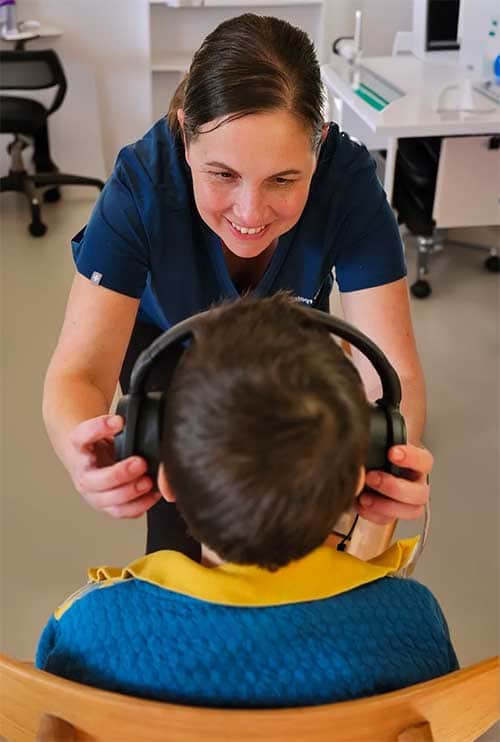
At The Audiology Place, our child-friendly testing rooms are designed to make hearing assessments feel like an adventure, not an ordeal. Kids who associate audiology with fun are more likely to return for follow-up care as they grow.
What Happens at a Paediatric Hearing Assessment
If you’ve never brought a young child for a hearing test, you might be picturing something clinical and intimidating. That’s not how it works at The Audiology Place.
Dr Steers and her team use play audiometry for children aged roughly 2.5 to 7. Instead of sitting in an isolating sound booth raising their hand at beeps, kids learn to perform a fun action whenever they hear a sound. Drop a block in a bucket. Put a peg on a board. Feed a toy dog a biscuit.
The child quickly grasps that the sound is their cue to play. This keeps them engaged and cooperative for much longer than traditional methods. It also produces verifiable, accurate results because the audiologist can observe consistent responses across multiple sound presentations.
For younger children (from about 6 months), we use Visual Reinforcement Audiometry (VRA). The child turns toward a visual reward, like a lit-up animated toy, when they hear a sound. It’s instinctive and doesn’t require any instructions the child needs to understand.
We also use tympanometry to check middle ear function (detecting fluid, glue ear, or eardrum problems) and Otoacoustic Emissions (OAE) testing, a quick, non-invasive way to assess inner ear function that works even on babies.
Our testing rooms are sound-treated but not isolating booths. Parents stay in the room. The whole experience is designed to feel safe and curious rather than clinical.
A typical appointment takes 30 to 45 minutes, depending on the child’s age and engagement level. Results are explained immediately in plain language, with clear next steps if anything needs addressing.
When in Doubt, Book an Assessment
If you’ve ever wondered about your child’s hearing, even just a small suspicion, trust that instinct. You see your child every day. You know their quirks and behaviours. If something feels off, it’s worth checking.
A hearing assessment is non-invasive, painless, and often genuinely fun for kids. The outcome is either peace of mind (everything is fine) or early identification of something that can be addressed. Either way, you’ve done the right thing.
At The Audiology Place, we believe in checking hearing first before families embark on the long road of developmental assessments. As an independent clinic, we’re not trying to sell you anything. We’re not owned by hearing aid manufacturers or retail chains. Our job is to give you accurate information about your child’s hearing and honest recommendations about what, if anything, needs to happen next.
Dr Signe Steers brings nearly 20 years of clinical experience to every paediatric assessment. Her philosophy is “From Twinkle to Wrinkle”, which means comprehensive hearing care for all ages, from the littlest ears to older adults.
Early hearing care is an act of love. By staying alert to your child’s hearing and getting timely check-ups, you’re ensuring that temporary problems don’t become long-term hurdles and that any persistent issues are managed well.
Here’s to happy ears and confident kids.
Book a Paediatric Hearing Assessment
The Audiology Place 12/14 Starkey Street, Forestville NSW 2087
Phone: (02) 9976 5710
Website: theaudiologyplace.com.au
Learn more about our paediatric services: Children’s Hearing Assessments
Frequently Asked Questions
How do I know if my toddler has hearing problems?
Watch for signs like not responding to their name, needing the TV volume unusually high, delayed speech development, saying “what?” frequently, or seeming inattentive in group settings but focused during quiet one-on-one time. Trust your instincts. If something feels off, get a professional assessment.
At what age can children have a hearing test?
Children can be tested from birth. At The Audiology Place, we test children from 6 months using age-appropriate techniques like Visual Reinforcement Audiometry (VRA) for babies and play audiometry for toddlers and preschoolers.
Does my child need a referral for a hearing test?
No referral is required to book a hearing assessment with us. You can call directly. If your child is under the Medicare Chronic Disease Management plan or has an Enhanced Primary Care referral, some rebates may apply.
Can ear infections cause permanent hearing loss?
Most ear infections cause temporary hearing loss that resolves when the infection clears. Repeated or severe infections, particularly those left untreated, can sometimes lead to complications. This is why it’s important to have hearing checked after significant ear infections to confirm everything has returned to normal.
My child passed the newborn hearing screening. Could they still have hearing loss?
Yes. Some forms of hearing loss develop later due to illness, medication, or delayed genetic factors. Continue monitoring as your child grows and don’t hesitate to get a check if you notice signs of difficulty.
How long does a paediatric hearing test take?
A typical appointment at The Audiology Place takes 30 to 45 minutes, depending on the child’s age and engagement level. We don’t rush. Results are explained immediately after testing.
What’s the difference between hearing loss and auditory processing disorder?
Hearing loss means the ears aren’t transmitting sound properly. Auditory Processing Disorder (APD) means the ears work fine, but the brain has trouble interpreting what it hears. APD can only be diagnosed once peripheral hearing has been confirmed as normal. That’s why a hearing test should always come first.
Should I get my child’s hearing tested before they start school?
It’s a very good idea. Even mild hearing loss can affect a child’s ability to learn in a classroom environment. A baseline assessment before kindy ensures you’re starting from a position of knowledge, not guesswork.
About Dr Signe Steers
Dr Signe Steers is a clinical audiologist with nearly 20 years of experience in diagnostic audiology and hearing rehabilitation. She holds a Bachelor of Speech and Hearing Science, a Masters in Clinical Audiology from Macquarie University, and a Doctor of Audiology from A.T. Still University in Arizona. She established The Audiology Place to provide independent, patient-focused hearing care to Sydney’s Northern Beaches community. Professional member of Audiology Australia.
About The Audiology Place
The Audiology Place is an independent audiology clinic in Forestville on Sydney’s Northern Beaches. We’re not owned by any hearing aid manufacturer or retail chain, which means our recommendations are based purely on what’s right for each patient. Our philosophy is “From Twinkle to Wrinkle”: comprehensive hearing care for all ages, from infants to older adults, delivered with transparency and genuine care.
Learn more: About The Audiology Place