

Sudden hearing loss can be frightening. It often appears out of nowhere—frequently in one ear—and you might notice it when you wake up, after a “pop,” or during an everyday conversation. While it is urgent, there’s good news: acting quickly gives you the best chance of recovery. Here’s exactly what to do, and how we’ll support you step by step.
First Things First: Treat This As An Ear Emergency
If your hearing drops suddenly (over minutes, hours, or within a couple of days), don’t wait to see if it passes.
Sudden hearing loss can be caused by inner-ear (sensorineural) problems that respond best to fast treatment, ideally within the first few days.
The Quick Plan
- See your GP immediately.
- Request an urgent ear examination to rule out earwax, infection, or fluid buildup.
- If your ear appears normal, consider starting steroids as soon as possible.
- When the ear exam is regular but hearing suddenly drops, this suggests an inner-ear issue. A short course of oral corticosteroids is the first-line treatment, and the timing is crucial.
- Book an urgent hearing test with us.
- We prioritise same-day/rapid appointments for sudden hearing loss to confirm the type and severity and guide next steps.
- If we confirm inner-ear (sensorineural) loss, we’ll fast-track you to an ENT or the Emergency Department.
- We’ll coordinate referrals and share your results so you’re not navigating this alone.
Necessary: Don’t delay treatment while waiting for tests. If your GP thinks steroids are indicated, starting them promptly can be crucial.
What We’ll Do At Your Urgent Appointment
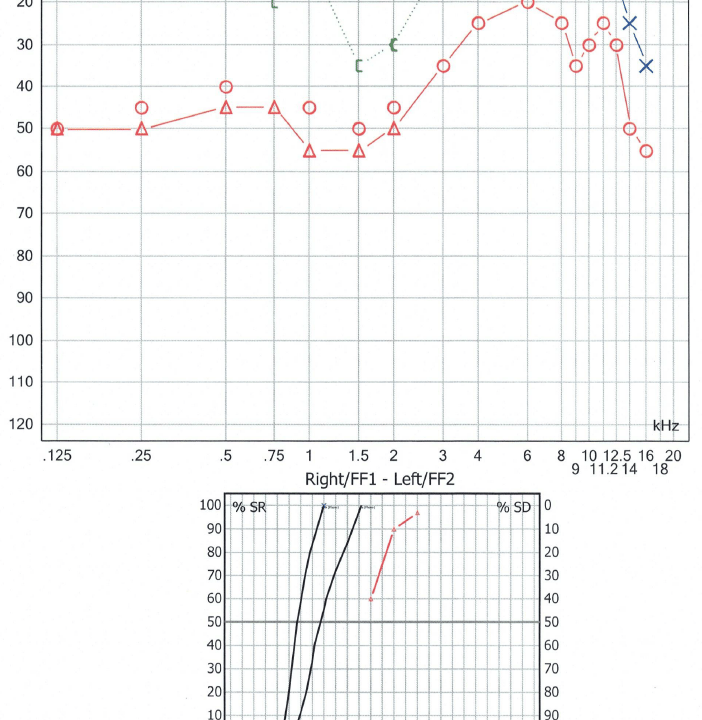
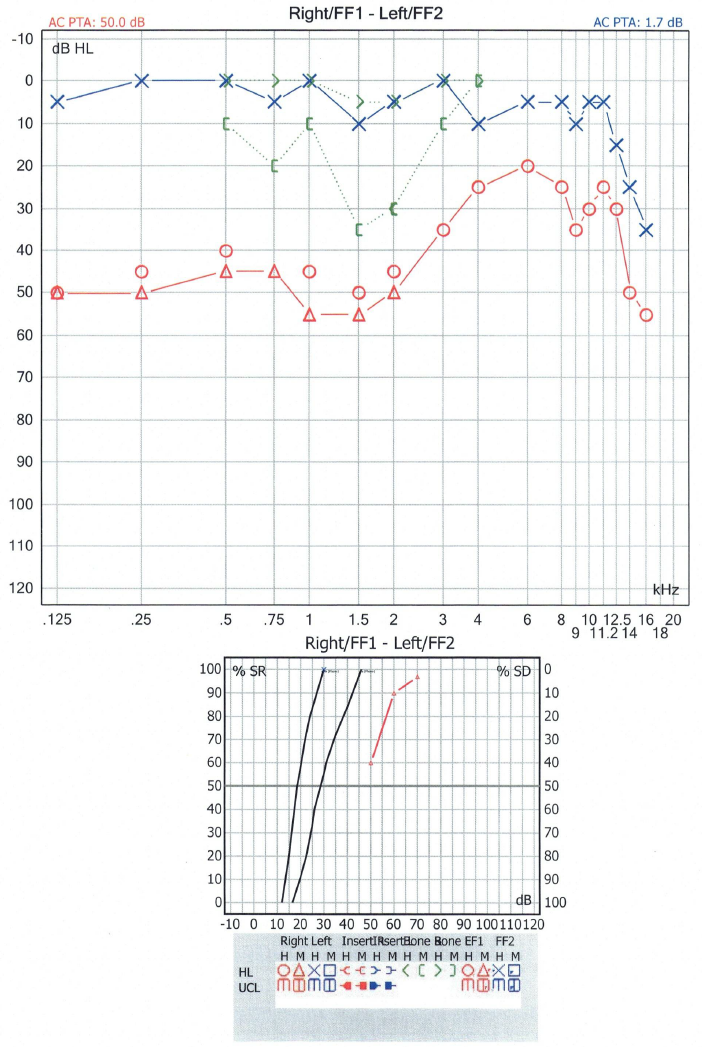
- Comprehensive hearing assessment (audiogram): Confirms whether your loss is sensorineural (inner ear/nerve) or conductive (blockage or middle ear).
- Otoscopy/ear health check: We double-check for wax, infection, or fluid that might have been missed. If it’s something simple, we’ll tell you right away—and help resolve it.
- Immediate explanation and plan: You’ll leave knowing what’s happening and what comes next.
- Fast referral if needed: If we identify sudden sensorineural hearing loss (SSNHL), we’ll urgently liaise with an ENT or advise ED attendance if that will be faster.
Why Speed Matters (In Plain English)
The inner ear (cochlea) is delicate. When hearing drops suddenly without an apparent blockage, two common theories are:
- Inflammation or a viral trigger: Swelling disrupts the inner ear’s function. Steroids aim to calm this.
- Reduced inner-ear blood flow (“ear stroke” concept): The cochlea is highly sensitive to oxygen and circulation; early treatment supports recovery.
Not every case has a clear cause—and that’s okay. What we can control is how quickly we respond.
Possible Outcomes: From “All Good” To “Needs Ongoing Care”
We’ll always be honest and reassuring about where you’re at. Here are the typical scenarios:
1) Best-Case: A Simple, Fixable Cause
- Impacted earwax, middle-ear fluid, or an infection mimicking sudden loss.
- Outcome: Clear the blockage or treat the infection, and hearing returns.
- Our favourite sentence: “The best news—we’ve found nothing serious; it was just wax.”
2) Likely Recovering: Inner-Ear Loss That Improves With Treatment
- You start steroids quickly; we coordinate ENT follow-up.
- Outcome: Hearing often improves over days to weeks. We track progress with follow-up tests and help manage any tinnitus in the meantime.
3) Harder Cases: Partial or Permanent Loss
- Sometimes hearing doesn’t fully return, even with prompt care.
- Outcome: We map out a longer-term plan, which may include hearing aids (often very effective for one-sided loss) or, in severe cases, a cochlear implant assessment. There are always options to help you hear better, and we’ll guide you through them.
How We Support You (So You Don’t Have To Navigate This Alone)
- Urgent Access: We reserve capacity for sudden hearing loss—please indicate it’s urgent when you call.
- Clear answers, fast: We explain your results in plain language right after testing.
- Seamless medical handover: We share your audiogram and summary with your GP/ENT immediately, helping to secure rapid appointments.
- Follow-through: We don’t stop at the first visit. We retest to track recovery and, if necessary, initiate rehabilitation options promptly.
Frequently Asked Questions
Is this always permanent?
No. Many people recover fully or partially, especially with prompt treatment. That’s why timing matters.
Should I start steroids before a hearing test?
If your GP suspects sudden sensorineural hearing loss and your ear appears normal, starting steroids promptly is common and appropriate—don’t delay treatment while waiting for test results.
What if I also experience ringing in my ears or dizziness?
Tinnitus and vertigo can occur with sudden hearing loss. They don’t rule out recovery, but they do raise urgency—get seen quickly.
What will the ENT do?
They may adjust or intensify treatment (e.g., intratympanic steroid injections), arrange imaging (like an MRI), and investigate rarer causes while working to optimise recovery.
A Calm, Urgent Reminder
Sudden hearing loss is an urgent but treatable condition. The most important thing you can do is act now:
- Contact your GP today.
- If the ear appears normal, consider starting steroids.
- Book an urgent hearing test with us to confirm the type of loss and coordinate next steps.
If you’re experiencing a sudden drop in hearing, call us immediately and say, “It’s urgent.”We’ll get you in, test you thoroughly, and either put your mind at ease—or move quickly to protect your hearing.