
Most ear wax clears on its own. If you do want to treat it at home, the safest options are sodium bicarbonate or olive oil drops used for three to five days. Avoid cotton buds, ear candles and wax vacuums: on a typical clinic day I see at least three cases of impacted wax that only became impacted after someone tried one of them. If you have pain, discharge, dizziness, or a history of a perforated eardrum or grommets, stop and book with an audiologist or GP. I have performed microsuction on several thousand ears, and the question I hear most is how to get wax out at home. The better question is whether you need to, and when home treatment starts doing more harm than good. This guide covers what works, what doesn’t, and when DIY becomes risky.
This article is general information and doesn’t replace an individual clinical assessment. If you’re concerned about your hearing or ear health, book an appointment with an audiologist or GP.Book a microsuction appointment at The Audiology Place in Forestville or Epping. No GP referral needed.
What ear wax is for
Cerumen, the medical name for ear wax, is a mix of secretions from glands in the outer ear canal. It has antimicrobial and protective properties, and in most people the canal cleans itself: jaw movement carries wax slowly outward, taking dead skin and debris with it. Problems start when that movement is disrupted, usually by cleaning attempts, a narrow canal, overproduction, or hearing aids and earplugs that block the way out. Most of the impactions I remove with microsuction weren’t caused by overproduction. Cotton buds pushed wax deeper, years of leaving it alone until it caused symptoms, or a method that sounded plausible on a Facebook thread but has no evidence behind it.Home ear wax removal methods ranked by safety
Here is how the common home methods compare, based on published evidence and what I see in clinic.| Method | Safety rating | Why |
|---|---|---|
| Sodium bicarbonate ear drops | Safe | Evidence-backed softening agent, available from pharmacies. Use as directed for three to five days. Rarely causes irritation. |
| Olive oil drops | Safe | Traditional softener supported by clinical guidance. A pharmacy olive oil drop or spray is preferable to kitchen olive oil for sterility. |
| Hydrogen peroxide drops (3%) | Use with care | Can soften wax but may irritate sensitive skin, especially if you have had outer ear infections (otitis externa). Not first-line in Australian clinical guidelines. |
| Bulb syringe (DIY irrigation) | Use with care | Safer than jet irrigators but can still perforate the eardrum if used forcefully or if the wax completely blocks the canal. I don’t recommend it unless the wax has been softened first and you know you have no history of perforation. |
| Cotton buds (Q-tips) | Avoid | The most common cause of impaction and ear canal injury I see. They push wax deeper and can scratch the canal or perforate the eardrum. |
| Ear candles | Avoid | No evidence they work, and multiple case reports of burns, canals blocked with candle wax, and perforated eardrums. Banned for sale as medical devices in several countries. |
| Ear wax vacuum devices | Avoid | Consumer devices lack the suction control and visibility needed for safe use. Clinical microsuction uses a medical-grade unit under a microscope, and a handheld vacuum is not comparable. |
When ear drops are enough, and when they’re not
Sodium bicarbonate and olive oil drops soften wax so it can work its way out or be removed more easily. For mild build-up, meaning slight fullness, no pain and no hearing loss you’d notice in conversation, a five-day course of drops twice a day is reasonable first-line management. Softening is not the same as removal. If wax already blocks the canal completely, drops can make it swell and your hearing may get worse for a while. When that happens the drops have done their job of softening, and the blockage now needs professional removal. Hydrogen peroxide gets a mixed reception. The 3% solution sold as ear drops softens wax and has a mild antimicrobial effect, but it fizzes and can feel uncomfortable. Some patients like it. Others find it irritating, particularly those with eczema or a history of outer ear infections. Healthdirect lists it as an option, and in my experience sodium bicarbonate is just as effective at softening and better tolerated. Don’t use stronger concentrations, or household hydrogen peroxide that isn’t made for use in the ear.Why cotton buds are still the problem
Several times a week a patient tells me, “I only use them to dry my ears after a shower.” Cotton buds do three things reliably. They push wax towards the eardrum. They can scratch the thin skin of the ear canal, which then becomes infected. They also leave you thinking your ears are clean, when the wax on the tip is only what stuck to it on the way in. The rest now sits deeper than it did before. If water in your ears after swimming or a shower bothers you, tilt your head and let it drain, or use a hairdryer on its lowest setting held at arm’s length. The canal doesn’t need to be completely dry, and trying to make it so causes more problems than it solves.Ear candles don’t work
Every few months someone asks me about ear candling, usually after seeing it at a market stall or on Instagram. The claim is that a lit hollow candle placed in the ear creates suction that draws out wax and “toxins”. It doesn’t. Studies testing candling, including one that measured pressure in ear models, found no suction and no wax removal. The residue left in the candle afterwards is candle wax and soot. Case reports, meanwhile, document burns to the face, ear canal and eardrum, and canals blocked with candle wax that then had to be removed in a clinic. No version of ear candling is safe or effective. Calling it an alternative therapy doesn’t change the evidence: it has been tested and it doesn’t work.When to stop and see a clinician
Don’t attempt home removal if any of these apply:- Pain or discharge from the ear, which can mean infection or a perforation
- Sudden hearing loss or tinnitus that wasn’t there before
- Dizziness or vertigo, which suggests the problem may involve the middle or inner ear rather than wax
- A history of a perforated eardrum, or grommets (ventilation tubes)
- Diabetes or a weakened immune system, which raise the risk of outer ear infection if the canal is injured
- Five days of drops with no improvement, or symptoms getting worse
- A foreign body in the ear, especially in a child. Don’t try to remove it yourself.
What happens during professional microsuction
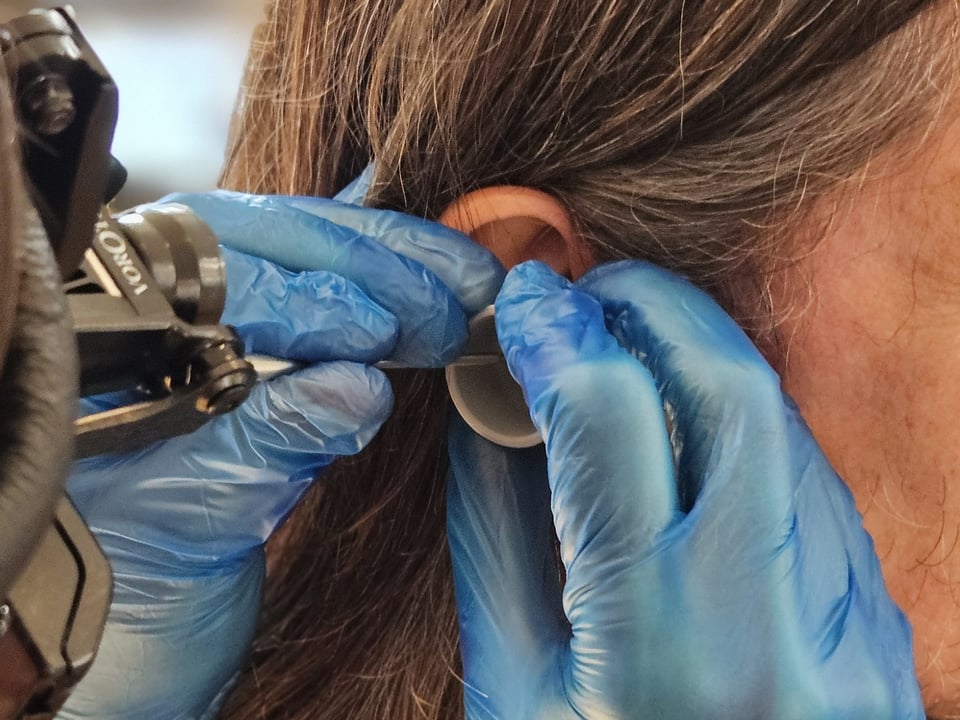
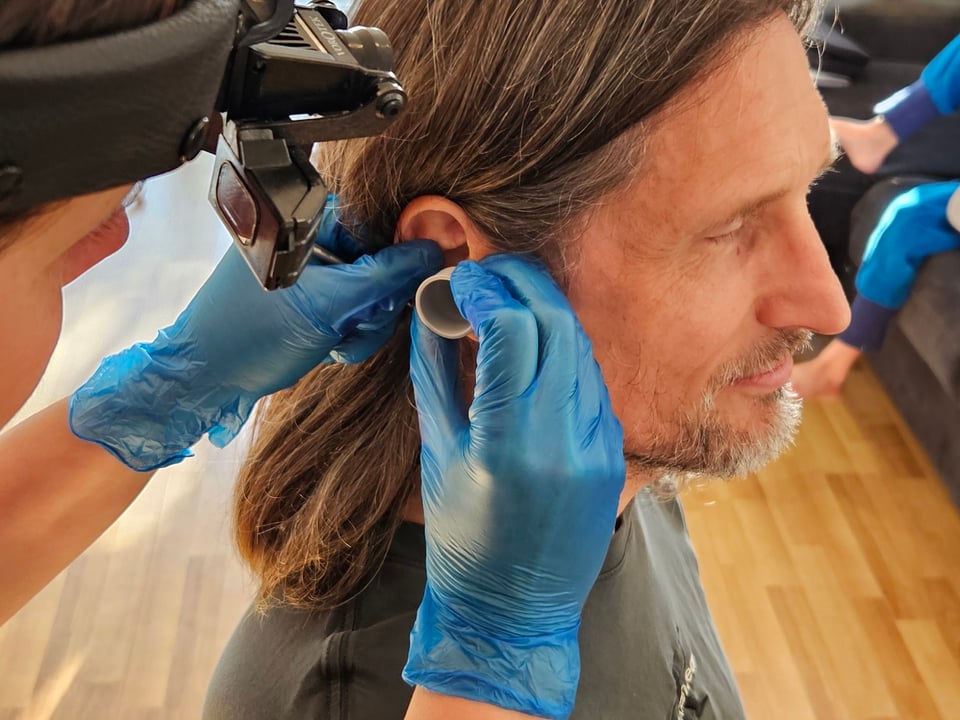
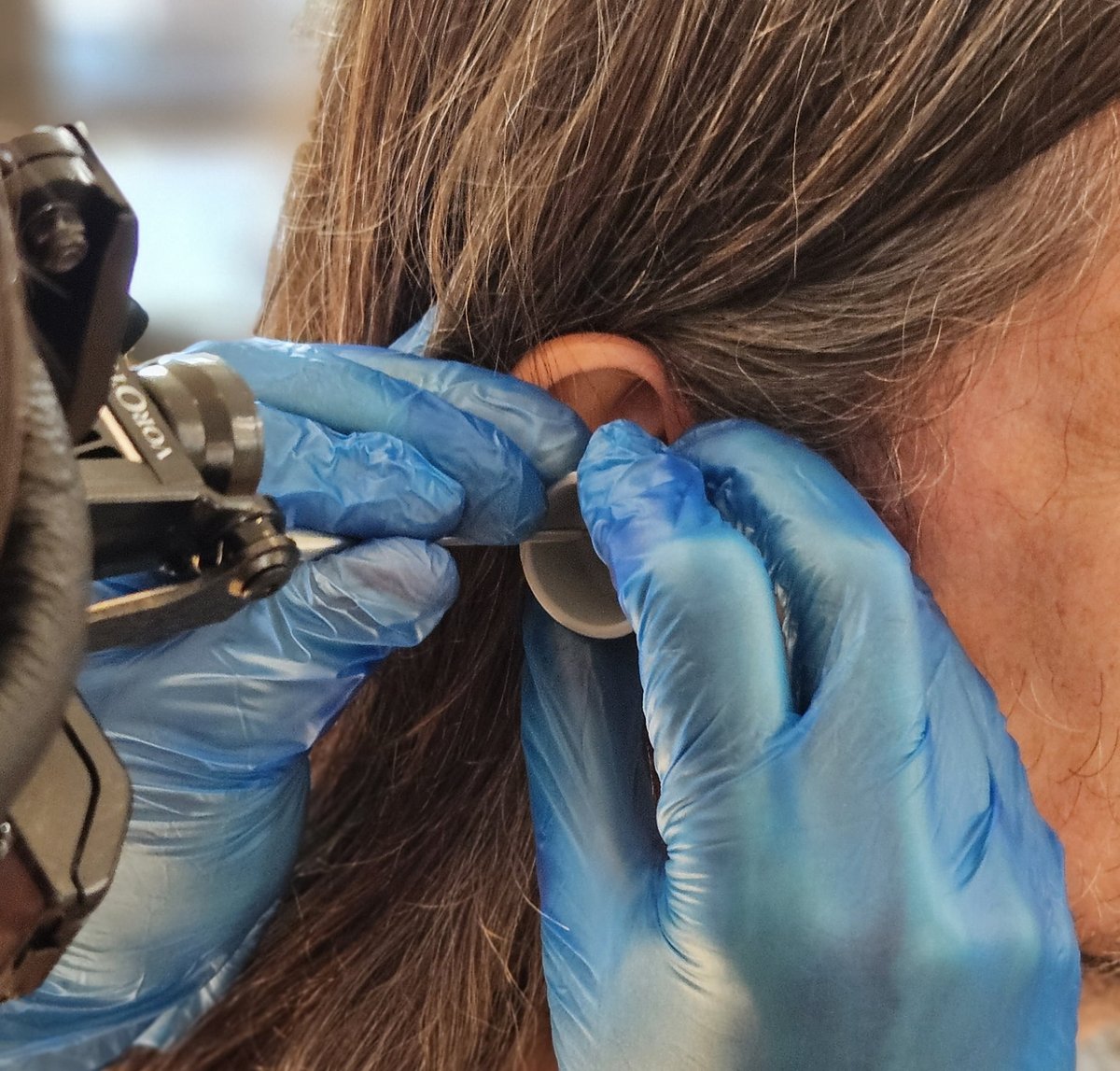
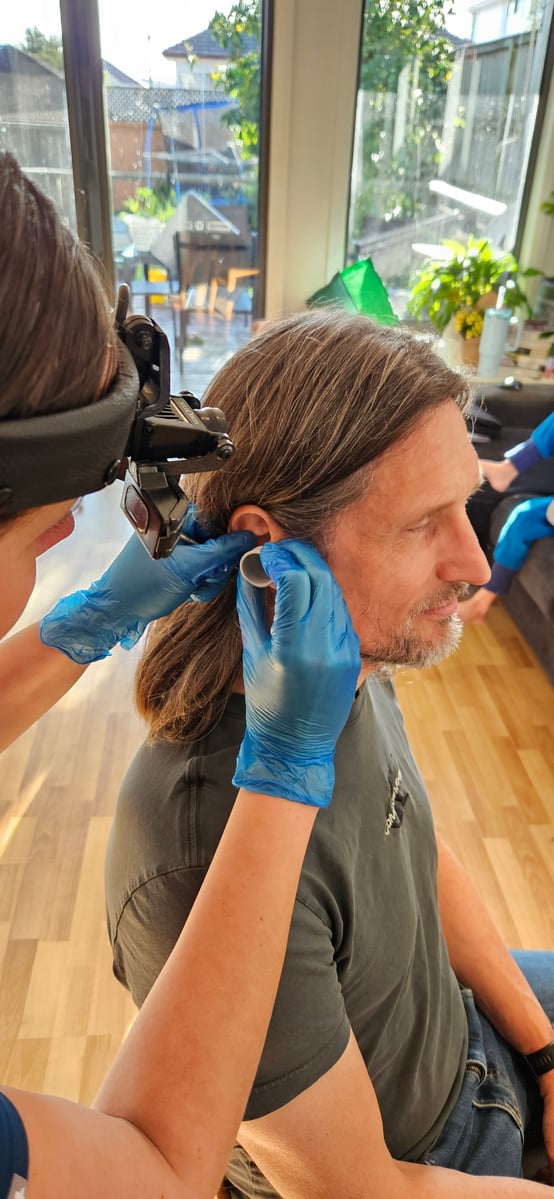
Microsuction is our preferred method at The Audiology Place because it is the safest and most comfortable option for most patients. I perform it under a surgical microscope, using a fine suction tube that removes wax without touching the eardrum or canal walls. Most people describe it as loud rather than painful, because the suction is close to the eardrum. It takes five to fifteen minutes per ear depending on how blocked the canal is, and you hear clearly straight afterwards. Unlike syringing, there is no water and no mess, and in trained hands the risk of perforation is minimal. You don’t need a GP referral. Medicare doesn’t rebate wax removal because it is treated as a maintenance procedure, but private health funds with audiology or ear health extras often pay a partial rebate. Our fee is $160 for both ears, and we’ll tell you before we start if there is likely to be any extra cost. At The Audiology Place, our position is that microsuction should be the first-line treatment for wax that is causing symptoms, especially if you have any of the risk factors above. It is faster, more controlled and safer than home irrigation, and you don’t have to guess whether it worked.How to use ear drops safely at home
If you have none of the warning signs above and want to try drops first:- Use sodium bicarbonate or olive oil drops and follow the packet directions, usually three or four drops twice a day.
- Lie on your side with the affected ear facing up and let the drops sit for five to ten minutes before getting up.
- Keep going for three to five days. Don’t expect the wax to clear straight away.
- Don’t put anything into the canal to help it along.
- If symptoms get worse or haven’t improved after five days, book with an audiologist or GP.
Natural doesn’t mean safe
The language around ear health is often misleading. Ear candling is sold as natural. So is putting a clove of garlic in your ear or using undiluted tea tree oil, along with a dozen other remedies patients have tried before arriving with contact dermatitis or chemical burns. Natural is not a synonym for safe or effective. Wax is natural too, and a canal full of it still needs dealing with. Sodium bicarbonate and olive oil are backed by peer-reviewed research and by guidance from Healthdirect Australia and the UK’s NICE guideline on ear wax management. Most other home remedies are not.Frequently asked questions
Can I use a water pick or dental irrigator to flush my ears?
No. These devices deliver water at pressures that aren’t safe for the ear canal and can perforate the eardrum. Even a manual bulb syringe carries risk if used forcefully.How often should I clean my ears?
For most people, never. If you’re prone to build-up, particularly if you wear hearing aids or earplugs every day, an annual check and clean with an audiologist is sensible. Otherwise, let your ears clean themselves.Is microsuction covered by Medicare?
No. Wax removal isn’t covered by Medicare. Some private health funds pay a partial rebate under audiology or ear health extras.My GP said my ears are full of wax but I can hear fine. Do I need it removed?
Not necessarily. If you have no symptoms there is no clinical need to remove it. The exception is when you need clear canals for something else, such as a hearing test or ear mould impressions.I used drops and now I can’t hear at all. What happened?
The drops softened the wax and it swelled, which made the blockage worse for now. This is common and not harmful, but at this stage the wax won’t clear on its own and needs professional removal.Can children use ear drops?
Sodium bicarbonate and olive oil drops are safe for children. If your child has ear pain, discharge or grommets, or you’re unsure, see a GP or paediatric audiologist first. Never try irrigation or put instruments in a child’s ear at home.This article is general information and doesn’t replace an individual clinical assessment. If you’re concerned about your hearing or ear health, book an appointment with an audiologist or GP.Book a microsuction appointment at The Audiology Place in Forestville or Epping. No GP referral needed.