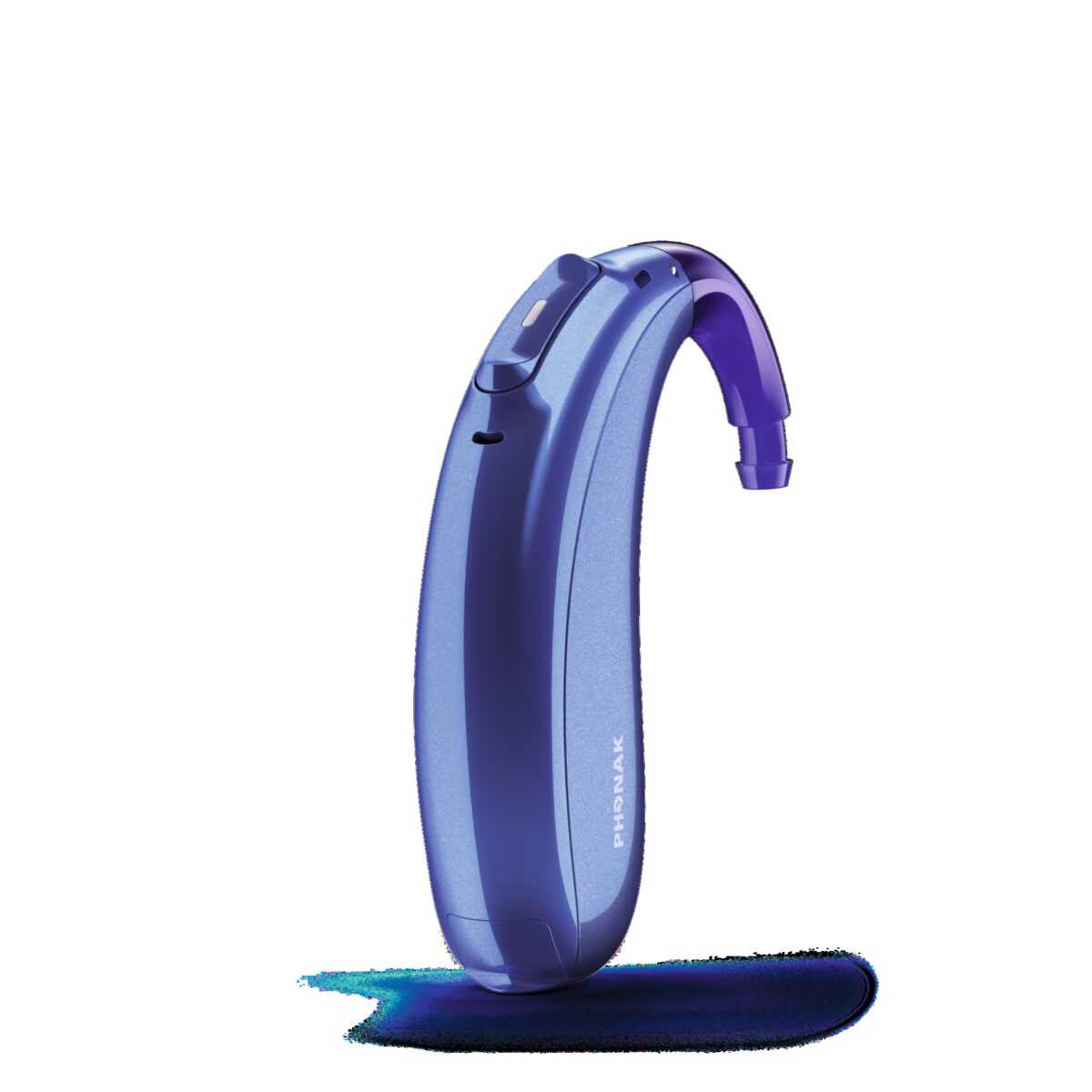

Every Oticon Intent hearing aid—whether you buy the $12,000 Intent 1 or the $6,500 Intent 4—contains identical hardware. Same chip, same speakers, same microphones, same 4D sensor array that tracks head movement, conversation activity, and acoustic environment. What changes between technology levels is the sophistication of the software running on that hardware, and specifically how hard the aid’s MoreSound Intelligence processing works in complex, noisy environments.
The real question you’re trying to answer is whether paying for Intent 1 over Intent 2 or 3 will make an audible difference in *your* life, and the honest answer depends less on the technology tier than on how often you’re in the exact situations where the premium software earns its keep.
What Actually Changes Between Oticon Intent Levels
Oticon publishes a technology comparison chart, but it’s dense and assumes you already understand what “channels” and “processing bands” mean after fifteen minutes of information overload in a showroom. Here’s what matters from twenty years of fitting these devices.
MoreSound Intelligence is the entire game. It’s Oticon’s machine-learning engine that continuously analyses your acoustic environment, separates speech from noise, and decides how much cognitive effort to spare you. Intent 1 has the full model trained on hundreds of acoustic scenarios. Intent 2 and 3 run lighter versions of that model—they recognise fewer distinct situations and make coarser adjustments. Intent 4 runs a simplified version that works well in stable environments but doesn’t adapt much when things shift quickly.
The practical upshot: Intent 1 might recognise “busy café with hard surfaces, two competing conversations, traffic noise filtering through an open door” as a distinct scenario and apply a tailored noise-reduction and directionality strategy. Intent 3 might lump that into “noisy restaurant” and apply a broader, less specific strategy. Both will help. One will help more, but only if you’re actually in that café.
Channels and frequency bands scale down as you drop tiers, but this matters less than the sales brochure implies. Intent 1 has 24 channels; Intent 3 has 16. Channels determine how finely the aid can sculpt amplification to match your specific hearing loss pattern. If your audiogram is a gentle slope—most age-related losses are—16 channels is plenty. If you’ve got a sharp noise-induced notch at 4 kHz or a steeply sloping loss, more channels give the audiologist more sculpting precision during Real Ear Measurement verification. But a badly programmed Intent 1 will always sound worse than a properly verified Intent 3, which brings us to the point that actually matters.
Real Ear Measurement Matters More Than the Tier
I’ve fitted thousands of hearing aids, and the single strongest predictor of whether someone is still wearing them six months later isn’t the technology level—it’s whether we did proper Real Ear Measurement at the initial fitting. REM uses a thin probe tube in your ear canal to measure exactly what sound pressure is reaching your eardrum, then adjusts the aid’s output until it matches your prescription within 5 dB across frequencies.
Without REM, we’re programming blind, trusting the manufacturer’s generic coupler measurements and hoping your ear canal is average. It usually isn’t. Research from 2022 published in the *International Journal of Audiology* found that 60–70% of hearing aids fitted without REM were either under- or over-amplifying by more than 10 dB in at least one frequency region. You can feel that. It’s the difference between “sounds tinny” and “I forgot I was wearing them.”
At our clinic, every fitting includes REM verification regardless of whether you choose Intent 1 or Intent 4. That hour of measurement does more for real-world outcomes than the price difference between tiers. If your provider isn’t using REM—and plenty of retailers still don’t, because it’s time-consuming and can’t be done remotely—you’re leaving more performance on the table than downgrading one tier would cost you.
The Honest Cut-Off: When Paying More Stops Returning Value
Choose Intent 1 (approximately $11,500–$12,500 per pair in Australia as of 2025) if you’re regularly in complex, shifting acoustic environments: open-plan offices, large social gatherings, restaurants with hard surfaces and competing music, public transport, busy shopping centres. The full MoreSound Intelligence model adapts fast enough to keep up with rapid changes—someone leaning in to speak while a bus pulls up, a colleague interrupting in a noisy corridor. If you’re still working full-time in a varied environment, or your social life involves a lot of unpredictable group settings, Intent 1 is the defensible choice.
Choose Intent 2 (approximately $9,000–$10,000 per pair) if your routine mixes quiet and moderately noisy environments but you’re not constantly toggling between extremes. You might go to a weekly dinner with friends, attend community meetings, manage household conversations while the TV is on. Intent 2’s processing is sophisticated enough for most everyday situations; you’ll notice a step down from Intent 1 mainly in very busy, reverberant spaces or when multiple people are talking over each other. For most retirees with active but predictable social lives, this is the sweet spot.
Choose Intent 3 (approximately $7,500–$8,500 per pair) if your life is quieter and more structured: one-on-one conversations, small family gatherings, watching television, talking on the phone. You’re not often in large groups or noisy public spaces. Intent 3 handles stable acoustic environments very well—the hardware is the same, the basic noise reduction is present, you’re just losing the adaptive edge in complex, shifting noise. Many of my patients who are home-based or have hearing loss limited to high frequencies do perfectly well at this level, especially if budget is a concern.
Intent 4 (approximately $6,000–$7,000 per pair) is Oticon’s entry tier, and it’s perfectly adequate for straightforward hearing loss in quiet, predictable environments. If you’re primarily trying to hear better at home and in calm settings, and noise isn’t a major complaint, Intent 4 delivers the same comfortable fit and Bluetooth connectivity as the premium tiers. Where it struggles is in adaptability; if your day varies widely or you’re regularly exposed to background noise, you’ll feel the limitations.
What About Private Health and Hearing Services Program Rebates?
Most Australian private health funds with top-tier extras cover will rebate $1,000–$2,500 toward hearing aids, depending on your policy and waiting periods. Check your fund’s annual limits—some reset in January, others on your policy anniversary. If you’re eligible for the Australian Government Hearing Services Program (Pensioner Concession Card holders, DVA Gold Card holders, or young Australians under 26), the Government fully subsidises a range of hearing aid models, though these are rarely a premium tier like Intent 1. Conditions apply under the Australian Government Hearing Services Program. If you’re HSP-eligible and want Intent 1, you’d pay the full private price minus any private health rebate.
Medicare doesn’t subsidise hearing aids or audiology consultations for hearing aid fittings, though diagnostic audiology for medical purposes (e.g., sudden hearing loss, tinnitus assessment) may be bulk-billed under certain item numbers if referred by your GP or ENT.
The Programming Caveat: Same Hardware, But Different Adjustment Flexibility
One technical detail that isn’t often mentioned: lower technology levels also reduce the number of independent programs and manual adjustments your audiologist can configure. Intent 1 allows up to four discrete programs and fine-grained control over directionality, noise reduction strength, and frequency shaping in each. Intent 3 might cap you at two programs with fewer adjustable parameters.
For most people, this doesn’t matter—Oticon’s intent (pun unavoidable) is that the aids adapt automatically and you never touch a button. But if you have a specific, recurring situation where you know you want a custom program—say, music performance, a particular workplace environment with machinery noise, or a hobby that involves wind noise—the extra programmability in Intent 1 or 2 can be useful. Discuss this with your audiologist during the selection conversation.
The Bottom Line: Buy the Tier Your Lifestyle Actually Needs
The Oticon Intent range is well-engineered, and the fact that all tiers use the same hardware means you’re never getting a “cheap” device—you’re getting a premium device with software limitations. Those limitations matter a great deal in some lives and barely at all in others.
If you’re uncertain which tier fits your routine, ask your audiologist to trial Intent 1 for a week in your noisiest environments, then switch to Intent 2 or 3 and see if you notice the difference. Most practices offer a 30- to 45-day trial period with full or partial refund if the aids don’t suit. Take advantage of it. Your perception of benefit in real-world situations is the only metric that matters, and it won’t always align with the spec sheet.
And remember: no matter which tier you choose, insist on Real Ear Measurement at your fitting. That’s where the real performance difference lives.
Always read the instructions for use. Follow the instructions for use.