

That sensation of blocked ears is one of the most frustrating auditory experiences you can have. Whether it developed suddenly during a flight, gradually over weeks, or appeared overnight with a cold, the muffled hearing and pressure can be genuinely distressing. You’ve likely searched “how to unblock ears” hoping for a quick solution, and you’ve probably encountered conflicting advice ranging from sensible to downright dangerous.
As audiologists, we see patients every week who’ve tried everything from olive oil to elaborate home remedies, sometimes making the problem worse in the process. This article separates evidence-based methods from persistent myths, giving you a clear understanding of what actually works to unblock your ears—and crucially, when you need professional help instead of home remedies.
Understanding Why Your Ears Feel Blocked
Before exploring solutions, it’s important to understand that “blocked ears” can stem from various causes, each requiring a different approach. The sensation might arise from Eustachian tube dysfunction (the small tube connecting your middle ear to the back of your throat), excessive earwax buildup, fluid in the middle ear, or, occasionally, something more serious.
The Eustachian tube normally opens when you swallow or yawn, equalising the pressure between your middle ear and the outside environment. When this tube becomes swollen or doesn’t function properly—often during colds, allergies, or rapid altitude changes—you experience that characteristic blocked feeling and muffled hearing. This is fundamentally different from a physical blockage caused by earwax accumulating in your ear canal.
This distinction matters because techniques that work brilliantly for Eustachian tube issues won’t help with wax blockages, and vice versa. Understanding which problem you’re facing guides you toward the right solution.
Evidence-Based Methods That Actually Work
The Valsalva Manoeuvre (When Done Correctly)
The Valsalva manoeuvre is one of the most effective techniques for relieving pressure-related ear blockage, but only when performed correctly. You’ve probably done a version of this instinctively when your ears felt blocked during a flight.
Here’s the proper technique: close your mouth, pinch your nostrils shut, and gently blow air through your nose. The keyword here is *gently*. You should feel a subtle pop or release in your ears as the Eustachian tubes open and equalise the pressure. If nothing happens after a gentle attempt, stop and try again later rather than forcing it.
The critical mistake people make is blowing too forcefully. Excessive force can actually damage the delicate structures of your middle ear, including your eardrum. Think of it as a controlled, gentle pressure rather than an aggressive blow. If you experience pain or dizziness, stop immediately.
This technique is effective only for pressure-related blockage caused by Eustachian tube dysfunction. It will do absolutely nothing for earwax blockages and shouldn’t be attempted if you have an ear infection or a perforated eardrum.
Swallowing, Yawning, and Chewing
These simple actions naturally open your Eustachian tubes, making them surprisingly effective for pressure-related blockage. During flights, the classic advice to chew gum or suck sweets during takeoff and landing isn’t folklore—it’s based on the physiological fact that these activities promote frequent swallowing, which opens the Eustachian tubes.
The beauty of these methods is their safety profile. Unlike more aggressive techniques, you can’t really do harm by yawning or swallowing. Many patients find that deliberate, exaggerated yawning whilst tilting their head to the affected side provides relief.
Warm Compress Application
Applying a warm compress to the affected ear can help with both Eustachian tube dysfunction and the discomfort associated with wax blockage, though it won’t remove the wax itself. The warmth helps reduce inflammation, promotes drainage, and can provide significant symptomatic relief.
Soak a clean flannel in warm (not hot) water, wring it out, and hold it against your ear for 5-10 minutes. Repeat several times daily. This method is particularly effective when ear blockage accompanies a head cold or sinus congestion, as it addresses the underlying inflammation contributing to Eustachian tube swelling.
Olive Oil for Ear Wax
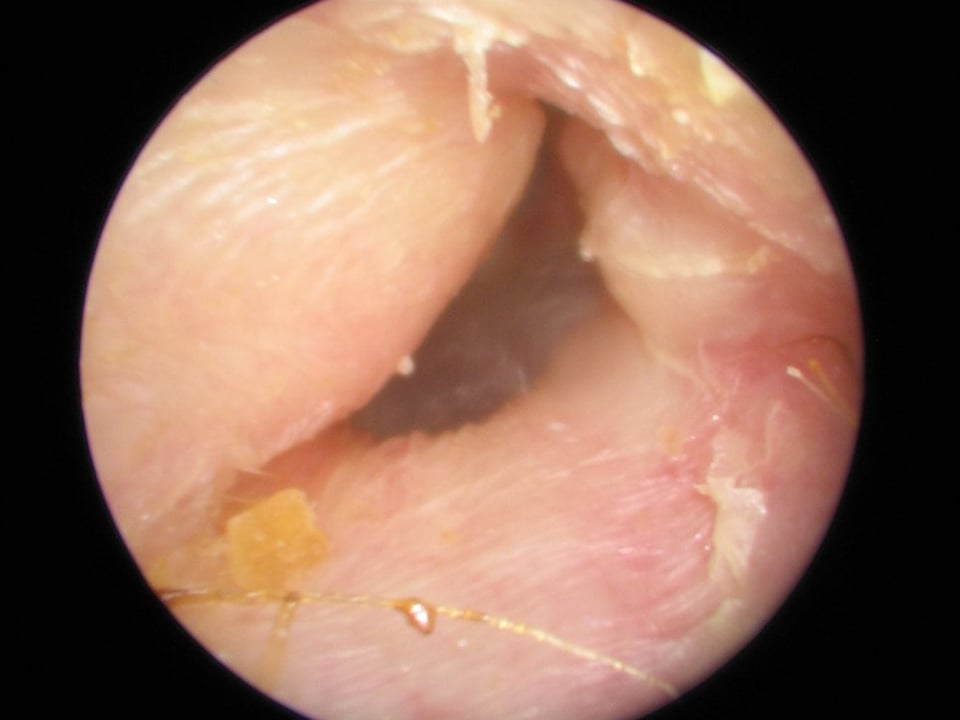
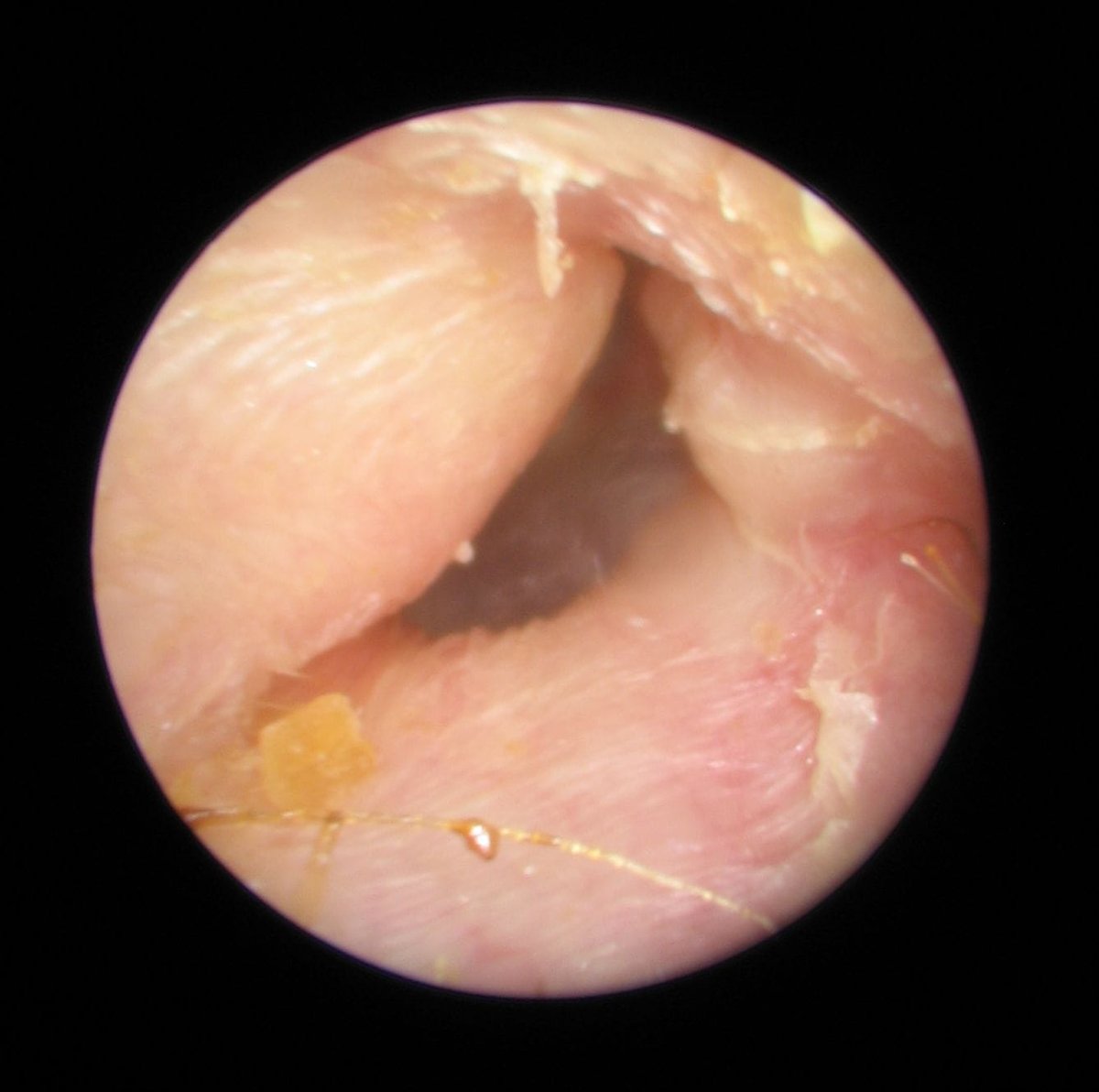
For earwax blockages specifically, olive oil drops are among the safest and most effective home treatments. The oil softens the wax, making it easier for your ear’s natural cleaning mechanism to move it outward.
Use medical-grade olive oil (available from pharmacies) at room temperature or slightly warm. Place 2-3 drops in the affected ear whilst lying on your side, remain in that position for 5-10 minutes, then allow any excess to drain onto a tissue. Repeat twice daily for 3-5 days.
It’s important to set realistic expectations: olive oil won’t immediately unblock your ear. It softens wax over several days, facilitating natural clearance. Some patients experience a temporary worsening of blockage as the wax swells before clearing—this is normal. However, if you have an ear infection, a perforated eardrum, or grommets, don’t use olive oil or any ear drops without first consulting a healthcare professional.
Methods That Don’t Work (And Might Harm You)
Ear Candles: Dangerous and Ineffective
Despite their persistent popularity in alternative health circles, ear candles are thoroughly debunked by scientific evidence. The practice involves placing a hollow, cone-shaped candle in the ear canal and lighting the opposite end, supposedly creating a vacuum that draws out earwax.
Research by Seely et al. and other investigators has conclusively demonstrated that ear candling doesn’t create a meaningful vacuum, doesn’t remove earwax, and leaves residue that’s often mistaken for extracted earwax but is actually just candle debris. More concerning are the documented risks: burns to the face, ear canal, and eardrum; ear canal obstruction from candle wax; and, in rare cases, perforation of the eardrum.
As audiologists, we’ve treated patients with complications from ear candling. The practice offers no benefits and presents genuine risks. Avoid it entirely.
Cotton Buds (Q-tips): Making Matters Worse
The instruction “never put anything smaller than your elbow in your ear” sounds humorous but contains genuine wisdom. Cotton buds are the most common cause of wax impaction we see in clinical practice.
Your ear canal has a sophisticated self-cleaning mechanism that naturally moves wax outward. When you insert a cotton bud, you disrupt this process and typically push wax deeper toward your eardrum, compacting it and worsening the blockage. Additionally, cotton buds can scratch the delicate skin of your ear canal, potentially causing an infection or, in worst-case scenarios, perforating your eardrum.
Cotton buds are designed for external ear cleaning only. Use them around the outer ear if you wish, but never insert them into the ear canal.
Hydrogen Peroxide: Proceed with Extreme Caution
Hydrogen peroxide solutions appear frequently in online advice about earwax removal. Whilst some over-the-counter ear drops contain diluted hydrogen peroxide, using household hydrogen peroxide directly is problematic.
The concentration matters significantly—household hydrogen peroxide is typically too strong for safe ear use and can irritate or damage the delicate skin of your ear canal. Furthermore, whilst satisfying to experience, the bubbling action can be uncomfortable and doesn’t necessarily translate into more effective wax removal than gentler options like olive oil.
If you wish to use a hydrogen peroxide-based approach, purchase ear drops from a pharmacy with the appropriate concentration and formulation for the ears. Even then, olive oil represents a gentler first-line option for most people.
When Home Remedies Aren’t Enough: Recognising Your Limits
Home remedies work well for straightforward cases of Eustachian tube dysfunction or mild wax accumulation, but they have clear limitations. You should seek professional help from an audiologist or GP if:
– Blocked ear symptoms persist beyond a week despite home treatment
– You experience sudden hearing loss (this requires urgent assessment)
– Pain accompanies the blockage
– You notice discharge from the ear
– You experience dizziness, tinnitus (ringing in the ears), or balance problems
– You have a fever alongside ear symptoms
– You have a history of ear disease, a perforated eardrum, or ear surgery
– Your blocked ear followed head trauma
These symptoms may indicate conditions that won’t respond to home treatment and could potentially worsen without proper intervention. Sudden hearing loss, in particular, represents a medical emergency requiring same-day assessment, as outcomes depend heavily on the timing of treatment.
What Professional Treatment Looks Like
If home remedies haven’t resolved your blocked ear, professional assessment begins with establishing the underlying cause. At The Audiology Place, we conduct a thorough examination that typically includes otoscopy (looking in your ear with a specialised instrument) and, if indicated, tympanometry, which assesses how well your eardrum moves and can identify middle ear fluid or Eustachian tube problems.
For wax blockages, we offer several evidence-based removal methods, including microsuction (using gentle suction under microscopic visualisation) and irrigation. These procedures are generally comfortable, safe when performed by trained practitioners, and immediately effective—you’ll notice improved hearing as soon as the wax is removed.
For Eustachian tube dysfunction that doesn’t respond to conservative measures, we can recommend appropriate management strategies or refer you to an ear, nose and throat specialist if needed. Sometimes the underlying issue requires treatment of allergies, sinusitis, or other contributing factors.
A Sensible Approach to Blocked Ears
The frustration of blocked ears tempts us toward increasingly creative solutions, but the evidence supports a measured approach. Start with the safest, evidence-based methods appropriate to your specific problem: pressure-equalising techniques for Eustachian tube issues, olive oil for wax accumulation.
Give these methods adequate time to work—typically several days for wax-related blockage. Avoid the temptation to try increasingly aggressive home remedies or those thoroughly debunked by research.
Most importantly, recognise when self-treatment has reached its limits. Persistent or concerning symptoms warrant professional assessment to establish the correct diagnosis and receive safe, effective treatment. Your hearing is precious, and whilst many blocked ear episodes resolve with simple measures, protecting your long-term ear health sometimes means acknowledging when you need expert help.