

You can tell that someone is talking to you. You just can’t always make out what they are saying, and in a busy restaurant it turns to mush. If that sounds familiar, you are describing the most common early sign of age-related hearing loss, and it has a clear explanation. Hearing tends to fade in the high notes first, and those are the exact sounds that carry the meaning of words.
Why you can hear sound but not the words
Speech is a mix of low-pitched sounds and high-pitched ones. The vowels, a, e, i, o and u, are low and loud, and they carry most of the volume. The consonants, the s, f, th, sh, ch, t, k and p sounds, are high and soft, and they carry most of the meaning. Age-related hearing loss almost always begins at the top of the range, so the consonants are the first to go. You still hear that a person is speaking, because the vowels come through loud enough. What you lose is the crisp detail that tells cat from cap, or fifteen from sixteen. Words begin to sound muffled or run together, and you find yourself filling in the gaps from context. Higher voices, women and young children, get harder to follow for the same reason.
Why background noise makes it so much worse
In a quiet room your brain can piece a sentence together even when some of the detail is missing. Add a cafe full of chatter, clinking plates and music, and that job becomes far harder. A large part of normal hearing is the brain’s knack for picking one voice out of a crowd and pushing the rest into the background. When the high-frequency detail is fading, the speech you want and the noise you don’t start to blur into each other, and the effort of following a conversation climbs. This is why most people first notice a problem at a restaurant, a party or a family gathering rather than at home. By the end of a loud evening you feel worn out, because you have been concentrating hard just to keep up.
But my last hearing test was normal
This one catches people out. The standard beep test, where you signal the softest tones you can hear, measures whether sound is getting in. It does not measure how well you understand speech when noise is competing with it, and those are two different abilities. Plenty of people have a normal beep test and still struggle in company, a pattern researchers call hidden hearing loss. It is one reason a test worth having includes a speech-in-noise assessment, where you repeat sentences played against background babble, so the result reflects the situation you actually find hard rather than a silent booth.
Signs it is worth getting your hearing checked
A few patterns tend to show up together:
• Asking people to repeat themselves, or answering the wrong question
• Turning the television up when others find it loud enough
• Struggling in restaurants, cafes and group conversations
• Finding women’s and children’s voices harder to follow
• Trouble on the phone, or missing the doorbell or the microwave
• A ringing or buzzing in the ears, known as tinnitus, which often arrives alongside early loss
One or two of these now and then is nothing to worry about. Several of them, most weeks, is a good reason to get a baseline.
Is it just ageing, and does it matter?
Some loss of hearing with age is normal, and it is common from around 60. That does not make it a thing to shrug off. Untreated hearing loss pushes people to pull back from the conversations and gatherings they used to enjoy, simply because keeping up is tiring. There is a wider health reason to act early too. Large research reviews, including the 2024 Lancet Commission on dementia, now rank hearing loss among the leading midlife risk factors for dementia that a person can actually do something about. That is an association drawn from population studies rather than a promise that any treatment prevents dementia, and the science is still developing. It is a sound reason to find out where your hearing stands rather than leave a change unchecked for years.
What a proper hearing assessment involves
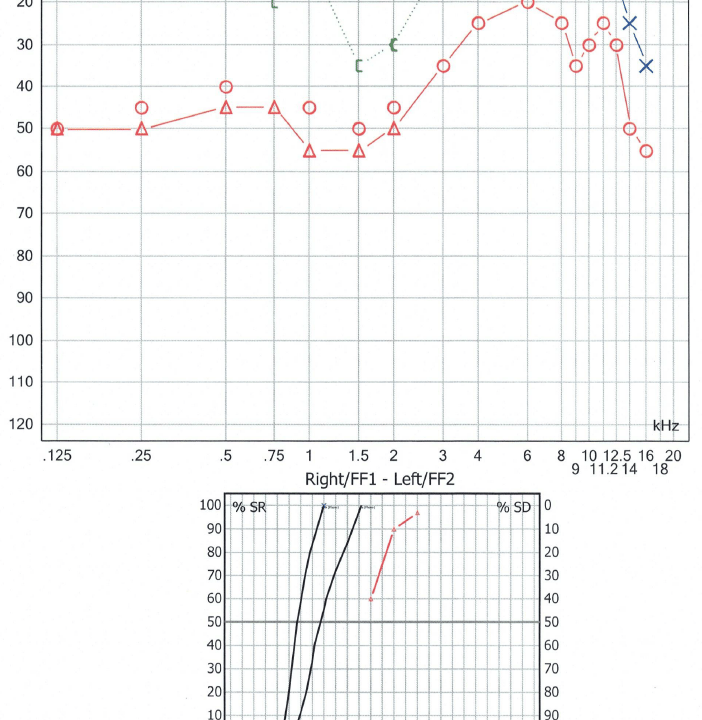
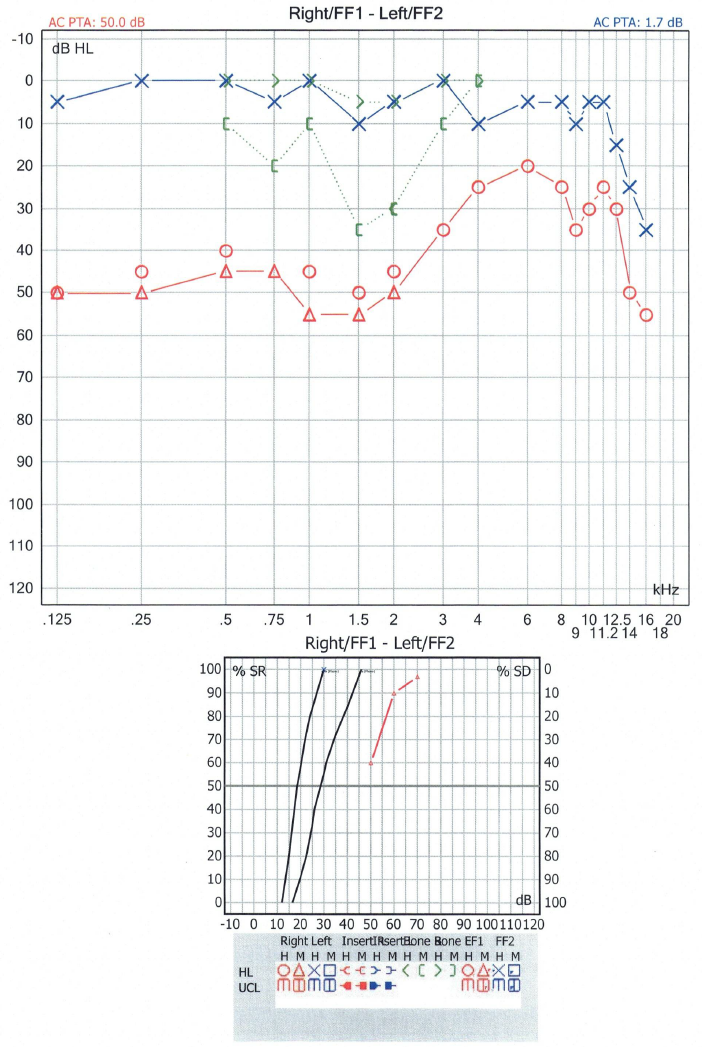
A quick screening gives you a pass or a fail in a few minutes. A full assessment is a different thing, and it is what actually answers the questions above. At The Audiology Place a hearing assessment runs 60 to 90 minutes and includes speech-in-noise testing and high-frequency testing up to 16 kHz, so it picks up the early changes a basic beep test can miss. If the result is that your hearing is fine for now, we tell you so and suggest when to check again. If you do need help, our advice is not shaped by who owns us or by what we are paid to sell. The Audiology Place is independent, not owned by a hearing aid manufacturer, and nobody here works on commission or to a sales target, so any recommendation rests on your hearing and your life rather than a brand quota. When a hearing aid is the right answer, we measure the fitting inside your own ear to confirm it is set correctly for your loss.
Getting your hearing checked in Sydney
The Audiology Place has clinics in Forestville, on the Northern Beaches, and in Epping. The assessment is painless, you leave with a plain explanation of the findings, and there is no obligation to buy anything. If conversations have started slipping away from you in noisy places, book an assessment on (02) 9315 8327 or email admin@theaudiologyplace.com.au.
Common questions
Why can I hear people talking but not understand the words?
Age-related hearing loss usually affects high-pitched sounds first, and those are the consonants that give words their meaning. The louder, lower vowels still come through, so you hear that someone is speaking while the detail that separates similar words goes missing.
Why is it so much harder to hear in noisy restaurants?
Following speech in noise relies on the brain separating one voice from everything else. When high-frequency detail fades, speech and background blur together, so busy venues are usually where people first notice the problem.
Can I have hearing loss if my hearing test came back normal?
Yes. A standard beep test measures the softest sounds you can hear, not how well you understand speech in noise. Some people test normal and still struggle in company, which is why a speech-in-noise test is worth including.
Is trouble hearing in background noise a normal part of ageing?
Some decline is common from around 60, but normal does not mean it cannot be helped or should not be checked. A baseline test tells you what has changed and whether anything needs doing.
How long does a hearing test take?
A full assessment at The Audiology Place takes 60 to 90 minutes, longer than a retail screening, because it includes speech and high-frequency testing rather than