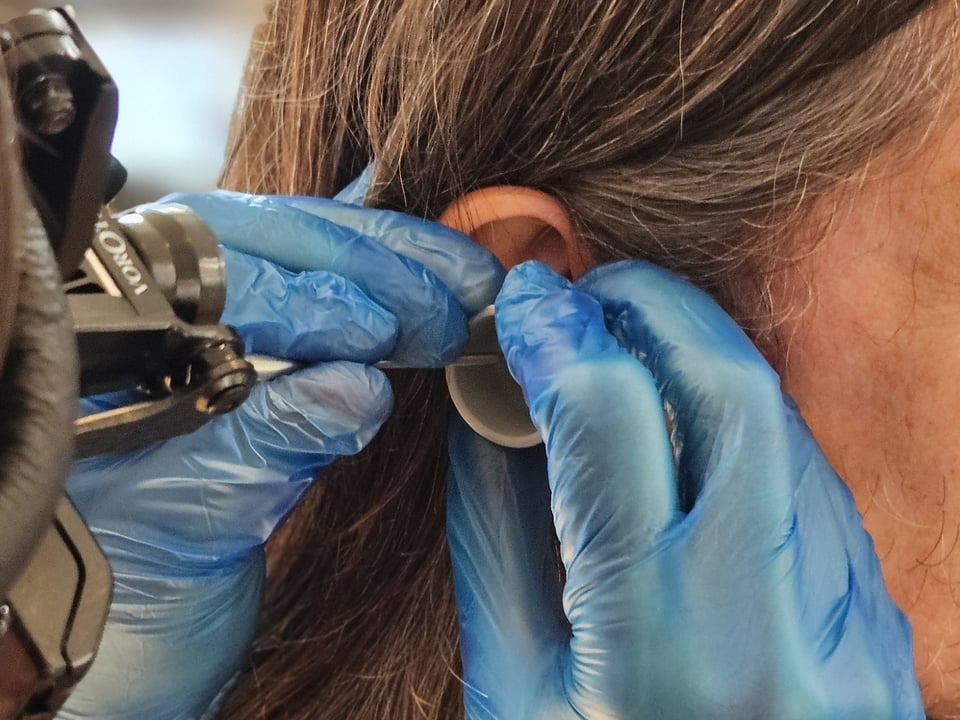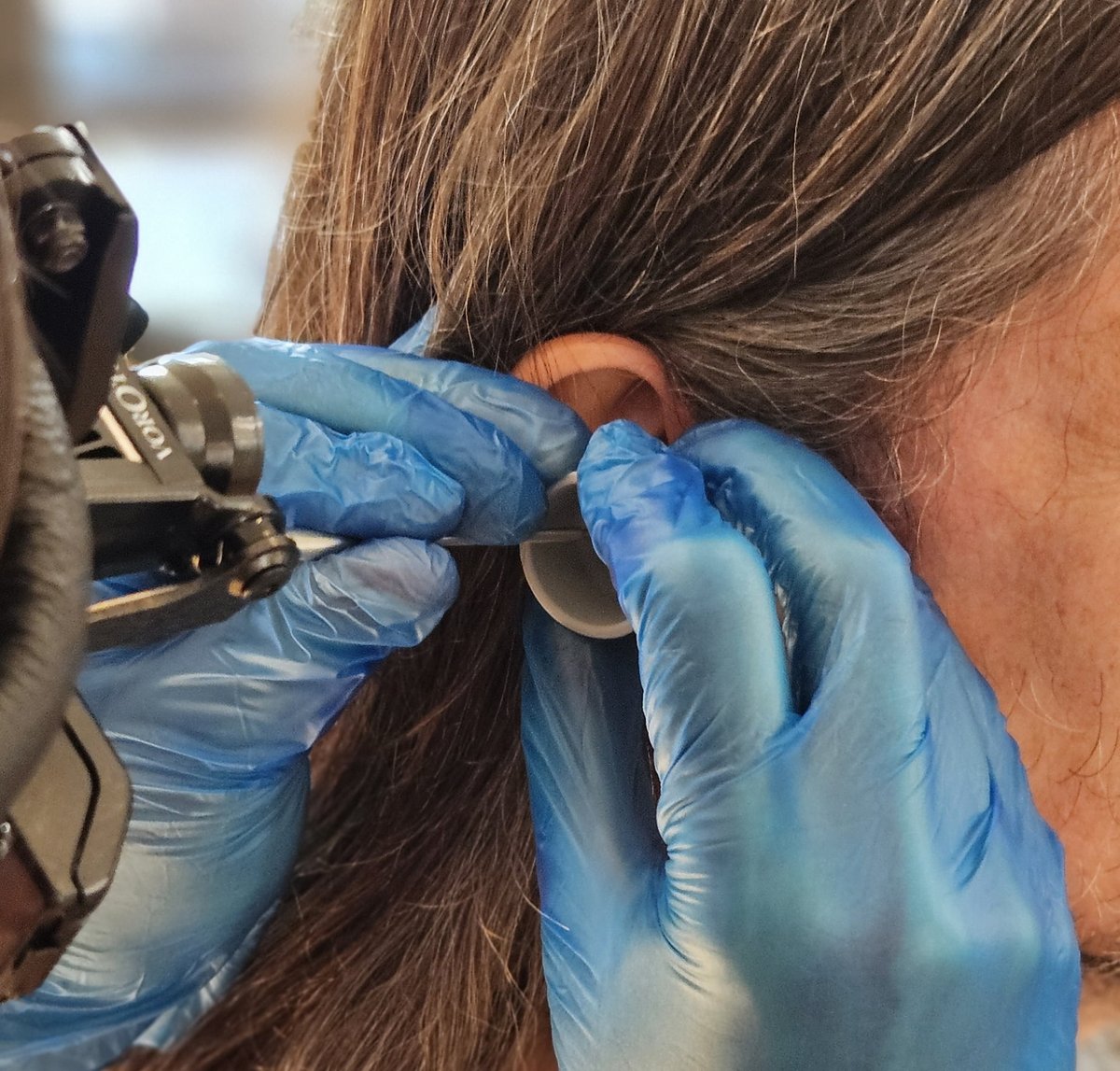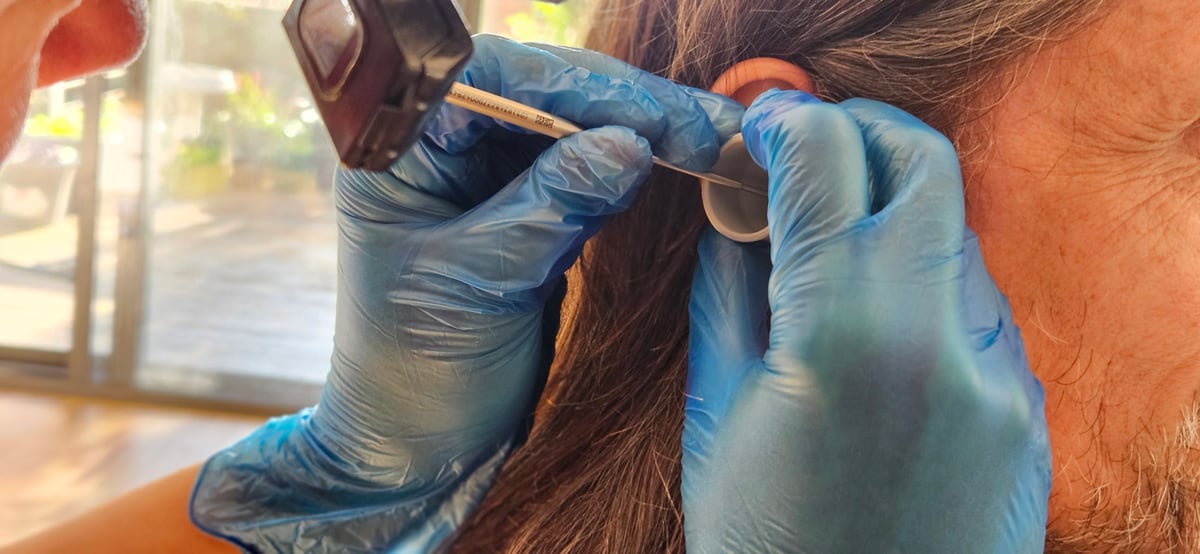


If you’ve ever taken a close look at your ear wax after cleaning your ears—or noticed an unusual colour on your cotton bud—you might have wondered whether what you’re seeing is normal. Ear wax colour can vary considerably from person to person, and even from day to day in the same individual. Understanding what different ear wax colours mean can help you distinguish between healthy cerumen and signs that warrant professional attention.
In this comprehensive guide, we’ll explore the spectrum of ear wax colours, explain the factors that influence these variations, and clarify when you should be concerned enough to seek medical advice.
Understanding Ear Wax: More Than Just a Nuisance
Before we delve into colour variations, it’s worth understanding what ear wax actually is and why your body produces it. Cerumen—the medical term for ear wax—is a naturally occurring substance produced by glands in the outer ear canal. It serves several important protective functions: trapping dust, debris, and microorganisms before they can reach the delicate structures of your inner ear; providing lubrication to prevent the ear canal from becoming dry and itchy; and offering mild antimicrobial properties that help prevent infections.
The composition of ear wax includes a mixture of dead skin cells, hair, secretions from ceruminous glands (modified sweat glands), and sebaceous gland oils. This complex mixture explains why ear wax colour and consistency can vary so dramatically—both between individuals and throughout your lifetime.
The Normal Range: What Healthy Ear Wax Looks Like
Healthy ear wax typically ranges from pale yellow to dark brown. These variations are completely normal and generally reflect differences in age, diet, environment, and individual body chemistry rather than any underlying health concern.
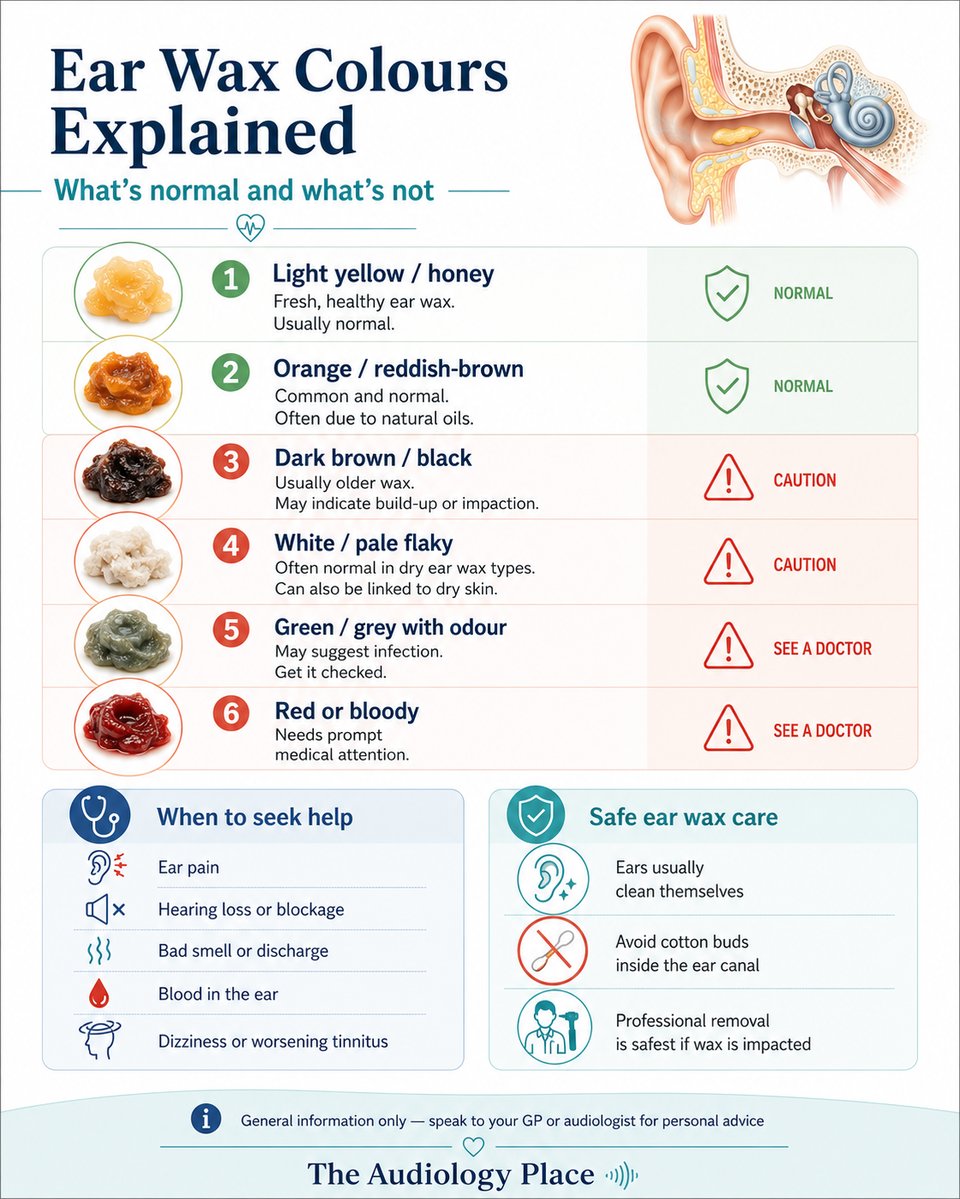
Light yellow or honey-coloured wax is often what people consider “typical” ear wax. This colouration is common in fresh cerumen and tends to have a softer, more fluid consistency. You’re most likely to see this shade if you produce wax regularly and your ears self-clean effectively.
Orange or reddish-brown wax usually indicates relatively fresh cerumen. The warmer tones can be influenced by the natural oils in your ear canal mixing with the waxy secretions. This colour is entirely normal and nothing to worry about.
Dark brown wax often represents older cerumen that has been sitting in the ear canal for a longer period. As ear wax ages, it naturally darkens in colour due to oxidation and the accumulation of trapped debris and dead skin cells. Think of it like how a cut apple turns brown when exposed to air—a similar chemical process occurs with ear wax over time.
Wet Versus Dry Ear Wax: A Genetic Trait
One fascinating aspect of ear wax that many people don’t realise is that the basic type of cerumen you produce is determined by genetics. There are two primary types: wet and dry.
Wet ear wax is sticky and ranges from yellow to dark brown. This is the dominant trait and is most common in people of European and African ancestry. Dry ear wax, by contrast, is flaky, pale, and crumbly in texture. It’s predominantly found in people of East Asian descent, with studies showing that up to 80-95% of people of Chinese, Japanese, and Korean heritage have the dry ear wax phenotype.
This genetic variation is controlled by a single gene called ABCC11, with the wet type being dominant and the dry type recessive. Research published in *Nature Genetics* has traced this variation back thousands of years and linked it to evolutionary adaptations to different climates and environments. Neither type is inherently better or worse—they’re simply natural human variations—though the type you have can influence your likelihood of developing ear wax impaction.
#image_title
Specific Ear Wax Colours and What They Mean
Dark Brown or Black Ear Wax
Very dark brown or black ear wax is most commonly a sign of old, impacted cerumen. The darker colouration results from prolonged exposure to air, accumulation of debris, and the natural ageing process of the wax itself. In most cases, black ear wax is not a cause for alarm, but it often indicates that the wax has been sitting in your ear canal for an extended period and may benefit from professional removal.
If you’re experiencing symptoms such as hearing loss, ear fullness, tinnitus, or discomfort alongside very dark wax, you likely have cerumen impaction that would benefit from microsuction or irrigation by a qualified professional. Black ear wax can also occasionally indicate the presence of fungal debris in cases of otomycosis (fungal ear infection), particularly if accompanied by itching or discharge, which warrants a consultation with your GP or audiologist.
Green or Grey Ear Wax with Odour
Ear wax that appears greenish or greyish, particularly if it’s accompanied by an unpleasant smell, may indicate an infection. While ear wax normally has a mild, slightly musty odour, a strong or foul smell combined with unusual colouration suggests the presence of bacteria or other pathogens.
If you notice green or grey discharge along with symptoms such as ear pain, itching, swelling, or hearing changes, it’s important to see your GP for proper evaluation. These signs could indicate otitis externa (swimmer’s ear) or another type of ear infection requiring medical treatment. Don’t attempt to clean the ear yourself with cotton buds or other implements, as this can push infected material deeper into the canal or damage the delicate skin lining.
Bloody or Red-Tinged Ear Wax
The presence of blood in your ear wax should always be taken seriously. Red streaks, pink-tinged wax, or fresh blood can indicate several possibilities: a scratch or abrasion in the ear canal (often from improper cleaning with cotton buds or other objects), a perforated eardrum, an infection causing inflammation and bleeding, or, rarely, a more serious condition such as a polyp or other growth.
If you notice blood in your ear wax, particularly if it’s persistent or accompanied by pain, sudden hearing loss, dizziness, or discharge, seek medical attention promptly. Your GP or an ear, nose, and throat (ENT) specialist will be able to examine your ear canal and eardrum with an otoscope to determine the cause and recommend appropriate treatment.White or Pale Flaky Wax
Very pale or white ear wax is most common in people with the dry ear wax phenotype, as discussed earlier. This type tends to be flaky rather than sticky and is completely normal if this is your usual ear wax type. However, if you typically have wet, darker wax and suddenly notice white flakes, this could indicate a lack of the oily secretions that normally contribute to ear wax composition, possibly due to dry skin conditions or environmental factors. White flakes might also represent dry skin cells from the ear canal, particularly if you have eczema or psoriasis affecting your ears.
When to Seek Professional Help
Whilst ear wax colour variations are usually benign, certain signs and symptoms warrant professional evaluation:
See your GP or audiologist if you experience:
– Persistent ear pain or discomfort
– Sudden or progressive hearing loss
– Continuous itching or irritation in the ear canal
– Unusual discharge with a strong odour
– Any blood in your ear wax or discharge from your ear
– Dizziness or balance problems
– Ringing in your ears (tinnitus) that’s new or worsening
– A feeling of fullness or blockage that doesn’t resolve
Seek urgent medical attention if you have:
– Severe ear pain
– Discharge following a head injury
– Sudden complete hearing loss
– High fever accompanying ear symptoms
– Swelling around the ear
The Safe Way to Manage Ear Wax
For most people, ears are self-cleaning and require minimal intervention. The natural migration process of the ear canal moves old wax outward, where it typically falls out or can be gently wiped away from the outer ear.
If you’re prone to wax build-up or impaction, professional ear wax removal is the safest option. Methods such as microsuction—performed by trained audiologists—allow for precise, comfortable removal under direct visualisation, making it suitable even for people with a history of ear infections, perforations, or who wear hearing aids.
Avoid using cotton buds inside your ear canal, as these typically push wax deeper rather than removing it, potentially causing impaction or injury. Similarly, ear candles are not recommended due to lack of evidence for efficacy and potential for burns or injury.
Ear wax colour can range from pale yellow to dark brown and still be completely normal. The specific shade of your cerumen is influenced by genetics, age, diet, environment, and how long the wax has been in your ear canal. Whilst most colour variations are benign, certain signs—particularly green or grey wax with odour, bloody discharge, or any wax changes accompanied by pain or hearing loss—warrant professional evaluation.
Understanding what’s normal for your ears helps you recognise when something might be amiss. If you’re ever uncertain about your ear health or experiencing symptoms that concern you, don’t hesitate to seek advice from a qualified professional.
References
Yoshiura, K., et al. (2006). A SNP in the ABCC11 gene is the determinant of human earwax type. *Nature Genetics*, 38(3), 324-330.
Guest, J.F., et al. (2004). Impacted cerumen: composition, production, epidemiology and management. *QJM: An International Journal of Medicine*, 97(8), 477-488.
Roland, P.S., et al. (2008). Clinical practice guideline: Cerumen impaction. *Otolaryngology–Head and Neck Surgery*, 139(3_suppl), S1-S21.