Hearing aids come in many shapes and sizes, and the best one for you or your child depends on a range of individual factors. When I sit down with a patient or a parent at The Audiology Place, we begin not by selecting a product, but by understanding their lifestyle, hearing needs, ear anatomy, dexterity, and even cosmetic preferences. Hearing aids are not one-size-fits-all, and choosing the right style is only part of the journey. What follows is a guide to the different types of hearing aids available today, written not from a sales catalogue but from the perspective of someone who fits them every week and sees the difference the right one can make.
Behind-the-Ear (BTE) Hearing Aids
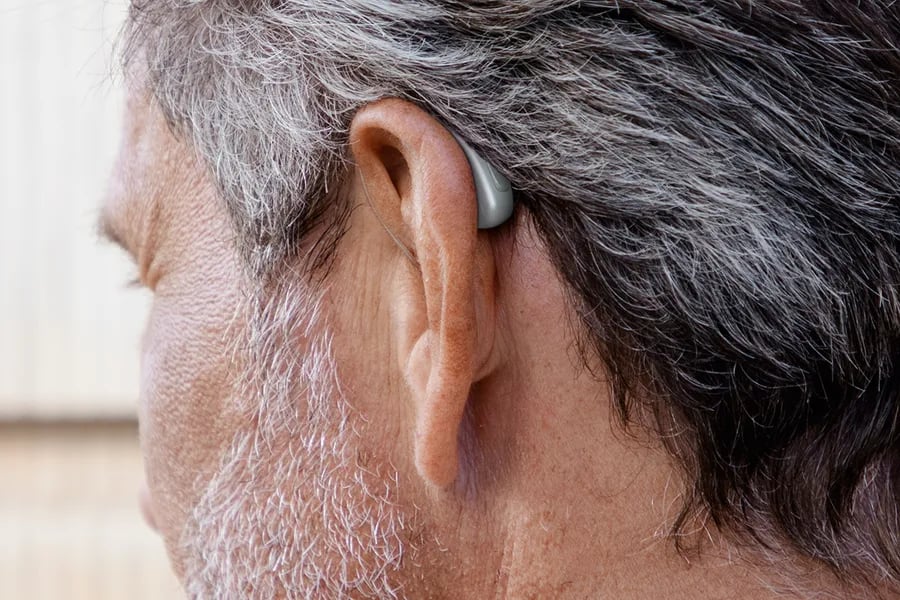
Behind-the-ear hearing aids are the most familiar to most people. These devices sit comfortably behind the ear and connect to a custom earmould or a slim tube that directs sound into the ear canal. They are known for their durability and power, which makes them especially suitable for people with moderate to profound hearing loss.
One of the things I often point out is that modern BTEs are no longer bulky or conspicuous, unlike their predecessors. Today’s models are sleek, lightweight, and can come in colours that either blend with hair and skin or make a statement if that’s your style. For children, BTEs are often the most practical choice because they can be adjusted as the child grows and are compatible with accessories like FM systems used in classrooms.
Receiver-in-Canal (RIC) Hearing Aids
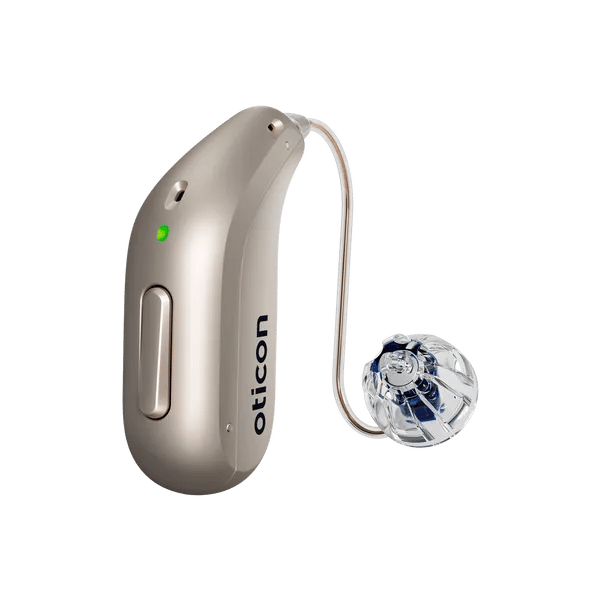
RICs, or receiver-in-canal hearing aids, are a popular choice among adults. They resemble BTEs in that part of the device rests behind the ear, but instead of a tube, a thin wire extends from the main body of the device into the ear canal, where the speaker, or ‘receiver,’ is located.
These devices tend to be smaller and more discreet than traditional BTEs. They provide excellent sound quality and are well-suited for people with mild to severe hearing loss. Because the speaker sits closer to the eardrum, users often report a more natural sound experience. Another advantage is that the open-fit design helps avoid the sensation of a blocked ear, which can be particularly important for individuals with good low-frequency hearing.
In-the-Ear (ITE) Hearing Aids
In-the-ear hearing aids are custom-made to fit the shape of the user’s ear and sit entirely within the outer ear. They’re a good option for people who want something easy to handle and relatively discreet but still powerful.
ITE aids are slightly larger than some of the completely-in-the-canal models, making them easier to insert and remove. They often come with manual controls, such as volume wheels or program buttons. For individuals with dexterity issues or arthritis, these models are usually a better fit than smaller ones.
In-the-Canal (ITC) and Completely-in-Canal (CIC) Hearing Aids
ITC and CIC hearing aids are both types of in-ear devices that sit inside the ear canal. They are custom moulded and very discreet. CICs are the smallest of the two and often barely visible to others.
People often ask me if these are the best simply because they are the least visible. The answer is, it depends. CICs can be ideal for mild to moderate hearing loss and for individuals seeking a discreet device. However, they can be more challenging to handle, have fewer features due to their small size, and may not be as effective in noisy environments.
ITC devices strike a balance. They’re still small and discreet but can include features like dual microphones or connectivity functions that CICs might not support. That said, people with very small or narrow ear canals may not be suitable candidates for these types of implants.
Invisible-in-Canal (IIC) Hearing Aids
IIC hearing aids are the most discreet devices available. They sit deep within the ear canal and are completely invisible when worn. These are custom-made for each individual and are a popular choice for those who want maximum discretion.
I often talk people through the trade-offs here. While IICs are cosmetically appealing, they are not appropriate for every ear or every type of hearing loss. They are generally best for mild to moderate hearing loss. Due to their position in the ear, they may be more prone to issues such as wax build-up or moisture damage, and they may not include some of the more advanced features, like directional microphones or Bluetooth.
Rechargeable Hearing Aids
A feature rather than a style, rechargeable hearing aids have become incredibly popular in recent years. Most RIC and BTE models now come with lithium-ion rechargeable batteries. This eliminates the need to fiddle with small batteries, which can be a real barrier for older adults or anyone with vision or dexterity concerns.
Many of my patients appreciate the convenience of charging their hearing aids overnight, just like a phone, and not having to worry about carrying spare batteries.
Bluetooth and Smart Features
Modern hearing aids are not just about amplifying sound; they also enhance the quality of life. Many models come with Bluetooth connectivity, allowing users to stream music, make phone calls, and even participate in Zoom meetings directly from their devices. Some models are compatible with smartphone apps that will enable fine-tuning, remote adjustments, or location-based settings.
When fitting someone with hearing aids, I always consider how these features can be integrated into their daily routine. For someone who uses their phone all day, a hearing aid that connects seamlessly to their iPhone or Android can be life-changing.
Final Thoughts
Choosing a hearing aid is not just about the device. It’s about how well it integrates into your life, how comfortable it feels, and how effectively it meets your communication goals. At The Audiology Place, we take a personalised and evidence-based approach. We use real-ear measurements, speech-in-noise testing, and take the time to understand your unique needs.
Whether you’re a parent seeking a hearing aid for your child or someone exploring solutions for yourself or a loved one, know that the correct device is available. And you don’t have to navigate it alone. We are here to help every step of the way.