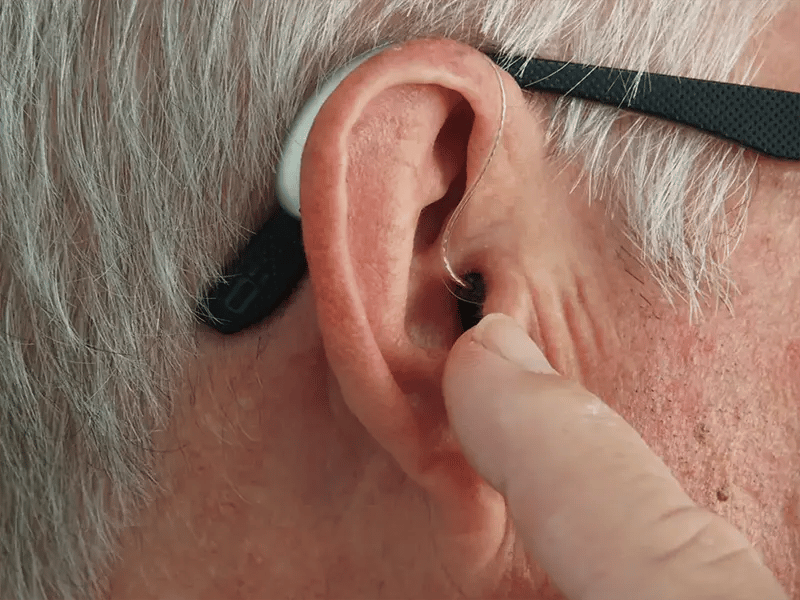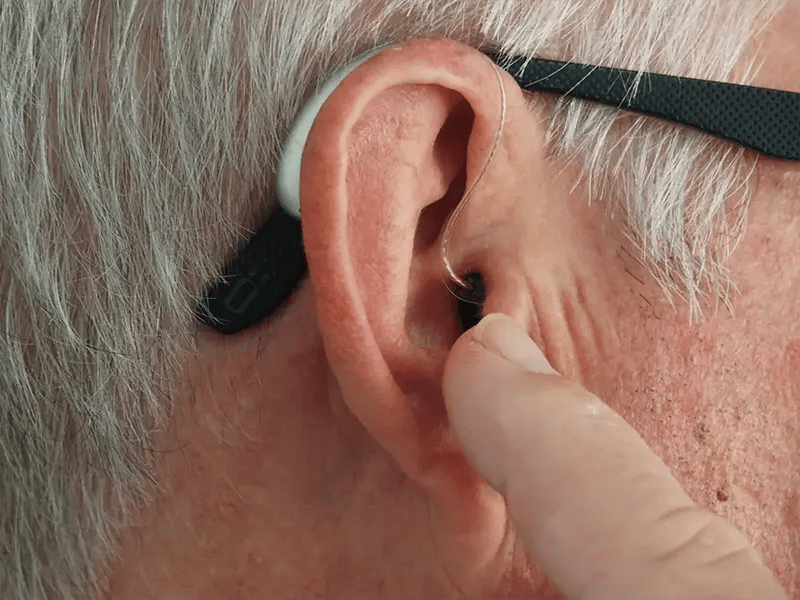

Hearing loss doesn’t just change how you hear: it fundamentally alters how you connect with the people closest to you. After nearly 20 years of fitting hearing aids and counselling families through this, I can tell you the relationship damage often brings people through our door long before the hearing loss itself does. A partner’s exasperation, adult children’s concerns, or the slow withdrawal from family gatherings: these are the real symptoms that finally prompt action.
The good news is that much of this damage can be repaired, but only if we’re honest about what’s actually happening in these relationships and why.
The Pattern Every Audiologist Recognises
There’s a script that plays out in consultation rooms across Australia, and it’s painfully consistent. One partner, usually the one with hearing loss, sits slightly back from the desk, arms crossed. The other leans forward, doing most of the talking. “He hears what he wants to hear,” they’ll say. “She ignores me unless I’m standing right in front of her.” The person with hearing loss bristles: “You mumble. You talk to me from other rooms.”
Both are right, and both are wrong.
What looks like selective hearing is actually the brain doing exactly what damaged auditory systems do: prioritise familiar patterns and filter aggressively. The conversation about bins going out doesn’t register because it lacks the acoustic salience of a name being called or a question asked directly. The high-frequency consonants that carry meaning in speech (the ‘s’, ‘t’ and ‘f’ sounds that distinguish “fast” from “fact”) are the first to go in typical age-related hearing loss. What remains is a muddy approximation that the brain fills in based on context and expectation. Sometimes it guesses right. Often it doesn’t.
The accusation of selective hearing, though inaccurate, speaks to something real: the emotional exhaustion on both sides. Untreated hearing loss has been linked with higher rates of depression, anxiety and social isolation, and partners often say their own quality of life suffers too.
The Invisible Third Party in Your Marriage
Untreated hearing loss functions like an uninvited third party in a relationship. It sits between couples during dinner conversations. It derails attempts at intimacy when one person can’t hear whispered affection. It creates a running commentary of resentment: “Why do I have to repeat everything?” versus “Why does everyone mumble?”
The television volume becomes a nightly negotiation. Social invitations get declined with increasingly transparent excuses because restaurants are simply too difficult to navigate. Partners compensate by becoming interpreters, buffers and social managers, until they start to resent the role. It’s a dynamic audiologists see often, and it tends to follow a predictable arc: frustration gives way to reduced communication, which gives way to parallel lives lived in the same house.
What’s particularly cruel is that the person with hearing loss often doesn’t recognise their withdrawal. Sensorineural hearing loss is insidious precisely because it’s gradual. You don’t wake up one morning unable to hear; you wake up after years of slow decline having forgotten what full participation in conversation feels like. The cognitive load of straining to hear, of filling in gaps and guessing at meaning, is exhausting. Withdrawal isn’t a choice: it’s a survival mechanism.
What Couples Commonly Report
The person with hearing loss often underestimates the impact, because they’ve adapted to a narrower social and communicative world. Partners, asked separately, tend to rate the impact more highly. The baseline has shifted.
Couples often describe conversations becoming shorter, more transactional and less spontaneous. The casual exchanges that build intimacy (comments on a shared TV show, passing thoughts, gentle teasing) fade because they aren’t worth the effort needed to bridge the hearing gap.
The psychological impact extends beyond the couple. Adult children often feel both frustration and concern. Grandchildren stop seeking out conversation with grandparents who can’t hear them. Family gatherings become sources of stress rather than joy because everyone’s attempting to manage the communication barrier without directly addressing it.
Why “Just Speak Up” Doesn’t Work
The most common coping strategy I see, speaking louder, is also the least effective. Shouting distorts speech acoustics and introduces emotional tone that wasn’t intended. “I’m not angry, I’m just trying to be heard” becomes the refrain. Volume might help a little, but it doesn’t fix the clarity issues that characterise most sensorineural hearing loss. If the problem is missing high frequencies, shouting mostly makes the vowels louder. You’ve amplified the problem, not solved it.
What does work: facing the person directly, reducing background noise, speaking clearly at a steady, slightly slower pace without exaggerating, and, crucially, bringing them into the conversation about solutions rather than working around the problem.
The Role of Family in Hearing Care
I encourage family members to attend initial consultations, and not just for support. A partner or adult child provides essential context about real-world communication challenges that don’t emerge in a sound booth. They’ll mention the missed phone conversations, the withdrawn behaviour at family dinners, the arguments about television volume: patterns that reveal functional hearing difficulties beyond what a pure tone audiogram shows.
Family involvement also matters for treatment success. Hearing aid uptake and long-term use tend to be better when a partner is involved in the process. They learn what’s realistic to expect, they understand the adjustment period, and they become allies in the rehabilitation process rather than critics when amplification doesn’t instantly restore normal hearing.
Communication Strategies That Actually Help
Before treatment, during treatment, and even with well-fitted devices, certain communication strategies reduce frustration on both sides:
Get attention before speaking. A gentle touch or saying the person’s name establishes that a conversation is beginning. It allows the listener to shift attention and engage cognitive resources.
Choose environments carefully. Background noise is the enemy of speech understanding, particularly with sensorineural loss. A quiet room with good lighting (so facial cues are visible) makes an enormous difference.
Rephrase rather than repeat. If something wasn’t understood the first time, saying it louder rarely helps. Rephrasing uses different words with potentially different acoustic patterns.
Confirm understanding. Both parties can take responsibility here. “What I heard was…” clarifies without accusation.
Address resentment directly. The emotional buildup around hearing loss doesn’t dissolve when hearing aids arrive. Couples often need explicit permission to acknowledge the frustration and grief around what’s been lost.
What Changes With Treatment
The relationship benefits of treating hearing loss often show up early, though not always in ways people expect. Properly fitted amplification (with real-ear measurement verification, speech-in-noise testing and ongoing fine-tuning, not devices programmed from an audiogram alone) restores access to conversation. It doesn’t restore normal hearing, and that distinction matters for managing expectations.
What I commonly see: less tension around daily communication, more social engagement, and partners saying they “have their person back.”
But amplification alone isn’t sufficient if years of communication damage have accumulated. Some couples benefit from explicit communication counselling. Most simply need time to rebuild habits of casual conversation that had atrophied.
When to Seek Assessment
If hearing difficulties are creating relationship friction, waiting won’t improve matters. The standard I use: if communication challenges are causing regular frustration for anyone in the household, it’s time for a comprehensive assessment. That means pure tone audiometry, speech discrimination testing, tympanometry to rule out middle ear issues, and a real conversation about functional difficulties in daily life.
Family members are welcome at appointments. In fact, I prefer it. The conversation about hearing loss is more productive when everyone affected is in the room.
To book an assessment at our Epping or Forestville clinic, contact us or call (02) 9315 8327.