
From 1 January 2024, Clause 58 of the NSW Work Health and Safety Regulation 2017 is in force. It requires employers (PCBUs) to provide audiometric testing for any worker who is frequently required to use hearing protection because workplace noise exceeds the exposure standard. In plain English: if earmuffs or plugs are a routine control at your site, baseline and repeat hearing tests are now mandatory.
What “exceeds the exposure standard” means
NSW adopts the model WHS noise limits: an LAeq of 85 dB(A) over an 8-hour period (the average over an 8-hour shift) or a peak LC of 140 dB(C). When typical tasks or plant push workers over those limits—and you mitigate with hearing PPE—Clause 58 applies. These values are set in the WHS Regulation (Clause 56) and explained in the Noise Code of Practice.
The testing timetable you must follow
Clause 58 sets two clear milestones:
- Baseline test within 3 months of a worker starting the noisy job, and
- Follow-up testing should be conducted at least every 2 years thereafter.
SafeWork NSW has flagged the end of the previous exemption and the start of mandatory testing from 1 January 2024. Several government and industry notices restate the same timetable, allowing PCBUs to plan onboarding and rolling reviews.
Why plant rooms, workshops, fabrication floors, breweries, road/asphalt crews, resource recovery, council maintenance and bus depots are squarely in scope
What ties these workplaces together isn’t their industry—it’s their noise profile and routine reliance on hearing PPE:
- Plant rooms & utilities (HVAC, blowers, pumps, compressors). Rotating machinery and reverberant spaces often require hearing protection for maintenance and operations teams, especially during inspections, start-ups, and fault-finding, when controls are less effective. Where PPE is frequently required above the exposure standard, Clause 58 is triggered.
- Workshops & fabrication floors (metal, plastics, timber, CNC, grinding, cutting). These spaces combine continuous equipment noise with intermittent peaks (e.g., grinders, impact drivers). PCBUs often mandate hearing protection as standard PPE on the floor—meeting the “frequently required” test in Clause 58.
- Breweries and beverage plants (canning/packaging lines, compressors, washdowns). The mix of packaging lines (continuous) and compressed-air peaks (impulsive) commonly pushes exposures over 85 dB(A)/140 dB(C), leading to routine PPE. That frequency of required PPE is exactly what Clause 58 describes.
- Roading & asphalt crews (pavers, compactors, saws). Outdoor work still counts: compactors and saws generate hazardous noise, and crews typically wear hearing protection for significant portions of the shift. If PPE is the control for exposures above the standard, audiometry is required.
- Waste transfer/resource recovery (MRF lines, shredders, mulchers, heavy plant). Materials handling creates both steady and peak noise; sites normally signpost hearing protection areas and require PPE for all time spent on the floor—meeting Clause 58’s “frequently required” threshold.
- Council maintenance depots (including parks, roads, andworkshops). Chainsaws, blowers, mowers, brush cutters and small plant produce hazardous noise; many crews have “PPE as standard” for tasks—again satisfying Clause 58 when exposures exceed the standard.
- Bus depots & fleet workshops (pits, panel/paint, wash plants). Engine testing, pneumatic tools and wash plants produce both continuous and peak noise, where PPE is routinely required, Clause 58 applies, and testing must be scheduled.
The standard compliance signal is straightforward: if your SWMS, signage, or site rules instruct workers to wear hearing protection most of the time in an area, you likely owe them audiometric testing under Clause 58. That’s by design; the regulation links the duty to test to the frequency of PPE use above the exposure standard, not to a specific industry.
How to run a compliant program (without overcomplicating it)
- Identify who’s “in scope.”Use your noise risk assessment and PPE rules to list roles that frequently require hearing protection because exposures exceed 85 dB(A) LAeq for eight hours or reach 140 dB(C) LC, peak. The Code of Practice outlines the process for assessing exposure and selecting controls.
- Book baseline tests within 3 months of start. New starters in noisy roles need a baseline quickly; don’t wait for an annual health day. Put audiometry into your onboarding checklist. SafeWork NSW
- Schedule repeat tests at least every 2 years. Set rolling reminders to ensure workers stay in compliance. If you detect a standard threshold shift, escalate per your risk management procedure. SafeWork NSW
- Test to the correct standard. Audiometry must be conducted in accordance with AS/NZS 1269.4:2014, which covers procedures, calibration, test environment, and reporting. Using this standard ensures reliable baselines and valid comparisons over time. Standards Australia
- Keep secure records and act on results. Store results confidentially and integrate them into your risk review. Where shifts are detected, revisit controls (engineering, administrative and PPE) under the hierarchy of control outlined in the Code of Practice. SafeWork NSW
What counts as “frequently required” PPE?
The regulation doesn’t specify a numeric threshold for “frequently,” as every site is unique. Regulators and government fact sheets explain that the trigger is a routine requirement of hearing PPE as a control for exposure above the standard. If earmuffs/plugs are listed as required for a role or area most of the time, you should assume Clause 58 applies and test accordingly. NSW Resources
The business case (beyond compliance)
Audiometric testing is not just a box-tick. Early detection helps you prevent permanent loss, reduce compensation risk, and implement more effective controls. NSW’s adoption of Clause 58 formalises good practice that many PCBUs already follow. Baselines within 3 months and biennial reviews make hearing health a predictable, manageable part of your safety system. SafeWork NSW
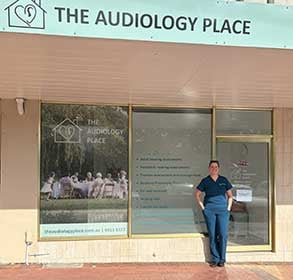
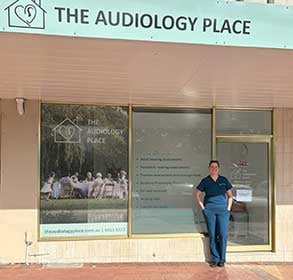
Need help? The Audiology Place (Forestville) offers Clause 58-compliant baseline and follow-up audiometry in accordance with AS/NZS 1269.4, featuring quiet test suites, calibrated equipment, and digital reporting that enables direct filing into your WHS system. We can also help you map roles that are “in scope,” set up reminders, and brief your teams on how to protect their hearing effectively.
Key references: NSW WHS Reg Clause 58 (audiometric testing), Clause 56 (exposure standard), SafeWork NSW commencement notice (1 January 2024), NSW/Model Noise Code of Practice, and AS/NZS 1269.4:2014 for test methods.