

A 10-year-old boy with suspected ADHD receives a proper diagnosis of Auditory Processing Disorder
The Referral
A Year 5 student (we’ll call him “Tim”) was referred to us following a developmental assessment for ADHD. The psychologist had flagged potential auditory processing concerns and recommended formal APD testing before finalising their diagnosis.
Tim’s mum reported ongoing struggles with multi-step instructions. Teachers had noticed he seemed to “tune out” during class. There were behavioural concerns too. The family was managing other stressors including some physical health issues, and everyone just wanted answers.
The Background
Tim had some relevant history. He’d dealt with middle ear problems when he was younger, including bilateral adenoid removal and a septum correction at age four. He’d passed his newborn hearing screening without issue. He was born healthy at 38 weeks.
The pattern his mum described is one we hear often: trouble following instructions (especially when there are several steps), difficulty concentrating when there’s background noise, and appearing not to listen. Sound familiar? These symptoms overlap heavily with ADHD, which is exactly why so many kids get misdiagnosed or diagnosed incompletely.
Step One: Rule Out Hearing Loss
Before we can assess auditory processing, we need to confirm the ears themselves are working properly. You can’t assess how the brain processes sound if the sound isn’t getting there in the first place.
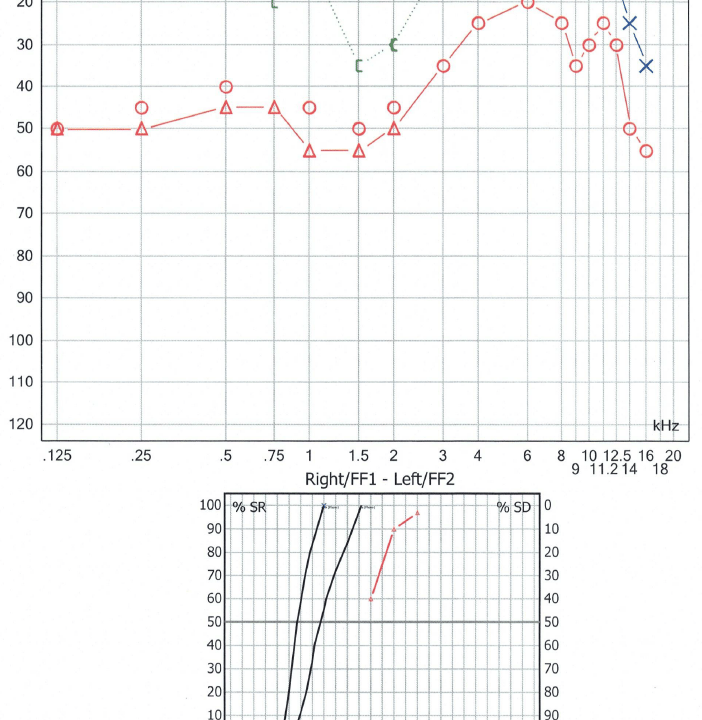
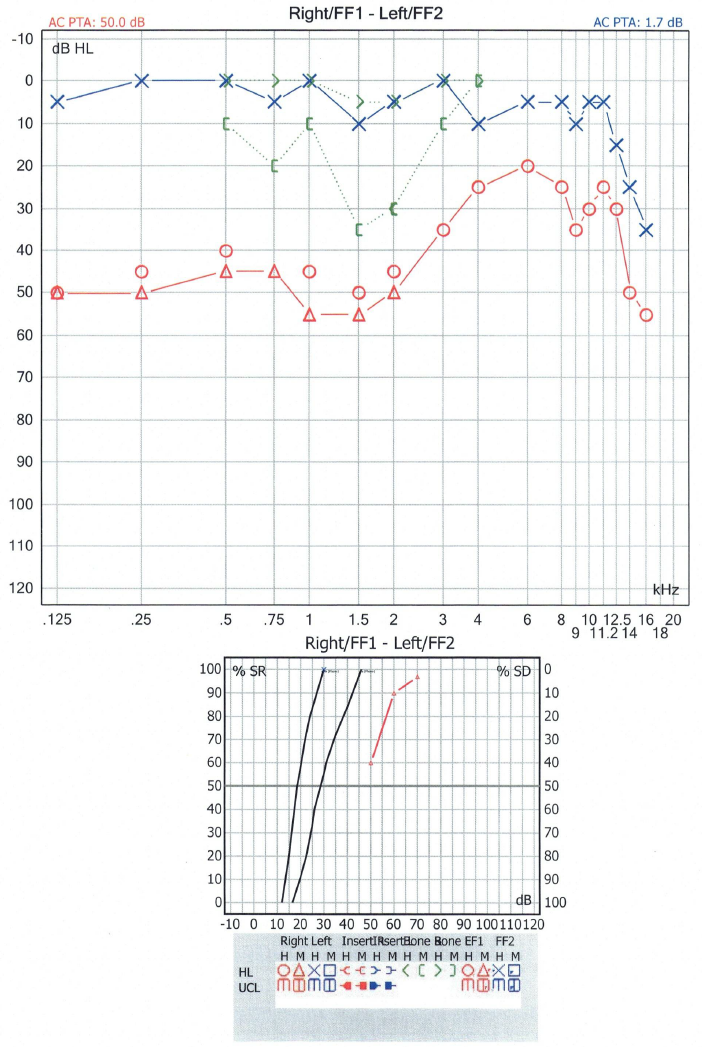
Tim’s peripheral hearing was completely normal. Clear ear canals bilaterally. Normal tympanic membranes (eardrums). Normal middle ear function with no signs of reflex decay. His pure tone thresholds were within normal limits from 250Hz right up to 16,000Hz. His speech discrimination was excellent at conversational levels in quiet. And his DPOAE results (those are the emissions that tell us about outer hair cell function in the cochlea) were present at all frequencies in both ears.
In short: Tim’s ears were fine. Whatever was causing his difficulties, it wasn’t hearing loss.
The APD Assessment
We ran Tim through a battery of tests designed to stress different aspects of auditory processing. Some tests challenge one ear while the other gets competing information. Some filter out parts of speech to see if the brain can fill in the gaps. Others test whether kids can pick up on timing, rhythm, and the musical aspects of speech that tell us about mood and intention.
Tim sailed through most of them. His monaural separation and auditory closure skills were fine. He could handle degraded speech, filtered words, and fill in missing parts of sentences. His temporal processing was solid, meaning he could detect gaps between sounds, identify pitch patterns, and recognise duration differences. His ability to understand speech in background noise was actually in the high end of normal. His spatial processing and ability to use voice differences to separate speakers? Also normal.
And his memory? Both short-term and working memory tested well within the normal range.
So where was the problem?
The Finding: Binaural Integration Deficit
It showed up in the dichotic listening tests. These present different information to each ear simultaneously and ask the child to report what they heard. They’re designed to stress the brain’s ability to integrate information arriving from both ears at once.
Tim struggled here. When competing words were presented to each ear and he was asked to repeat both, his performance dropped. When competing digits were presented the same way, the deficit was even clearer. His ability to take advantage of each ear receiving different sounds (what we call “dichotic advantage”) was near the bottom of the normal range.
We also noticed something else: Tim showed an abnormal right ear advantage for his age. Normally, information entering the right ear has a more direct path to the language-dominant left hemisphere, so kids often do slightly better with the right ear on these tests. But this advantage typically matures by age 11 or 12. Tim’s pattern suggested his auditory pathways between the two hemispheres hadn’t fully matured yet.
What This Means in Real Life
A binaural integration deficit creates very specific problems. Think about a classroom where the teacher is talking while other students are whispering. Or a home where instructions are given while the TV plays in the background. Tim’s brain struggles to integrate the information coming from both ears when it arrives simultaneously.
This looks exactly like inattention. He seems like he’s not listening because, in a sense, he isn’t. He’s working so hard to process the competing sounds that he misses parts of the message. By the end of the school day, he’s mentally exhausted from the extra effort required just to keep up.
It can also look like behaviour problems. When a child can’t follow instructions (because they genuinely didn’t catch all of them), frustration follows. For everyone.
The Recommendations
APD assessment isn’t just about getting a diagnosis. It’s about identifying what specific supports will actually help.
For Tim, we recommended environmental modifications: preferential seating near the teacher and away from hallway noise, reducing background distractions when giving instructions, and avoiding situations where he needs to listen to competing speakers. Large group learning environments are particularly challenging for kids with this profile.
We also recommended speaker strategies for teachers and parents: getting his attention before speaking (a tap on the ear or “ready?” cue), speaking clearly, allowing extra processing time, repeating or rephrasing important information, and checking for understanding. Marking transitions between activities clearly helps too, since kids with APD often need more time to shift gears.
Tim’s family is now considering a remote microphone system, which would help him focus on the teacher’s voice regardless of where he’s sitting. The evidence for these systems in binaural integration deficits is promising but not conclusive, so we discussed it as a complementary tool rather than a therapy.
Most importantly, we recommended direct auditory training. Specifically, Zoocaper Skyscraper by Acoustic Pioneer. This is an auditory training exercise that progressively improves the brain’s ability to distinguish different sounds arriving at each ear simultaneously. It targets exactly the skill Tim struggles with. The program takes anywhere from weeks up to six months and requires consistent follow-through, but Tim’s family is committed and capable. If more direct auditory training is required, we have colleagues who specialise specifically in this area that we can refer to.
We also recommended exam accommodations: a quiet room, small groups, noise-cancelling headphones where appropriate, and extra time. These aren’t advantages. They’re adjustments that put Tim on equal footing with his peers.
The Bigger Picture
Tim’s case illustrates something we see regularly. A child struggling at school. Parents at their wit’s end. Teachers concerned. A possible ADHD diagnosis on the table. And underneath it all, an auditory processing disorder that explains many (though not always all) of the symptoms.
The two conditions can coexist. They can also be confused for each other. Without proper APD testing, it’s impossible to know which you’re dealing with.
What struck us most about Tim was his attitude during testing. He was attentive, cooperative, and gave his best effort throughout. He showed a keen and eager personality. He’s a kid who wants to do well. He just needed someone to figure out what was getting in the way.
We’ll reassess Tim’s binaural integration skills after he has completed his auditory training program, along with whatever environmental adaptations his school implements. The prognosis is good. These deficits often improve with targeted intervention, especially when caught at this age.
Could Your Child Have a Similar Profile?
If your child has been flagged for possible ADHD, or if they struggle with listening, following instructions, or concentrating in noisy environments, APD testing may provide important answers. We see children from age seven onwards for these assessments.
Peripheral hearing testing comes first. If that’s normal, we can proceed to the full APD battery. The assessment takes place over two sessions to keep fatigue from affecting results.
The Audiology Place provides APD assessments for children and adults on Sydney’s Northern Beaches and beyond. Contact us on 9315 8327 or email admin@theaudiologyplace.com.au to discuss whether testing is appropriate for your child.
Note: This case study is based on a real patient with identifying details changed to protect privacy. Written consent was obtained.