When Australians worry about their hearing, where do they turn for advice? Not to Google. Definitely not to AI chatbots. And here’s the twist: not even to their GPs, at least not with complete confidence.
Audiologists sit at the top of Australia’s hearing trust hierarchy, and the margin isn’t close. In a national survey of 390 Australians conducted by The Audiology Place, 55.7% said they trust audiologists completely for advice about hearing problems. ENT specialists came in second at 43.6%, followed by GPs at 41.8%. The numbers drop off a cliff from there. Family and friends? Just 15.1%. Large retail hearing chains? 10.4%. Online search? 4.5%. And AI tools or chatbots, despite all the hype about artificial intelligence revolutionising healthcare? A barely-there 2.5%.
That last figure deserves a moment. Only nine people in the entire survey said they trust AI completely for hearing advice. Nine out of 390. The robots aren’t taking over this particular corner of healthcare anytime soon.
The Gender Gap Nobody Talks About
Dig into the demographics and a significant split emerges between men and women. Sixty percent of men trust audiologists completely, compared to 48% of women. That 12-point gap persists across the board: men also show higher complete trust in GPs (45.8% vs 38%) and especially in large retail hearing chains (14.7% vs 5%).
What’s driving this? The data doesn’t say directly, but patterns elsewhere in the survey suggest women approach the entire hearing care system with more hesitation. They’re less likely to trust retail chains, less likely to act quickly when they notice a hearing change, and less likely to hold strong positive views about hearing aids themselves. It’s not scepticism of audiologists specifically. It’s something broader. Women seem to carry more doubt about the whole enterprise.
Age Flips the Script
You might assume older Australians, with their greater proximity to hearing loss, would place more faith in audiologists. The data says otherwise.
Among 18 to 34-year-olds, 60% trust audiologists completely. Same for the 35-54 cohort. But for those 55 and over, that figure drops to 47.4%. The people most likely to need an audiologist’s services are the least likely to trust them completely.
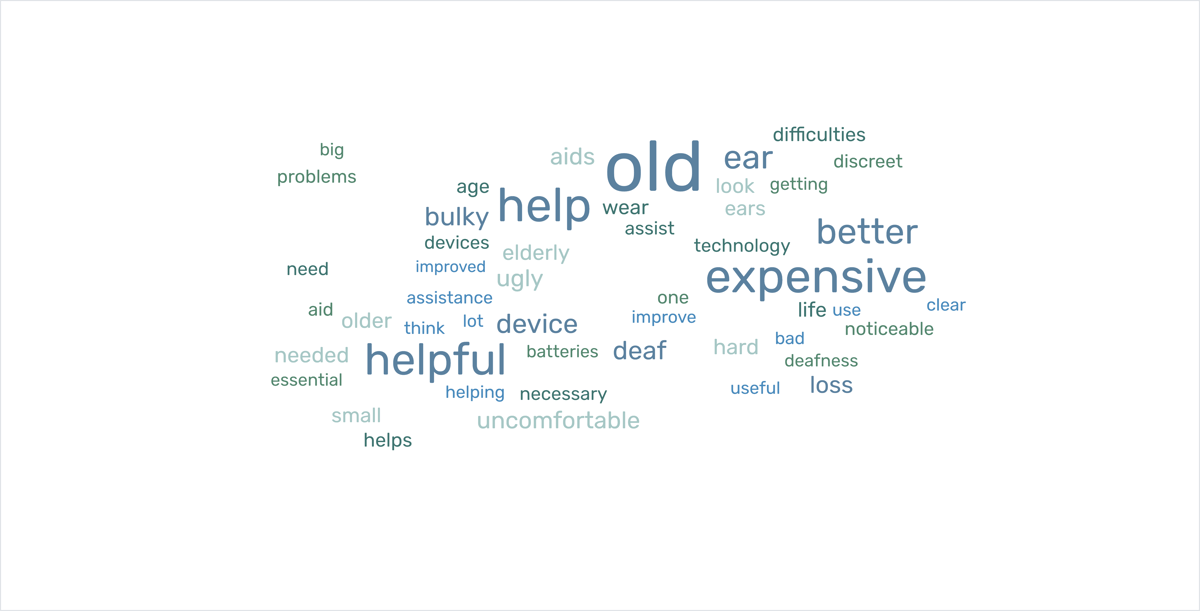
One possibility: experience breeds scepticism. The older cohort has had more interactions with the healthcare system generally, more chances to encounter appointments that didn’t go well or advice that didn’t pan out. They may also carry residual impressions of hearing aids from decades past, when the devices were bulkier and less effective.
The AI trust numbers flip in the opposite direction, though the absolute levels remain tiny. Four percent of under-35s trust AI tools completely, dropping to 2.7% for middle-aged respondents and 1.6% for the 55+ crowd. The young are marginally more open to algorithmic advice, though “marginally more open” still means almost nobody.
The Trust Ecosystem
Here’s where the data gets genuinely interesting. You might expect trust in audiologists to compete with trust in other sources. If someone relies heavily on their GP, perhaps they feel less need for a specialist’s opinion. If they’re comfortable with retail chains, maybe they bypass the clinical route.
The opposite appears true. Trust clusters together rather than trading off.
Those who trust audiologists completely are also more likely to trust GPs (the correlation is 0.42), ENT specialists (0.41), and even large retail hearing chains (0.31). People who rate audiologists highly also give higher marks to free hearing tests at Specsavers: an average perception score of 74.9 out of 100, versus 64.4 among those with lower audiologist trust.
The implication is that audiologist trust isn’t really about audiologists versus alternatives. It’s part of a broader orientation toward the hearing care system as a whole. Some Australians approach hearing services with general confidence. Others approach with general wariness. The confident group trusts everybody more, including the sources you’d think audiologists would be competing against.
Who Are the High-Trust Australians?
Beyond demographics, the survey reveals behavioural and attitudinal differences between high and low audiologist trust groups.
Those who trust audiologists completely are quicker to act. Asked how long they’d wait to seek help after noticing a hearing change, 24.8% of the high-trust group said within a week. Only 14.4% of the lower-trust group would move that fast. The high-trust group is also more likely to choose an audiologist as their first point of contact if they decided to see someone about their hearing (38.1% vs 27.5%).
They’re more engaged with hearing services overall. In the past 12 months, 24.3% of the high-trust group had used wax removal services, compared to 15.6% of the lower-trust cohort. They’re less likely to say “none of the above” when asked about recent service usage.
And they view hearing aids more positively, with an average perception score of 66.3 versus 59.4 for the lower-trust group.
The Distrust Paradox
Only 1.9% of people who trust audiologists completely cite “I don’t trust hearing providers” as a barrier to getting a hearing aid. For the lower-trust group, that figure jumps to 6.6%. Fair enough. You’d expect those numbers to align.
But here’s the oddity: the high-trust group is actually more worried about “not wanting to feel old.” Among those who trust audiologists completely, 32.4% cite this as a top-three barrier to hearing aids. For the lower-trust group, it’s 22.8%.
Why would people who trust audiologists more be more concerned about stigma? Possibly because they’re closer to action. They trust the provider. They’re engaging with the system. They’re taking hearing loss seriously. So the stigma becomes a live issue, not an abstract one. You don’t worry about looking old using something you’d never consider getting in the first place.
What This Means
The trust hierarchy matters for anyone trying to reach Australians about hearing health. If you want credibility, the message should come from or through audiologists. GPs and ENT specialists carry weight too. Retail chains less so. Google searches even less. And AI? Australians aren’t ready to take hearing advice from a chatbot, regardless of how many other aspects of their lives they’ve handed over to algorithms.
The gender gap suggests outreach to women may require different messaging, perhaps addressing the underlying hesitations about the hearing care system rather than just promoting services. The age pattern indicates that older Australians, despite being the primary market, may need more reassurance than younger cohorts.
And the clustering of trust suggests that building confidence in one part of the system lifts all boats. When someone trusts their audiologist, they’re also more comfortable with GPs, specialists, and yes, even retail chains. Trust, it seems, is less a zero-sum competition and more a rising tide.