
When you invest in hearing aids, you’re not just purchasing a device—you’re beginning a journey toward better hearing and improved quality of life. Yet many Australians don’t realise that the programming process matters just as much as the technology itself. Real-ear measurement (REM) is the gold standard for verifying that your hearing aids are delivering the right amount of amplification for your unique ears, but surprisingly, it’s not always performed. Understanding why proper verification through REM changes outcomes can help you make informed decisions about your hearing healthcare.
The Difference Between First-Fit and Evidence-Based Fitting
When you first have hearing aids fitted, the audiologist loads your hearing test results into programming software. The manufacturer’s algorithm then applies what’s called a “first-fit” setting—essentially an educated guess based on your audiogram. While modern algorithms are sophisticated, they cannot account for the unique anatomy of your ear canal, the acoustics created by your specific ear shape, or how a hearing aid fits in *your* ear rather than someone else’s.
Think of first-fit programming like buying shoes based solely on your foot length measurement. The size might be technically correct, but without trying them on and adjusting for width, arch support, and how you actually walk, they may not fit comfortably or function optimally. This is where real-ear measurement becomes essential.
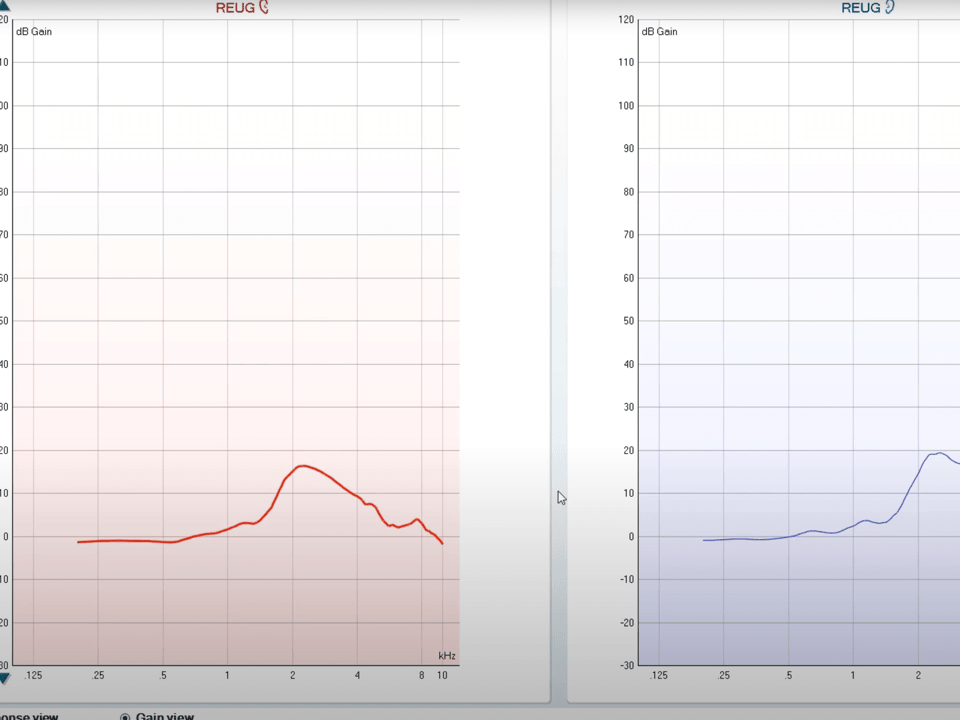
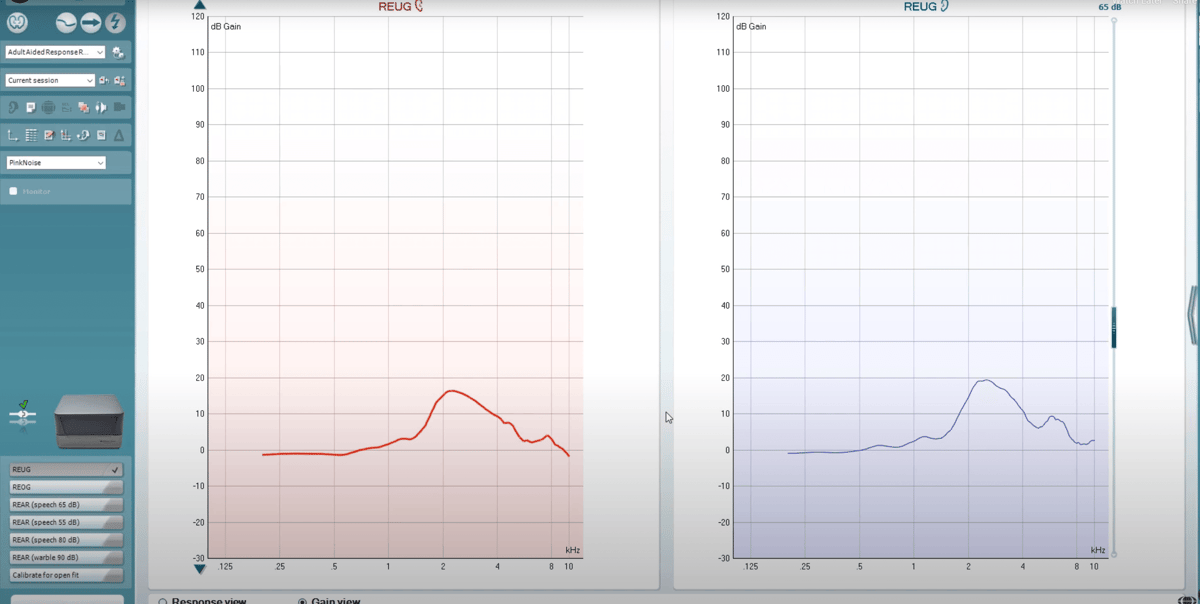
Real-ear measurement involves placing a thin probe microphone in your ear canal alongside the hearing aid. This probe measures the actual sound pressure level reaching your eardrum when the hearing aid is operating. The audiologist can then compare this measurement against evidence-based prescriptive targets to ensure you’re receiving the appropriate amplification across all frequencies. Studies consistently show that hearing aids fitted with REM provide significantly better outcomes than those fitted with first-fit settings alone.
Understanding Target Gain and Prescriptive Formulas
Prescriptive formulas like NAL-NL2 (developed by Australia’s National Acoustic Laboratories) and DSL are research-validated approaches that calculate the amount of gain—or amplification—you need at each frequency to restore audibility while maintaining comfortable listening. These formulas consider not only the degree of your hearing loss but also factors like the overall loudness perception and speech intelligibility.
Target gain represents the goal your audiologist is working toward. During REM, the probe microphone measurement shows whether your hearing aid is meeting, exceeding, or falling short of these targets. Without verification, your audiologist is essentially working in the dark, unable to confirm whether the amplification you’re receiving matches what decades of research have proven effective.
The Australian Government’s Hearing Services Program requires REM for all pensioner and veteran hearing aid fittings precisely because the evidence supporting its use is so robust. The American Academy of Audiology, the British Society of Audiology, and audiology bodies worldwide all identify REM as best practice. Yet research suggests that fewer than 40% of hearing aid fittings in private practice include this crucial verification step.
Verification Versus Validation: Two Sides of Quality Care
It’s important to distinguish between verification and validation, as both play essential roles in successful hearing aid outcomes. Verification refers to the objective measurement process—REM confirms that your hearing aids are providing the intended acoustic output. It answers the question: “Is the device doing what it should be doing technically?”
Validation, on the other hand, assesses the real-world benefit you’re experiencing. This typically involves questionnaires, speech-in-noise testing, and conversation about your listening experiences across different environments. Validation answers: “Is this device improving your life in meaningful ways?”
Both are necessary. A hearing aid might measure perfectly on REM but still require fine-tuning based on your preferences and lifestyle needs. Conversely, you might report initial satisfaction, but without proper verification, you could miss out on optimal speech understanding, especially in challenging listening environments. Comprehensive audiological care includes both verification through REM and validation through ongoing follow-up and outcome measurement.
The Real-World Impact: What the Data Shows
The benefits of REM-verified hearing aid fittings aren’t just theoretical—they’re measurable and significant. Research published in the International Journal of Audiology found that hearing aids fitted with REM provided better speech understanding in noise, required fewer follow-up adjustments, and resulted in higher user satisfaction compared to those fitted without verification.
Another study examining aided audibility found that without REM, approximately 40% of hearing aid fittings failed to provide adequate amplification for soft speech sounds—the very sounds that are crucial for understanding consonants and following conversation in quiet environments. These deficiencies often go unnoticed by patients who lack a comparison point, leading to the common complaint: “Hearing aids help, but I still can’t understand what people are saying.”
Consider the financial implications as well. Hearing aids represent a significant investment, typically ranging from several thousand dollars per pair. Without REM verification, you may not be receiving the full value of that investment. You might adapt to inadequate amplification, assuming “this is as good as it gets,” when in fact, proper verification could unlock substantially better performance from the same devices.
How Real-Ear Measurement Works in Practice
Understanding what to expect during an REM session can help you feel confident in the process. The procedure is painless, non-invasive, and typically adds only 15-20 minutes to your hearing aid fitting appointment.
What happens during a real-ear measurement:
– A thin silicone probe tube (much thinner than the hearing aid itself) is gently placed in your ear canal, with the tip positioned near your eardrum
– Your hearing aid is then inserted in the normal wearing position
– The audiologist presents calibrated sounds through a speaker positioned at ear level
– The probe microphone measures the sound pressure level at your eardrum while the hearing aid is operating
– This measurement is compared against prescriptive targets on a computer screen
– The audiologist adjusts the hearing aid programming in real-time, repeating measurements until the output matches the targets across frequencies
– The process is repeated for both ears and typically includes measurements at soft, moderate, and loud input levels
The visual feedback REM provides is valuable for both patients and clinicians. Many audiologists will show you the before-and-after measurements, helping you understand how the adjustments are designed to improve your hearing. This transparency builds trust and helps you become an active participant in your hearing healthcare rather than a passive recipient.
Evidence-Based Practice at The Audiology Place
At The Audiology Place, real-ear measurement isn’t an optional add-on—it’s a standard component of every hearing aid fitting. This commitment to evidence-based practice reflects our understanding that proper verification fundamentally changes outcomes. Our approach combines REM verification with comprehensive validation measures to ensure you’re not only receiving optimal amplification but also experiencing meaningful improvement in your daily life.
Questions to Ask Your Audiologist
If you’re considering hearing aids or reviewing your current devices, asking the right questions can help ensure you receive evidence-based care.
Consider asking:
1. “Do you perform real-ear measurement on every fitting?” (The answer should be yes, with rare exceptions for specific medical conditions)
2. “Which prescriptive target will you use, and why?” (Common answers include NAL-NL2 or DSL)
3. “Can you show me the REM results and explain what they mean?” (Transparency in results is important)
4. “How will you validate that the hearing aids are working well for me in real-world situations?” (This should include follow-up appointments and outcome measures)
5. “What follow-up care is included, and how do you handle needed adjustments?” (Ongoing support is essential for success)
Your audiologist should welcome these questions. A professional committed to best-practice care will appreciate your interest in evidence-based verification and be happy to explain their protocols.
Beyond the Initial Fitting: The Importance of Ongoing Verification
Real-ear measurement isn’t just important at the initial fitting—it plays a valuable role throughout your hearing aid journey. As you adapt to amplification, your preferences may change. The physical fit of your hearing aids can shift over time. Ear canal acoustics can change with weight fluctuations, aging, or even seasonal factors. Periodic re-verification ensures your hearing aids continue to provide optimal amplification as these variables evolve.
At follow-up appointments, REM allows your audiologist to objectively assess whether adjustments you’re requesting will move you closer to or further from evidence-based targets. This data-informed approach to fine-tuning prevents the common problem of over-adjustment based on subjective preferences, ultimately reducing speech understanding. The goal is always to balance your comfort and preferences with the amplification characteristics that research has proven most effective.
Additionally, if you change hearing aid models or manufacturers in the future, previous REM data provides valuable information about what worked well for you and what didn’t. This historical perspective makes the transition to new technology smoother and more successful.
The Bottom Line: Verification Changes Outcomes
Hearing healthcare has evolved considerably over the past few decades. We now have robust research showing exactly how much amplification is needed across frequencies to maximise speech understanding for different types and degrees of hearing loss. We have sophisticated hearing aid technology that delivers precisely tailored amplification. Yet without verification through real-ear measurement, that scientific knowledge and advanced technology cannot be fully realised.
Proper verification through REM represents the bridge between potential and actual performance—between what your hearing aids could do and what they’re actually doing in your ears. The evidence is clear: REM-verified fittings deliver better speech understanding, higher satisfaction, and improved real-world outcomes than fittings based solely on first-fit settings.
When seeking hearing healthcare, you deserve more than guesswork or manufacturer defaults. You deserve evidence-based care that’s been properly verified to meet your individual needs. Whether you’re exploring hearing aids for the first time or questioning whether your current devices are performing optimally, understanding the critical role of real-ear measurement empowers you to advocate for the quality care that will genuinely change your hearing outcomes.