FOR IMMEDIATE RELEASE
New research reveals hearing has become the “forgotten check-up” despite one in six Australians experiencing hearing loss.
SYDNEY, January 2026 — Australians visit their GP six times a year on average. Eight in ten have their eyes tested every two years. More than half see a dentist annually. Yet new national research reveals nearly half of all Australians did absolutely nothing about their hearing health in the past 12 months. The findings, from a survey of 425 Australians conducted for The Audiology Place, expose a striking blind spot in the nation’s otherwise robust preventive health culture, and raise uncomfortable questions about an industry where most consumers don’t realise who actually owns the clinic testing their hearing. Dr. Signe Steers is the owner of The Audiology Place, has 20 years of experience and has a Doctor of Audiology from A.T. Still University, Arizona.
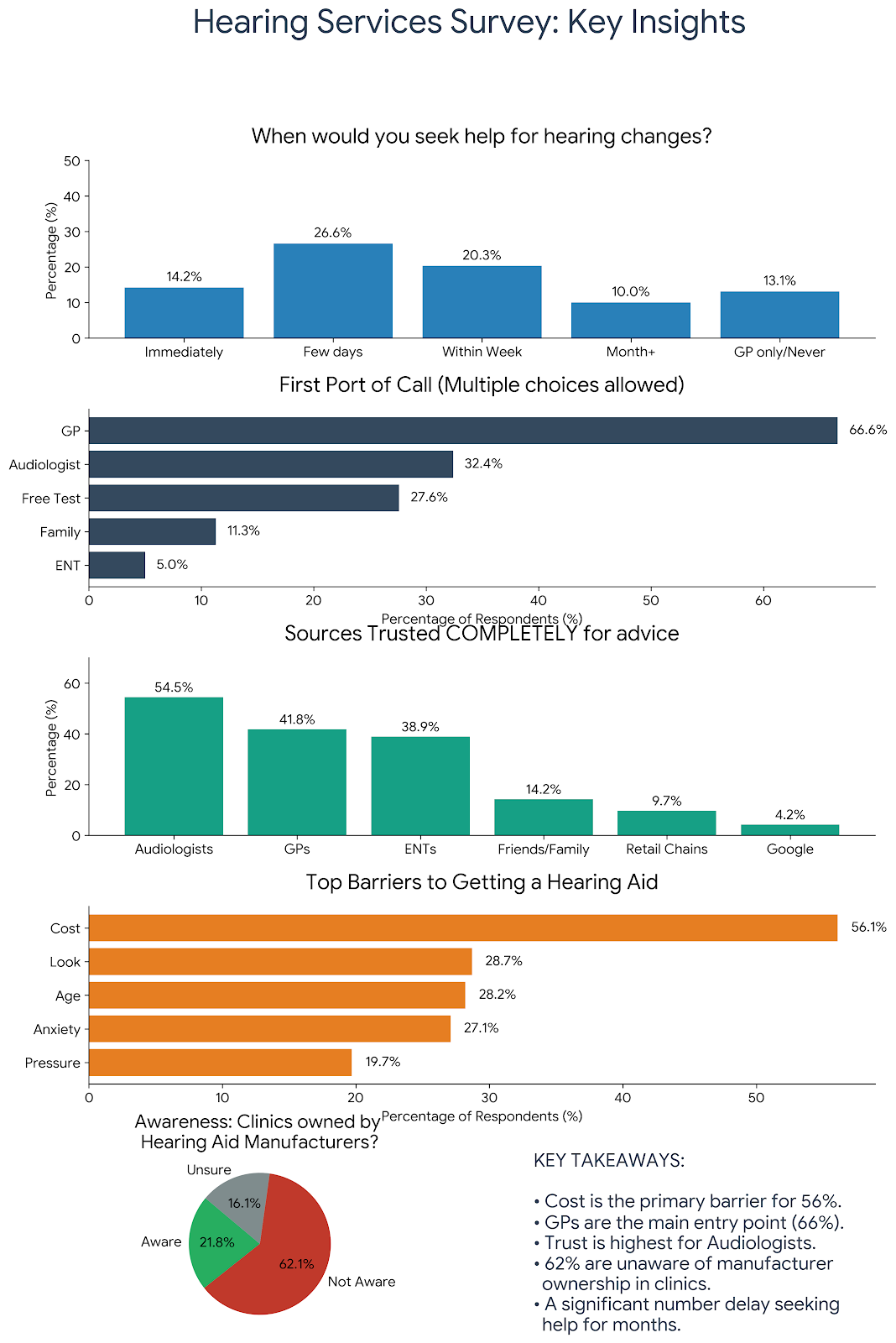
Infographic Summary of Findings
The Numbers That Should Alarm Us
While 84% of Australians had at least one GP visit last year, just 27.7% had a hearing test. Only 14.9% saw an audiologist. And when Australians do notice changes to their hearing, fewer than one in seven (14.1%) would seek help immediately, with almost a quarter saying they’d delay for months, mention it casually to their GP, or never mention it at all.
This inaction persists despite hearing loss affecting approximately 3.6 million Australians and being increasingly linked to cognitive decline, social isolation and depression.
“We’ve normalised dental cleans and eye checks as routine adult healthcare,” said Dr Steers. “Yet hearing — a sense fundamental to relationships, work and mental health — remains something Australians only address when communication becomes difficult or distressing.”
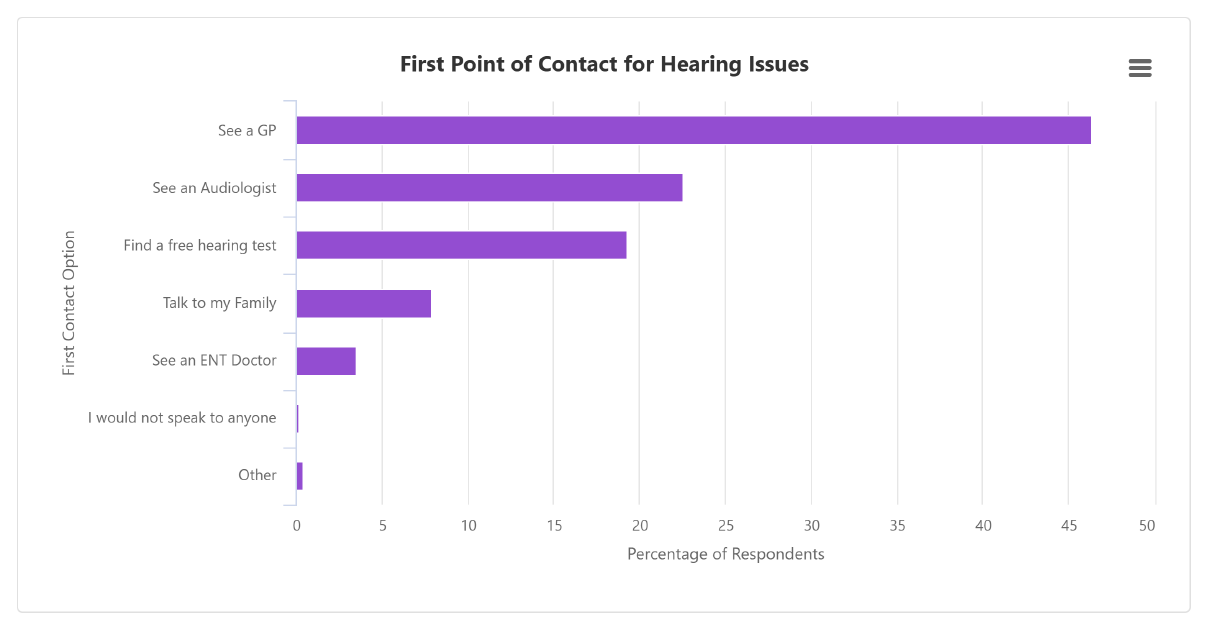
First point of contact for hearing issues
The Stigma Paradox: Young Australians Fear “Looking Old” More Than Their Grandparents Do
Perhaps the survey’s most counterintuitive finding concerns who actually fears hearing aids, and why.
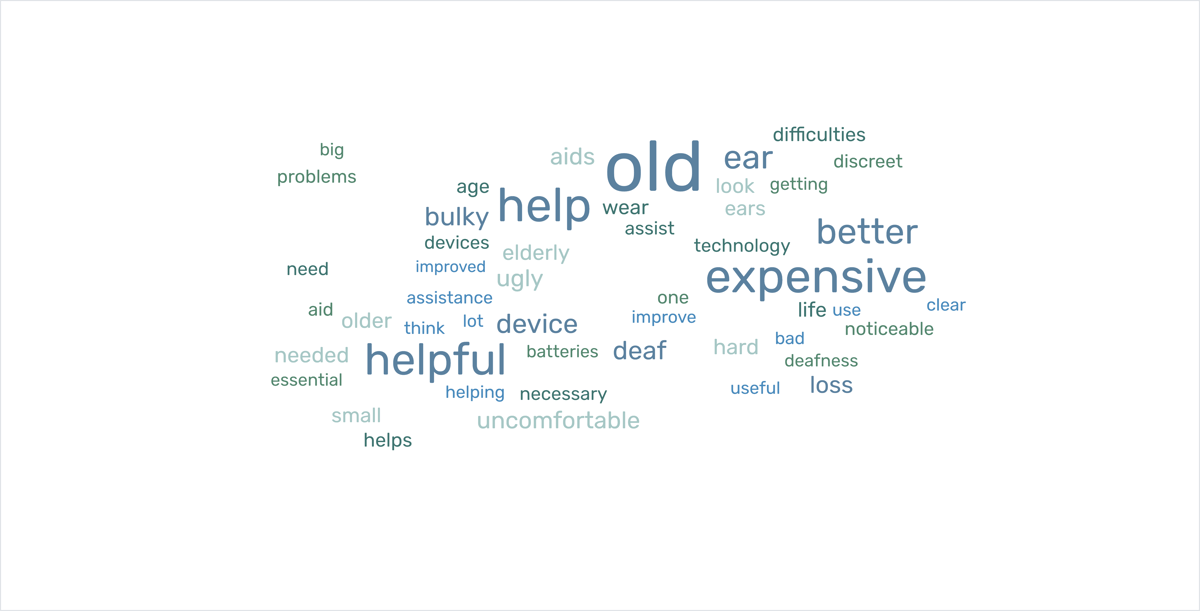
When asked what words come to mind when thinking about hearing aids, more than one in five responses (21.7%) referenced age or ageing. Terms like “old people,” “elderly,” and “makes you feel old” dominated the language.
But here’s the twist: more than half of Australians under 30 (52%) said fear of “feeling old” would deter them from getting hearing aids. Among those aged 70 and over? Just 16% shared this concern.
The people least likely to need hearing aids are the most worried about what wearing them might signal. The generation most likely to benefit has largely moved past the stigma.
“Hearing aids have become smaller, smarter and virtually invisible,” Dr Steers noted. “Yet the mental image many younger Australians carry is decades out of date. This perception gap is costing people years of better hearing.”
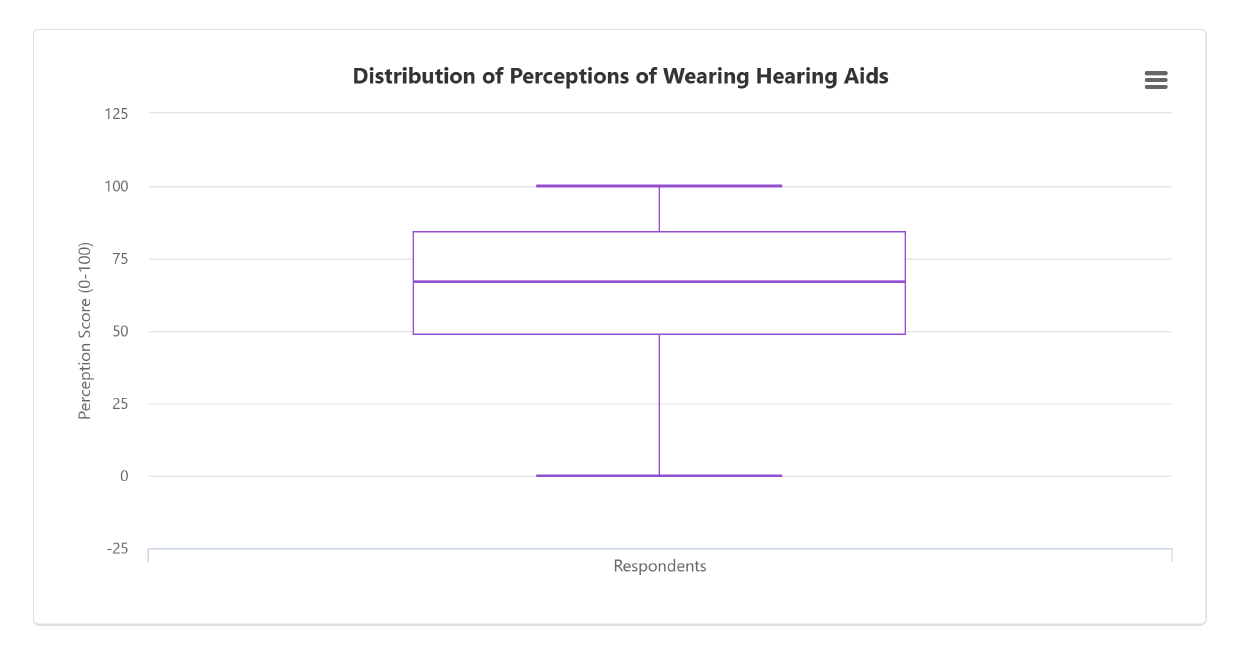
Perceptions of wearing hearing aids
The Trust Gap: Audiologists vs Retail Chains
The research reveals Australians draw sharp distinctions between clinical professionals and retail settings.
More than half of respondents (53.8%) said they trust audiologists “completely” for hearing advice, with 88.7% expressing at least some trust. By comparison, only 9.7% trust large retail hearing chains completely, a gap of more than 44 percentage points.
AI tools and chatbots ranked lowest among all sources, with fewer than one in four Australians (22.9%) expressing any confidence in them to provide advice.
Yet despite this clear preference for qualified professionals, most Australians would still visit a GP first if experiencing hearing concerns rather than going directly to an audiologist, suggesting hearing care remains positioned in the public mind as secondary or referral-based rather than routine.
The Industry Secret Most Australians Don’t Know
One finding carries significant implications for consumer choice: 62.1% of Australians were completely unaware that some hearing clinics are owned by hearing aid manufacturers. An additional 16% were unsure.
This means nearly four in five consumers don’t know to ask whether the clinic testing their hearing has a commercial interest in which brand of hearing aid they’re recommended.
Open-ended responses revealed deep ambivalence about “free” hearing tests offered by retail chains. While 31.5% viewed them positively, 14.1% associated them with sales pressure. Many questioned whether they were receiving healthcare or a sales pitch, with comments describing the experience as part of a “money-making process” or feeling “pressured to buy.”
“Independence matters in healthcare,” Dr Steers said. “When a clinic is owned by a manufacturer, there may be inherent pressure to recommend specific products. Consumers deserve to know this before they walk through the door.”
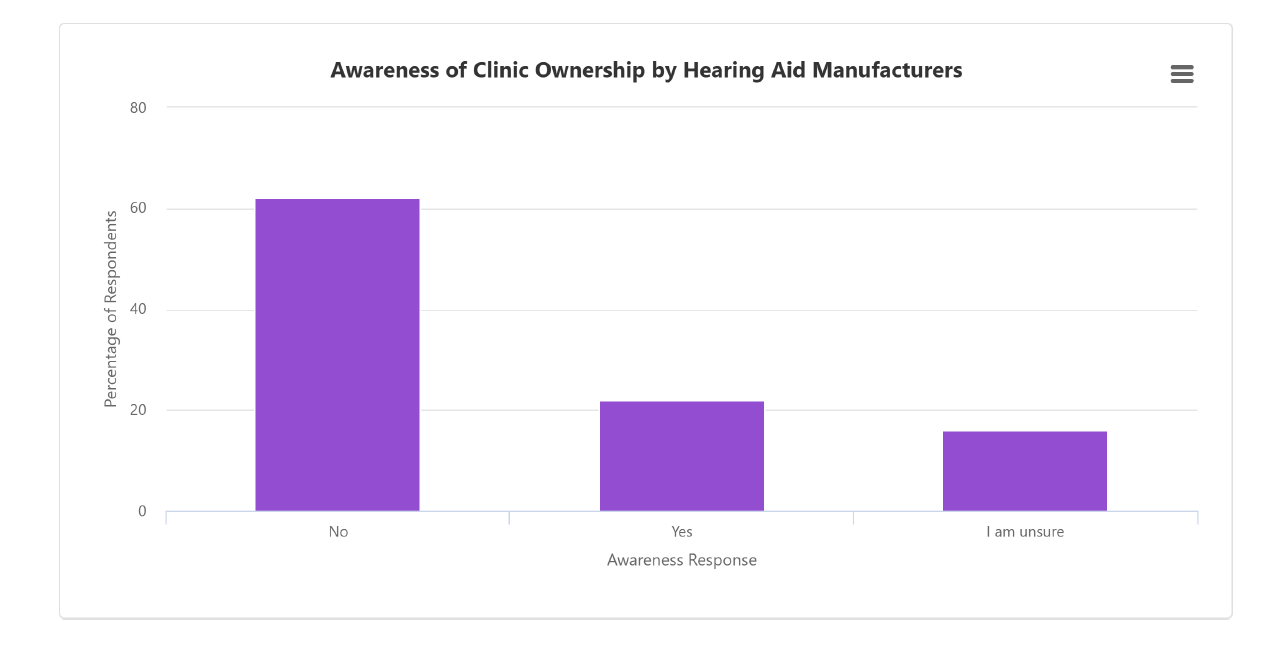
Awareness of clinic ownership by hearing aid manufacturers
Cost: The Headline Barrier With Hidden Complexity
Cost emerged as the dominant obstacle to hearing aid adoption, cited by 56.4% of respondents as their primary concern.
But the survey suggests cost anxiety is not purely financial. The language used reveals suspicion about value and motive. Respondents described hearing aids as “overpriced” and “a rip-off,” and questioned whether the recommendations were clinically driven or commercially motivated.
This scepticism may partly explain why Australians trust audiologists but don’t necessarily act on that trust, and why the pathway to hearing care remains cluttered with doubt.
The Tinnitus Trigger
One finding offers insight into what finally moves Australians to act: tinnitus.
Among respondents experiencing significant tinnitus, only 25.9% reported doing nothing about their hearing in the past year. Among those without tinnitus, that figure jumps to 62.2%.
When hearing issues become intrusive and impossible to ignore, behaviour changes. But waiting for symptoms to become distressing is not preventive healthcare, it’s crisis response.
A Cultural Shift Is Overdue
The survey paints a picture of a nation that understands preventive health in almost every domain except one.
Australians don’t lack trust in audiologists. They don’t reject hearing technology — many described hearing aids as “helpful” and “life-changing.” What stands in the way is stigma, cost anxiety, sales scepticism, and the simple absence of a cultural norm around routine hearing checks.
As Australia’s population ages and evidence mounts connecting hearing health to cognitive function, the case for change grows stronger.
“The solution isn’t necessarily technological,” Dr Signe Steers concluded. “It’s behavioural. Normalising hearing assessments as part of regular adult healthcare, particularly from midlife onwards, could close the gap between what Australians believe and what they actually do.”
“We check our teeth before they decay. We check our eyes before we can’t read. It’s time hearing joined that list.”
Key Statistics:
- 47.7% of Australians did nothing about their hearing health in the past 12 months
- 88.7% trust audiologists; only 56.3% trust large retail chains
- 62.1% unaware that some hearing clinics are manufacturer-owned
- 56.4% cite cost as the primary barrier to hearing aids
- 52% of under-30s fear hearing aids would make them “feel old” vs 16% of over-70s
About the Research
The survey was conducted in January 2026 across all Australian states and territories with 425 respondents aged 18-89.
About The Audiology Place
The Audiology Place is an independent audiology practice.